Astronomers compared new James Webb images with old Hubble ones. One quasar, GNz7q, had faded by about one magnitude. It sits at redshift 7.19, 700 million years after the Big Bang.
Twenty years of archives show a fast rise, then a smooth fade over about two years in its own time. Only about 0.1% of quasars vary this much.
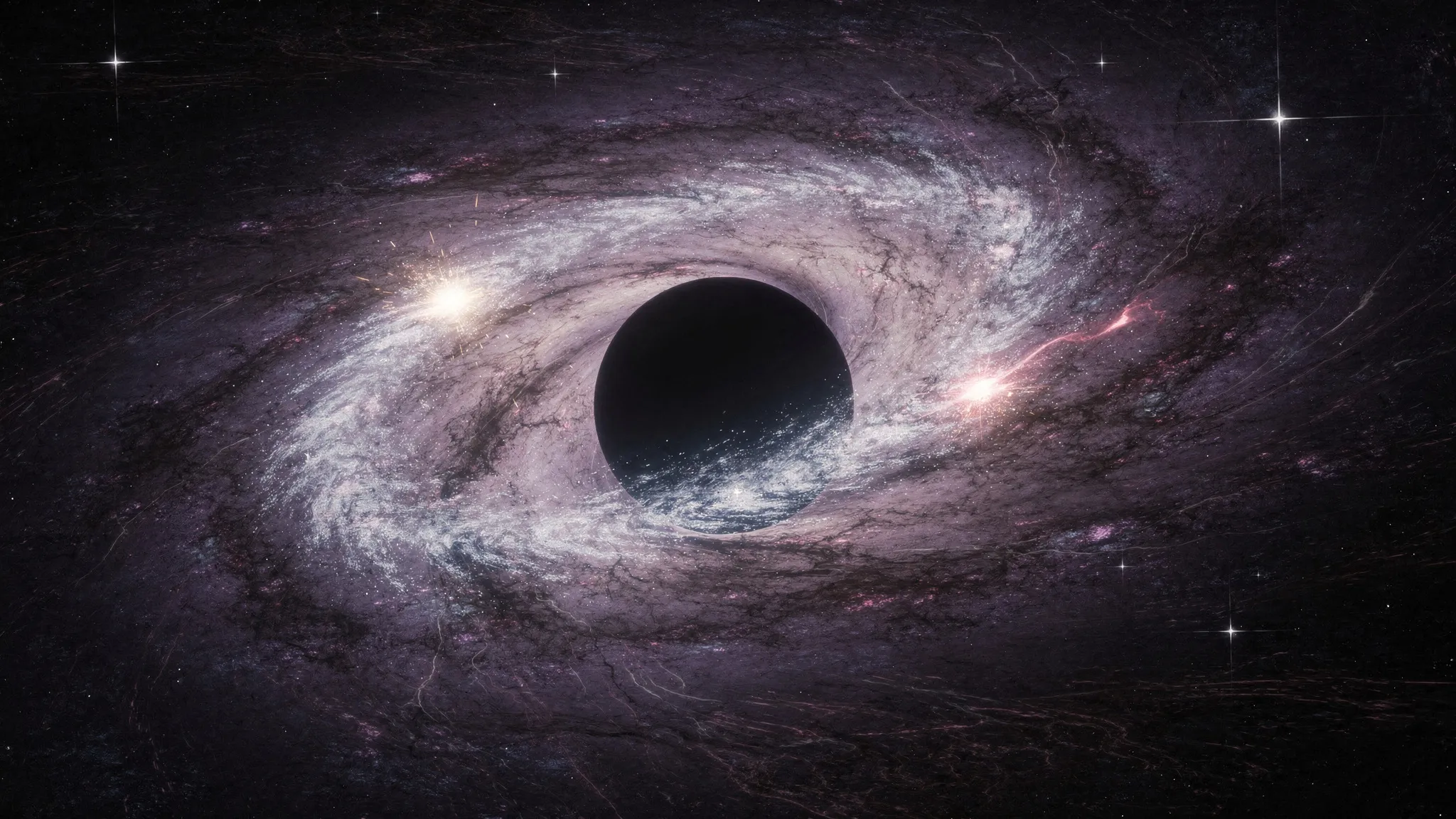
The best explanation: a star of a few solar masses ripped apart by the black hole. The flare released about 1.5 × 10⁵³ erg. It ranks among the most energetic such events known.
Webb also caught the echo. Dust about half a parsec away, heated to about 1,500 K, glows after the flash. Until now, confirmed star-shredding events stopped near redshift 1.2.
Source: A tidal disruption event in a quasar at redshift 7.19, https://arxiv.org/abs/2609.30441