Edisi 1 Oktober 2026

  1. Fisika

    WHICH NEUTRINO IS THE HEAVIEST? JUNO LEANS ONE WAY

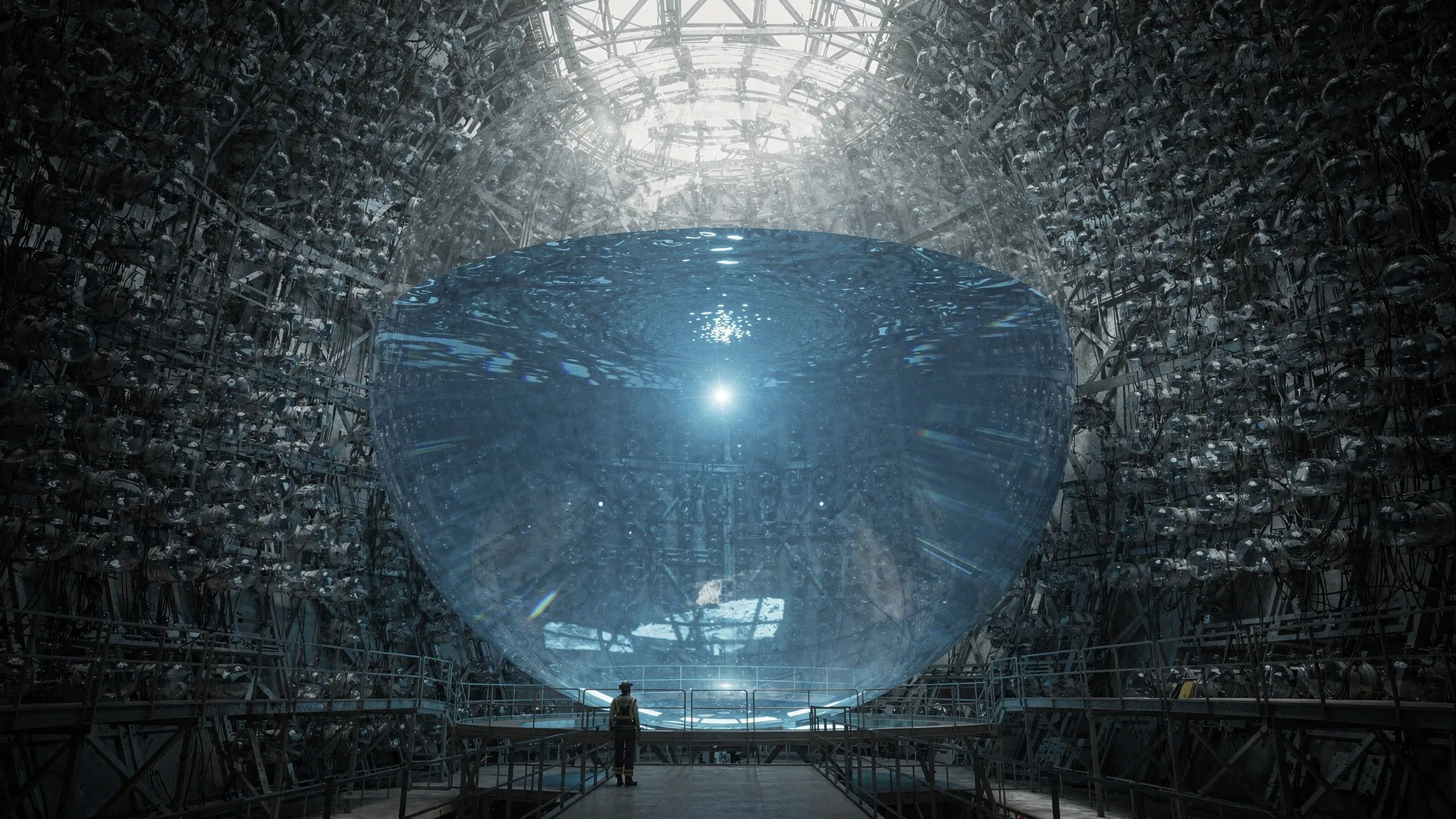
    Inside a giant spherical neutrino detector: a clear acrylic sphere surrounded by thousands of round light sensors, a faint flash in the liquid, blue light.

    Neutrinos come in three masses. Nobody knows their exact order. Is the third one heavier than the first, or lighter?

    Under 650 m of rock in southern China, JUNO watches 20,000 tonnes of glowing liquid. It catches antineutrinos from eight reactor cores, 52.5 km away. Each one leaves a tiny flash. In 207 days: 8,294 of them.

    The result: the world's sharpest values for two neutrino parameters, to about 1 to 2%. And a first JUNO measurement of a third, to about 1%.

    Combined with accelerator experiments, the data favour the "normal" ordering. One analysis puts the odds at about 10 to 1. Another gives 2.1 sigma. The team calls it an indication, not a verdict. More years of data will tell.

    Source: Measurement of Neutrino Oscillation Parameters at JUNO and Indication of the Neutrino Mass Ordering, https://arxiv.org/abs/2609.37895
    PracetakAnalisis data3 menit baca
  2. Fisika

    A SPIN THAT CAN ONLY BE ±½ READS 7

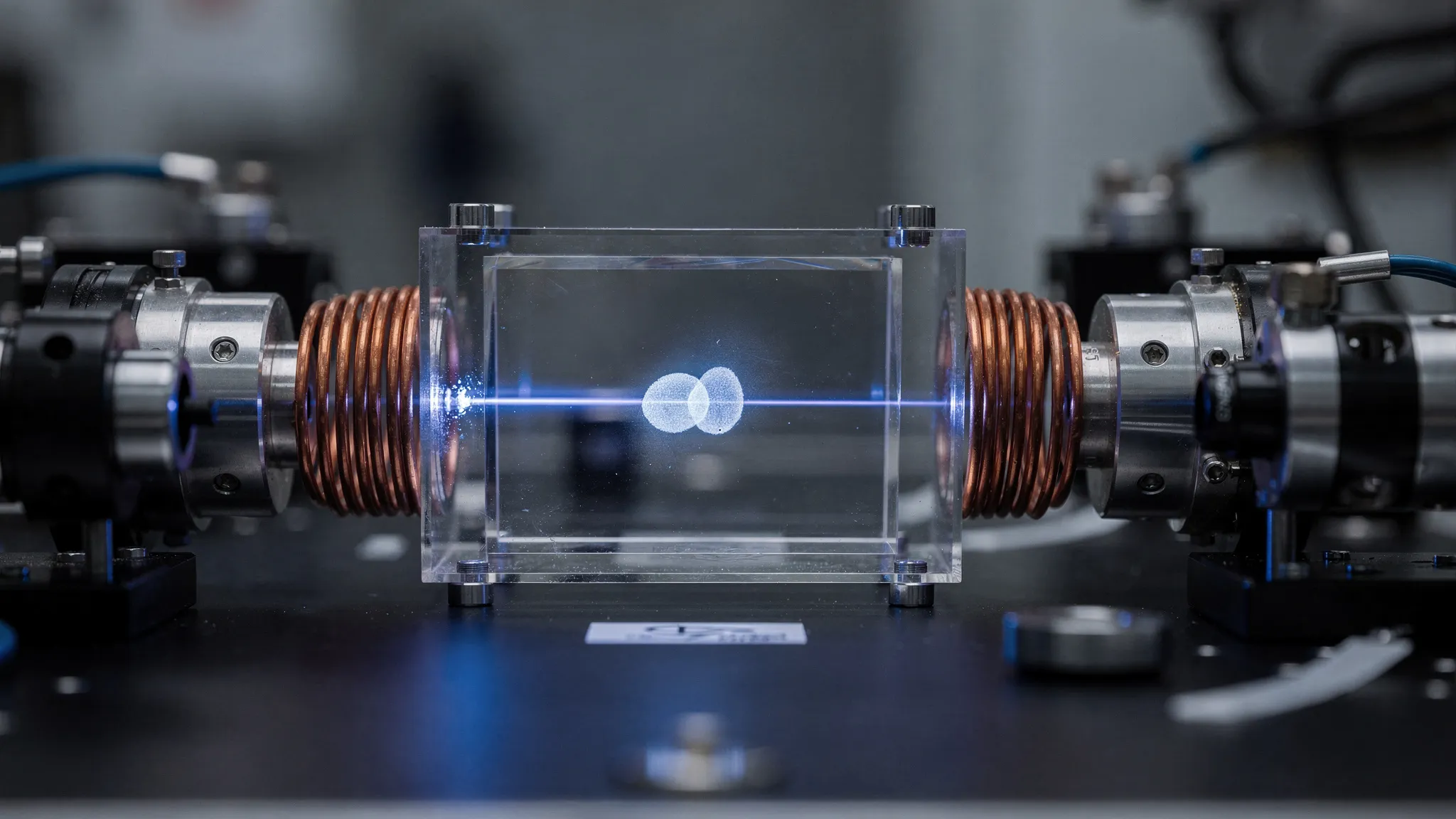
    A small glass vacuum cell among magnetic coils and lenses, a faint cloud of atoms split in two inside, a thin laser beam, blue light.

    Some particles have a spin of one half. Measure it, and quantum rules allow two answers: +½ or −½. Nothing else. So how can a measurement give 7?

    In 1988, three physicists found a loophole. Measure very gently. Then keep only the rare cases that end in an unlikely state. The average can land far outside the allowed range.

    Their spin experiment was never done. A Toronto team has now done it. They used rubidium atoms cooled into a single quantum wave.

    After a tiny magnetic push, the selected atoms moved as if pushed 14 times harder. In spin terms: a result of 7, with an error of ±3. Physics is not broken. The trick is interference — and a lot of thrown-away atoms.

    Source: Measuring the spin of a spin-1/2 and getting a result of 7, https://arxiv.org/abs/2609.37822

    PracetakEksperimen3 menit baca
  3. Antariksa & astronomi

    HAUMEA HIDES A ROCKY HEART

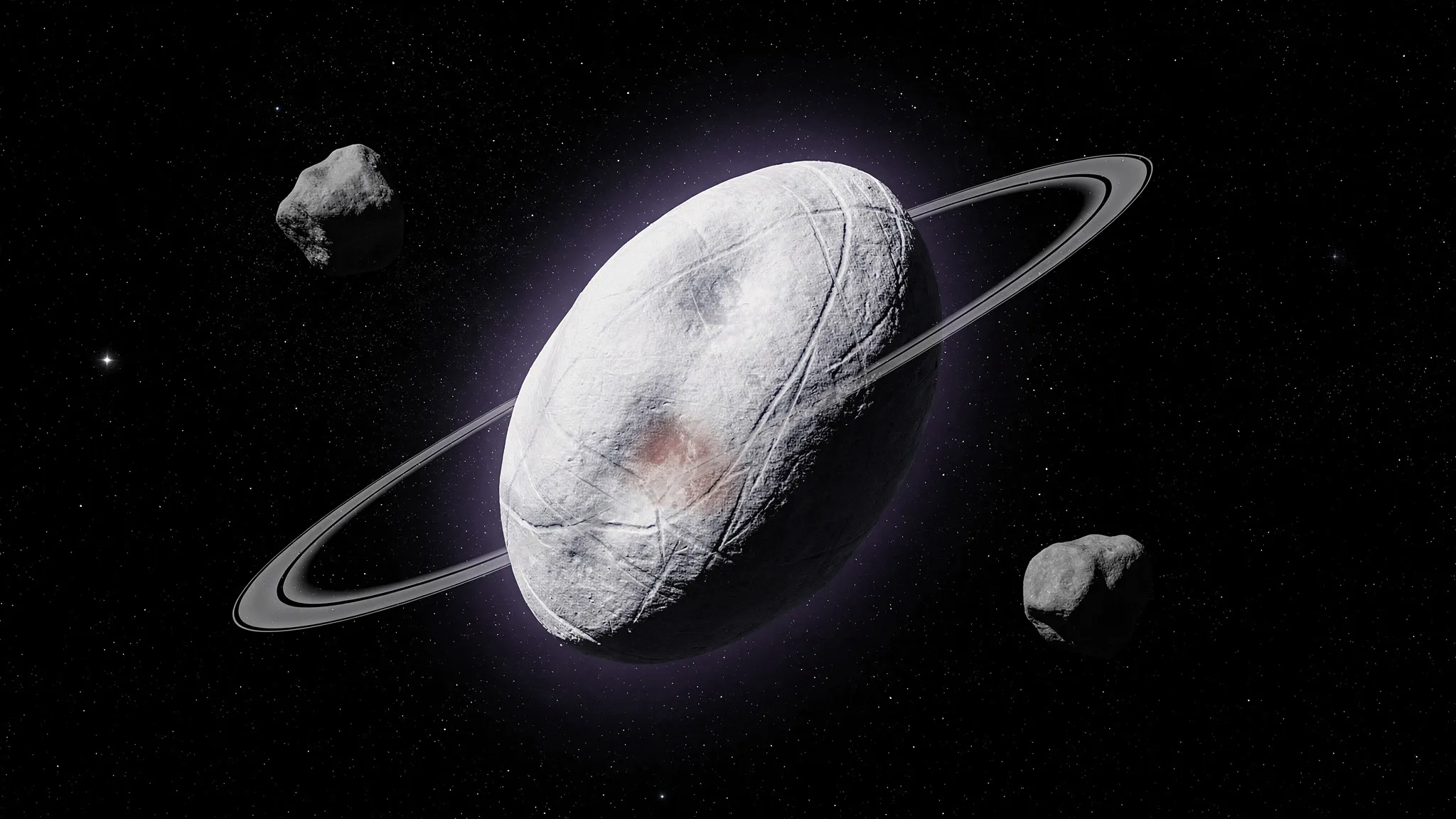
    The elongated, egg-shaped icy dwarf planet Haumea with a thin ring and two small moons, lit from one side, violet glow.

    Far beyond Neptune spins Haumea, a stretched dwarf planet. One day there lasts about 3.9 hours. What is inside it?

    Its two moons, Hi'iaka and Namaka, hold the answer. A spinning, flattened world tugs on its moons in a special way. Their orbits slowly twist.

    A US team tracked those moons on 20 years of Hubble images. The twist is too small for a uniform body. Haumea must hide a dense, rocky core under an icy mantle.

    The core's density, 2,500 to 3,500 kg per cubic metre, fits rock altered by water. So liquid water once filled the inside of this frozen world. Maybe even an ocean. The authors think most large worlds out there followed the same path.

    Source: The Dense, Rocky Core of Haumea Revealed by Satellite Dynamics, https://arxiv.org/abs/2609.36037

    PracetakAnalisis data3 menit baca
  4. Antariksa & astronomi

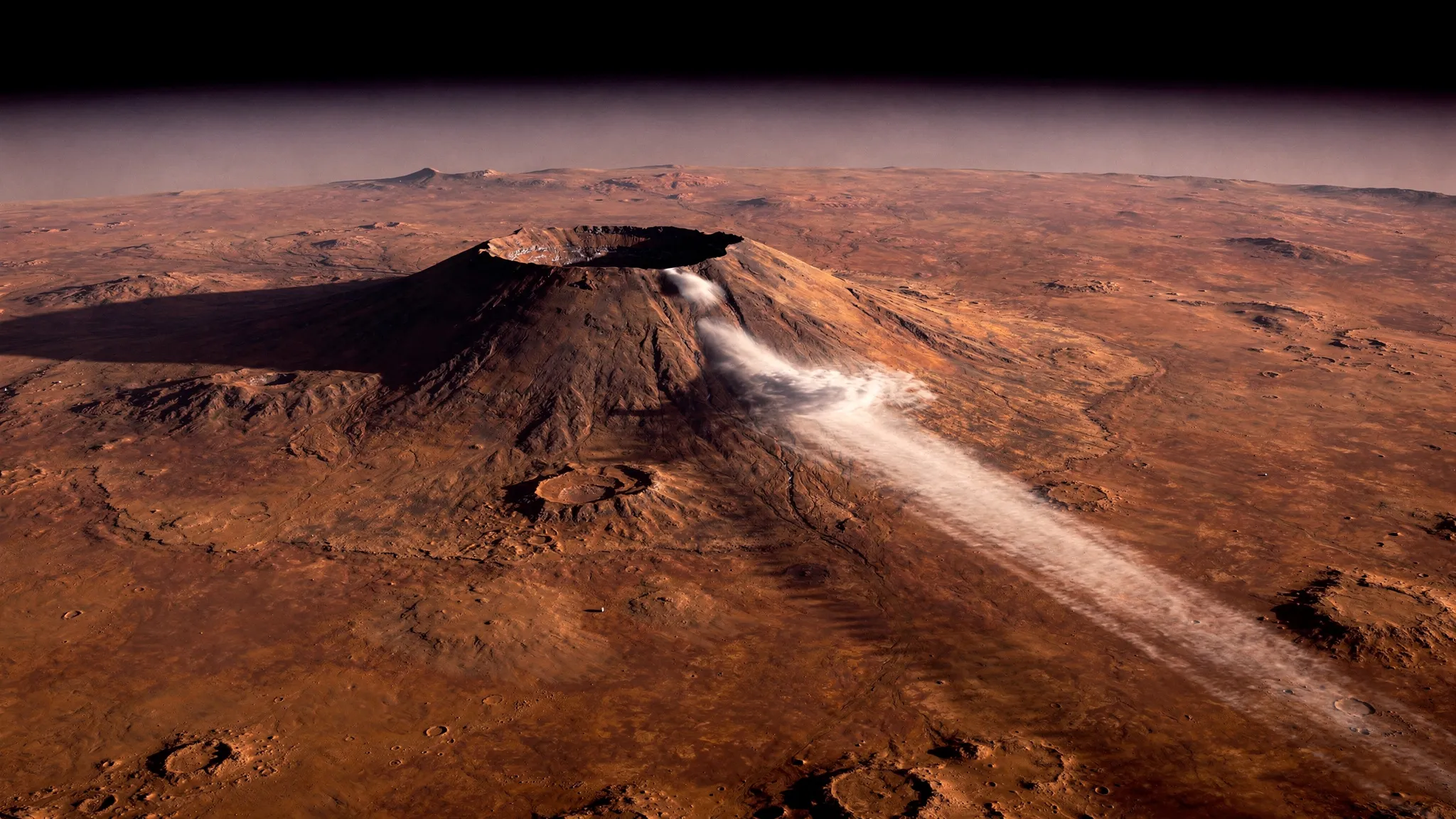
    A 1,800 KM CLOUD ON MARS MAY BE BORN WITHOUT DUST

    Mars seen from orbit in the morning: a long thin white cloud streaming west from the flank of the volcano Arsia Mons.

    Each morning on Mars, a thin white cloud grows from the Arsia Mons volcano. In three hours it can stretch 1,800 km. No model had ever reproduced its long tail.

    Cloud ice usually forms on dust grains. Forming straight from vapour needs extreme humidity. On Earth, that is considered impossible in real air.

    A Paris team added this "dust-free" ice to a Martian weather model. In a cold pocket over the volcano, humidity reaches 100,000 times saturation. Hundreds of crystals per cubic centimetre appear. The cloud's tail then comes out right.

    The authors warn: this is their draft before peer review, with known errors fixed later. The reviewed version says the clouds "suggest" this process. If it holds, a textbook idea has finally been seen at work.

    Source: Homogeneous Nucleation of Water Vapor Evidenced by Elongated Clouds on Mars, https://arxiv.org/abs/2609.37259

    PracetakSimulasi3 menit baca
  5. Bumi & iklim

    MAGMA FLOWS EASIER WHEN SQUEEZED — BUT THAT'S NOT WHY IT POOLS

    Close-up of glowing molten rock seeping through cracks between dark mantle rock grains, olive-tinted light.

    Earth's plates glide on a soft layer of the mantle. A little molten rock may lubricate it. But how easily does that magma flow, deep down?

    Squeeze most things and they stiffen. Experiments said basalt magma does the opposite, down to a point. Then critics called it a lab artefact.

    A Chinese-German team simulated basalt melt atom by atom. A neural network sped up the quantum-level forces. Up to 600 runs per condition. Verdict: at 2,073 K, viscosity drops about 19% by 3 GPa, then rises again. Aluminium atoms swapping partners make the flow easier.

    The twist: this dip does not explain why magma pools under the plates. Heat does. Hotter depths make melt runny. Cooler heights slow it until it stalls.

    Source: Anomalous pressure-dependent viscosity of basaltic melts and its role in asthenosphere melt accumulation, https://arxiv.org/abs/2609.36623

    PracetakSimulasi3 menit baca
  6. Matematika

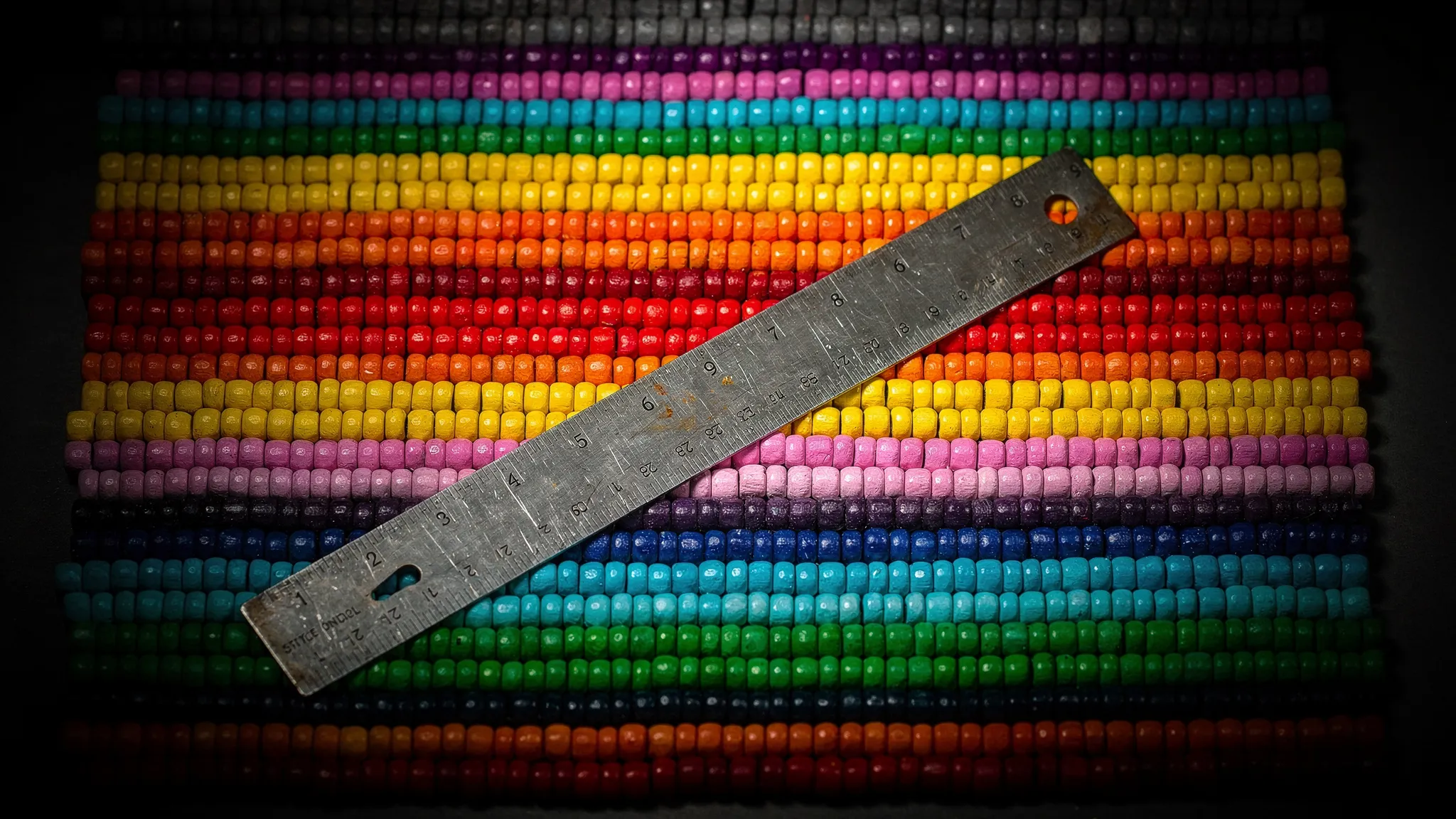
    HOW MANY COLOURS TO PAINT SPACE? FOR A TYPICAL RULER, NO MORE THAN 2d

    Coloured beads laid out in parallel stripes of different colours on a dark table, a steel ruler across them, cyan rim light.

    Paint every point of the plane. Rule: two points exactly 1 apart never share a colour. How many colours do you need? Asked in 1950, it is still open: between 5 and 7.

    Now change the ruler. Mathematicians can measure distance in countless other ways, called norms. In d dimensions, the usual ruler needs a number of colours that explodes.

    Noga Alon, Matija Bucić and James Davies tackle "typical" norms. There, 2d colours always suffice. And some norms need exactly 2d. Ten dimensions, twenty colours.

    Along the way they solve a 1978 conjecture by Schoenberg. They also credit ChatGPT 6 Pro with the proof of their last missing lemma. The authors helped steer it with their own ideas.

    Source: Hadwiger–Nelson Problem for Typical Norms, https://arxiv.org/abs/2609.36220

    PracetakTeori3 menit baca
  7. Komputasi & AI

    GPS SPOOFING AT SEA: 31 HOTSPOTS ON THE WORLD MAP

    Container ships at night near a desert coast, deck lights on dark water, a navigation satellite as a bright point in the starry sky.

    In May 2025, a 75,000-tonne container ship ran aground in the Red Sea. Its GPS had reportedly been fed a false position. It stayed stuck for over five weeks. How common is that?

    A Georgia Tech team checked position reports from over 367,000 ships. The survey spanned about ten weeks. They flagged impossible motion, then looked for many ships fooled at once.

    Result: 17,936 suspicious episodes and 31 hotspots. At least 22 show strong signs of GPS spoofing. Ships loop in circles off the Black Sea coast. Others jump onto a Jordanian airport, far inland.

    The same fake track that preceded the Red Sea grounding appeared there five months earlier. The authors propose spoofing risk maps for sailors, like weather charts.

    Source: She Spoofed Sea Ships by the Sea Shore: Measuring Large-Scale GPS Spoofing in Global Maritime Traffic, https://arxiv.org/abs/2609.37676

    PracetakAnalisis data3 menit baca
  8. Kedokteran & kesehatan

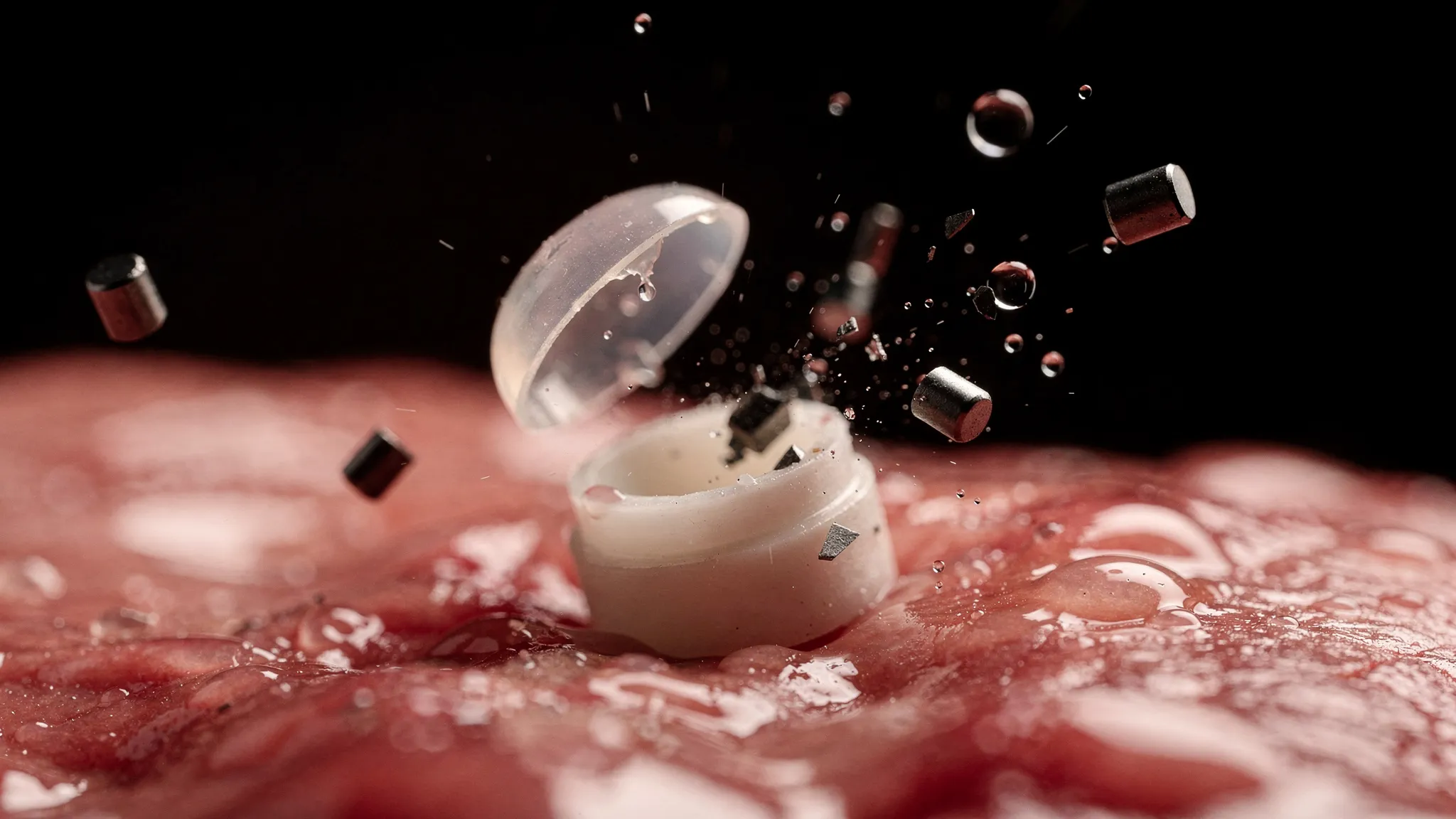
    A CAPSULE THAT BURSTS LIKE A SEED POD

    A tiny capsule bursting open on stomach tissue, its soft transparent dome flipping off and small dark magnetic pieces flying out, red light.

    Touch a ripe seed pod of Impatiens balsamina and it bursts, flinging its seeds. Engineers in Hangzhou copied the trick to deliver tiny robots inside the stomach.

    Their capsule is about 8 mm wide. A soft silicone dome is turned inside out, like a spring. A gel with iron nanoparticles holds it in place.

    Magnets guide the closed capsule to its target. Then an alternating magnetic field warms the gel to about 41 °C. The gel gives way. In under 50 ms the dome snaps back and shoots out its cargo at 1 m/s.

    It worked on a printed track and on a pig stomach outside the body. No living animal yet, and the gel must still face stomach acid. Four of the authors have filed a patent.

    Source: A Bioinspired Magnetothermally Triggered Capsule for Rapid Microrobot Release, https://arxiv.org/abs/2609.37598

    PracetakEksperimen3 menit baca
  9. Kimia

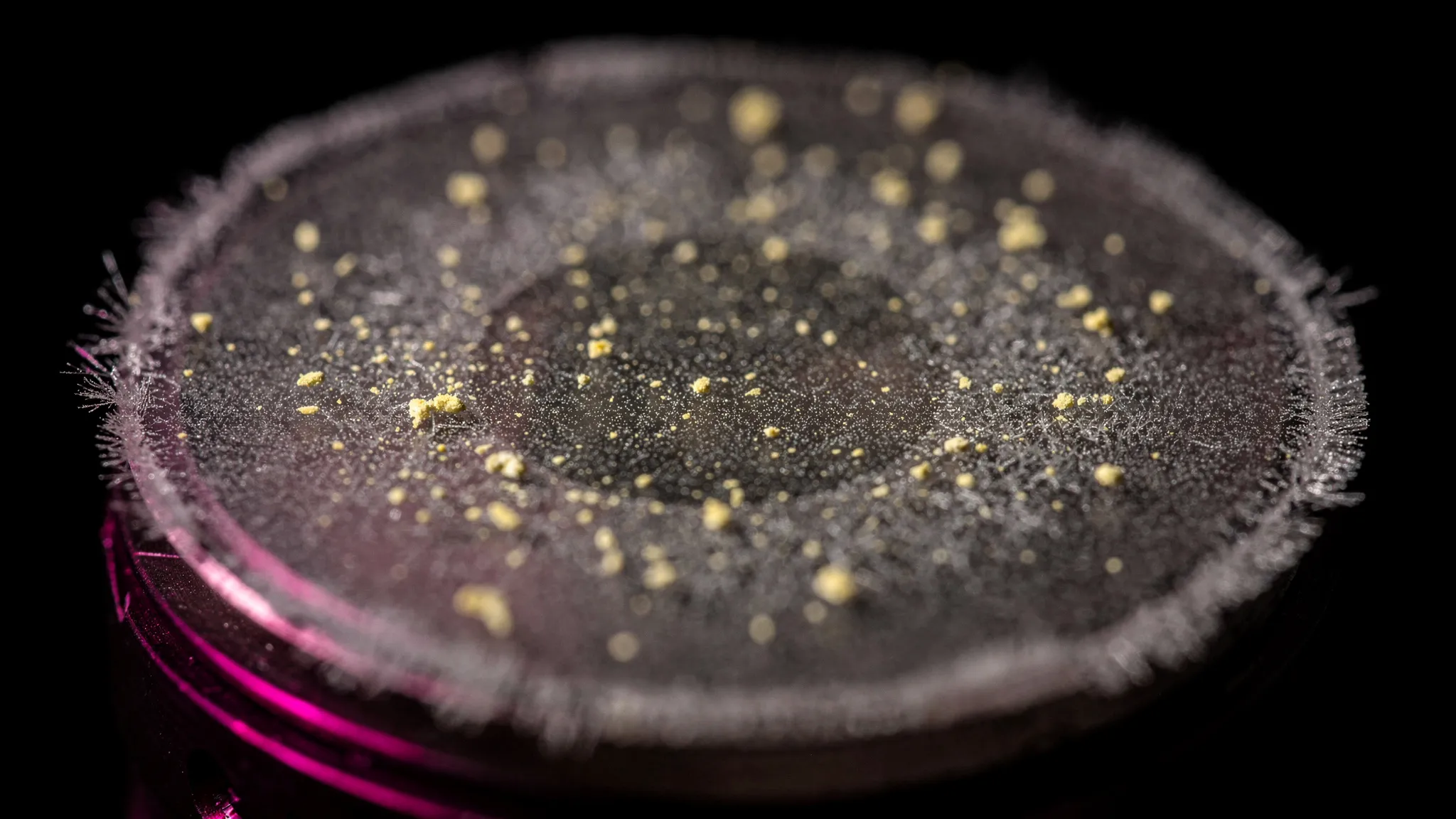
    SPACE'S MISSING SULFUR MAY BE GLUED TO DUST

    A dark glassy silicate surface in a vacuum chamber, tiny pale yellow sulfur specks scattered on it, frost evaporating at the edges, magenta light.

    Sulfur is a common element in the universe. But in the cold clouds where stars are born, less than 5% of it shows up. Where is the rest?

    A Japanese-Spanish team recreated those conditions in a vacuum chamber at −263 °C. They made single sulfur atoms on a film of space-like dust, sometimes buried under ice.

    They warmed the dust to 180 K, then to room temperature. About half of the atoms stayed put, chemically bonded to the silicate. Even atoms dropped on ice dug their way down to it.

    In a model of a forming cloud, 10 to 20% of all sulfur gets stuck. Invisible to telescopes, it should only escape when shock waves heat the dust. JWST could check.

    Source: Thermally irreversible sulfur chemisorption on silicate grains as a major sulfur reservoir in molecular clouds, https://arxiv.org/abs/2609.37663

    PracetakEksperimen3 menit baca
  10. Ilmu hayati

    A ZAP OF COLD PLASMA CLEANS SEEDS — AND RESHUFFLES THEIR FUNGI

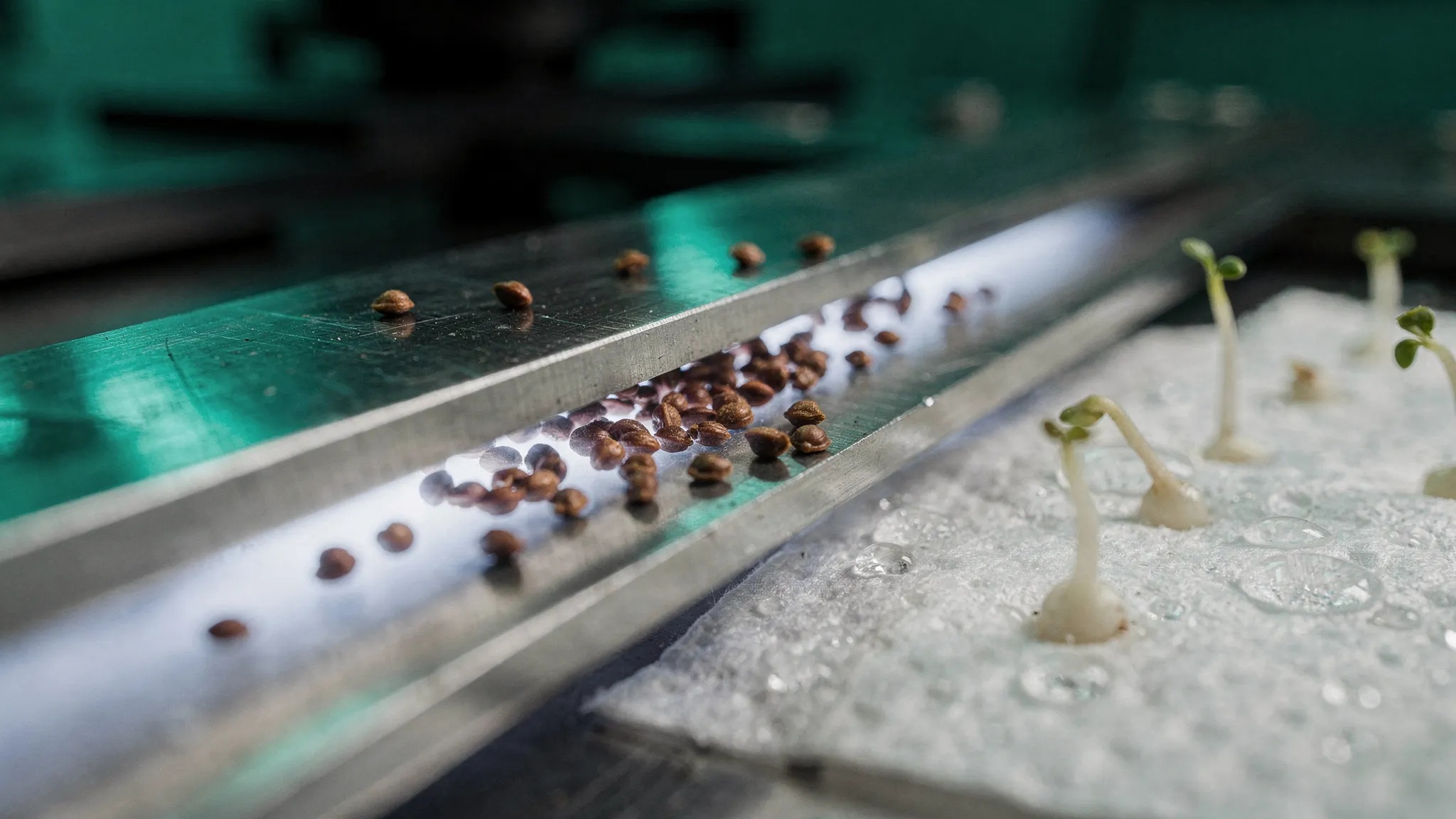
    Tiny brown seeds between two flat metal electrodes with a faint plasma glow, a few sprouting seeds nearby on moist paper, green light.

    Seeds carry their own microbes. Some help the plant, others make it sick. Farmers fight the bad ones with chemicals.

    A Paris team tried another weapon: cold plasma. It is electrified air, full of reactive molecules, yet close to room temperature. They zapped seeds of the lab plant Arabidopsis for 5 or 15 minutes.

    Untreated, up to 100% of the seeds grew mould, depending on the batch. After 5 minutes of plasma, almost none. After 15, none at all. Every batch still sprouted fully, at the same speed.

    The surprise came later. DNA tests on the seedlings showed a reshuffled fungal community. The dominant Penicillium faded in some batches, and other fungi took its place. Cleaning a seed also decides who moves in next.

    Source: Cold atmospheric plasma decontaminates Arabidopsis thaliana seeds and remodels seedling fungal microbiota, https://arxiv.org/abs/2609.37222

    Ditelaah sejawatEksperimen3 menit baca
Legal notice