عدد 28 سبتمبر 2026

  1. الفيزياء

    A STRANGE HIT IN A DARK MATTER TRAP

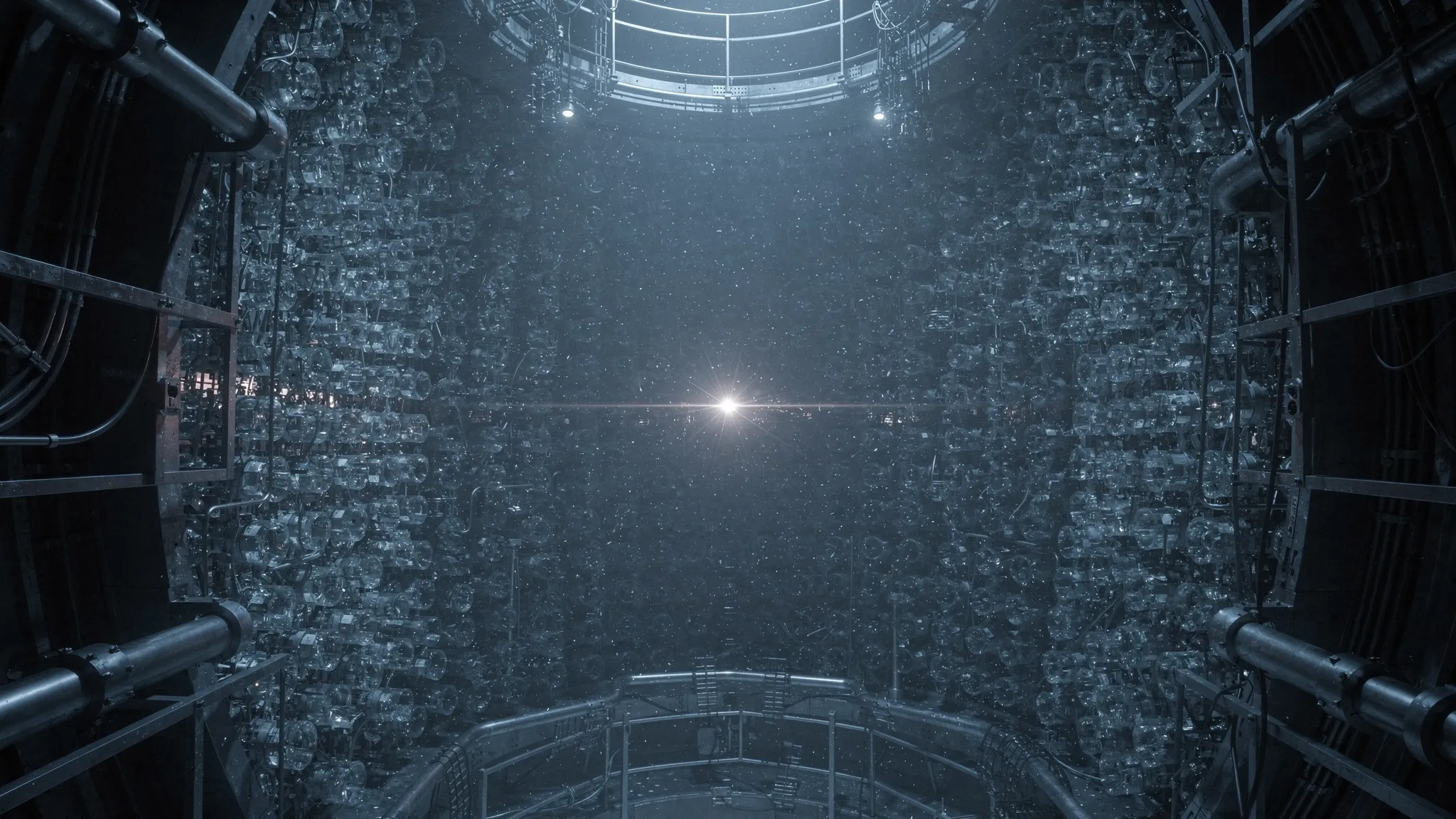
    Inside a large cylindrical detector lined with rows of photomultiplier tubes, a single tiny flash of light in the dark.

    Deep underground, the LZ detector waits for dark matter to bump into a xenon atom. It recently recorded one single, unexplained hit, at 248 kiloelectronvolts. Its significance is intriguing, not a discovery.

    The blow was far too strong for ordinary dark matter. Unless it weighs over 74 times a proton — an option already largely ruled out.

    One idea: tiny black holes born after the Big Bang, slowly evaporating. They would spray out very fast, light particles. A physicist in India ran the numbers.

    Verdict: impossible. Such black holes would also cause many small hits, and LZ saw none. Bonus: at most a millionth of dark matter can be this kind of black hole.

    Source: Limits on Primordial Black Hole Evaporation from LUX-ZEPLIN, https://arxiv.org/abs/2609.29462
    نسخة أوليةنظريةمدة القراءة: 3 د
  2. الفضاء والفلك

    THE MOST POWERFUL RADIO GALAXY EVER FOUND

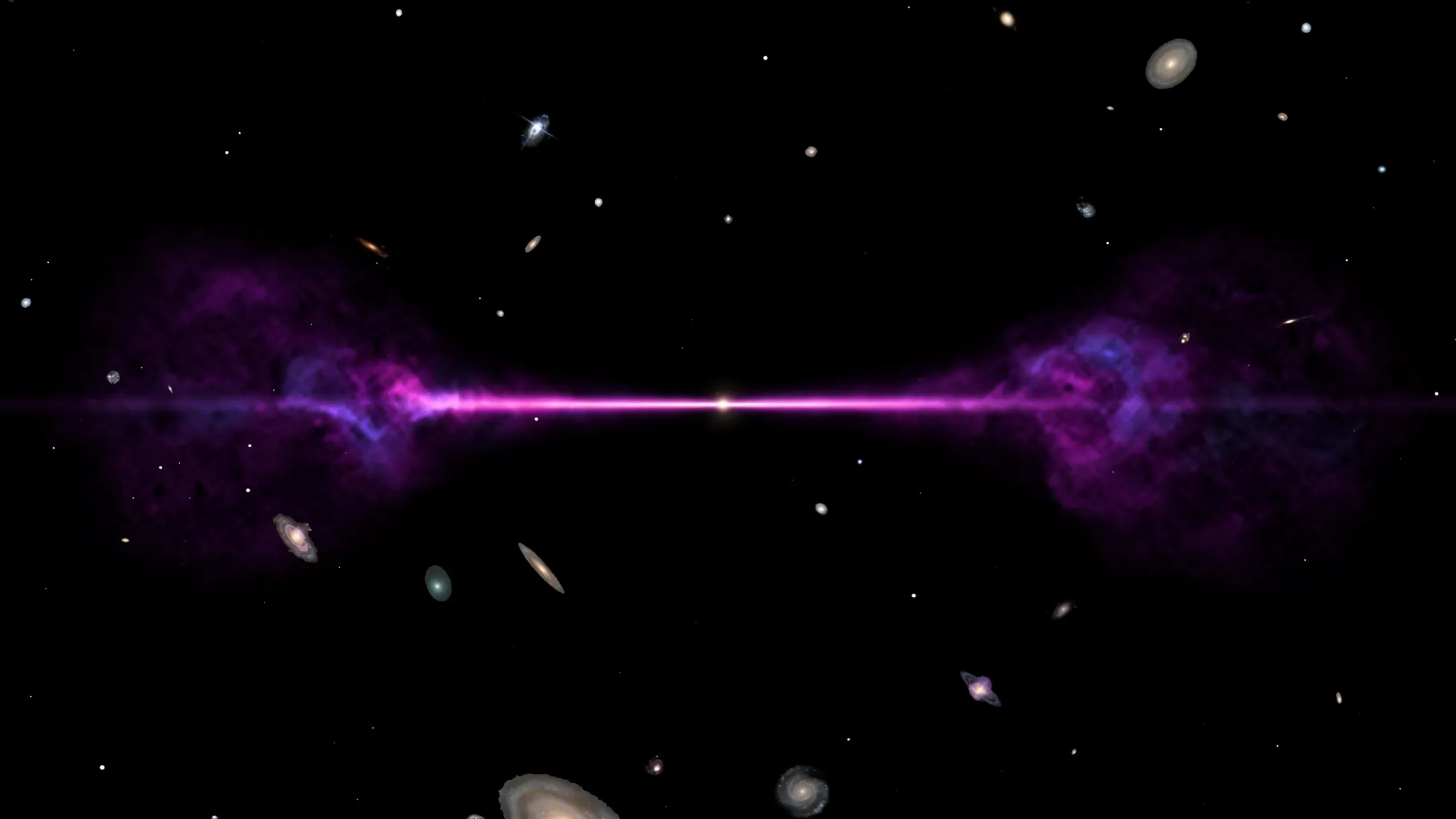
    False-colour radio image of a distant galaxy: a bright core with two long straight violet jets ending in wide diffuse lobes.

    At the heart of some galaxies, a giant black hole shoots jets of matter across space. Seen by radio telescopes, these are radio galaxies.

    An Italian-led team hunted for the most distant ones. Using the VLT in Chile, they confirmed one: TXS 2354+015, at redshift 4.946.

    At 500 megahertz, it emits 6.2 × 10²⁹ watts per hertz. That is about twice the previous record. It is now the most powerful radio galaxy known.

    It is also the second most distant ever found. Most of these monsters hide behind dust. Many more may be waiting. The team's method, based on how early galaxies vanish in some colours, finds them where the classic radio test fails.

    Source: The quest for high-redshift radio galaxies II. Discovery of the most powerful known radio galaxy at z=4.946, https://arxiv.org/abs/2609.28632

    نسخة أوليةرصدمدة القراءة: 3 د
  3. الفضاء والفلك

    TINY WHIRLPOOLS ON THE SUN

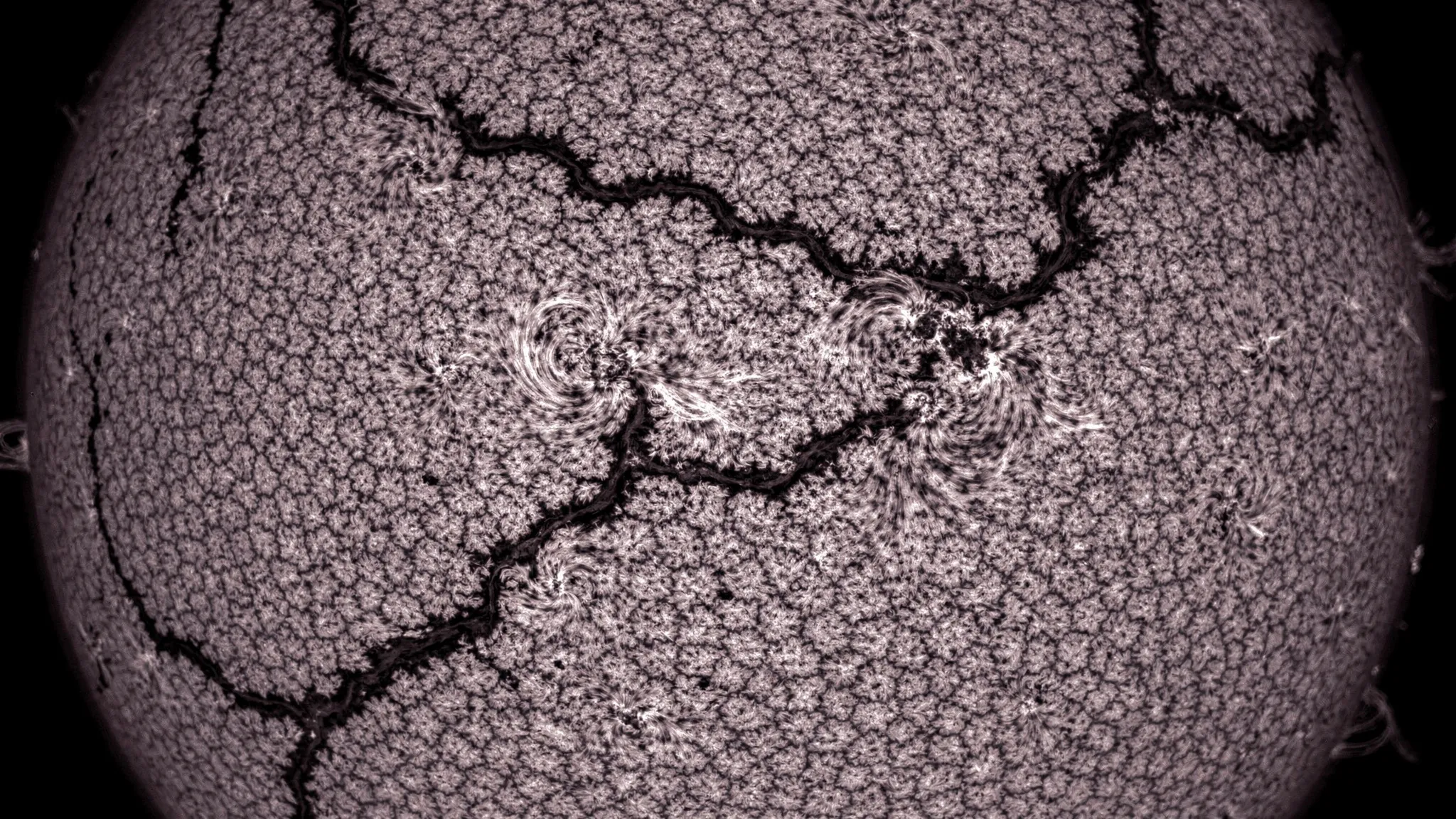
    Monochrome image of the Sun's disc covered in granulation, crossed by dark filament-like lines.

    The surface of the Sun boils. Cells of hot gas rise, cool and sink again. Simulations predicted tiny whirlpools in between. No telescope could see them. The sharpest earlier views reached about 150 kilometres.

    Until DKIST, the 4-metre solar telescope in Hawaii. It filmed a small patch of the Sun for 3.2 minutes, 740 images per second.

    Result: 201 whirlpools detected. Their typical width: 38.6 kilometres. More than 99% are under 50. Each turns about once every 37 seconds.

    These whirlpools could carry energy upward and help heat the Sun's atmosphere. The team now wants to catch them higher up.

    Source: DKIST unveils MHD-predicted sub-50 km photospheric vortices, https://arxiv.org/abs/2609.30051

    نسخة أوليةرصدمدة القراءة: 2 د
  4. الفضاء والفلك

    40 MILLION BLACK HOLES WANDER OUR GALAXY

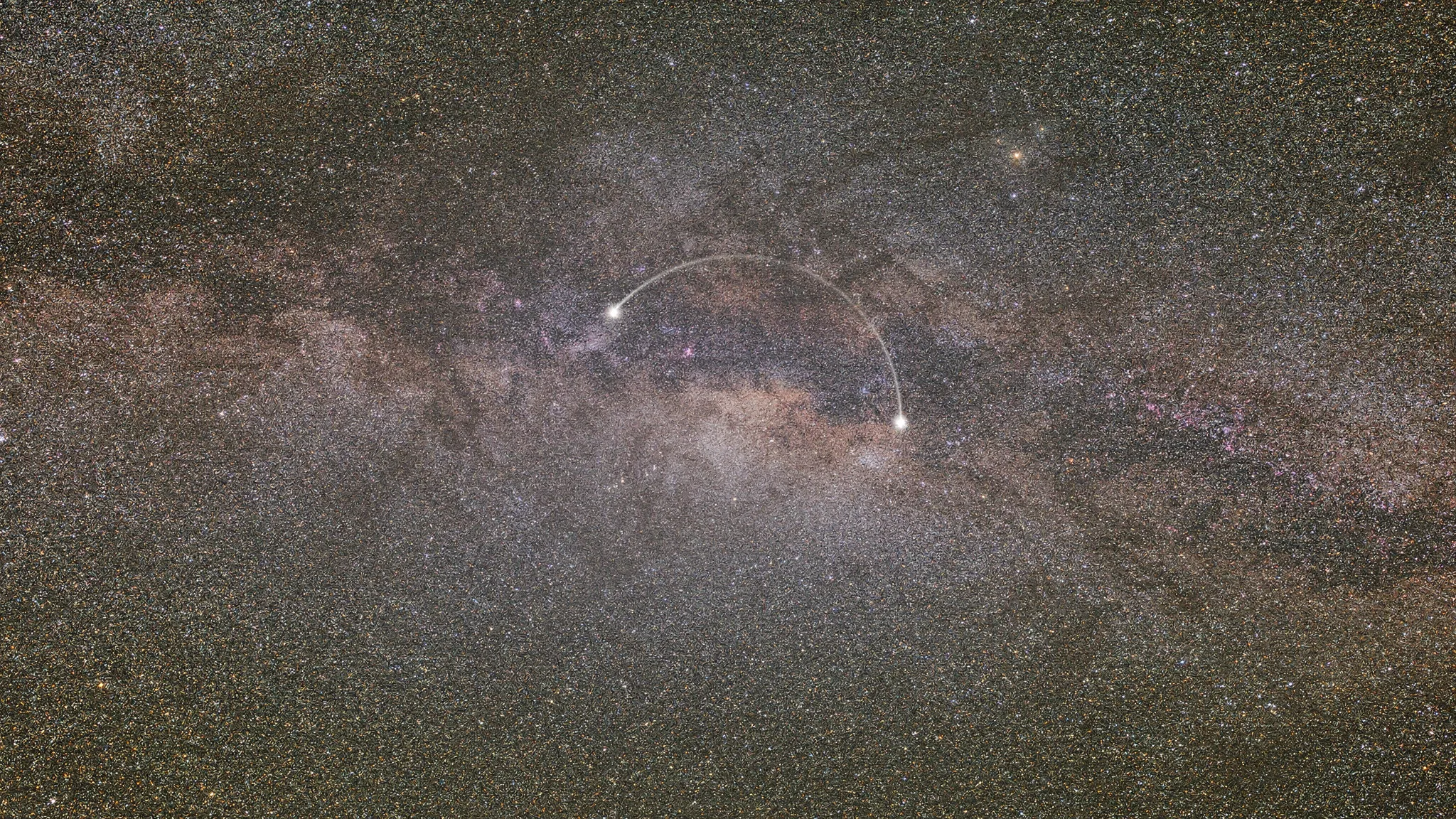
    A dense star field of the Milky Way, with a thin bright arc joining two stars near the centre.

    When a massive star dies, it can leave a black hole. Most of them drift alone through the Galaxy. Almost impossible to see. In our Galaxy, only about two dozen black holes are known, nearly all with a companion star.

    A team at Nanjing University built a simulation of the Milky Way's whole history: stars, couples of stars, explosions and orbits.

    Result: about 40 million lonely black holes. Around 80,000 lie within 1 kiloparsec of the Sun, roughly 3,300 light-years. So far, only one has been confirmed.

    How to find the others? They bend the light of stars behind them. The future Roman space telescope could catch hundreds of such events.

    Source: A Census of Stellar-mass Black Holes in the Milky Way with POPKIN. I. Isolated Black Holes, https://arxiv.org/abs/2609.29211

    نسخة أوليةمحاكاةمدة القراءة: 3 د
  5. الحوسبة والذكاء الاصطناعي

    AI SUMMARIES CAN REWRITE YOUR MEMORY

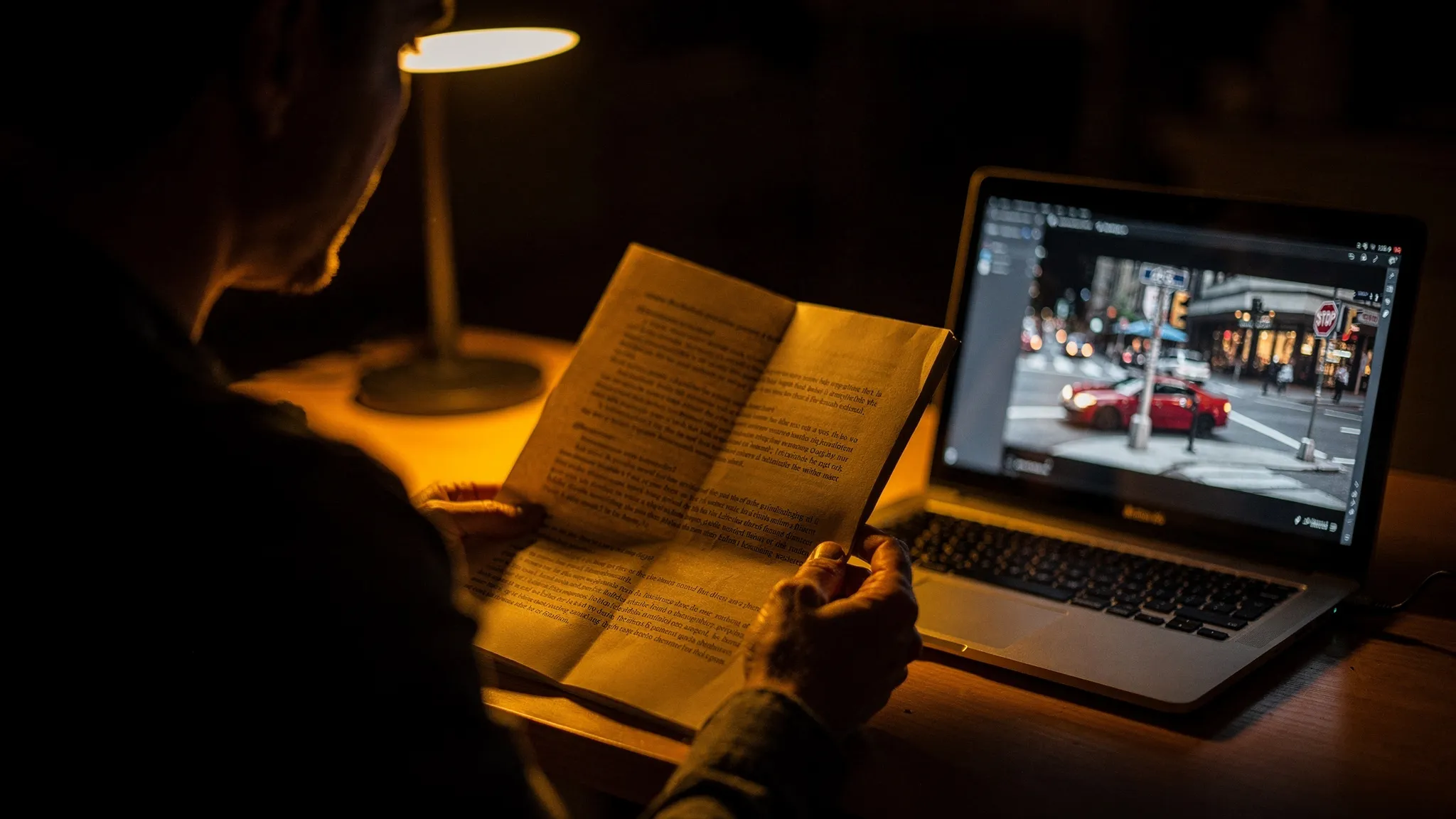
    A person reads a printed page under a desk lamp at night, beside a laptop showing a paused street scene with a red car.

    AI now writes police reports from bodycam footage. A human is supposed to catch its mistakes. But what if the mistakes change the human?

    Researchers asked ChatGPT and Gemini to summarise a 25-second video of a car hitting a pedestrian. 19 out of 20 summaries left out the collision itself.

    Then 328 people watched the video. A day later, they read a summary naming the wrong traffic sign. Only 44.8% still remembered the right one, versus 83.6% with a correct summary.

    Believing a human wrote it changed nothing. Neither did distrusting AI. Knowing that AI makes mistakes did not protect memory. The authors question the use of AI summaries in policing.

    Source: AI-Enabled Human Memory Manipulation: Misleading AI-Generated Summaries Distort Human Memory, https://arxiv.org/abs/2609.28820

    نسخة أوليةتجربةمدة القراءة: 3 د
  6. الكيمياء

    AN AI FINDS A WAY AROUND IRIDIUM

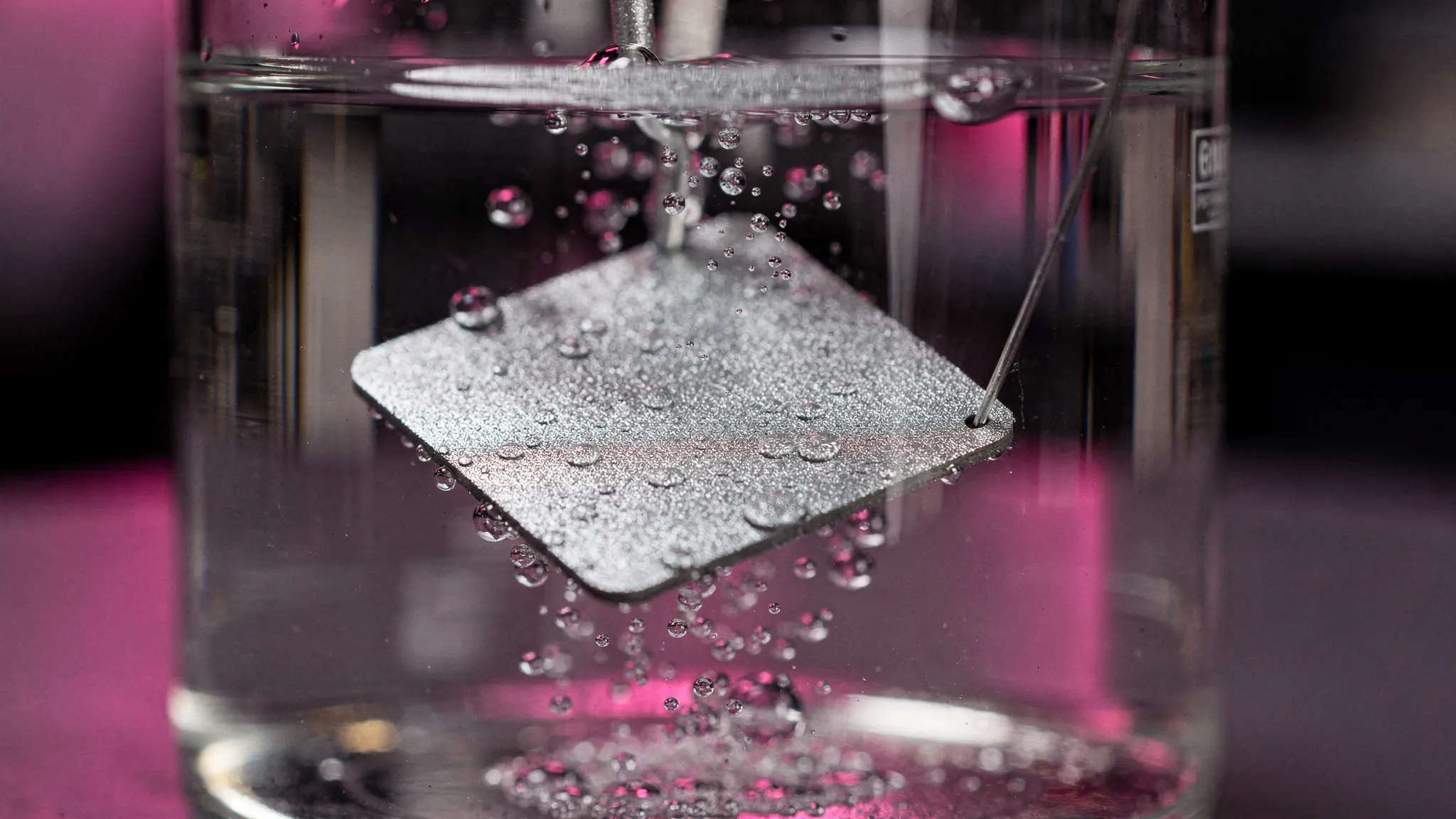
    Macro photograph of a small silvery coated wafer in clear acid, with tiny bubbles rising from its surface, in magenta light.

    To make green hydrogen, we split water. One key step only works with iridium or ruthenium. These metals are rare, with fragile supply chains.

    A US company built a robot lab steered by AI. It tested 2,942 materials made from 26 elements, about 240 per week. Humans only move the samples.

    Surprise: the winners are rich in palladium, a family nobody expected. The best one lasted 1,000 hours and kept 96% of its palladium.

    Palladium is also precious, but produced more than ten times more than iridium. A chatbot alone did worse than random at this search.

    Source: AI-guided high-throughput discovery of iridium- and ruthenium-free palladium-oxide catalysts for durable acidic oxygen evolution, https://arxiv.org/abs/2609.30133

    نسخة أوليةتجربةمدة القراءة: 3 د
  7. الفيزياء

    ONE SHEET, MANY ORIGAMI

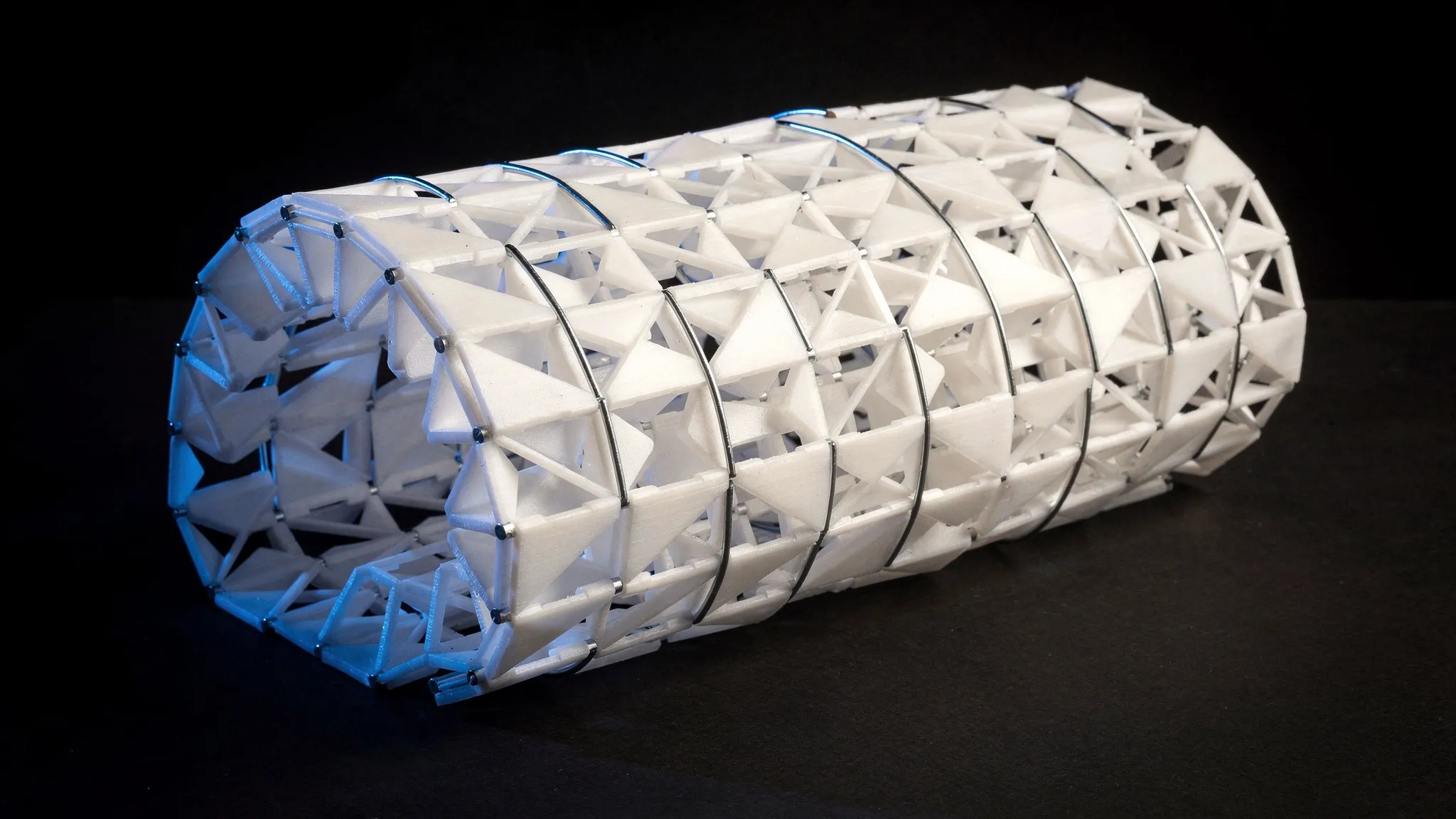
    A sheet of small white triangular panels folded into a cylinder, thin steel strips arched across its hinges, lit in blue.

    Crease a sheet of paper, and it remembers that fold forever. So one origami usually makes only one shape. Tiny motors at every hinge are one known fix.

    A team at Harvard slipped a steel strip, 0.05 mm thick, across each hinge. Squeezed, it bows up or down. Press it, and it flips.

    Each flip decides if a fold goes up or down. One sheet folds into a bird or a whale. Another into a box or a boat. A chain spells ORIGAMI.

    Some sheets even reprogram themselves when you fold their edges. One unfolds on its own when pulled. Another counts how often it has been squeezed.

    Source: Reprogrammable origami through bistable buckled hinges, https://arxiv.org/abs/2609.28790

    نسخة أوليةتجربةمدة القراءة: 3 د
  8. الفيزياء

    A CROWDED CRYSTAL THAT STAYS QUANTUM

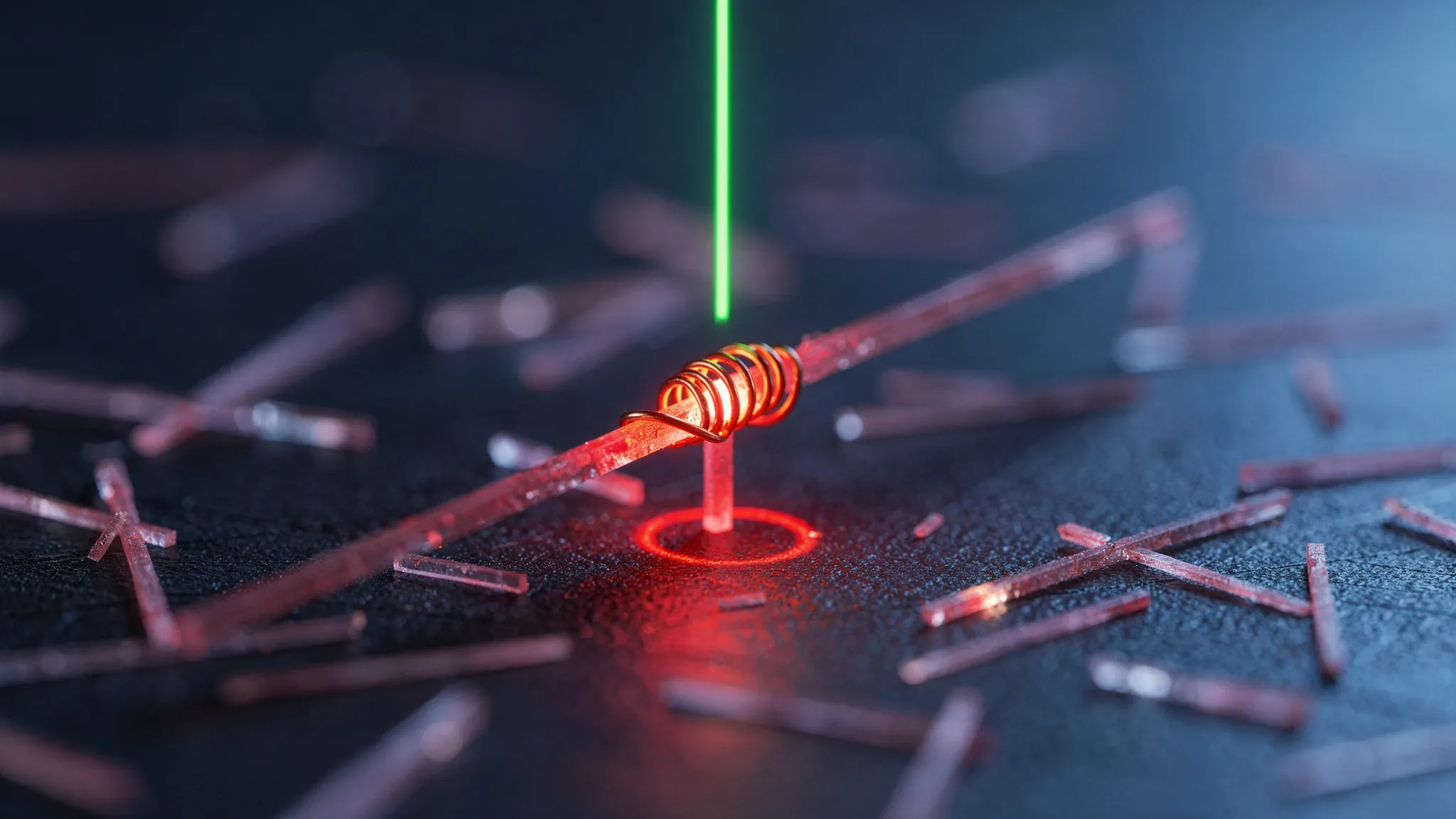
    Macro photograph of thin pink needle-shaped crystals on a dark surface; one needle glows red where a green laser beam hits it, inside a small copper coil.

    Quantum sensors use tiny magnets called spins to measure magnetic fields. The more spins you pack in, the more sensitive the sensor. In theory.

    In practice, crowded spins disturb each other. Their quantum state collapses too fast. So diamond sensors keep them rare, a few to tens of parts per million.

    A Berkeley-led team grew pink crystal needles where one molecule in three is a sensor. That is over 100 times denser than the benchmarks.

    At room temperature, the spins stay coherent for about a microsecond. The secret: a neighbour molecule that blocks their energy from hopping around. Next step: turning these needles into real magnetic sensors.

    Source: Dense pentacene cocrystal demonstrates room-temperature coherent control, https://arxiv.org/abs/2609.28912

    نسخة أوليةتجربةمدة القراءة: 3 د
  9. الأرض والمناخ

    DELIVERY DRONES WILL CHANGE WHERE CITIES ARE LOUD

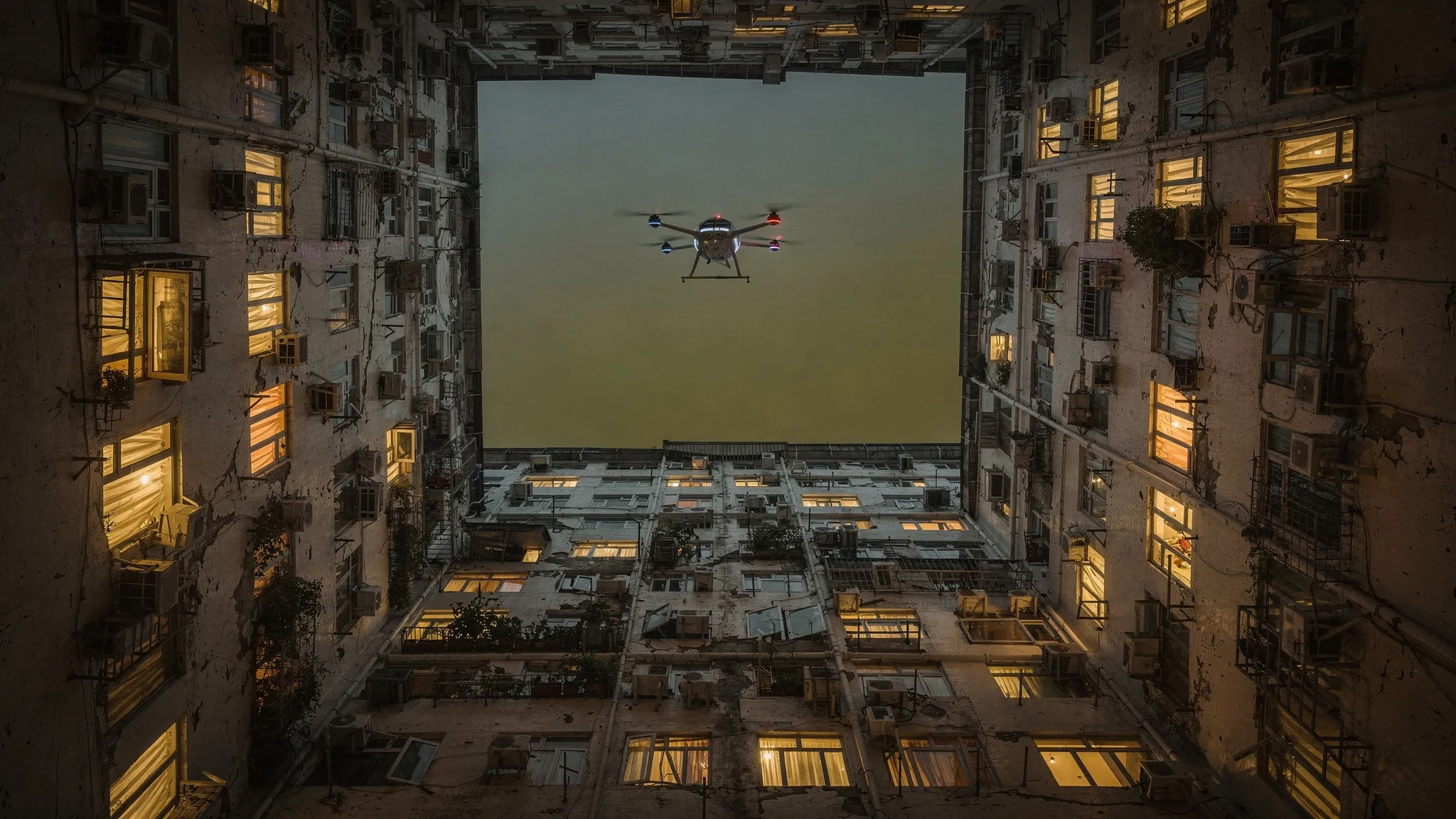
    View at dusk from the bottom of an enclosed courtyard between tall apartment buildings, looking up at a multirotor drone crossing the square of sky.

    Delivery drones and flying taxis are coming to cities worldwide. Their noise comes from above. Current noise rules were written for roads and airports. Yet drones seem to annoy people more than traffic at the same volume.

    Researchers in London simulated identical flights over ten cities, from Tokyo to Nairobi. Same route, 100 metres up, same traffic.

    On busy streets, the change was small: traffic already drowns it out. In quiet inner courtyards of London and New York, noise jumped by over 20 decibels.

    Upper floors can be louder than lower ones, near the flight height. The team says future routes must be checked in 3D.

    Source: Low-altitude aircraft will reshape noise exposure across global cities, https://arxiv.org/abs/2609.29763

    نسخة أوليةمحاكاةمدة القراءة: 3 د
  10. الرياضيات

    HOW MANY CARDS UNTIL THE FIRST ACE?

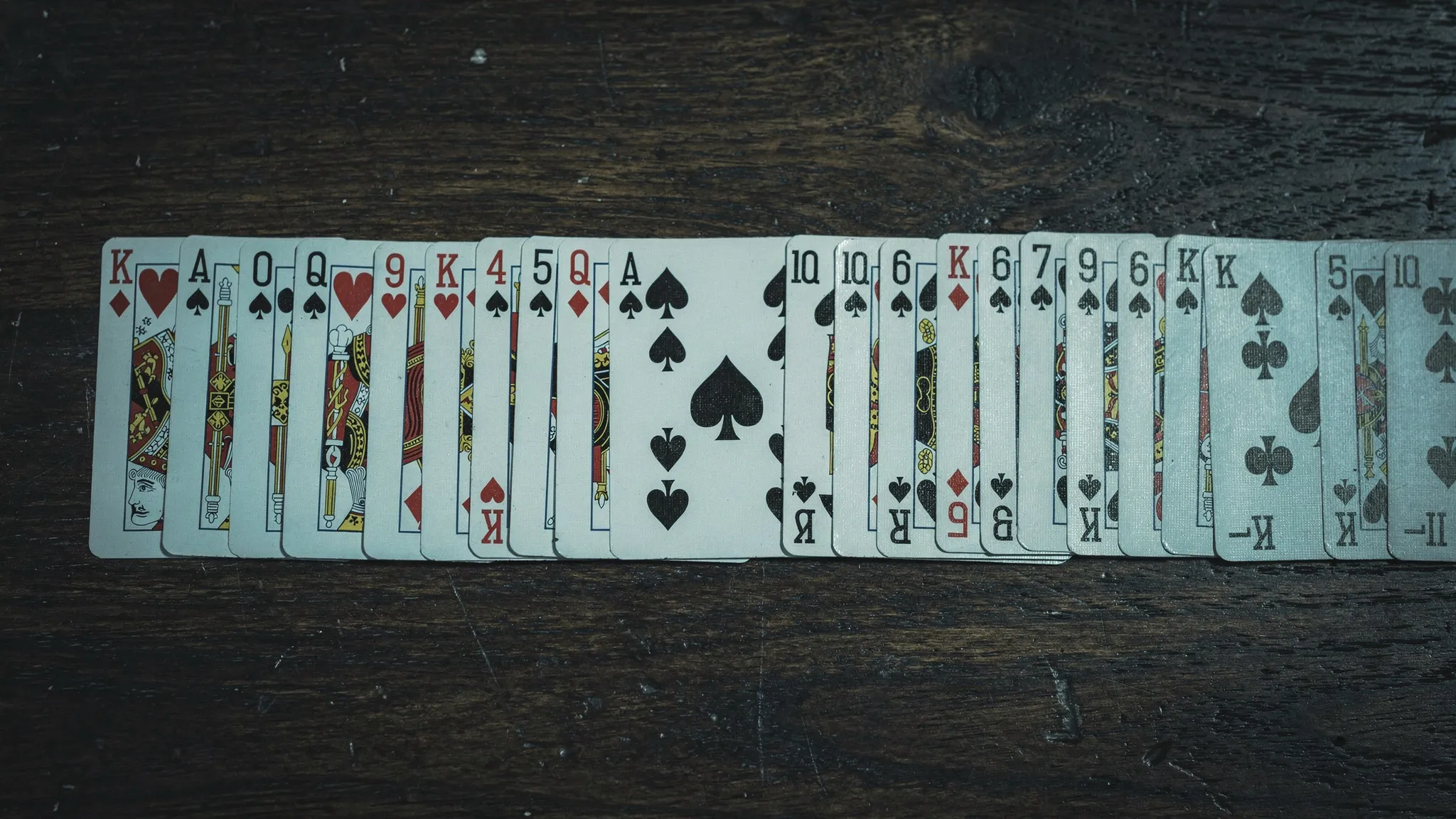
    Playing cards dealt face up in a long row on a dark wooden table, an ace of spades appearing among the first cards.

    Shuffle a 52-card deck. Turn cards over one by one until the first ace. How many cards, on average? Take a guess. It is a puzzle from a Norwegian statistics magazine.

    The answer: 10.6. A Norwegian statistician proves it several ways. The general formula is simple: cards plus one, divided by aces plus one.

    Even better: the four aces split the deck into five equal parts, on average. Each gap between aces behaves like the first one.

    Flip the question and it becomes useful. If the fifth left-hander in a room of 1,000 is the 50th person you meet, there are about 85.

    Source: How many cards, until the first ace: variations, extensions, lachrymae, confidence, Dirichlets, https://arxiv.org/abs/2609.29596

    نسخة أوليةنظريةمدة القراءة: 3 د
Legal notice