Edition of November 13, 2026

  1. At The Knowledge Frontier, we pick out the research papers of the day and explain them simply.

    The web has changed in nature. We no longer search, we scroll. Pages look alike, texts are churned out, and we end up reading a great deal without keeping any of it. Educating yourself there has become a strangely passive affair.

    Here, you do more than read. Every article ends with a quiz: a few questions on what you have just read. When the subject lends itself to it, it is an experiment — you set the values yourself and recover, in turn, the researchers' result.

    @VirScience
  2. Space & astronomy

    AN INVISIBLE COMPANION AT THE NEUTRON-STAR LIMIT

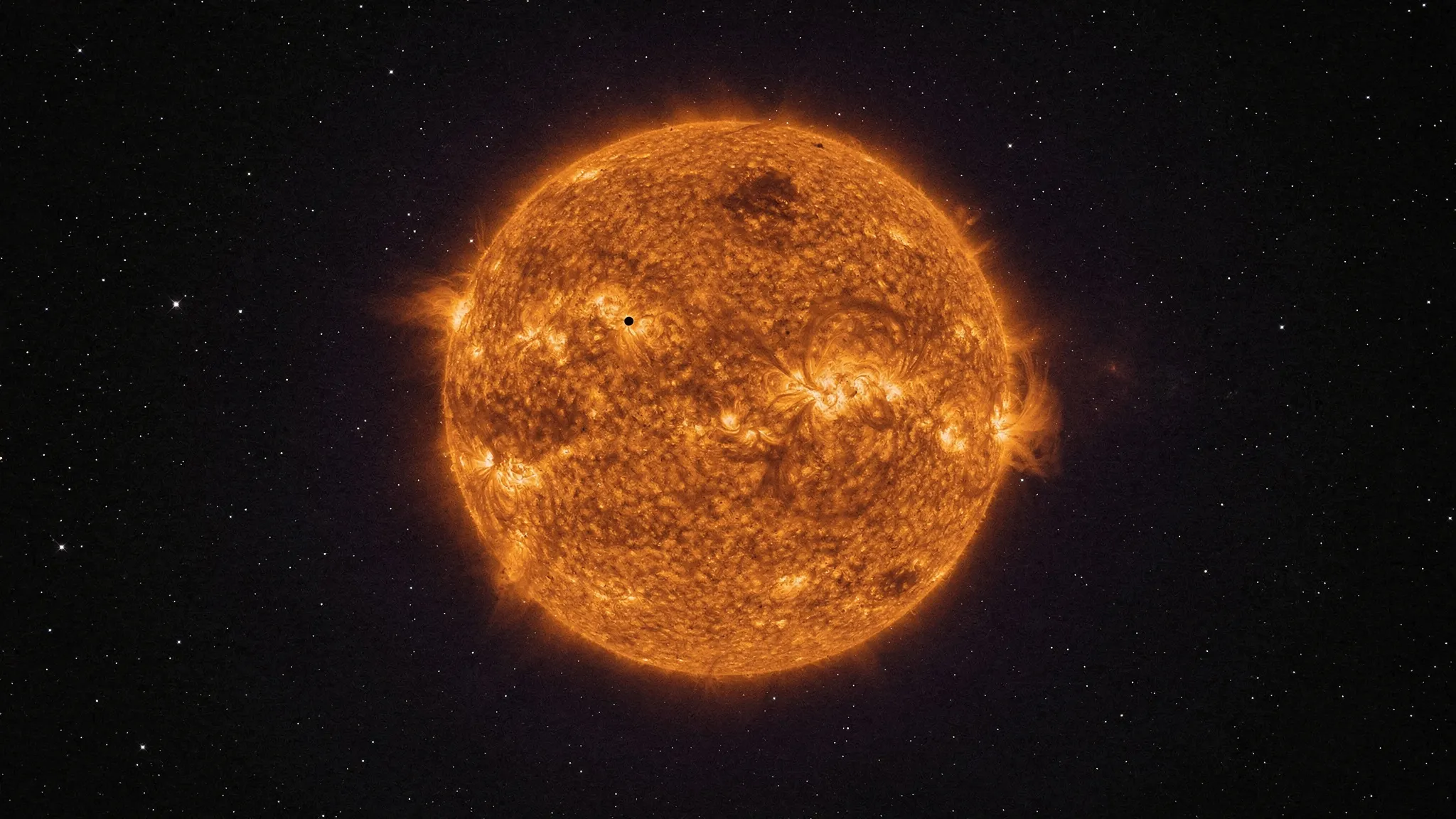
    A large orange giant star with a mottled, granular surface glowing alone against a sparse field of small white stars.

    A red giant star sways back and forth in space. One full loop takes 1,218 days. Something invisible is pulling it around.

    A team based mostly in China tracked its speed in 27 spectra. They span twelve years. Gaia's position measurements added the tilt of the orbit: about 73 degrees.

    The hidden partner weighs about 2.2 Suns. Theory caps neutron stars between 2.15 and 2.3 Suns. Yet it gives off no light of its own, no X-rays and no radio pulses.

    So what is it? Perhaps a record-heavy neutron star, or a very light black hole. Its wide, nearly round orbit is a second puzzle. No simulated binary in the team's search reproduced it. Its birth explosion must have been remarkably gentle.

    Source: Discovery of a likely supermassive neutron star in a remarkably wide binary, https://arxiv.org/abs/2611.14998
    PreprintObservation🧪 Experiment
  3. Earth & climate

    EARTH'S MANTLE POINTS TO A SMALL THEIA

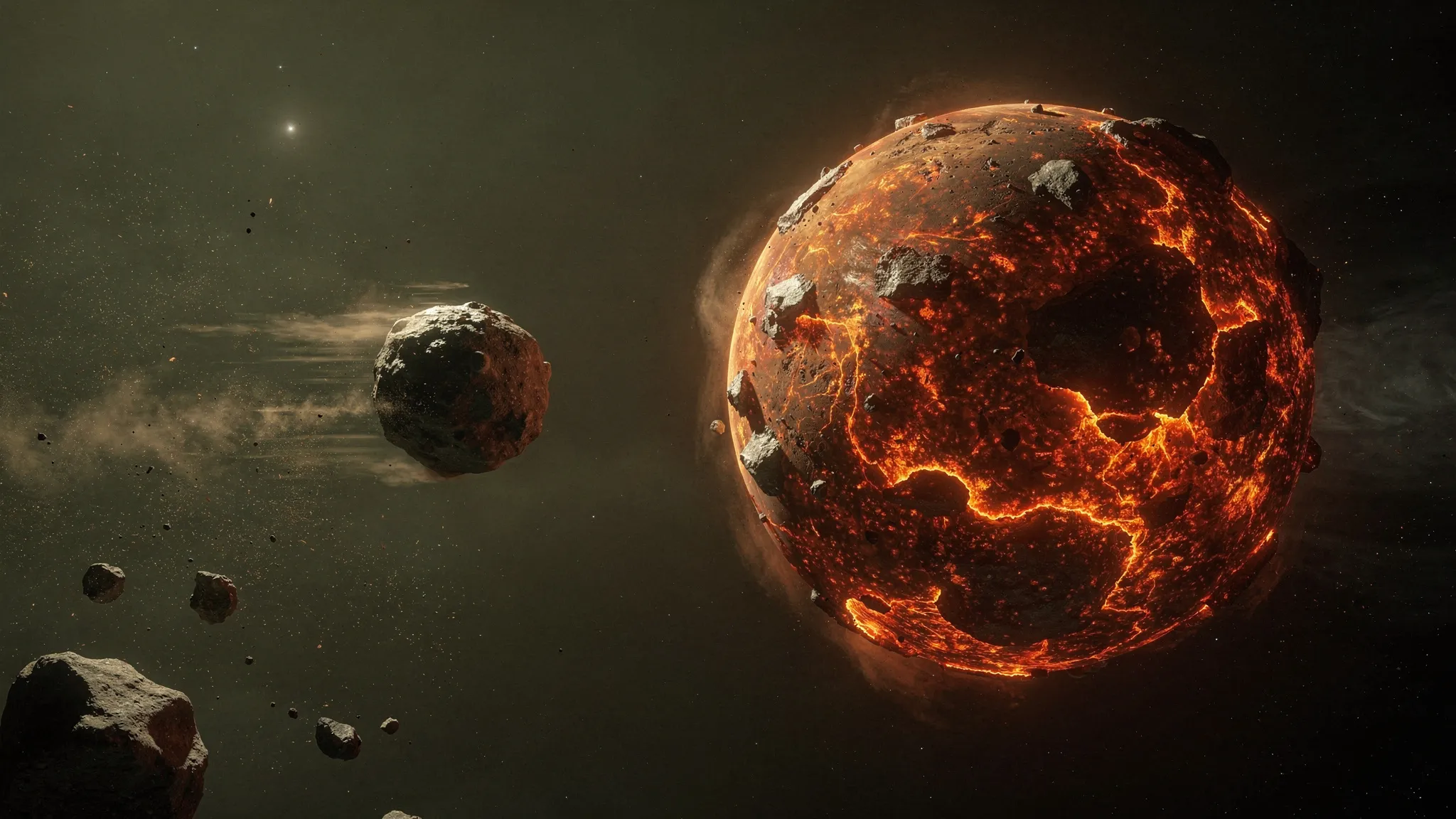
    A rocky body and a scattering of smaller rocks drifting towards a molten planet whose dark crust is cracked by glowing orange lava.

    How did Earth grow, and what hit it to make the Moon? A team at Michigan State University asked the rocks of Earth's mantle.

    They rebuilt 164 Earths from published planet-formation simulations. Every scenario could produce the right mantle, on one condition. Earth had to swallow more and more oxidized rock as it grew. In such rock, iron is bound to oxygen rather than metallic.

    The order matters. Start with oxidized rock and finish with metal-rich rock, and the mantle goes wrong. Excess iron oxide cannot be removed later.

    That is a strong clue about Theia, the body whose impact made the Moon. A small Theia could be metal-rich or very oxidized. A Theia as big as the young Earth would need Earth's own chemistry. The best Earths came from a small Theia.

    Source: Earth accreted increasingly oxidized material as it grew constraining Theia to be small and relatively oxidized, https://arxiv.org/abs/2611.14842

    Peer-reviewedSimulation❓ Quiz
  4. Space & astronomy

    A SPINNING STAR LEAVES A SLOWER BLACK HOLE

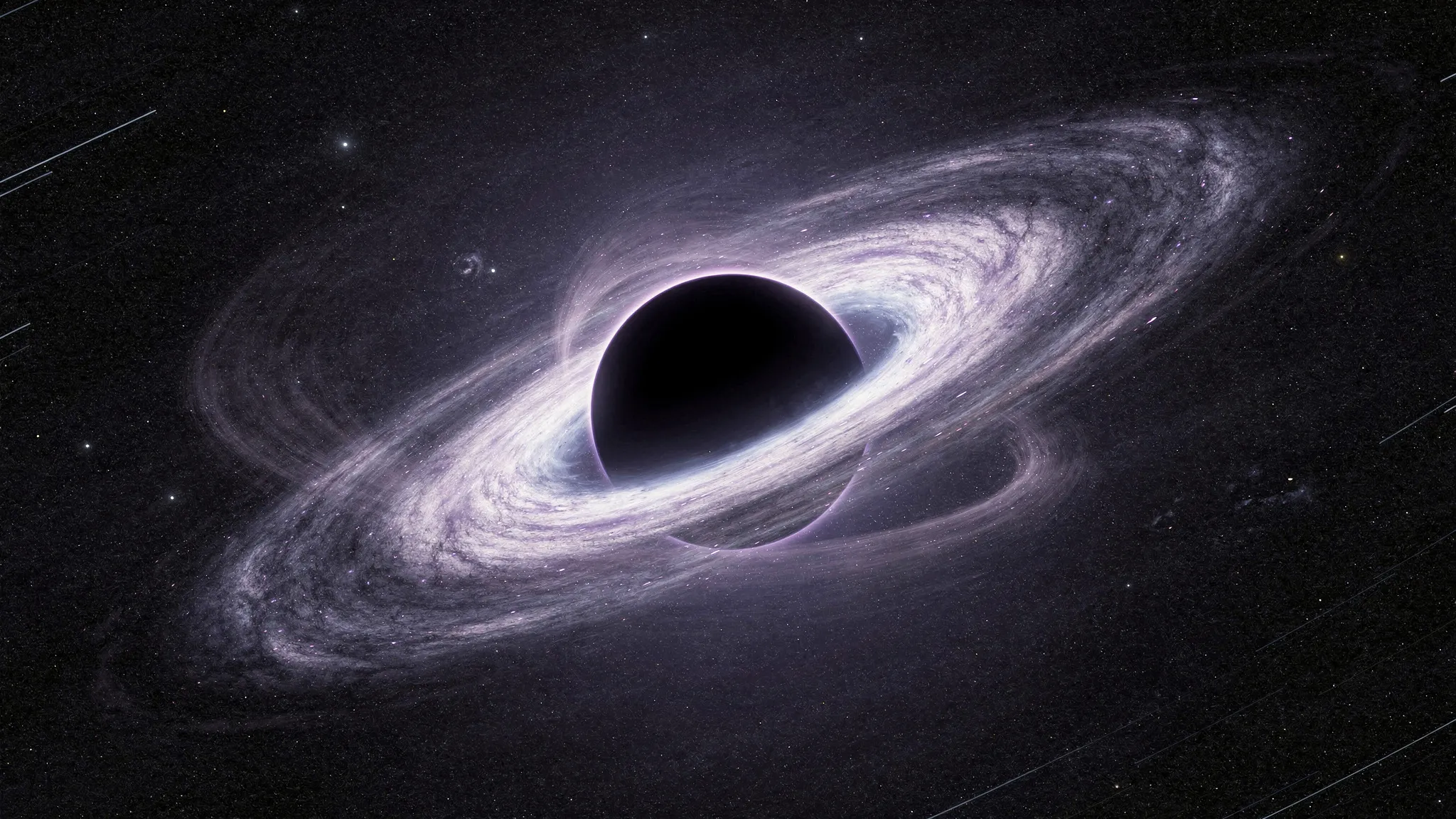
    A black disc at the centre of a wide swirling spiral of pale blue glowing matter, against a dark starfield.

    When two black holes merge, their spins add up. Faster partners make a faster-spinning final black hole. This has been known for almost twenty years.

    A team in Frankfurt simulated black holes swallowing neutron stars of similar mass. In 16 virtual mergers on supercomputers, the opposite happened. The faster the star spun, the slower the final hole turned.

    The reason: a fast-spinning star breaks apart farther out. Much of its spin leaves with flung-out matter and a disk. With equal masses, the final spin drops from 0.84 to 0.76. Zero would mean no rotation.

    This changes what telescopes may one day see. Any jet would be dimmer, and the kilonova, light from the ejected matter, brighter. Models that treated these mergers like black-hole pairs need revising.

    Source: Spins do not add: why rotating stars do not help spin-up black holes in binaries, https://arxiv.org/abs/2611.14610

    PreprintSimulation❓ Quiz
  5. Physics

    TINY ROBOTS THAT SNAP TO LIFE IN SUNLIGHT

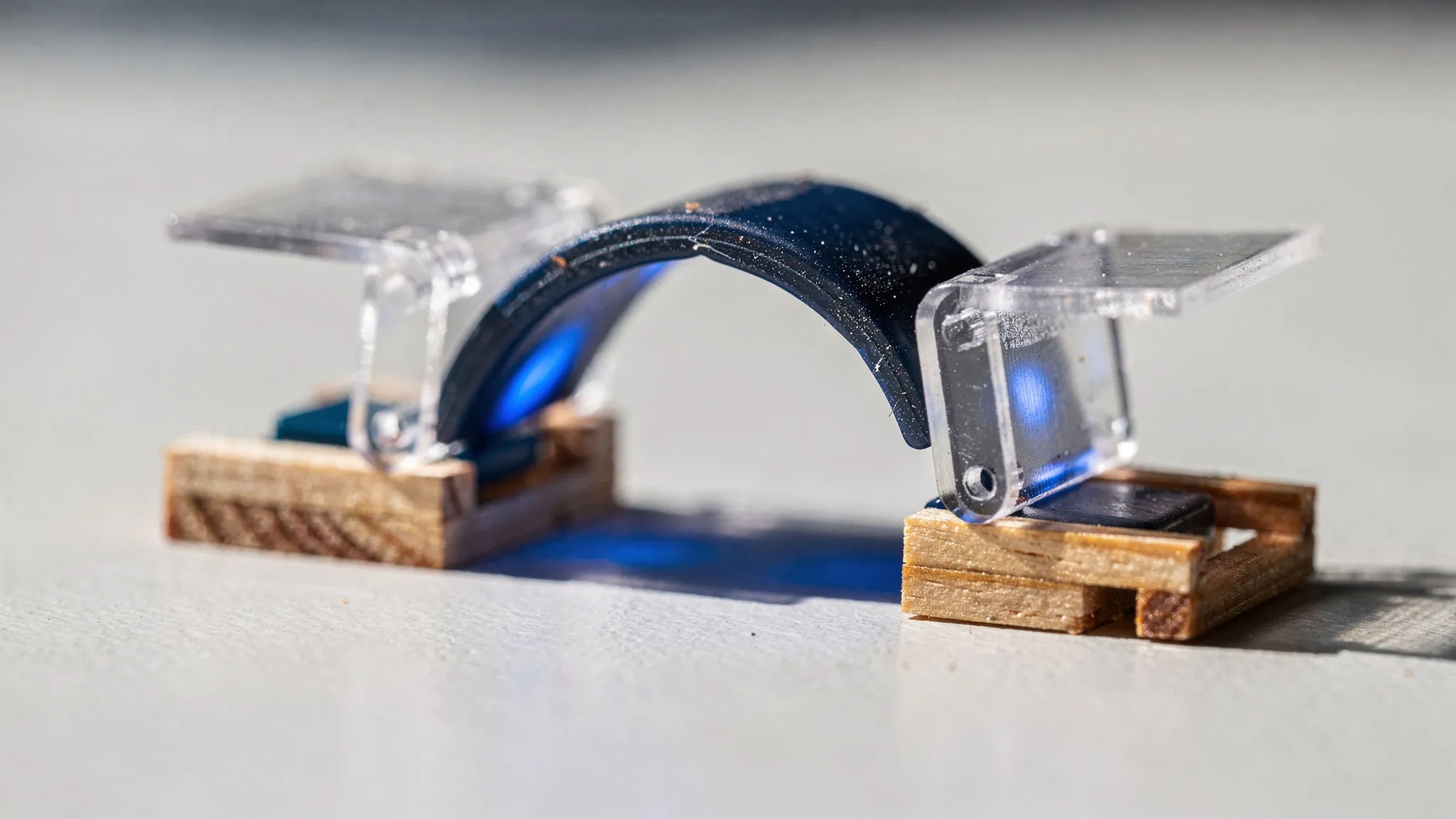
    A tiny robot on a pale surface: a curved dark strip arched between two clear plastic flaps on a small wooden frame, lit in blue.

    A Venus flytrap stores energy slowly, then snaps shut in an instant. A team from Yale and UC Davis copied the trick. Their robots weigh less than a gram.

    A strip of light-sensitive rubber warms up under light and contracts. It slowly bends a curved beam until the beam snaps. Shutters then shade the strip, it cools, and the cycle restarts by itself.

    At less than twice the Sun's strength, the snap peaks at 89 watts per kilogram. No battery, no wire, no electronics.

    The robots swim, crawl and jump. The swimmer covers more than three body lengths per cycle. The jumper hops more than 20 times in a row. Earlier light-powered jumpers needed more than six Suns of light.

    Source: SunLightBots: Turning sunlight into self-sustained, high-power motion in soft robots, https://arxiv.org/abs/2611.14729

    PreprintExperiment❓ Quiz
  6. Chemistry

    TWO LASER BUBBLES, ONE JET, AND CRYSTALS APPEAR

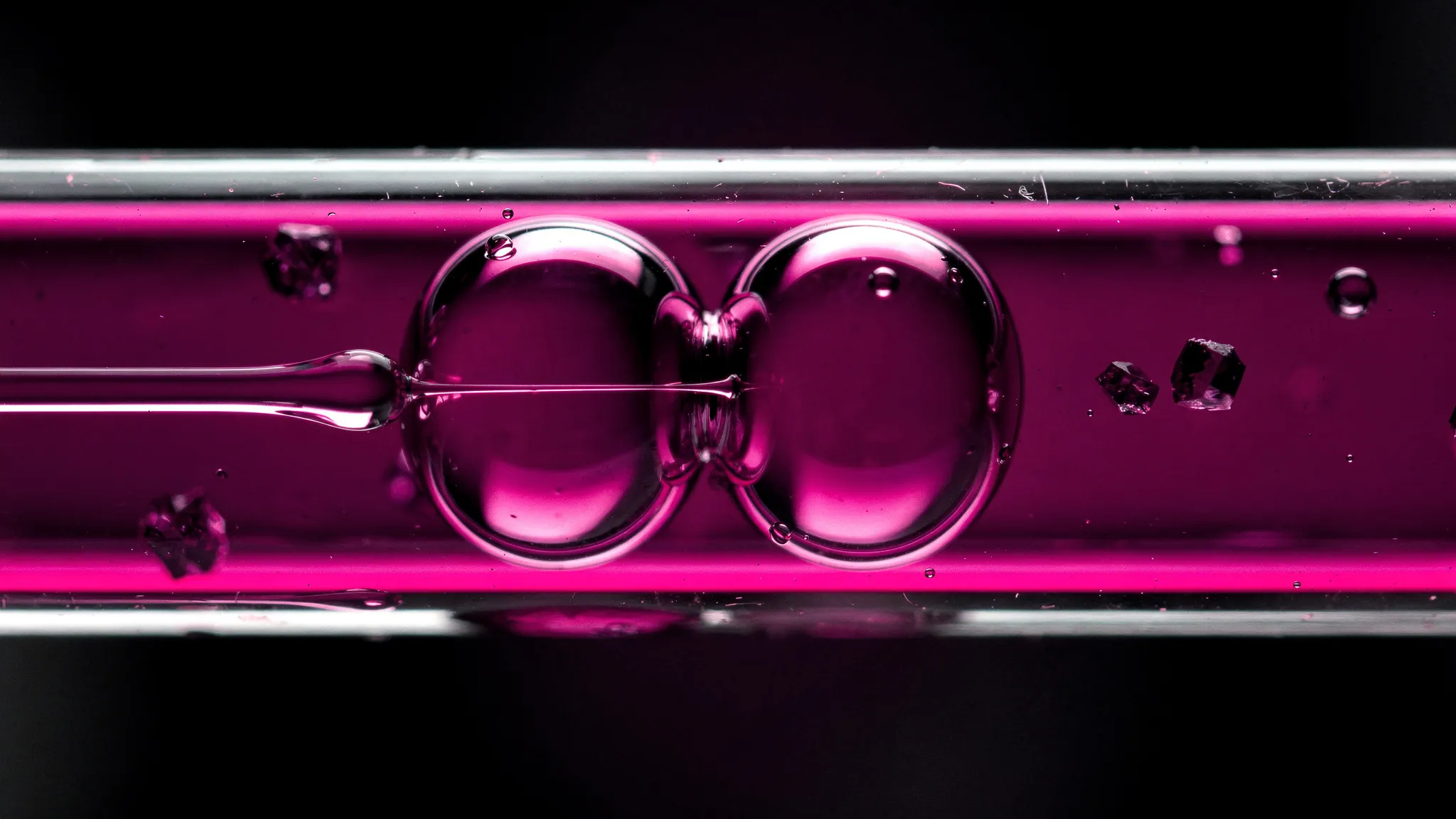
    Two round bubbles side by side inside a glass tube of magenta liquid, a thin jet of liquid streaming out from one of them, with small dark crystals nearby.

    Fire one laser pulse into a tube of overloaded salt solution. A vapour bubble swells, then fades. No crystals form, even with twice the energy.

    Now fire a second pulse when the first bubble reaches full size. The new bubble drives a tiny liquid jet through the first one. It moves at several metres per second.

    Within seconds, crystals of potassium permanganate appear in the tube. A team from Delft and Utrecht in the Netherlands found the rule. The faster the jet, the likelier the crystals.

    Why does it work? The team proposes that the jet violently shears the liquid. Yet its own numbers suggest shear alone is too weak for such tiny seeds. Two other effects may lend a hand.

    Source: Crystal Nucleation Driven by Microjets from Hydrodynamically Interacting Thermocavitation Bubbles, https://arxiv.org/abs/2611.15259

    PreprintExperiment❓ Quiz
  7. Life sciences

    46,000 ENZYMES THAT COULD BREAK OUR ANTIBIOTICS

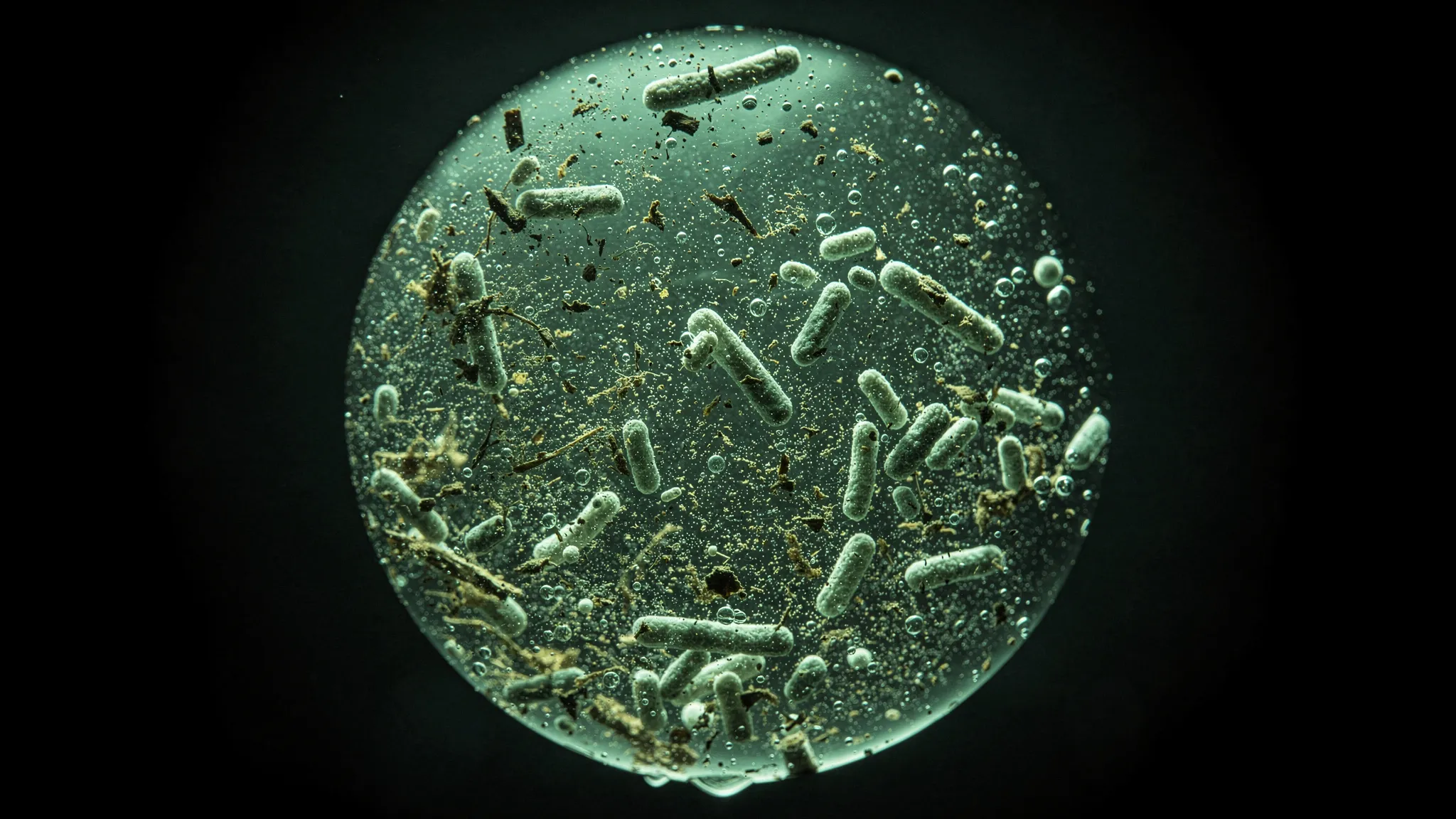
    A round drop of murky green water seen through a microscope, filled with pale rod-shaped bacteria and small specks of debris.

    Bacteria resist penicillins with enzymes that cut the drug apart. Nearly 1,800 of them have been characterised in the laboratory.

    A team in Zhuhai, China, searched a huge database of DNA taken from the environment. Their model flagged more than 46,000 candidate enzymes of this kind. They come from sewage, rivers, oceans, sediments and human gut samples.

    Two of those candidates then went to the lab for testing. They share only about 30% of their sequence with known enzymes. Put into the bacterium E. coli, both made it resist several penicillins.

    Then two more models proposed single-letter changes in those enzymes. One change handed its enzyme a brand-new power. It gained resistance to carbapenems. The known reference enzyme barely resisted those.

    Source: Deep learning-guided discovery reveals the diversity and mutational potential of environmental beta-lactamases, https://arxiv.org/abs/2611.14568

    PreprintData analysis❓ Quiz
Legal notice