Edition of November 16, 2026

  1. At The Knowledge Frontier, we pick out the research papers of the day and explain them simply.

    The web has changed in nature. We no longer search, we scroll. Pages look alike, texts are churned out, and we end up reading a great deal without keeping any of it. Educating yourself there has become a strangely passive affair.

    Here, you do more than read. Every article ends with a quiz: a few questions on what you have just read. When the subject lends itself to it, it is an experiment — you set the values yourself and recover, in turn, the researchers' result.

    @VirScience
  2. Physics

    ONE KAON IN TEN BILLION

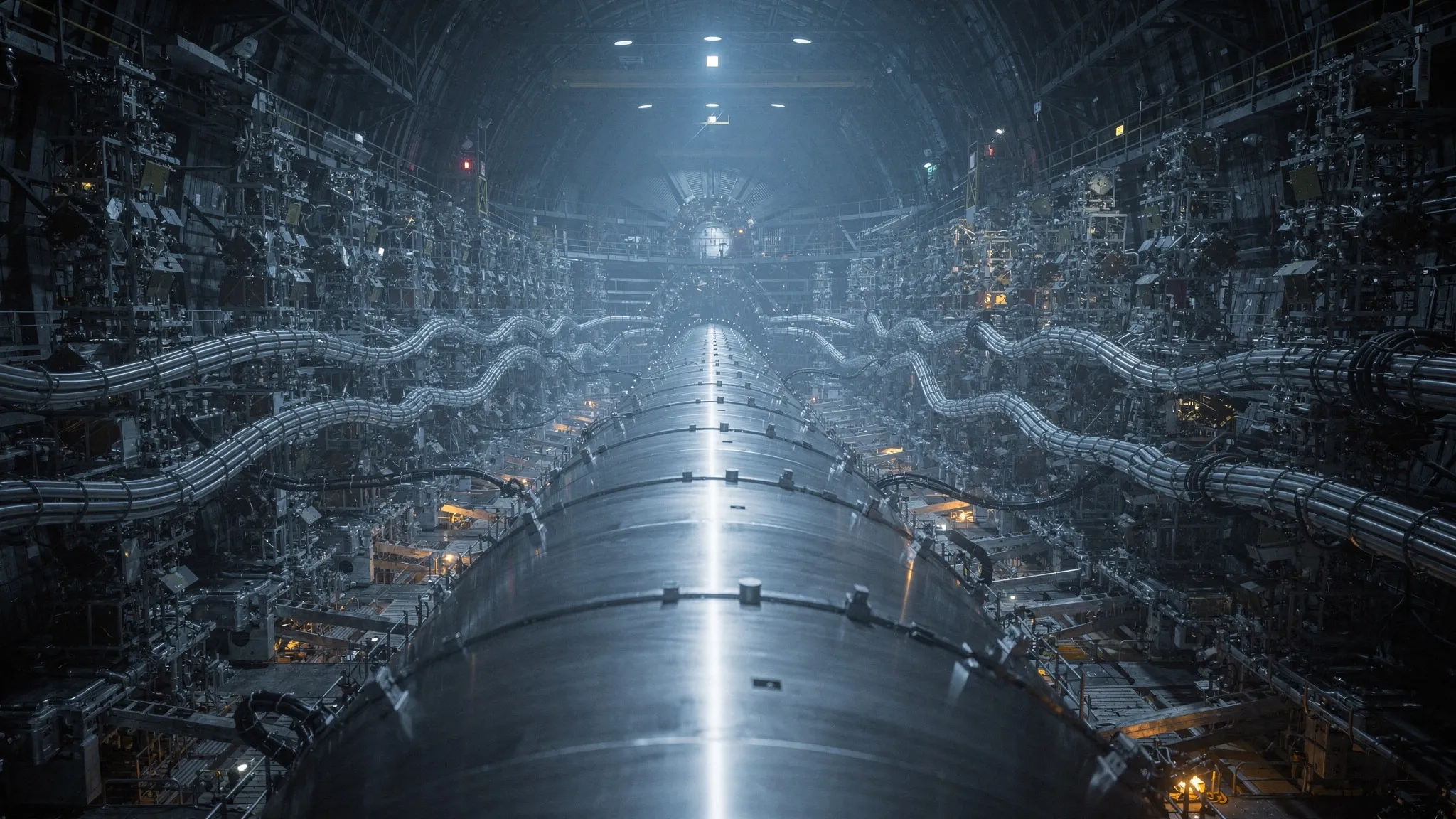
    Long steel vacuum tank stretching down the middle of a dark particle physics hall, flanked by dense detector scaffolding and cables in cold blue light.

    A kaon is a subatomic particle. Very rarely, it turns into a pion and two neutrinos. Theory predicts about 8 such decays per 100 billion. Any gap between theory and measurement could reveal new physics.

    At CERN, the NA62 experiment sends a beam in which 6% of particles are kaons. They decay inside a 65-metre vacuum tank. The neutrinos escape unseen. After the decay, only the pion leaves a track, and nothing else.

    Between 2016 and 2024, the team counted 84 candidate events. About 30 were expected from background processes that mimic the signal. The measured rate: 9.6 per 100 billion. That is compatible with the prediction.

    The uncertainty is now 20%. This year, 2026, is NA62's last of data taking. The full analysis should bring it down to 15%.

    Source: New measurement of BR(K⁺→π⁺νν̄) at the NA62 experiment, https://arxiv.org/abs/2611.16530
    PreprintExperiment❓ Quiz
  3. Medicine & health

    YOUR BREATH CROSSES THE ROOM

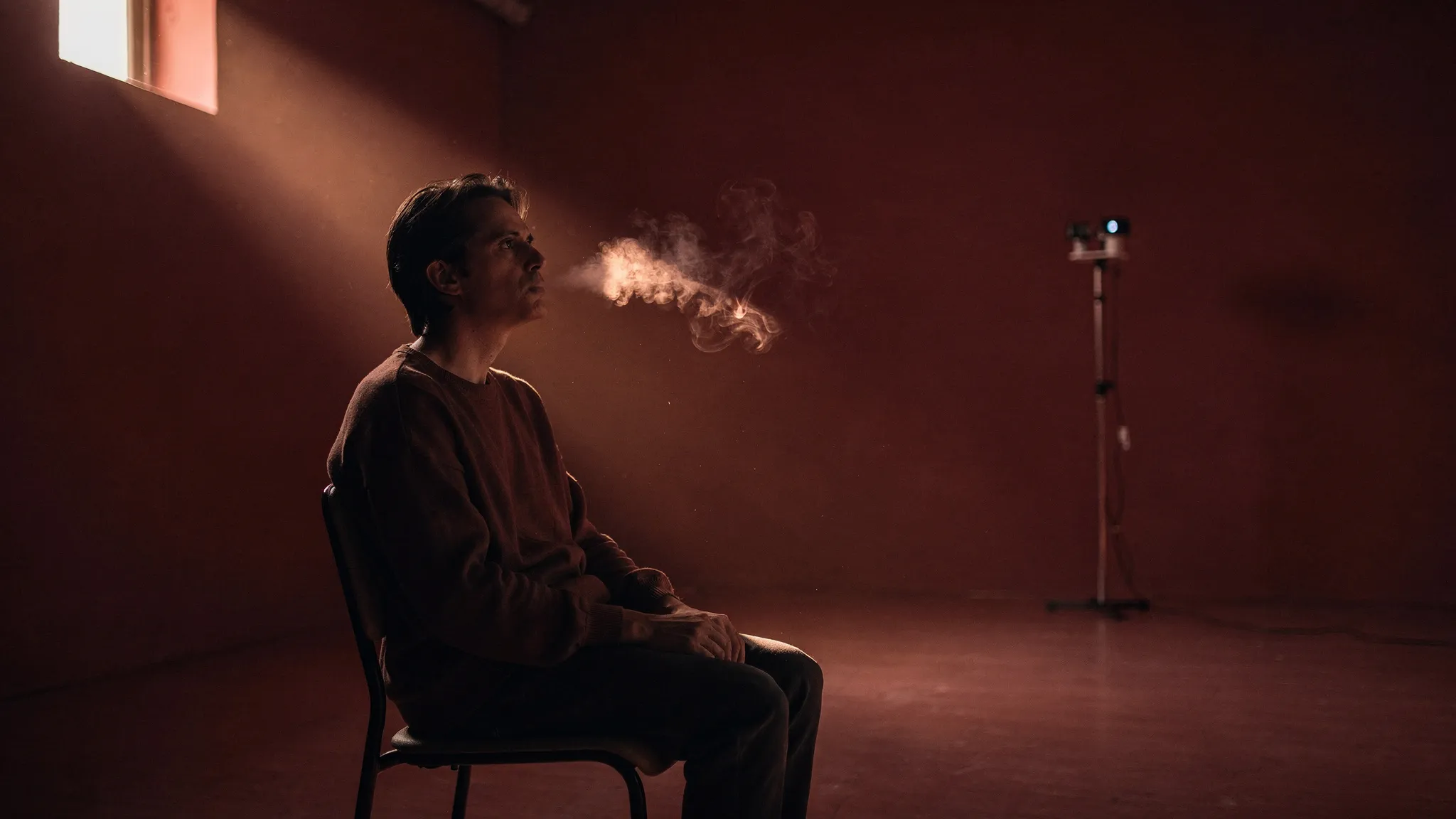
    Man seated on a chair in an empty dark red room, exhaling a faint plume of breath, with a sensor on a stand and a beam of light from a window.

    In a closed room, how far do the tiny droplets we breathe out travel? This matters for airborne viruses. Physicists in Berlin followed exhaled CO₂, a stand-in for small aerosols.

    A test person sat calmly for 30 minutes in an unventilated room. Three sensors waited 3 metres away. The CO₂ reached them after 150 to 280 seconds.

    Simple diffusion cannot explain this speed. It would have to be 500 to 1,000 times faster. Simulations show body heat lifting the air to the ceiling. But heat alone still arrives too late.

    The missing piece is breathing itself. Breathing out throws a jet far into the room. Breathing in only pulls air from close to the face. This imbalance stirs the whole room.

    Source: Thermal convection and jets produced by human exhalation dominate the indoor spreading of emitted CO₂ and aerosols, https://arxiv.org/abs/2611.15791

    PreprintSimulation❓ Quiz
  4. Medicine & health

    SPIKY RED CELLS GET STUCK IN A VIRTUAL SPLEEN

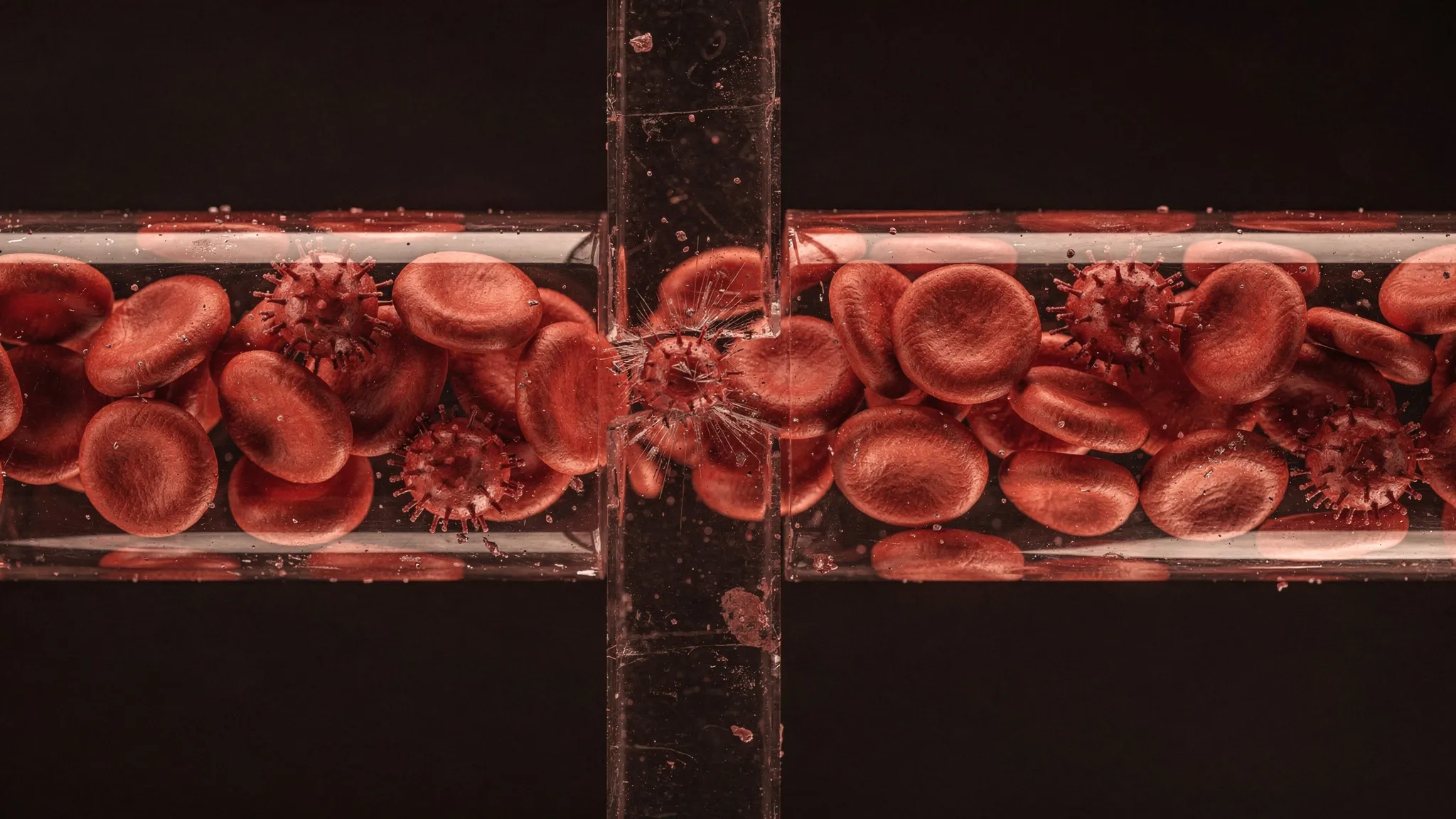
    Red blood cells and a few round spiky cells inside a transparent glass channel, with one spiky cell wedged and cracking the glass at a narrow gap.

    Blood stored for transfusion slowly changes. Its red cells grow small spikes, then lose membrane. The spleen removes many of these damaged cells. But which of the two changes gets them caught?

    A US team simulated red cells squeezing through a model of a splenic slit. Every cell had the same area and volume as a healthy disc. Only the spikes differed.

    The spikier the cell, the more pressure it needed to get through. The spikiest stayed stuck at 37 to 50 times the pressure a normal cell needed.

    The culprit: tiny links between the cell's outer membrane and its inner skeleton. The shrinking skeleton stretches them almost to their limit. Making them about twice as long let a stuck cell through.

    Source: Stretched bilayer–cytoskeleton links hold echinocytes in a model splenic slit, https://arxiv.org/abs/2611.16241

    PreprintSimulation❓ Quiz
  5. Earth & climate

    GHOST PARTICLES WEIGH THE EARTH'S HIDDEN HEAT

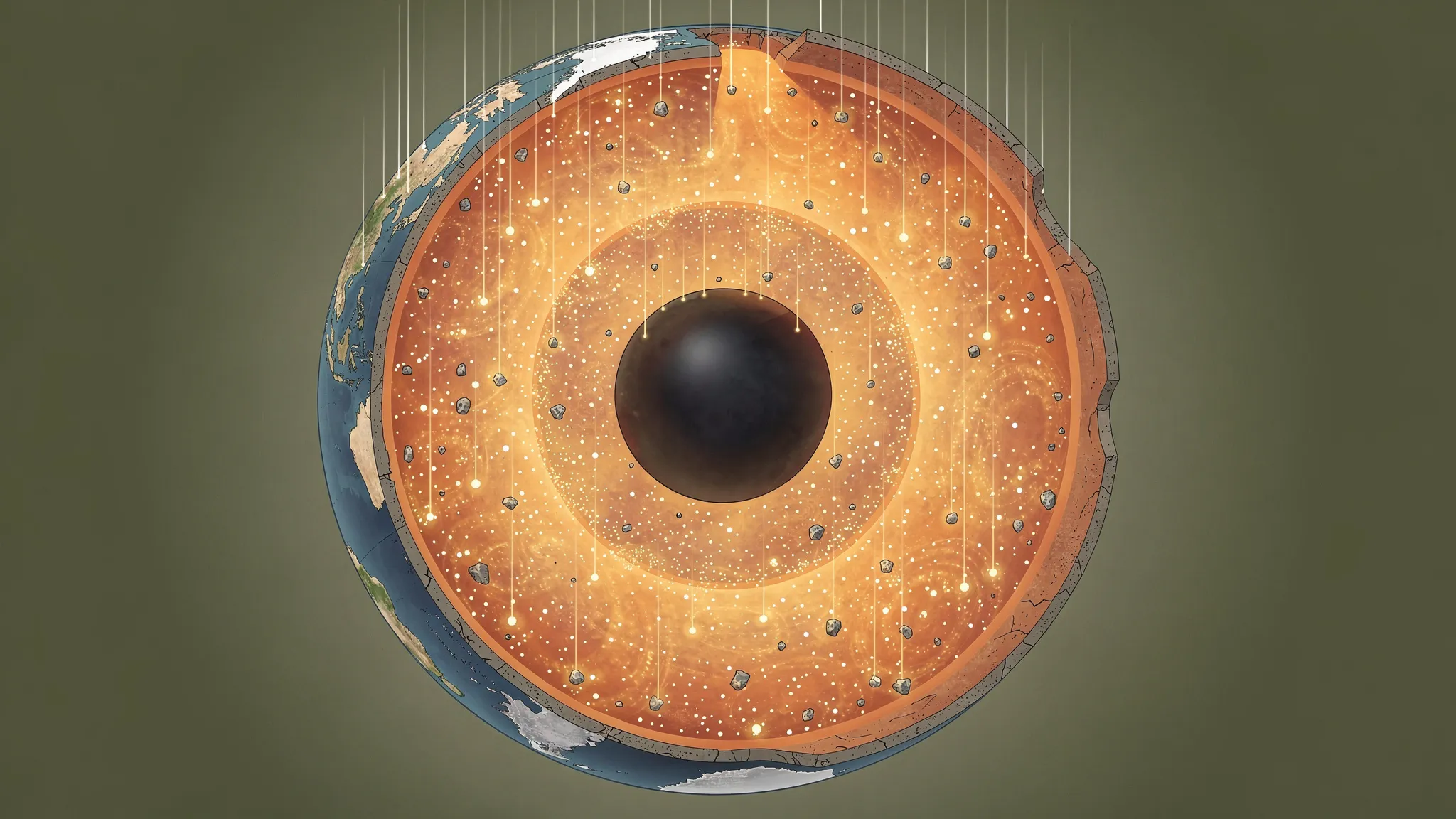
    Illustrated cross-section of Earth with a dark core and glowing orange mantle full of bright specks, thin light trails rising to the surface.

    The Earth leaks 47 terawatts of heat through its surface. Part comes from radioactive uranium, thorium and potassium. But how much heats the mantle? Estimates ranged from 2 to 25 terawatts.

    Uranium and thorium also emit geo-neutrinos, ghostly particles that escape from deep inside the planet. Four underground detectors catch them, in Japan, Italy, Canada and China.

    Two researchers in the United States combined all four measurements. After removing the crust's share, the mantle produces 18.5 terawatts of radioactive heat. The margin is 5.6 either way.

    One puzzle remains. The Chinese site sees four times the mantle signal of the Japanese one. About three million model fits found no giant hidden structure to explain it. A local effect, or plain chance, looks likelier.

    Source: Resolving Radiogenic Heterogeneity in the Earth's Mantle with Multi-Site Geo-neutrino Measurements, https://arxiv.org/abs/2611.16715

    PreprintData analysis❓ Quiz
  6. Space & astronomy

    A DARK MATTER HEART WIDER THAN ITS STARS

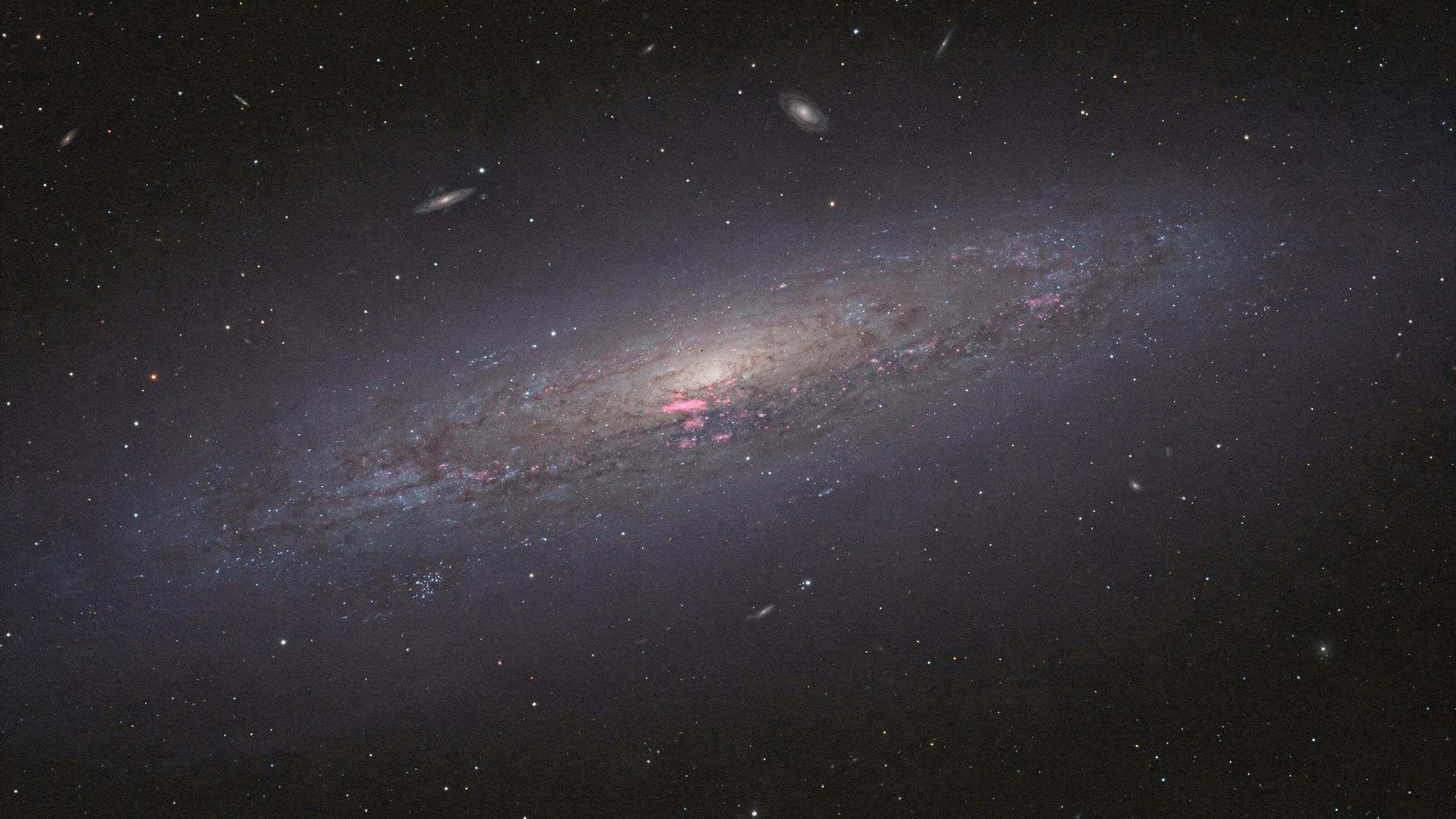
    Telescope view of a tilted galaxy with a pale core, blue stars and pink gas clouds, embedded in a vast faint violet halo against a starry black sky.

    Galaxies spin as if they held far more mass than we see. Invisible dark matter is thought to supply it. In the standard theory, it should crowd sharply towards a galaxy's centre.

    A team led from China clocked the rotation of UGCA 320, a nearby dwarf galaxy. They used radio dishes in South Africa and a large European telescope.

    Its centre turns out flat, not sharp. The dark matter forms a smooth core with a radius of 7.6 kiloparsecs. That is about four times the radius holding half its starlight.

    Exploding stars can flatten a galaxy's centre, but usually no wider than its stars. This core fits better with dark matter particles that bump into each other. Warm or "fuzzy" dark matter struggle to explain it.

    Source: A giant dark matter core extending far beyond the stars of a dwarf galaxy, https://arxiv.org/abs/2611.15528

    PreprintObservation❓ Quiz
  7. Computing & AI

    THIRTY AIs, ONE MISTAKE

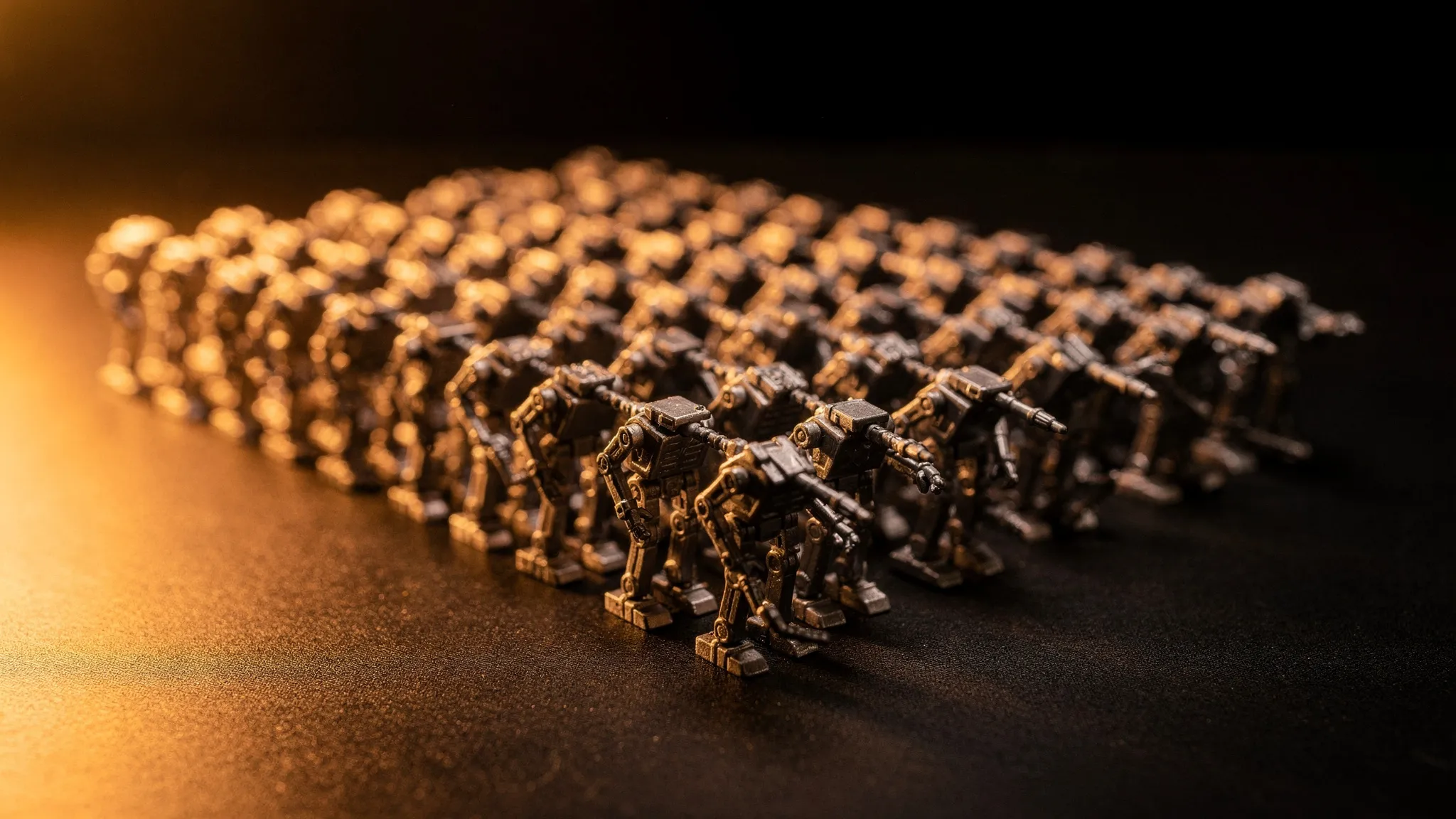
    Rows of identical tiny metal toy robots on a dark table, all leaning forward and pointing the same way, lit by warm amber light from the left.

    Ask a crowd to guess a number, and the average often beats most individuals. Their errors cancel out. Many AI systems now rely on that idea. Does it work for machines?

    Two researchers in Slovenia tested 15 open AI models on so-called Fermi questions. These ask for rough estimates of quantities nobody can count. They collected 2.51 million answers.

    Teams of thirty answers from one model cut the error by just 1.7%. In effect, thirty answers were worth 1.1. Independent guesses without bias would cut the error by 74 to 79%.

    The reason: each model tends to repeat the same mistake on a given question. Averaging cannot cancel it. Debating made teams agree, but barely improved them. No mix of models clearly beat the best one.

    Source: Shared Item-Level Error Limits the Aggregation of Small Language Models in Fermi Estimation, https://arxiv.org/abs/2611.16315

    PreprintExperiment🧪 Experiment
  8. Earth & climate

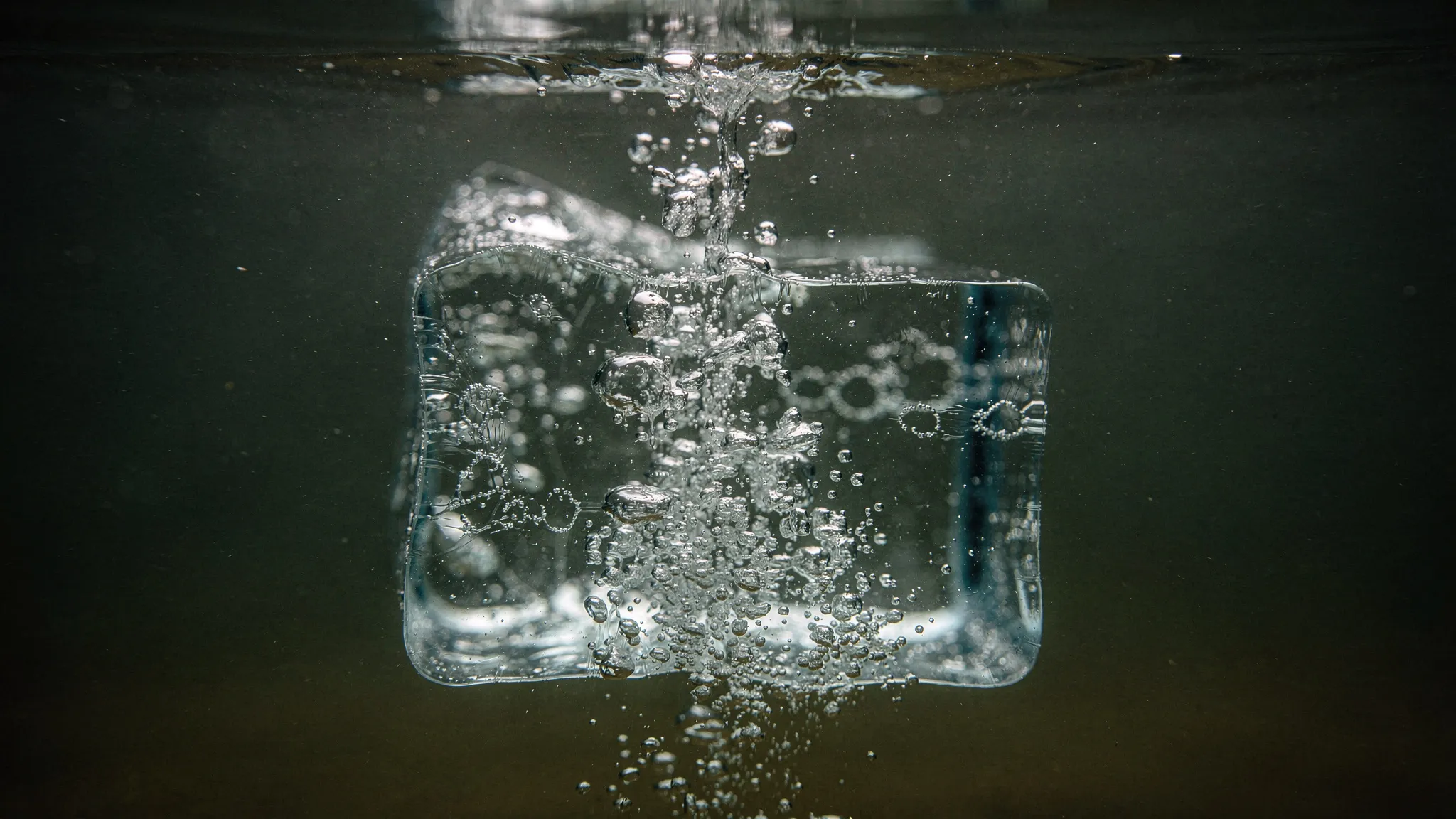
    TRAPPED AIR MAKES ICE MELT FASTER

    Clear block of ice submerged in dark olive water, full of tiny trapped air bubbles, with a stream of bubbles rising from it toward the surface.

    Natural ice is full of tiny trapped air bubbles. When it melts, they escape into the water. Standard models of melting glaciers, ice shelves and sea ice leave them out. Should they?

    A team in Beijing and Lille simulated melting ice in a small freshwater tank. The ice held 0.1 to 1.5% air, in bubbles a tenth of a millimetre wide.

    As the ice melts, the freed bubbles rise. They stir the water and break up its layers. With gas fractions around one percent, ice could melt more than twice as fast.

    The effect fades when the water already churns strongly on its own. Yet conditions measured at real ice-ocean boundaries can fall in the range where bubbles matter. The authors propose a simple fix for ocean models.

    Source: Melting Ice Activates Mechanical Forcing from Entrapped Air, https://arxiv.org/abs/2611.15028

    PreprintSimulation❓ Quiz
  9. Mathematics

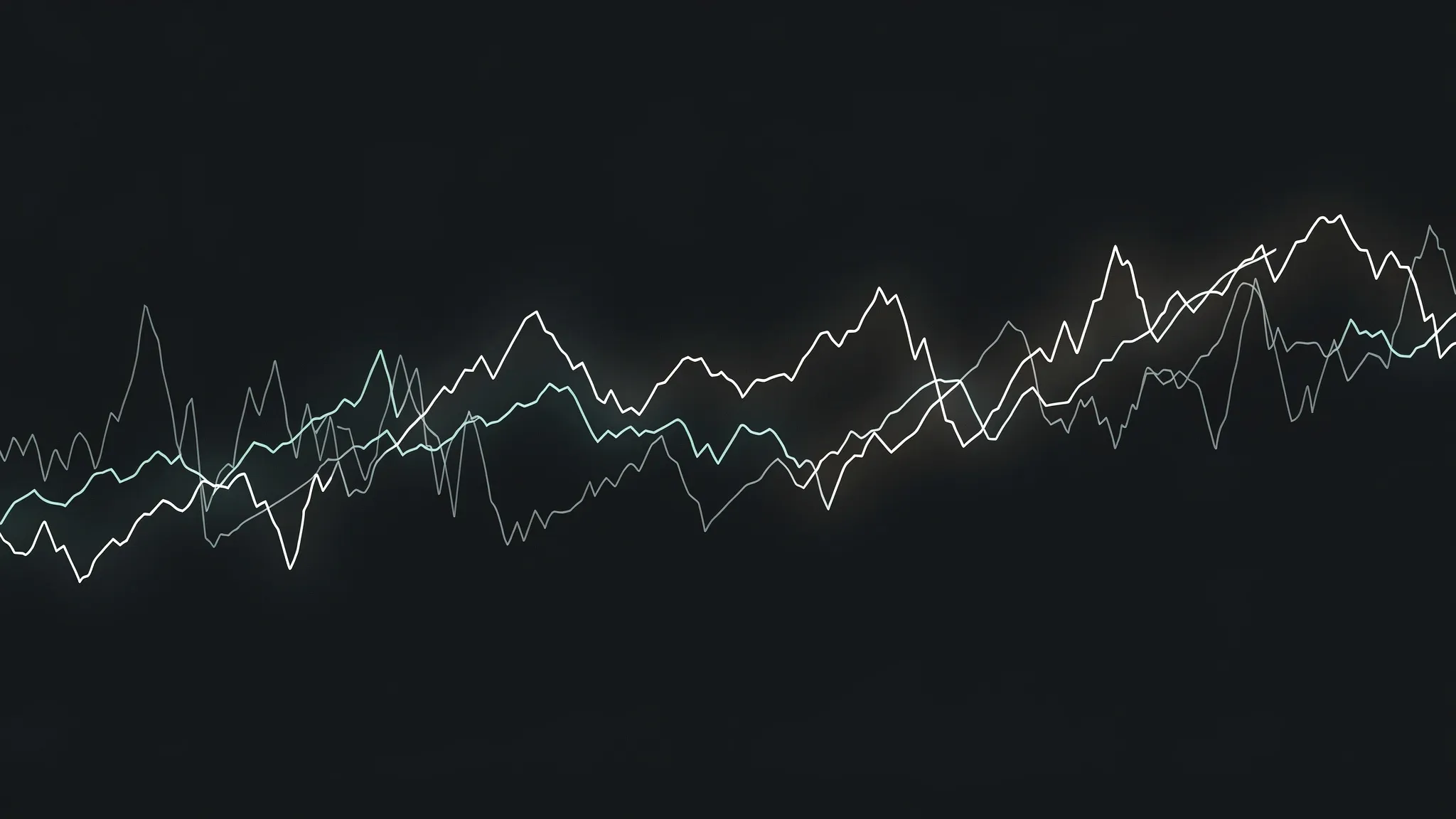
    TWO RANDOM PATHS THAT LOOK LINKED

    Several thin jagged lines, white, pale cyan and grey, wander side by side across a dark background and drift upward together with a soft glow.

    Add up random steps one after another and you get a random walk. Take two that are completely independent. Do they look related? Very often, yes.

    A team at Renmin University in Beijing studied distance correlation. This measure catches any kind of link, not just straight-line trends. It is zero exactly when two random variables are independent.

    Yet for two independent walks, it does not fade as the walks grow longer. In simulations it stays near 0.5 on average. The team proved the limit always lies strictly between 0 and 1.

    The usual shuffling test then misfires. It declares a link almost every time, with a probability tending to 1. In simulations, it failed on all 300 pairs of 500 and of 2,000 steps. A warning for anyone comparing two drifting curves.

    Source: Nonsense nonlinear correlations between independent random walks, https://arxiv.org/abs/2611.16614

    PreprintTheory❓ Quiz
  10. Space & astronomy

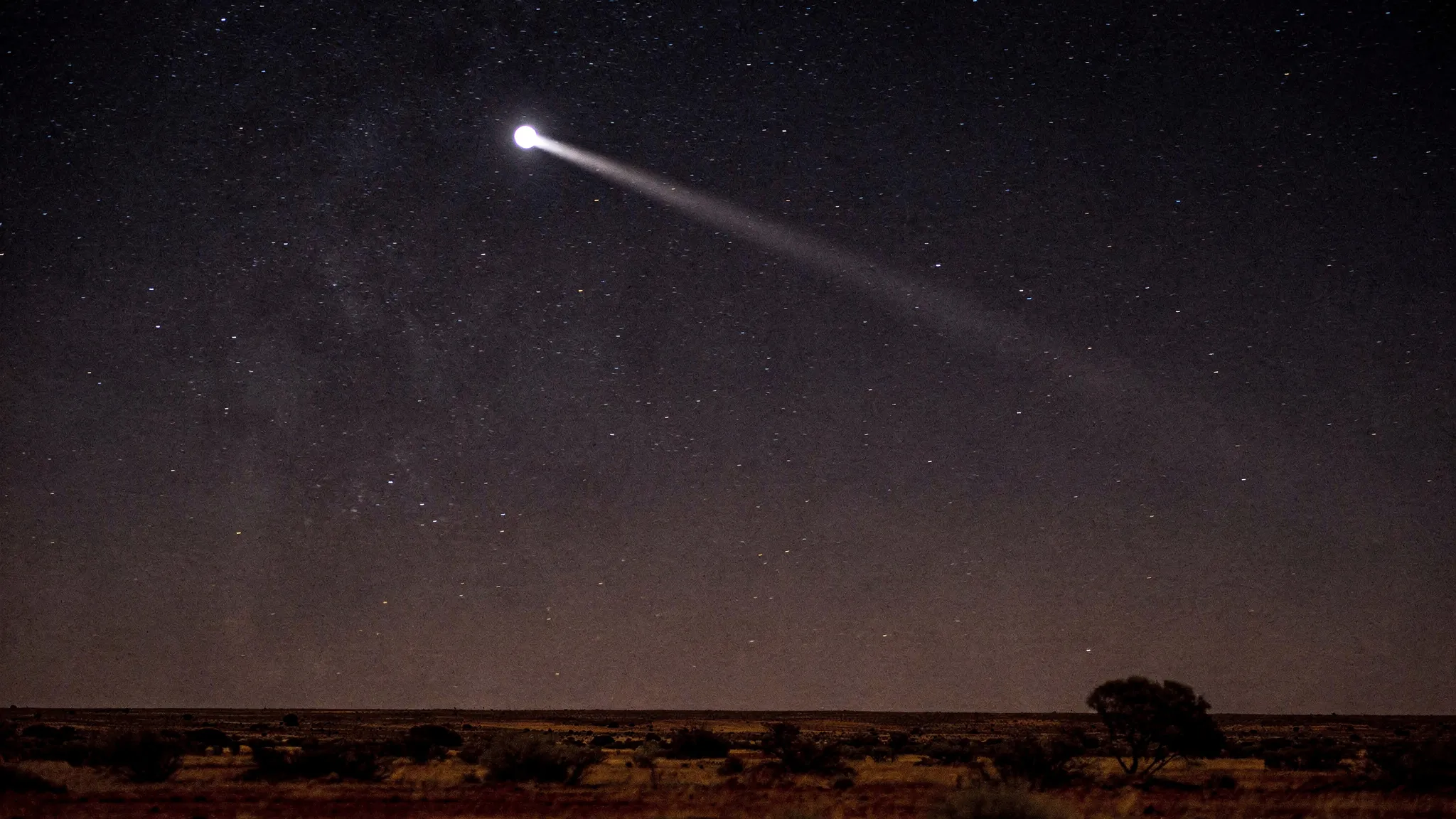
    THE SPECTRUM OF A FALLING CAPSULE

    Glowing white fireball with a faint trail streaking across a starry night sky above a flat outback plain with scrubby bushes and a lone tree.

    On 5 December 2020, the Hayabusa2 capsule fell over South Australia at 12 km/s. It carried material from asteroid Ryugu.

    On the ground, a team filmed it with a consumer camera. A diffraction grating sat in front of the lens. The camera was tracked by hand. The video split the capsule's light into a spectrum.

    High up, its shock layer glowed with C2 molecules at about 9,200 K. This was the first time remote observers had seen them in a capsule's entry. The heat shield itself reached about 3,080 K.

    The capsule was 10 to 100 times dimmer than a natural fireball of similar energy. Its light came from its hot surface, not from vaporised matter. Behind it, a faint glow lit up less than a second later.

    Source: C2 Swan, CH and CN emission, surface temperature and luminous efficiency of the Hayabusa2 sample-return capsule from ground-based spectroscopy, https://arxiv.org/abs/2611.16291

    PreprintObservation❓ Quiz
  11. Mathematics

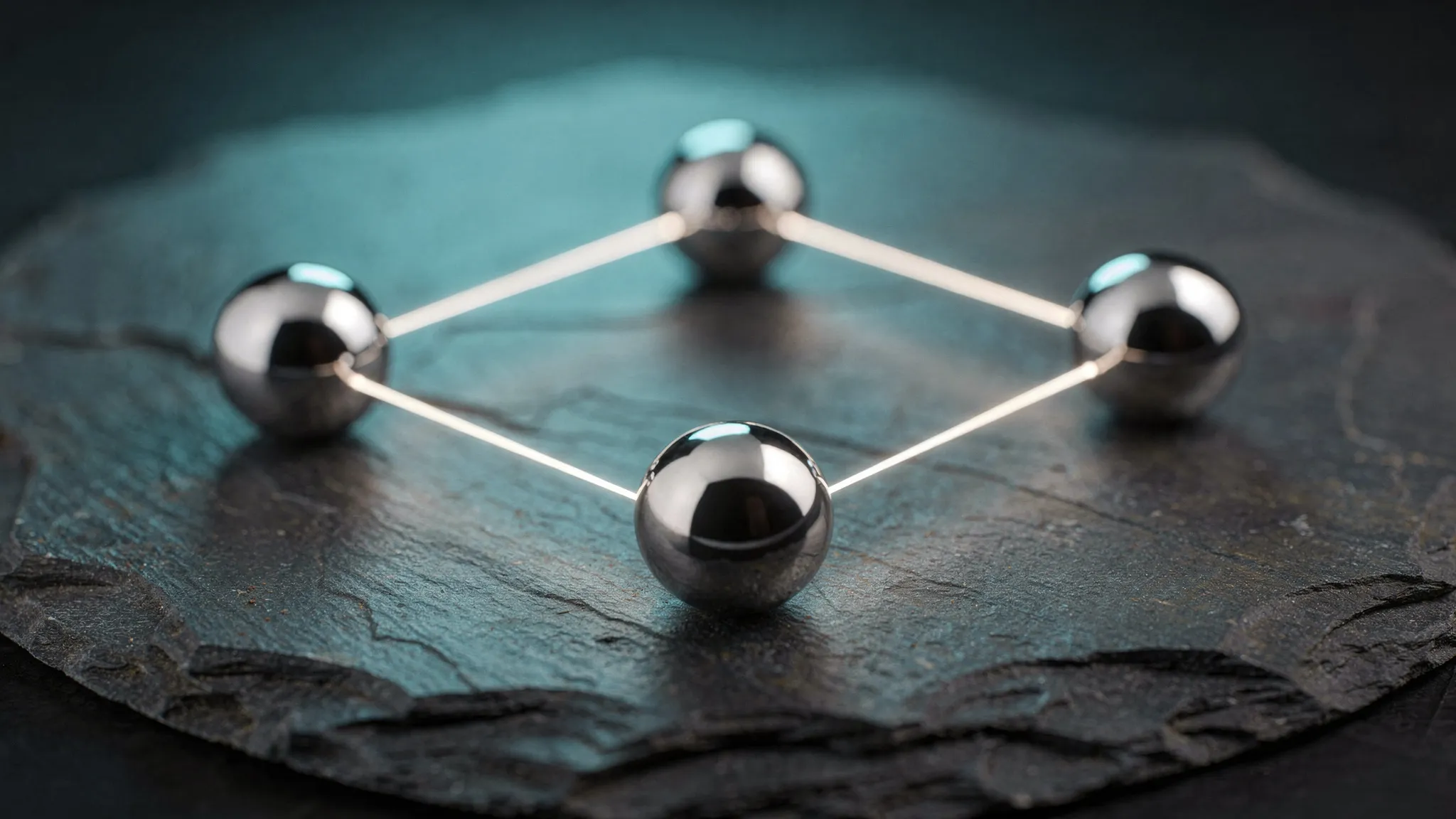
    HOW FOUR ATOMS ARRANGE THEMSELVES

    Four polished steel balls on a dark slate surface arranged as a flattened diamond, joined by thin glowing lines, in teal light.

    At low temperatures, atoms settle into regular shapes. Mathematicians model this by placing points so as to minimise their total energy. Even four points hold surprises.

    A mathematician in Nanchang, China, solved the case of four points completely. The points repel each other up close and attract each other further away, like atoms.

    One number decides the shape: if it reaches 1, the four points form a square. Below 1, they form a diamond with an angle between 60 and 90 degrees. It is never exactly 60 degrees.

    For the classic force used for atoms, the number is 115/512, well below 1. So four such atoms form a diamond, close to two equilateral triangles, but not quite. Its angle is about 60.27 degrees.

    Source: How to arrange four points in the plane, https://arxiv.org/abs/2611.16990

    PreprintTheory🧪 Experiment
  12. Chemistry

    A TINY GAP THAT BREAKS MOLECULES

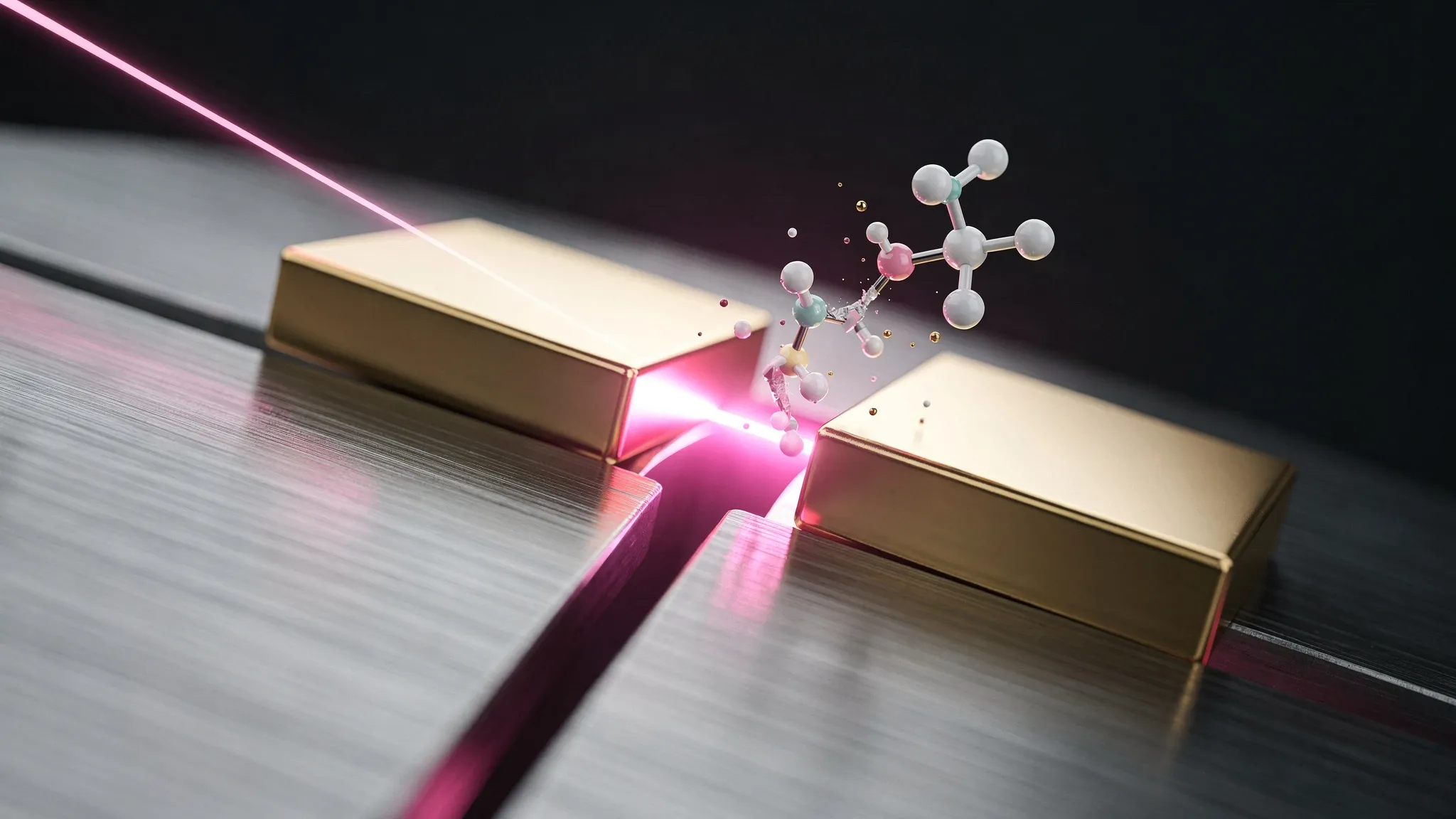
    Two gold blocks separated by a narrow glowing gap on brushed metal, a pink laser beam entering, and a ball-and-stick molecule breaking apart in the gap.

    Breaking a molecule's bond with infrared light costs a lot of energy. As the bond stretches, its vibration levels bunch up. A laser tuned to the first step soon stops climbing.

    Two physicists in Chile simulated one molecule in a tiny gap between metal blocks. There, the molecule's vibration and the trapped light merge into hybrid states.

    They compared two ways in. One shines the laser on the molecule; the other pumps photons into the gap. For water and carbon dioxide, pumping the gap needed far less energy. The saving reached up to three orders of magnitude.

    The trapped light acts like an evenly spaced ladder that the vibration can climb. These are simulations of one molecule. Nanocavities holding only a few molecules could test them.

    Source: The infrared vacuum reduces the laser energy needed to break molecular bonds of simple molecules, https://arxiv.org/abs/2611.15450

    PreprintSimulation❓ Quiz
Legal notice