Edition of November 9, 2026

  1. At The Knowledge Frontier, we pick out the research papers of the day and explain them simply.

    The web has changed in nature. We no longer search, we scroll. Pages look alike, texts are churned out, and we end up reading a great deal without keeping any of it. Educating yourself there has become a strangely passive affair.

    Here, you do more than read. Every article ends with a quiz: a few questions on what you have just read. When the subject lends itself to it, it is an experiment — you set the values yourself and recover, in turn, the researchers' result.

    @VirScience
  2. Physics

    ELECTRONS THAT CROSS IN THREES

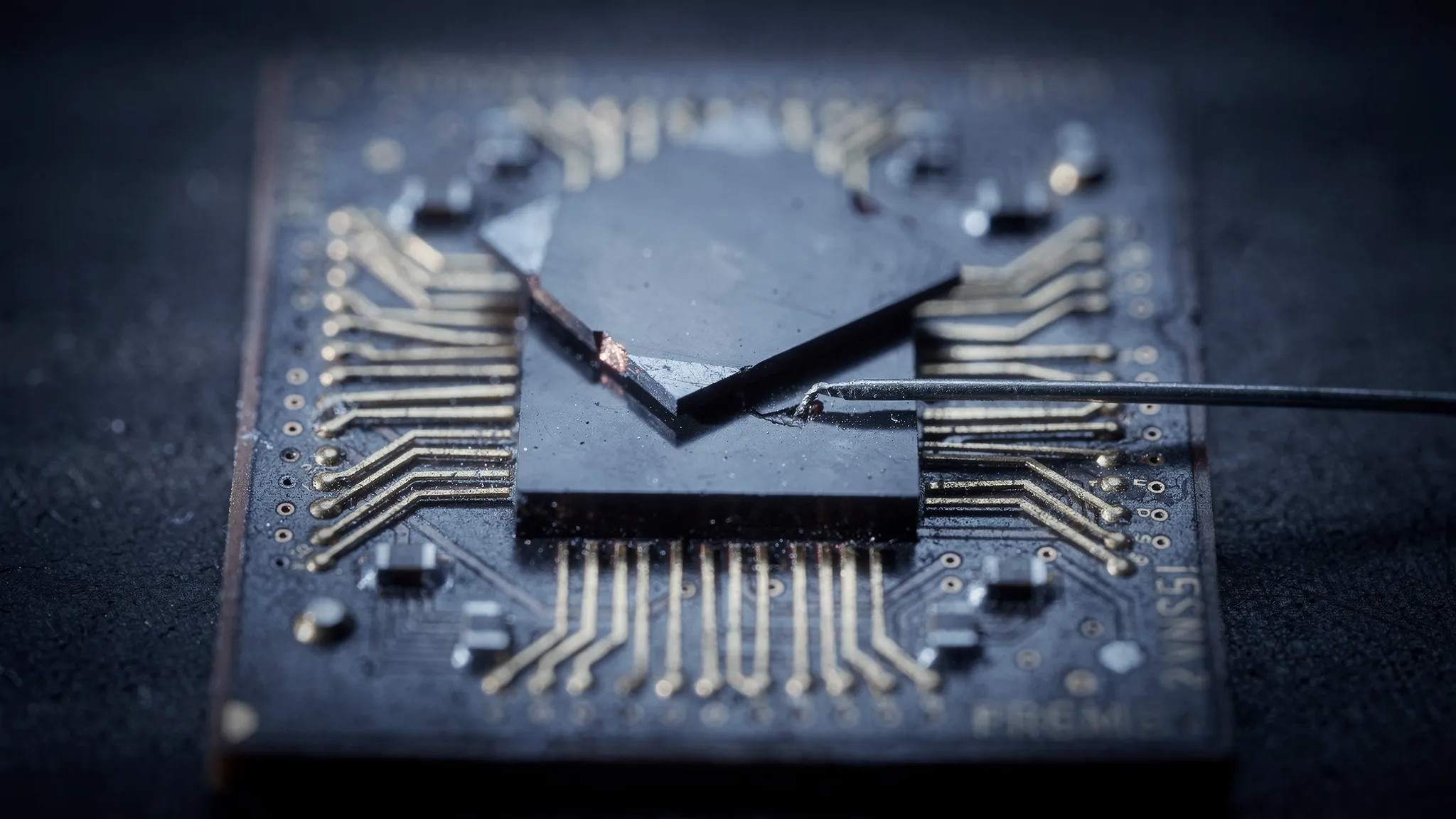
    Two thin dark square crystal flakes lying flat on a chip with gold contact lines, the upper one turned diagonally so its corners overhang the lower one, a thin wire touching it, in cold blue light.

    In a superconductor, electrons travel in pairs. Shine microwaves on a junction between two superconductors, and its voltage climbs in neat steps. The size of each step reveals the charge that crosses: two electrons.

    A team in China stacked two thin flakes of a copper-oxide superconductor. The top one was turned by 45 degrees. In two such junctions, the steps came out at two-thirds of the usual size. That is the size expected for three electrons.

    The pattern held from 1.6 to 70 kelvin, over three separate cool-downs. The usual two-electron step, easy to resolve, never showed up.

    Hence a strange conclusion: three electrons crossing together. Every known superconducting process moves an even number. The team's guess: electrons in one layer binding to holes in the other. Not yet a theory.

    Source: Signature of charge-3e tunneling in twisted cuprate Josephson junctions, https://arxiv.org/abs/2611.07708
    PreprintExperiment🧪 Experiment
  3. Physics

    TRUE, BUT IMPOSSIBLE TO PROVE

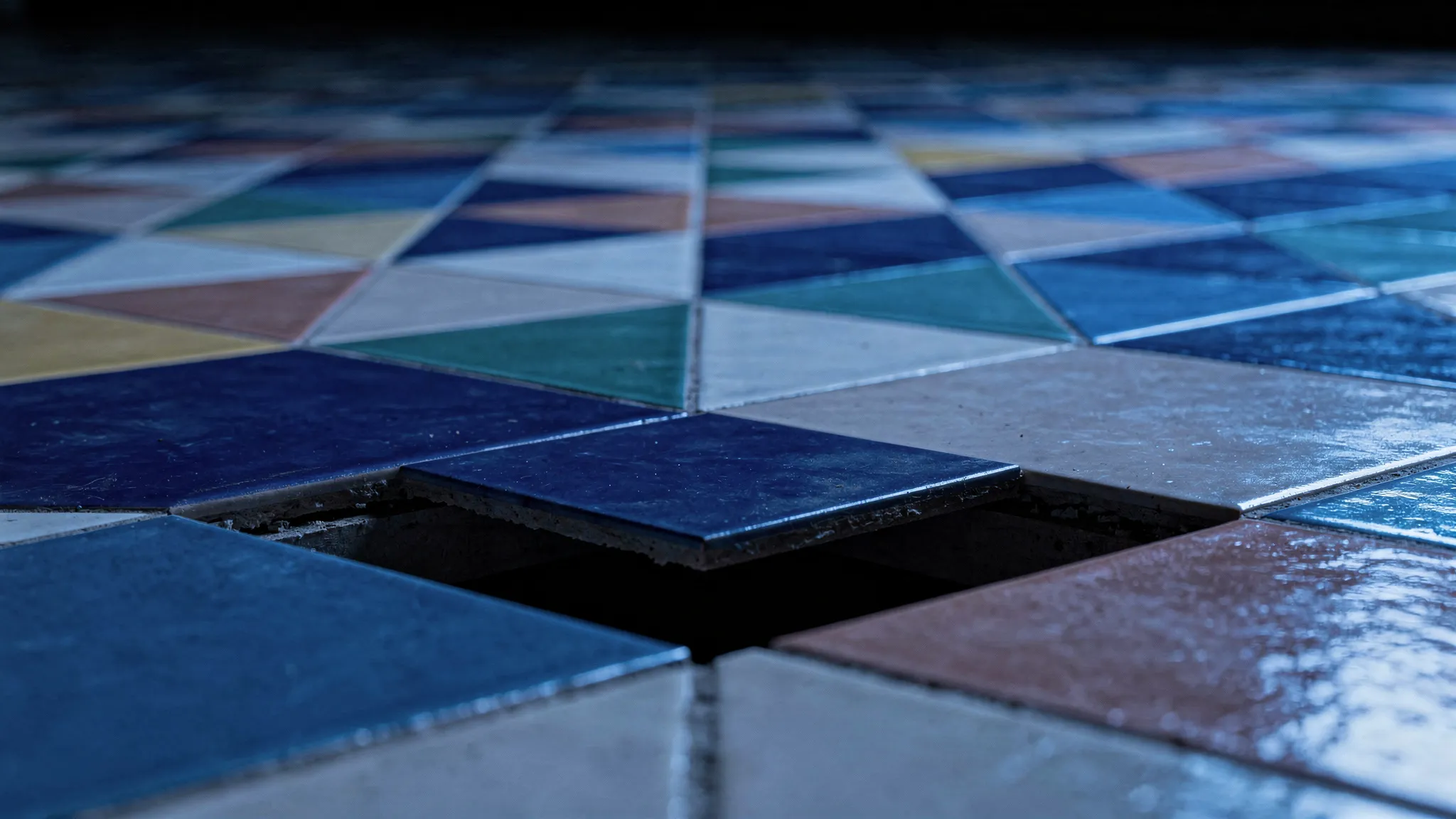
    A floor of square tiles patterned with coloured triangles, one tile lifted out of place above a dark gap, under cobalt blue light.

    In some quantum magnets, every pair of neighbouring spins can be satisfied at once. Physicists call this "frustration-free". It makes a model far easier to study.

    Can you tell if a model has this property at every size? A physicist at the University of Tokyo proves it is possible. For a given spin size, checking one finite lattice is enough.

    Then comes the twist. The same paper builds a frustration-free model. Yet no proof from the standard axioms of mathematics can show it. Hidden inside is a machine hunting for a contradiction in mathematics.

    How can both be true? The decisive lattice size exists, but no algorithm can compute it. It grows at least as fast as the "busy beaver" function. That one outruns every computable function.

    Source: Frustration-freeness is decidable but unprovable, https://arxiv.org/abs/2611.07337

    PreprintTheory❓ Quiz
  4. Space & astronomy

    A FAMOUS BLACK HOLE GOES QUIET

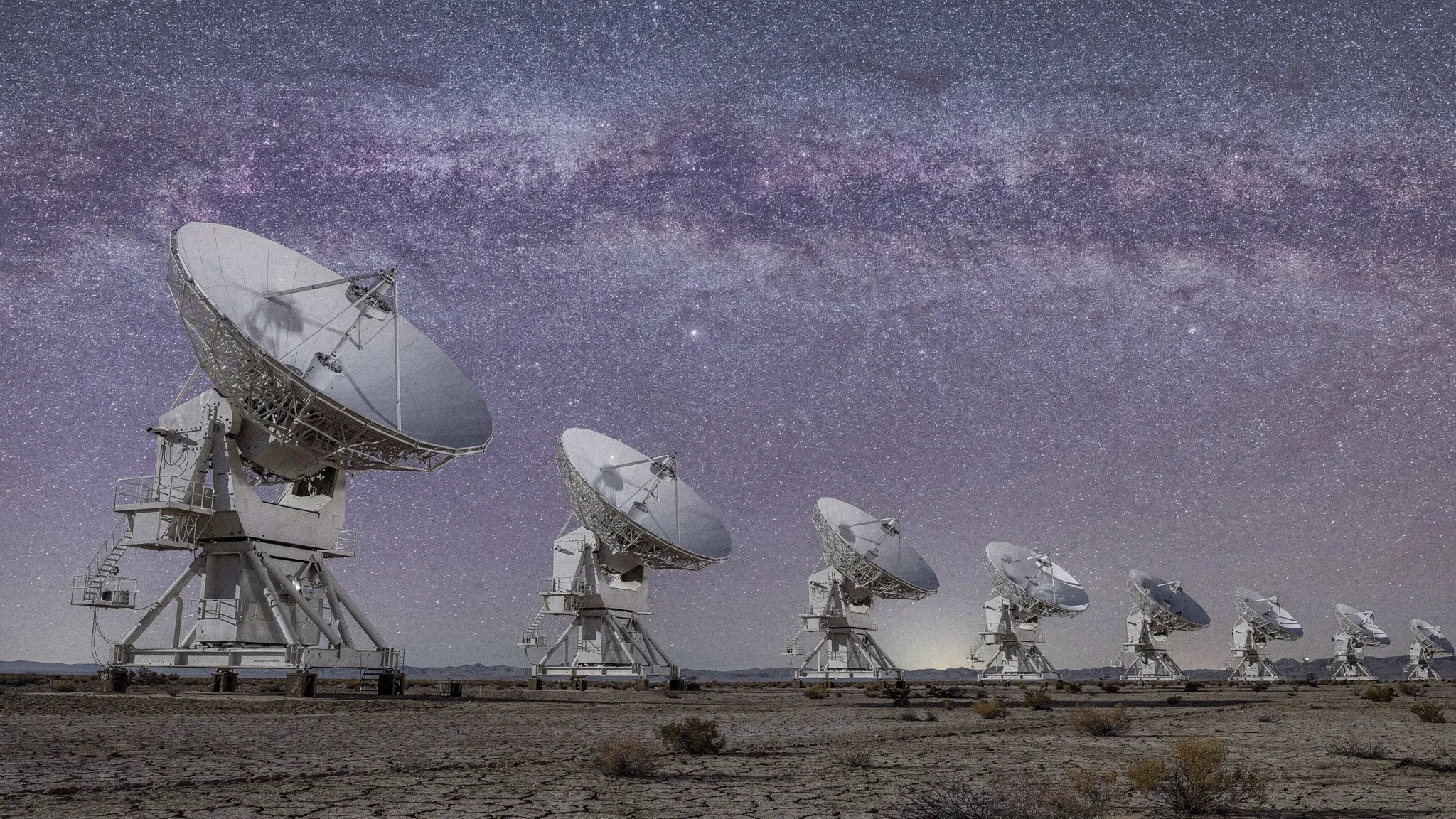
    A row of large white radio telescope dishes on dry, cracked ground under the Milky Way, in a violet night sky.

    GRS 1915+105 is a black hole of about 12 Suns. It feeds on gas from a companion star. Since 1992 it has blazed almost nonstop, firing out jets of matter.

    In 2019, a thick screen of gas began to hide its X-rays. Radio waves pass through that screen. They still showed the engine hard at work.

    Now the radio is fading too. In July 2026, the MeerKAT telescope measured about 150 microjanskys, the faintest level ever recorded. The decline has run for 14 months now, with no comeback.

    An international team concludes that the black hole is most likely going quiet for good. Models predict a calm on the order of 10,000 years. Its giant companion star can now be studied without the glare.

    Source: The retirement party of GRS 1915+105: the radio fading to quiescence of the archetypal microquasar, https://arxiv.org/abs/2611.07039

    PreprintObservation❓ Quiz
  5. Physics

    BOUNCE OR MERGE? A MATTER OF NANOMETRES

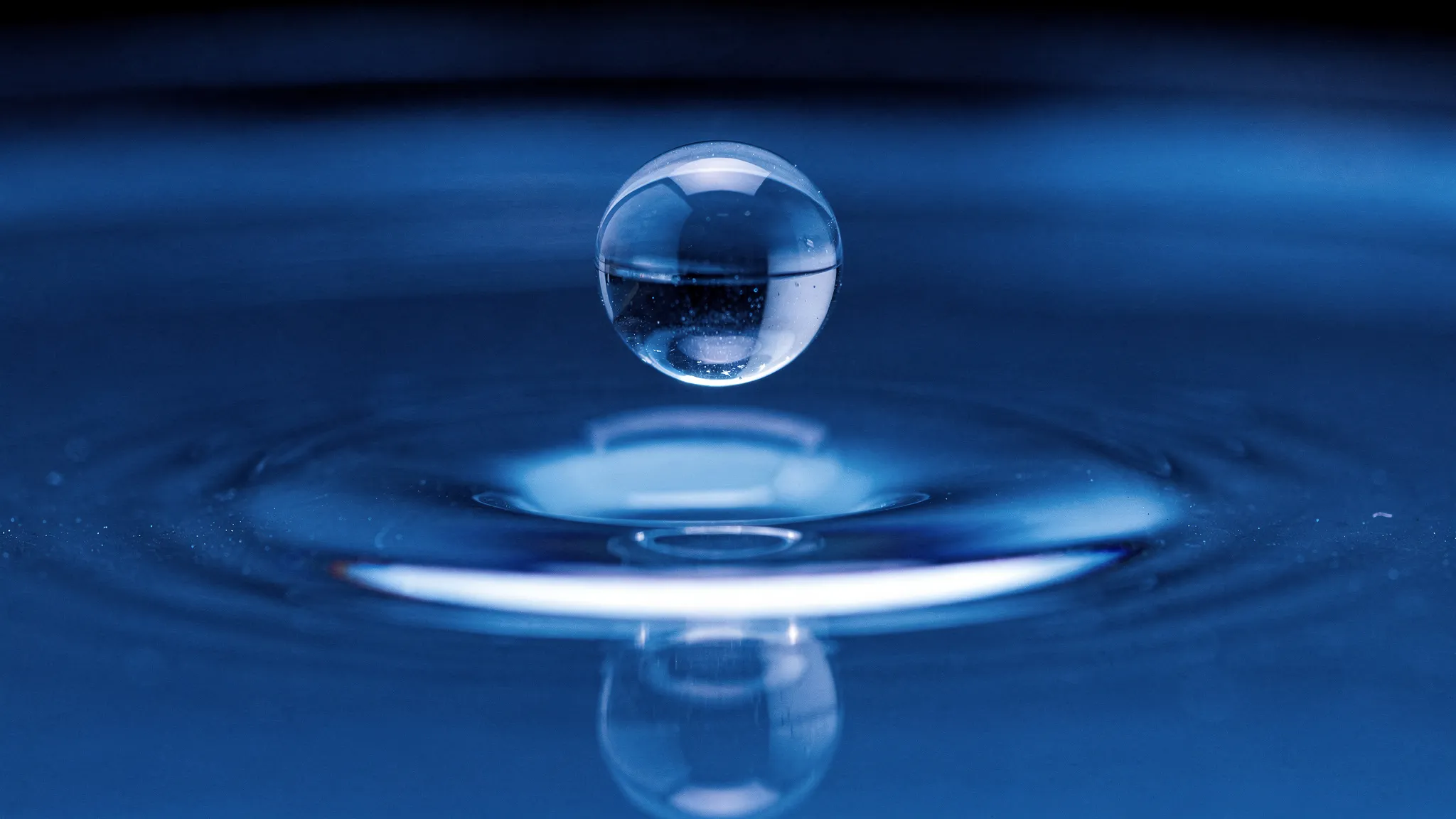
    A small clear drop hovering just above a smooth liquid surface, ripples spreading out below it, in deep blue light.

    Drop oil onto a bath of the same oil. Sometimes the drop bounces right off. Sometimes it merges into the bath. What decides the outcome?

    A thin film of air gets trapped between drop and bath. It can thin to tens of nanometres. At that scale, air no longer flows like an ordinary fluid.

    Researchers at the universities of Warwick and Brown built a new model. It includes this nanoscale physics. It uses only independently measured properties, nothing fitted. Its predicted threshold speeds match the experiments closely.

    A drop with a 0.17 mm radius bounced at 88.6 cm/s and merged at 91.1. Lower the air pressure, and bouncing gets rarer. Drops under about 0.04 mm in radius should always merge.

    Source: Bouncing or Merging in Drop-Bath Impacts, https://arxiv.org/abs/2611.07942

    PreprintSimulation❓ Quiz
  6. Mathematics

    IF AB = 1, IS BA = 1? NOT ALWAYS

    A spherical wire lattice of points joined by straight rods on a dark wooden desk, beside an old leather notebook and a fountain pen, in teal lamplight.

    For ordinary numbers, if a × b = 1, then b × a = 1. Kaplansky conjectured the same for group algebras. In these algebras, the order of a product can matter.

    The conjecture was proved in many cases. With fractions or real numbers as coefficients, it always holds. For large families of groups, it holds whatever the coefficients.

    Then a construction credited to OpenAI produced a counterexample. Its coefficients obey a rule where 1 + 1 = 0. Andrei Jaikin-Zapirain now gives a version humans can read. The note extends it to every prime number.

    The groups behind it are "hyperbolic": they act on a negatively curved space. Bonus: such a group that is not "sofic", a kind first built only months ago.

    Source: A Note on OpenAI's Construction of Counterexamples to Kaplansky's Direct-Finiteness Conjecture, https://arxiv.org/abs/2611.08268

    PreprintTheory❓ Quiz
  7. Space & astronomy

    A LONE COLD WORLD, 64 PARSECS AWAY

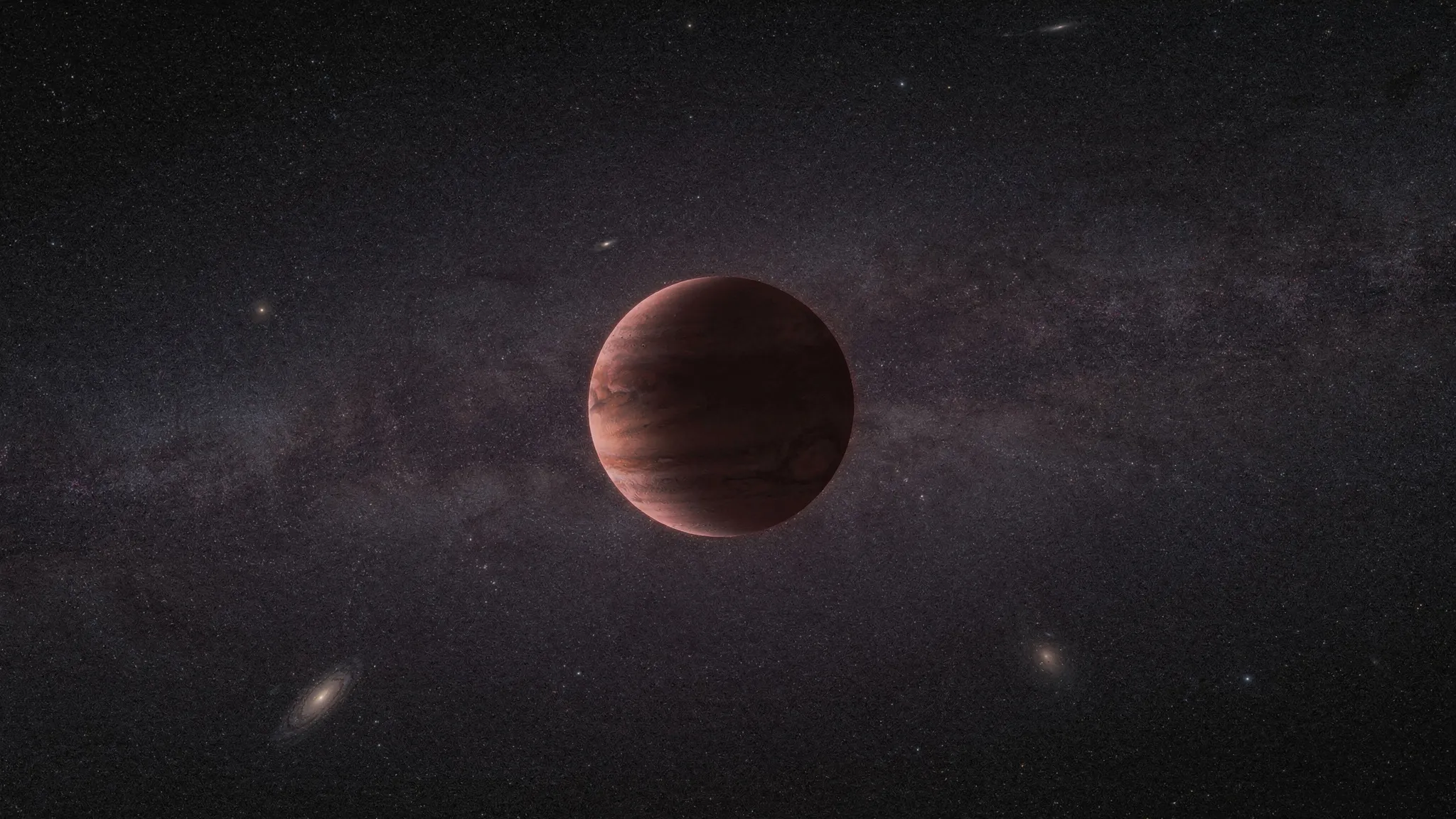
    A small, dim reddish-brown world with faint cloud bands, floating alone in dark space, with a few tiny distant galaxies far behind it.

    The JWST deep fields were made to study distant galaxies. Hidden among them: a body of about 8 Jupiter masses, floating alone in our Galaxy.

    Called JADES-GS-BD-5, it is a Y dwarf, a failed star that never ignites. Its surface sits near 300 kelvin, among the coldest known. Only about fifty Y dwarfs are known, all nearby.

    A team from Edinburgh tracked it across five dates over two years. Earth's yearly orbit makes it wobble by 15.7 thousandths of an arcsecond. That gives its distance: about 64 parsecs.

    That is three times farther than any Y dwarf measured this way. No host star was found: it is a lone world of planetary mass. Yet no atmosphere model fully reproduces its light.

    Source: The cold substellar frontier in JWST Extragalactic surveys: a robust parallax measurement yields the most distant known ultra-cold Y dwarf, https://arxiv.org/abs/2611.08346

    PreprintObservation❓ Quiz
  8. Computing & AI

    SORTING WITH FORBIDDEN COMPARISONS, NEARLY AS FAST

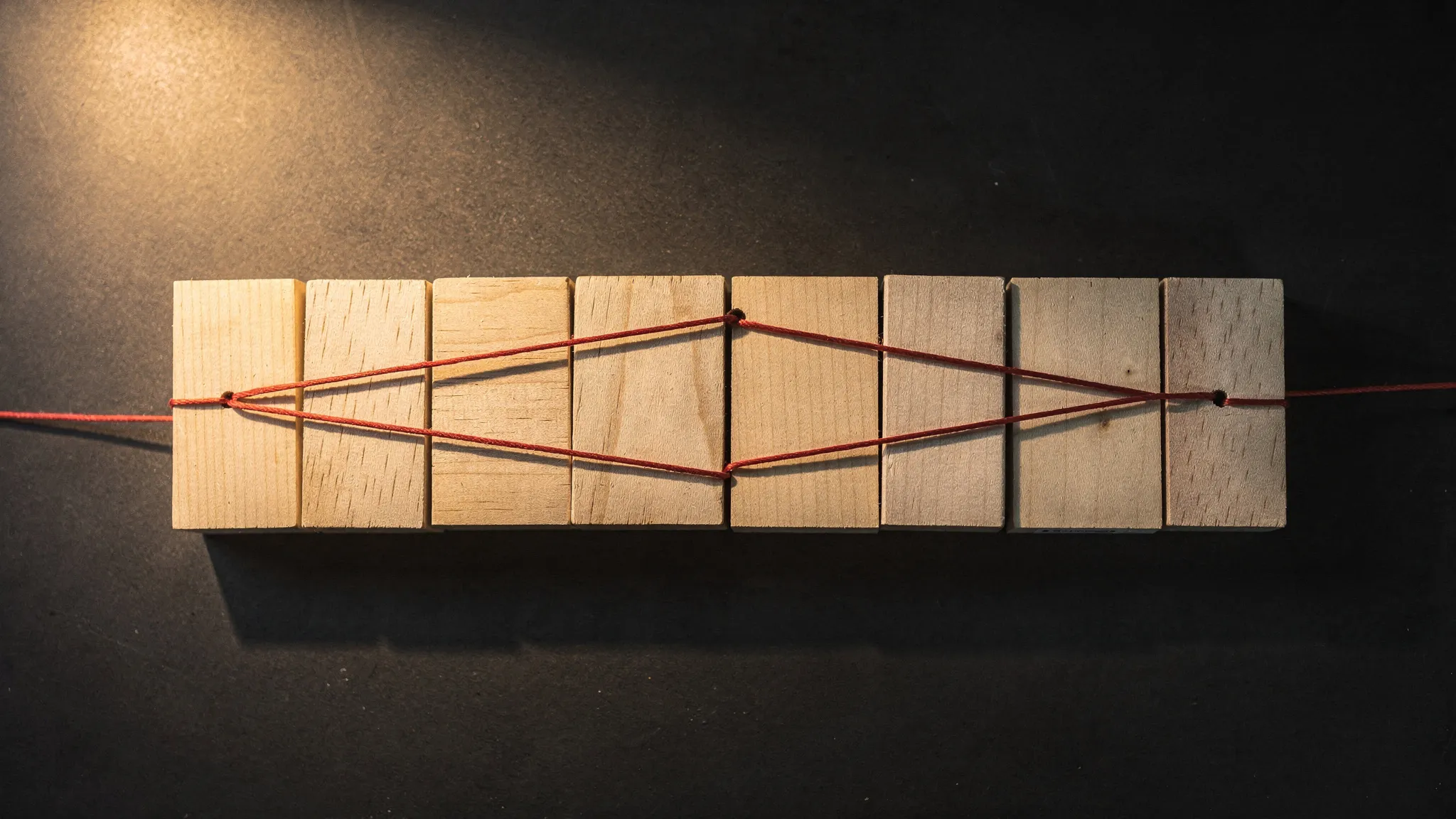
    A row of eight wooden blocks seen from above on a dark table, some of them linked by a taut red thread, in warm amber light.

    Picture job candidates and their references. Two candidates can be compared only if one reference knows both. Can you still rank everyone?

    That is "generalized sorting": some comparisons are simply forbidden. Sorting n items normally takes about n log n comparisons. Here, the classic methods break down.

    Since 2011, the best known method needed about n to the power 1.5. Its authors even asked whether something near n was possible at all. A team from New York University and Harvard now says yes: about n log⁴ n.

    The authors call ChatGPT "essential". A model found a first gain, then the team improved it. Later, models pushed on to the final algorithm. It counts comparisons only: running it quickly remains open.

    Source: A Near-Optimal Generalized Sorting Algorithm, https://arxiv.org/abs/2611.08397

    PreprintTheory❓ Quiz
  9. Mathematics

    THE ONLY MAHJONG HAND THAT WAITS ON EVERY TILE

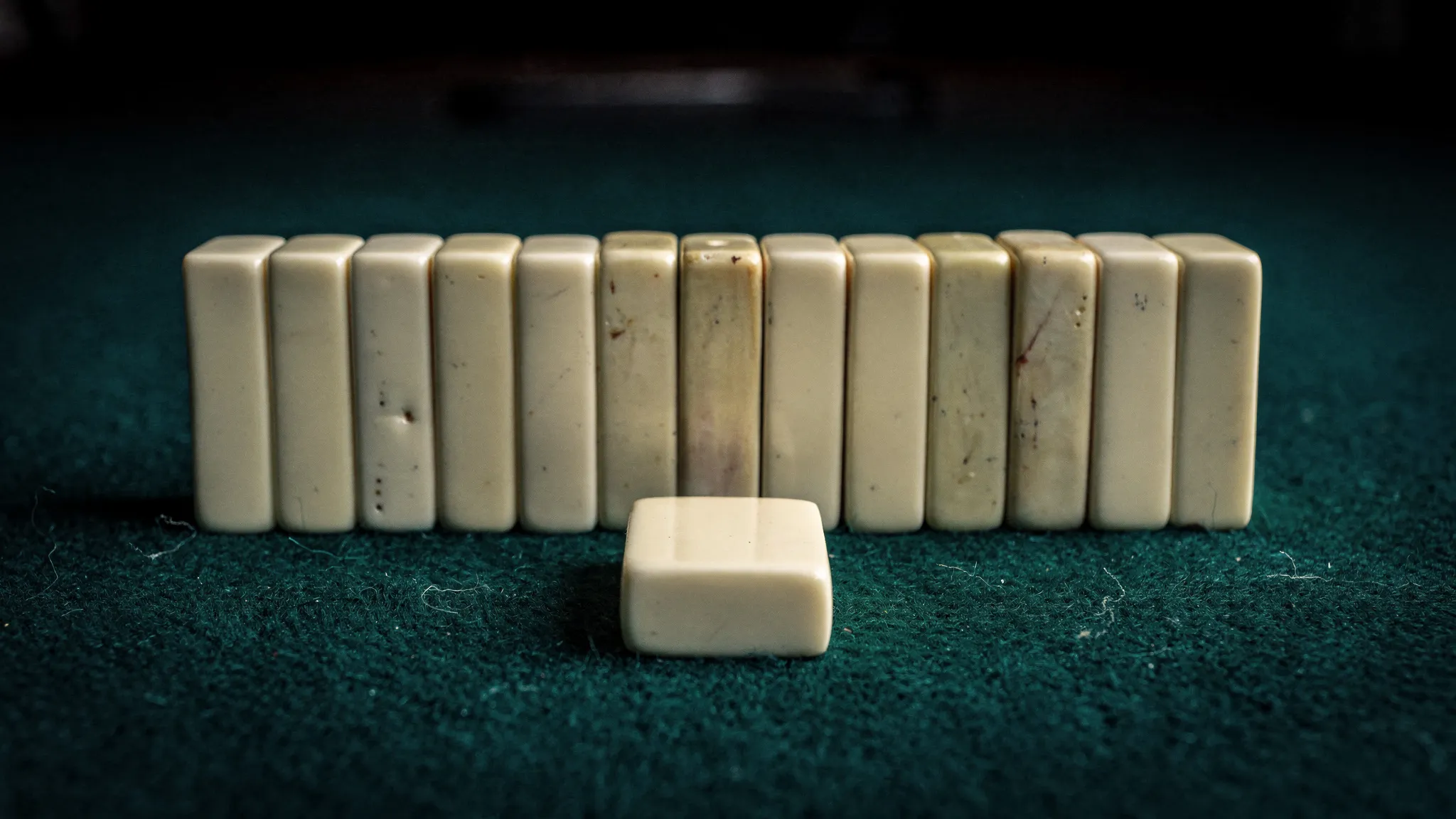
    Thirteen ivory mahjong tiles standing in a row on dark green felt with their backs to the camera, one more tile lying face down in front of them.

    In mahjong, a winning hand needs one pair and four melds. A meld is three identical tiles, or three in a row.

    Nine Gates holds 1-1-1, then 2 to 8, then 9-9-9, all in one suit. Draw any tile of that suit, and it wins. That is why it earns the top prize in many rule sets.

    Players long believed it was the only hand of its kind. Computers had checked the classic game, hand by hand. Shubin Xue and Xingyu Zhong now prove it by reasoning alone. It holds for suits of any length.

    Lift the four-copy limit, and exactly eight such hands exist. Only Nine Gates can be played with a real set. The others would need a fifth copy of some tile.

    Source: Beyond Nine Gates: Classification of Full-Sided Mahjong Waits with 3n Ranks, https://arxiv.org/abs/2611.06944

    PreprintTheory❓ Quiz
  10. Life sciences

    COULD A BACTERIUM'S WALL LEARN TO STEER IT?

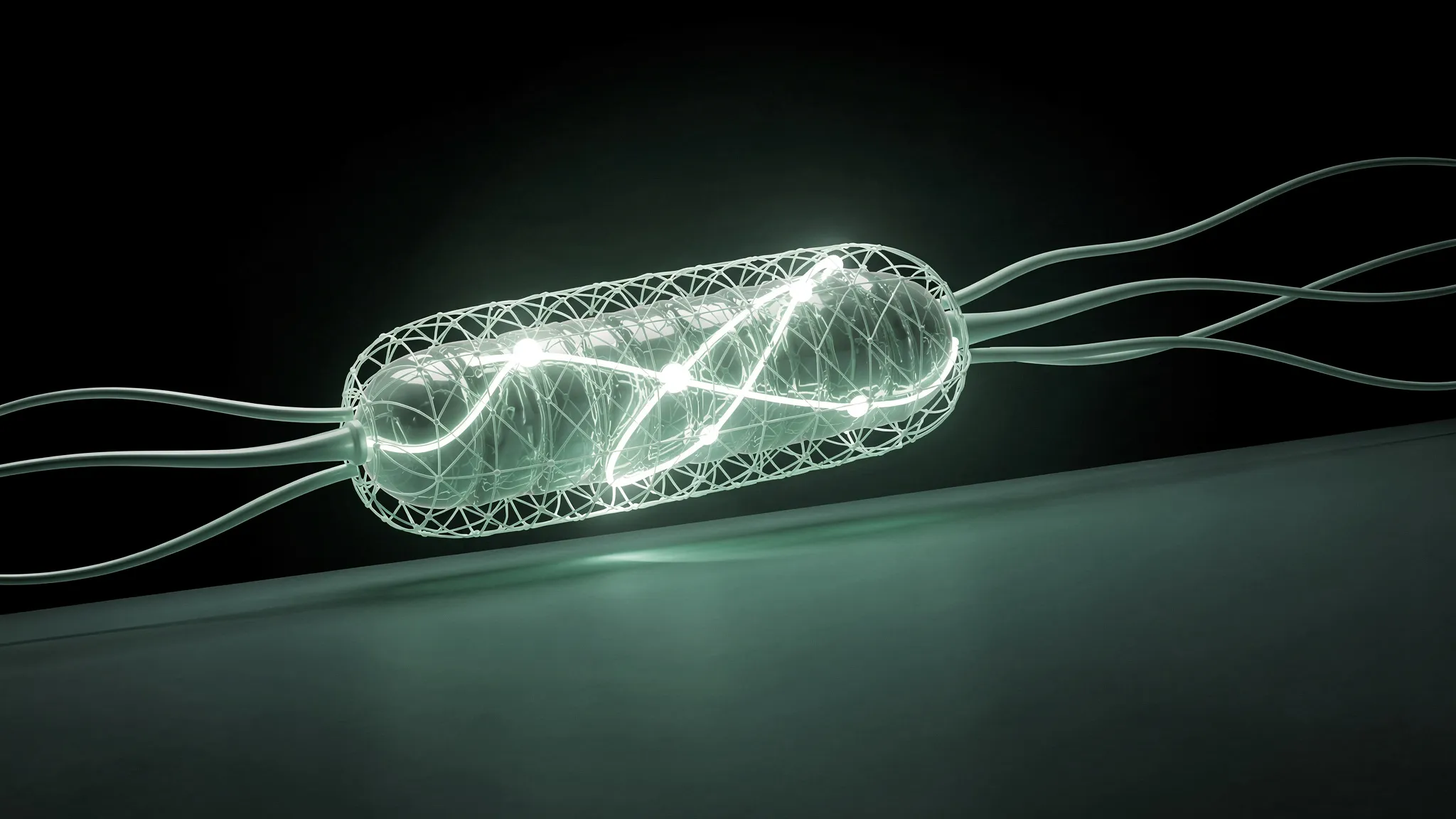
    A glowing rod-shaped bacterium wrapped in a fine mesh, bright threads crossing its body, long flagella trailing from both ends, gliding near a smooth surface, in jade green light.

    A bacterium's wall is a mesh of crosslinked strands. It is usually seen as mere armour. A team at Syracuse University asked: could it also learn?

    In a simulation, they trained this mesh like a network of springs. The goal: carry the push of a collision across the cell. It must reach the motors on the far side.

    There, compression would loosen the motors' grip. The flagella that push toward the obstacle weaken, so the cell turns away. It escapes on 62% of first tumbles after being trapped, against 43% untrained.

    The authors put this at 89% of what an ideal controller would gain. A few hundred collisions of training are enough. The key step, motors loosening under compression, remains an untested hypothesis.

    Source: Embodied physical learning: a trained bacterial cell wall can guide organism behavior, https://arxiv.org/abs/2611.07112

    PreprintSimulation❓ Quiz
  11. Earth & climate

    THE MOST EFFICIENT PRICE FOR CLEAN WATER: ZERO

    A concrete water tower above a village of tin-roofed houses and flooded rice fields, a tap pouring water into a basin in the foreground, in soft golden light.

    In Bangladesh, about 30 million people drink water tainted with arsenic. A tap of clean, piped water could change that. But what should a connection cost?

    Two researchers built a real water network in a village. It has a deep borehole and a water tower. Before drawing which village would get it, they measured what each household would truly pay.

    Demand collapsed with price: 88% would connect at $1, only 12% at $20. The revenue-maximising price, $9.70, would connect just a third of homes.

    The surprise: the cost per connected home is lowest at a price of zero. It comes to about $98. The borehole and tower cost the same however many connect. Each extra connected home shares that fixed cost.

    Source: Economies of scale and the equity-efficiency trade-off: Evidence from a piped water network in rural Bangladesh, https://arxiv.org/abs/2611.08031

    PreprintExperiment🧪 Experiment
  12. Chemistry

    FOREVER CHEMICALS RECHARGE MEMBRANES, THEN STRIP THEM

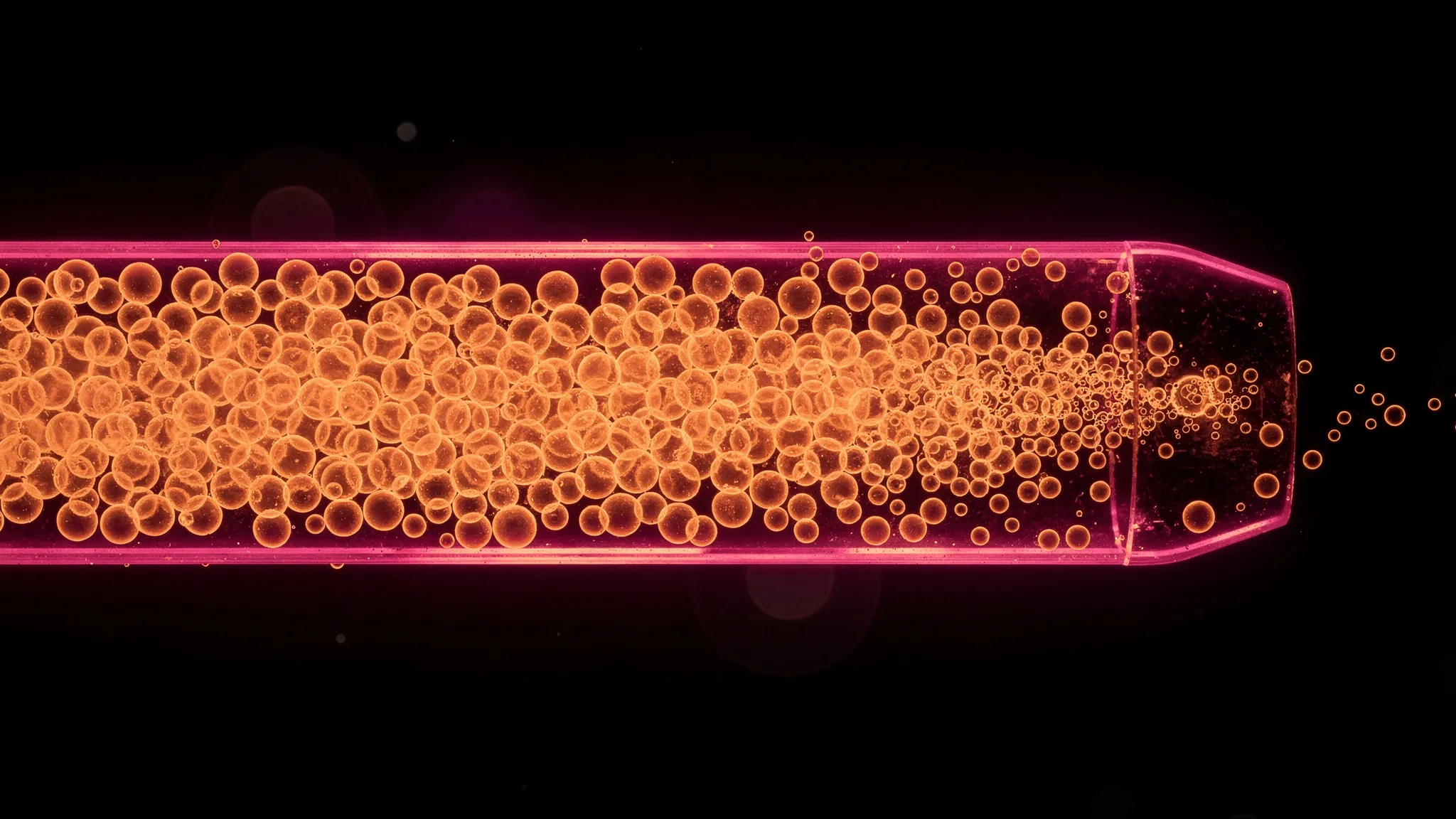
    Hundreds of small glowing orange spheres packed inside a narrow pink-lit tube, some spilling out of its open end into darkness.

    PFAS, the "forever chemicals", barely break down. Their widespread presence raises health concerns. They readily slip into the membranes of cells. But what exactly do they change once inside?

    A team at the University at Buffalo tested model membranes: tiny lipid bubbles called vesicles. PFAS made their surface more negatively charged. The longer the PFAS chain, the bigger the effect.

    In a salt gradient, charged vesicles drift on their own, with no push needed. With PFAS inside, they drifted faster through microscopic channels. The team's model reproduced their paths.

    Then came a twist. After rinsing, the vesicles carried less charge than before any exposure. The authors conclude that the PFAS had stripped lipids out of their membranes. The shortest PFAS tested left no trace at all.

    Source: PFAS-induced modulation of vesicle diffusiophoresis, https://arxiv.org/abs/2611.07075

    PreprintExperiment❓ Quiz
Legal notice