Deep inside Uranus, Neptune and carbon-rich exoplanets, pressure nears a terapascal. There, carbon should change form. A denser structure called BC8 has been predicted for nearly forty years. Nobody had ever seen its crystal.
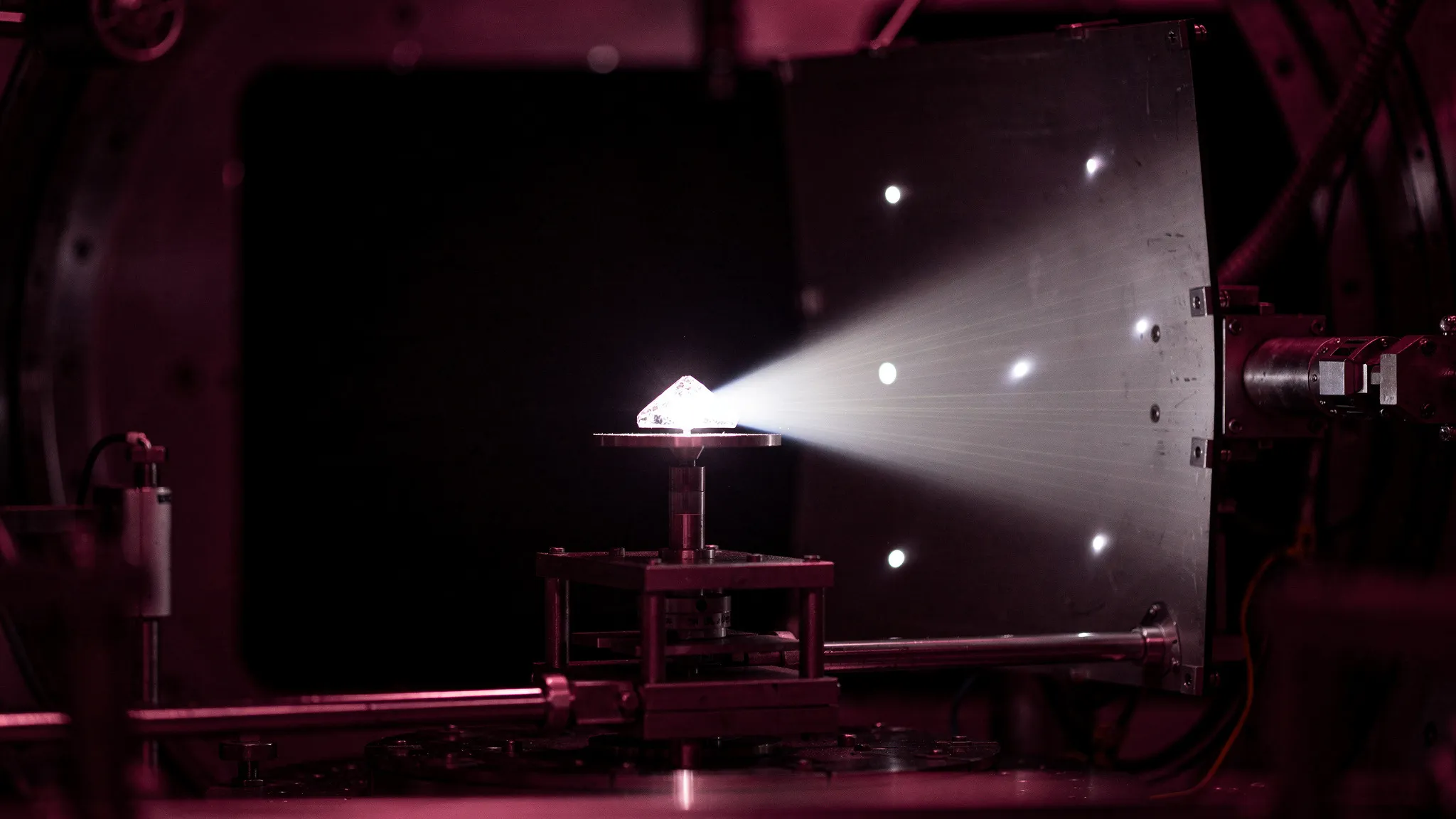
A China-led team hit a diamond with a one-nanosecond laser pulse. The shock pushed it above 1.1 terapascals and melted it. As the shock faded, the molten carbon could crystallise again.
A flash of X-rays caught the moment. Sharp diffraction spots appeared. Their spacings and angles fit one single BC8 crystal. Two separate shots gave the same density: 7.19 grams per cubic centimetre.
The trick was the route, not just the pressure. Squeezed slowly, diamond holds out up to 2 terapascals. Next question: does BC8 survive the return to normal pressure?
Source: Single-crystal X-ray diffraction of BC8 carbon near terapascal pressures, https://arxiv.org/abs/2611.06045