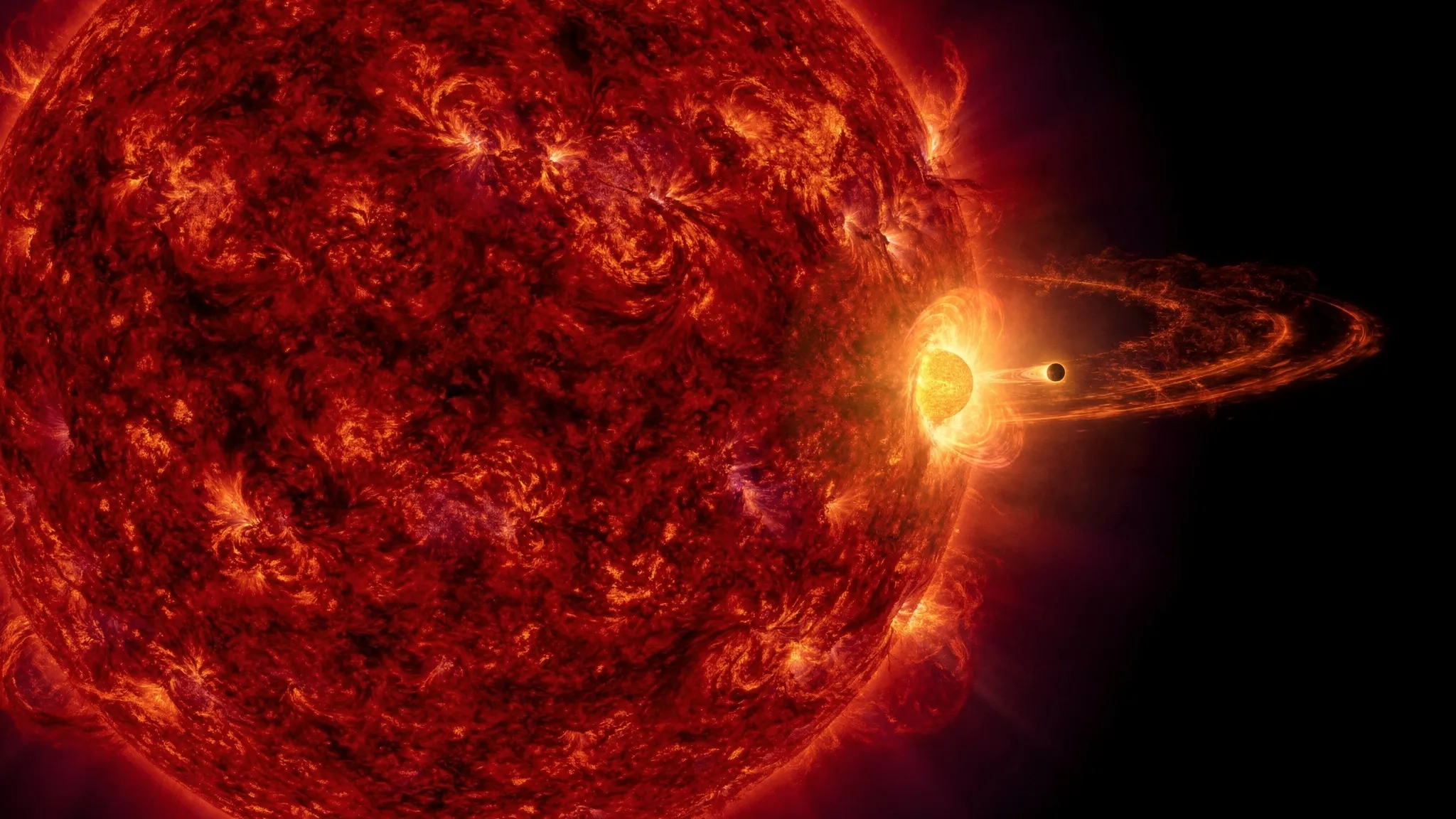
Some pairs of stars end up sharing one swollen envelope of gas. Friction then drags the smaller star inward. Theory predicted this spiral. Until now, says a new study, nobody had watched it directly.
A team of 45 researchers followed one star in the Andromeda Galaxy. From 2018, this giant of about 7 Suns brightened slowly for seven years. A companion of about 0.7 Suns was likely grinding through its outer layers.
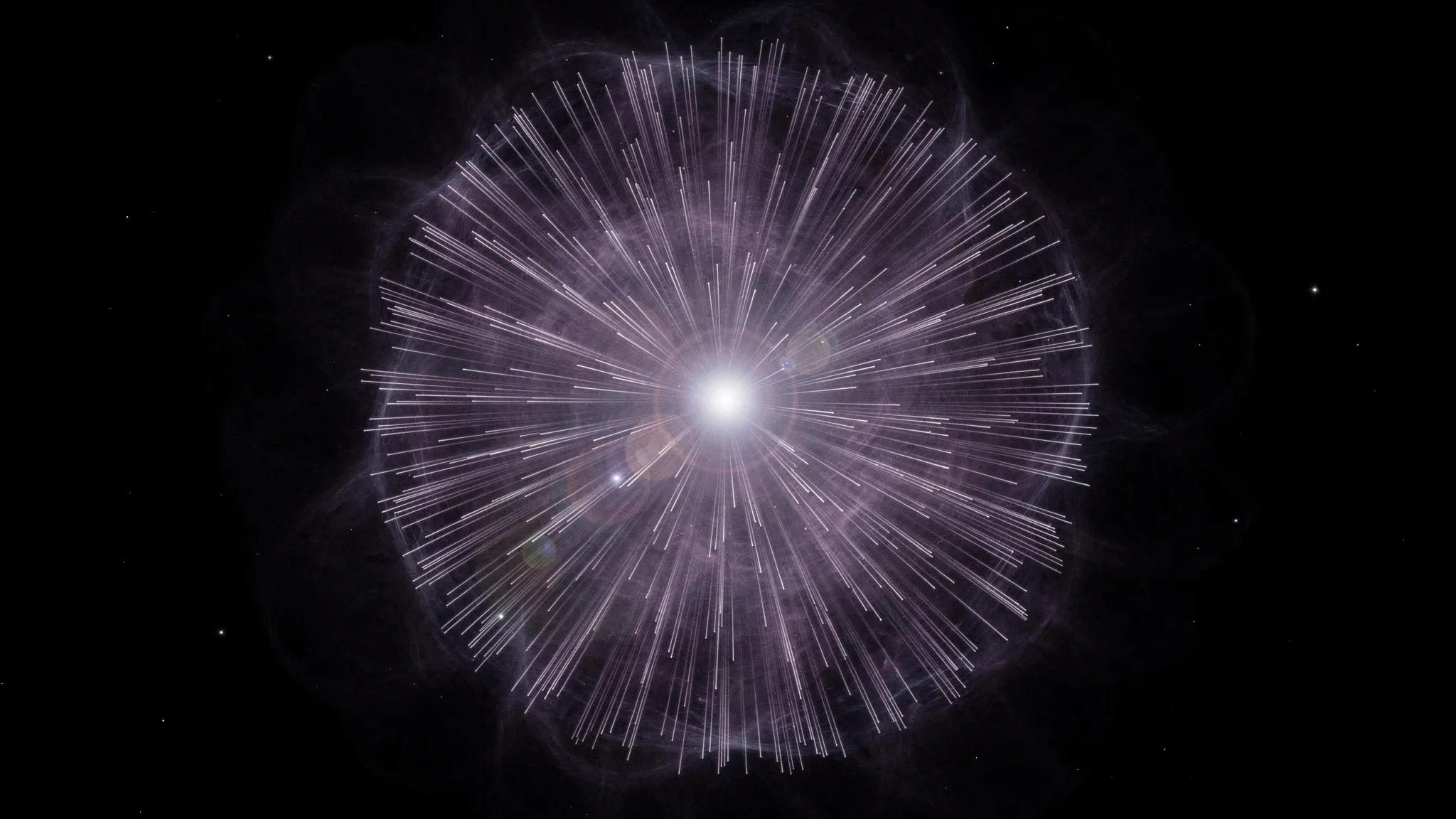
In October 2025, the star flared about 100 times brighter in 25 days. The companion had probably merged with the giant's core. Roughly a tenth of the envelope was blown away.
In the final plunge, almost all the energy went into speed, not light. A simple formula astronomers use to predict whether such pairs survive misses that. The Rubin Observatory and the Roman telescope should catch many more.
Source: An inspiral of a star inside a common envelope with its giant companion, https://arxiv.org/abs/2611.23470