Edition of November 20, 2026

  1. At The Knowledge Frontier, we pick out the research papers of the day and explain them simply.

    The web has changed in nature. We no longer search, we scroll. Pages look alike, texts are churned out, and we end up reading a great deal without keeping any of it. Educating yourself there has become a strangely passive affair.

    Here, you do more than read. Every article ends with a quiz: a few questions on what you have just read. When the subject lends itself to it, it is an experiment — you set the values yourself and recover, in turn, the researchers' result.

    @VirScience
  2. Space & astronomy

    A STAR CAUGHT SPIRALLING INSIDE ITS GIANT COMPANION

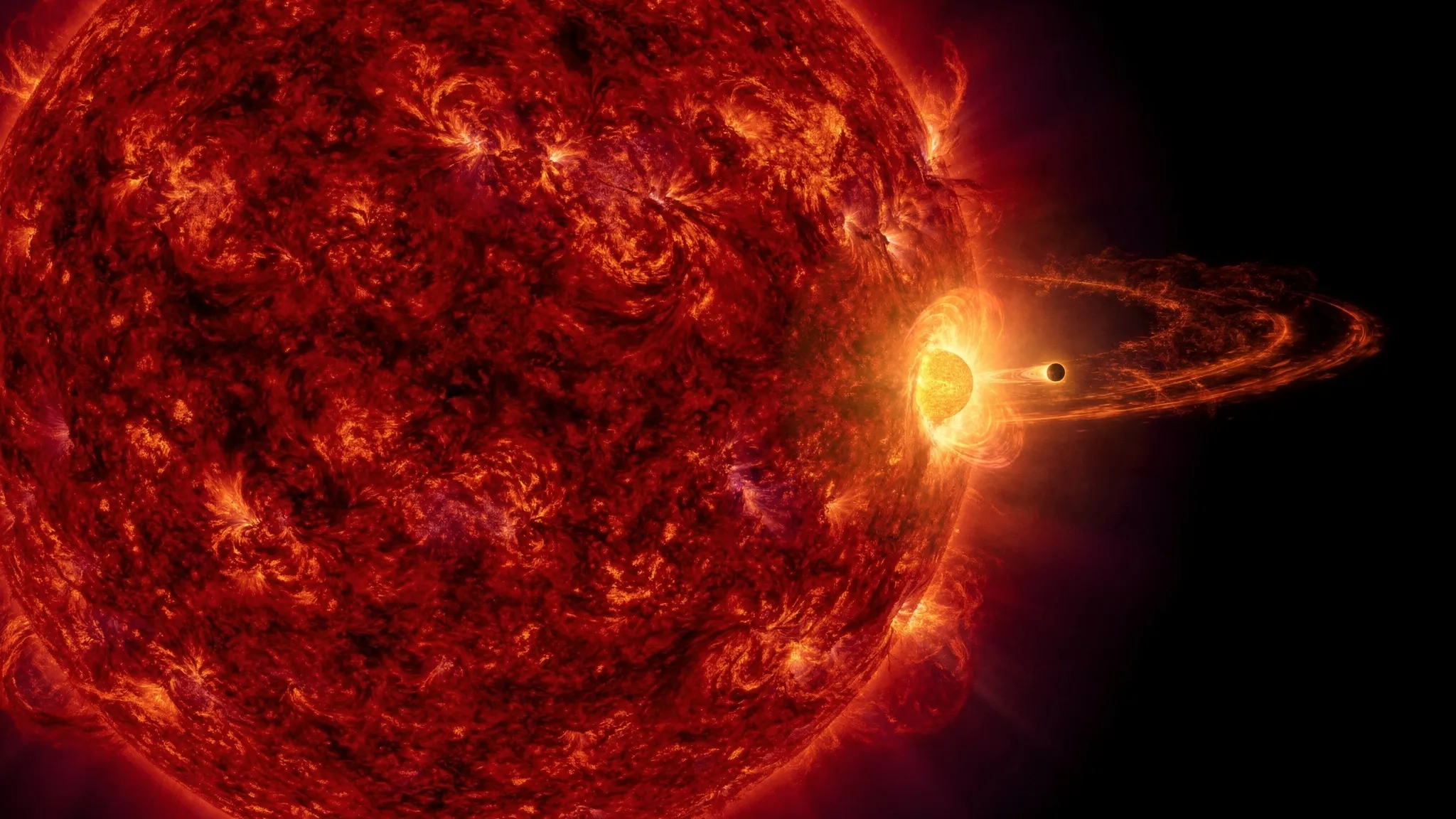
    Artist's impression of a huge red giant star filling most of the frame, a small bright yellow star sunk into its glowing right edge, and a ring-shaped trail of hot gas curving out from it into dark space, with a tiny dark sphere on the trail.

    Some pairs of stars end up sharing one swollen envelope of gas. Friction then drags the smaller star inward. Theory predicted this spiral. Until now, says a new study, nobody had watched it directly.

    A team of 45 researchers followed one star in the Andromeda Galaxy. From 2018, this giant of about 7 Suns brightened slowly for seven years. A companion of about 0.7 Suns was likely grinding through its outer layers.

    In October 2025, the star flared about 100 times brighter in 25 days. The companion had probably merged with the giant's core. Roughly a tenth of the envelope was blown away.

    In the final plunge, almost all the energy went into speed, not light. A simple formula astronomers use to predict whether such pairs survive misses that. The Rubin Observatory and the Roman telescope should catch many more.

    Source: An inspiral of a star inside a common envelope with its giant companion, https://arxiv.org/abs/2611.23470
    PreprintObservation❓ Quiz
  3. Space & astronomy

    A BUTTERFLY COLLECTOR'S FORMULA SAYS COSMIC RADIO REPEATERS FADE FAST

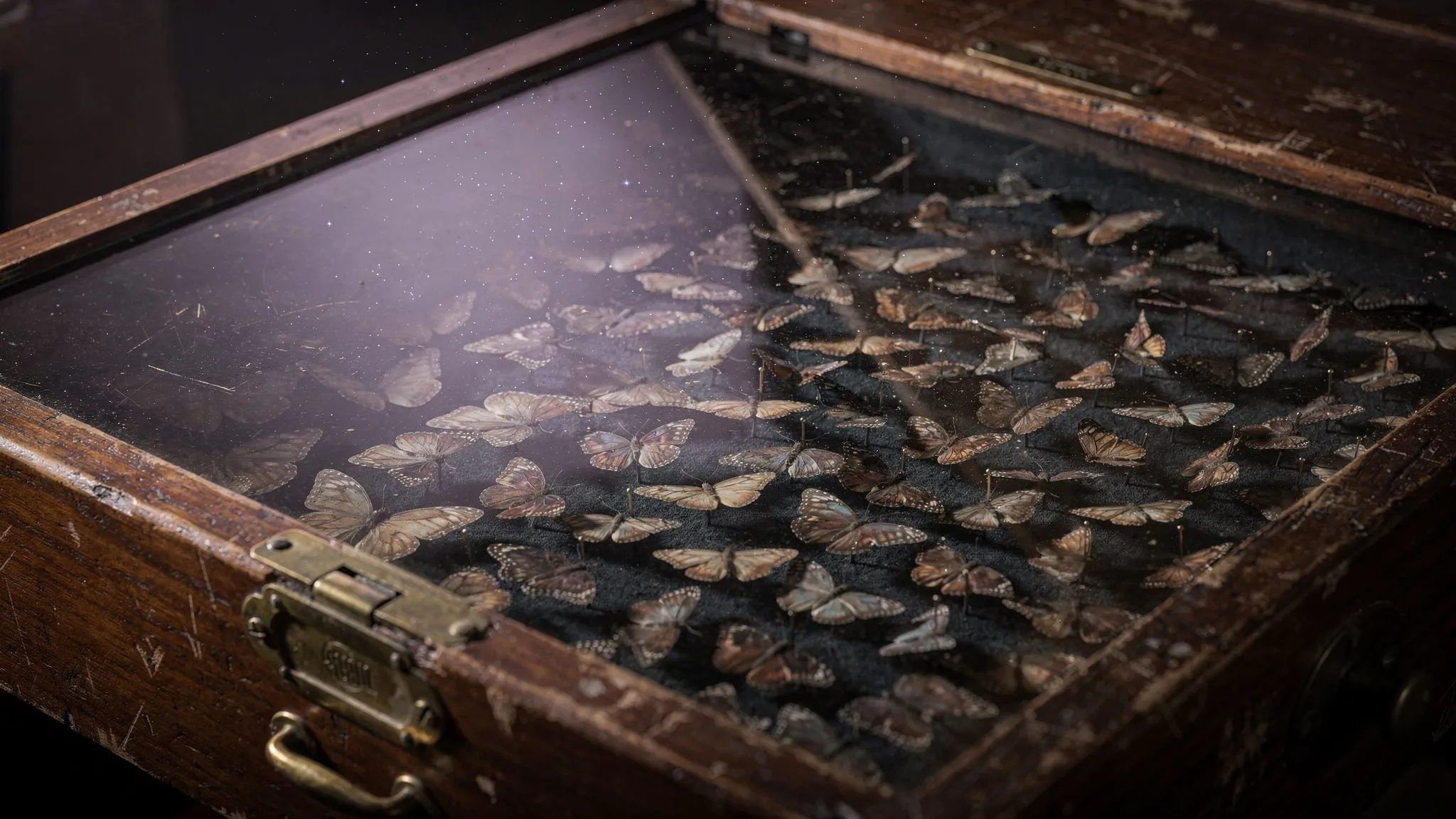
    An old wooden collector's drawer under glass, holding many pinned pale brown butterflies on dark velvet, in soft violet light.

    Fast radio bursts are flashes of radio waves lasting a few milliseconds. They come from other galaxies. A few of their sources repeat. But for how long do they stay active?

    Shotaro Yamasaki, in Taiwan, borrowed a trick from butterfly collectors. It predicts a future catch from the species caught once, twice or three times. No guess about distances is needed.

    The test used five years of data from the CHIME telescope. The forecast holds for gaps of up to two months. After one year, sources give only about half the predicted bursts. Steady sources would deliver them all.

    Repeating sources seem to fade within one to three years. They could be magnetars, a kind of young neutron star, in a brief active phase. Advice to astronomers: watch new repeaters right away.

    Source: A Butterfly Collector's View of Fast Radio Bursts: Repeating Sources Go Quiet within a Few Years, https://arxiv.org/abs/2611.24202

    PreprintData analysis❓ Quiz
  4. Mathematics

    AN ENDLESS LIST WRITTEN WITH SIX NUMBERS THAT NEVER BALANCES

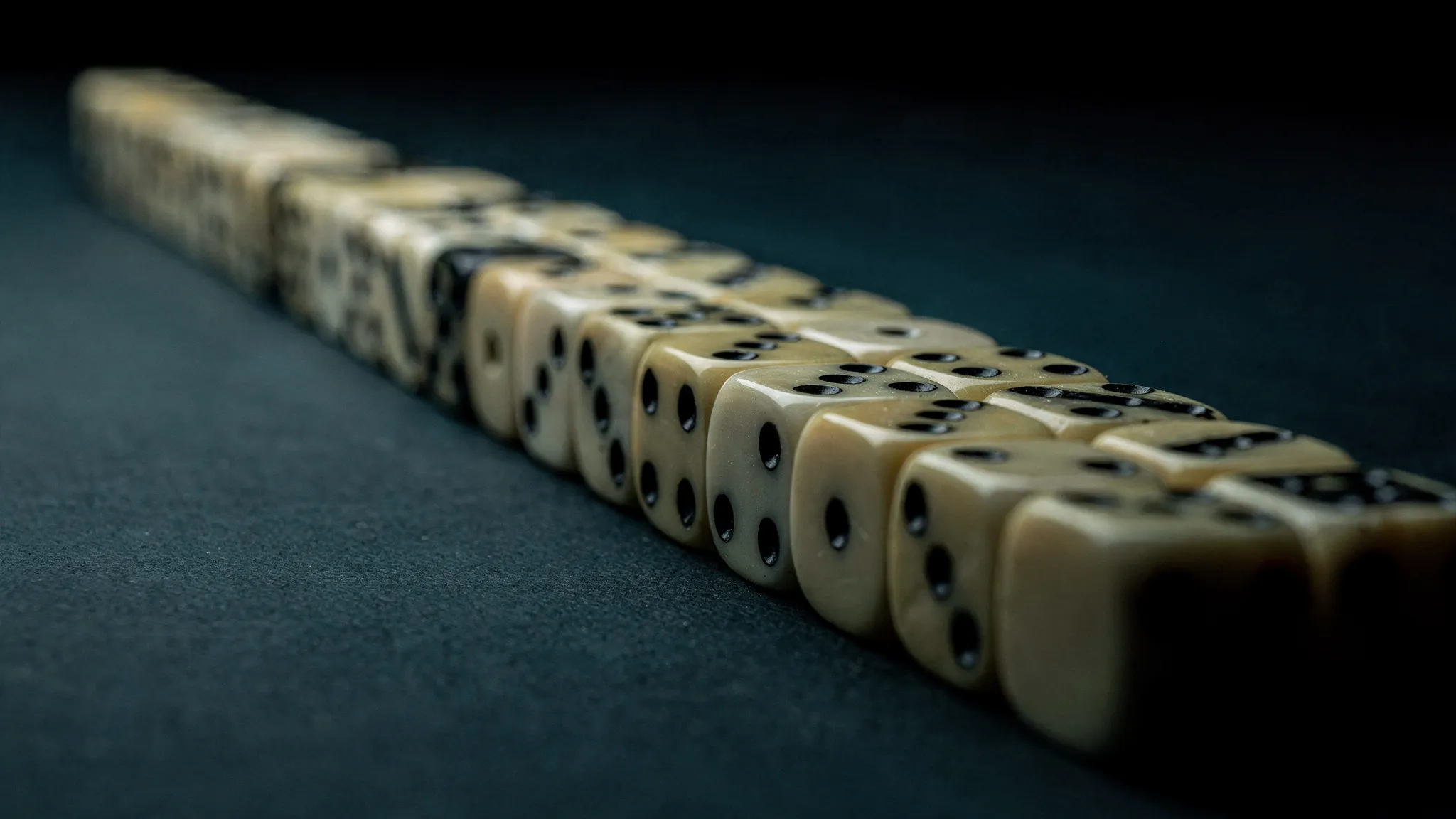
    A long row of ivory dice lined up edge to edge on a dark table, their top faces showing different numbers of black pips, the far end of the row blurred into darkness.

    Take the digits 1, 4, 2, 3. Cut them in the middle: 1 4 and 2 3. Same length, same sum: 1 + 4 = 2 + 3 = 5. Mathematicians call this an additive square.

    Can an endless list, written with only a few numbers, avoid every such square? The question was posed in 1972. A later conjecture said it was impossible.

    Jeffrey Shallit works at the University of Waterloo, in Canada. The new note gives an explicit endless list built from six numbers. No two neighbouring blocks of equal length ever share a sum. Five of the six numbers are gigantic, though.

    The note says its text was almost entirely written by an AI, GPT 6.2 Astra. So was a machine-checked version of the proof. Could four or five numbers do? Nobody knows yet.

    Source: An additive-square-free word over an alphabet of size 6, https://arxiv.org/abs/2611.24441

    PreprintTheory❓ Quiz
  5. Mathematics

    A 1969 CONJECTURE ABOUT SUMS THAT CANCEL OUT TURNS OUT FALSE

    A row of hexagonal brass nuts threaded side by side on a dark metal rod, each turned at a slightly different angle, most of them blurred into the dark background.

    Picture 23 clocks with six hours each. A move turns some of their hands forward. Pile up enough moves, and some group brings every hand back to the start.

    How many moves guarantee that? This number is called the Davenport constant. In 1969, van Emde Boas and Kruyswijk proposed a simple formula for it. For 23 six-hour clocks, it gives 116.

    A team in China and Austria has built 116 moves where no group cancels out. So 116 is not enough. The formula fails for 23 clocks and for any larger number.

    The guess had stood for 57 years, and experts expected it to hold. The true value remains unknown. Even for just four six-hour clocks, nobody knew it as late as 2018. The hunt goes on.

    Source: A disproof of the van Emde Boas–Kruyswijk conjecture on the Davenport constant, https://arxiv.org/abs/2611.24775

    PreprintTheory❓ Quiz
  6. Physics

    NEUTRON WAVES BENT INTO CONES MAKE BESSEL BEAMS

    A small square silicon wafer covered in tiny circular patterns that shimmer in rainbow colours, held by metal tweezers on a dark bench in blue light.

    A normal beam spreads as it travels. A Bessel beam keeps its shape for a while, with a sharp central spot. It has been made with light, electrons and clouds of atoms.

    A team from Waterloo, in Canada, has now done it with neutrons. They etched millions of tiny ring patterns into silicon wafers. Each pattern bends the neutron wave into a cone.

    Tests in the UK and Australia confirmed it. On the detector, the central spot came out 7.8 mm wide. An ordinary beam gave 15.5 mm. Twisted versions carry a dark core.

    Ordinary lenses barely bend neutrons. These etched gratings offer another way to focus them. The team also proposes using them to measure a subtle phase shift, the Gouy phase.

    Source: Generation of neutron Bessel beams, https://arxiv.org/abs/2611.24655

    PreprintExperiment❓ Quiz
  7. Computing & AI

    69,486 PAINTINGS SHOW HOW WESTERN ART LEFT THE BROWNS BEHIND

    A long museum gallery wall with a single row of framed oil paintings under warm spotlights, the nearest one dark and brown, the next ones brighter and full of vivid blue, red and yellow flowers, above a polished wooden floor.

    For centuries, Western painters worked mostly in black, brown and ochre. Then colour took over. A team in Paris measured how, across 69,486 digitized paintings.

    Each painting was reduced to 25 reference colours. The dark earths declined throughout. Greys and pastels gained ground before about 1880. Pure reds, greens and blues rose mainly in the twentieth century.

    Two numbers sum up a palette: how many colours it uses, and how unevenly. Until the 1910s, painters used ever more colours. After 1950, a few colours started to dominate.

    Hundreds of volunteers then judged abstract colour images. Two recipes came out as most harmonious. The first: many colours in a strong hierarchy. The second: a few colours used evenly. The middle ground scored lowest.

    Source: Color Through Time: Distributions, Sparsity and Dominance in Western Painting, https://arxiv.org/abs/2611.23139

    PreprintData analysis❓ Quiz
  8. Space & astronomy

    THE STAR THAT OUTLIVED THE SUPERNOVA OF 1181

    A round violet nebula of countless thin straight filaments radiating like a firework from a single brilliant star at its centre, on a black sky.

    In August 1181, a "guest star" was recorded in China, Japan and Egypt. Its leftover is probably Pa30: thin rays of gas around a tiny, scorching star.

    The favoured story is a botched supernova, called Type Iax. The white dwarf that exploded did not blow apart completely. A very hot star survived the blast.

    Astronomers from India, Britain, the US and Italy have now studied that star. They took its first infrared spectrum. They combined NASA's SPHEREx with three ground telescopes. Its lines are extremely broad: its wind races at about 15,000 km/s.

    Most lines come from highly ionised oxygen. Others match silicon, sulphur, magnesium and aluminium in hot, shocked gas. That fits what the leftover of a Type Iax explosion should show. The authors still call this modelling exploratory.

    Source: Infrared spectrum of the Type Iax supernova remnant Pa30, https://arxiv.org/abs/2611.24734

    PreprintObservation❓ Quiz
  9. Mathematics

    1729 IS THE ONLY CARMICHAEL NUMBER OF ITS KIND

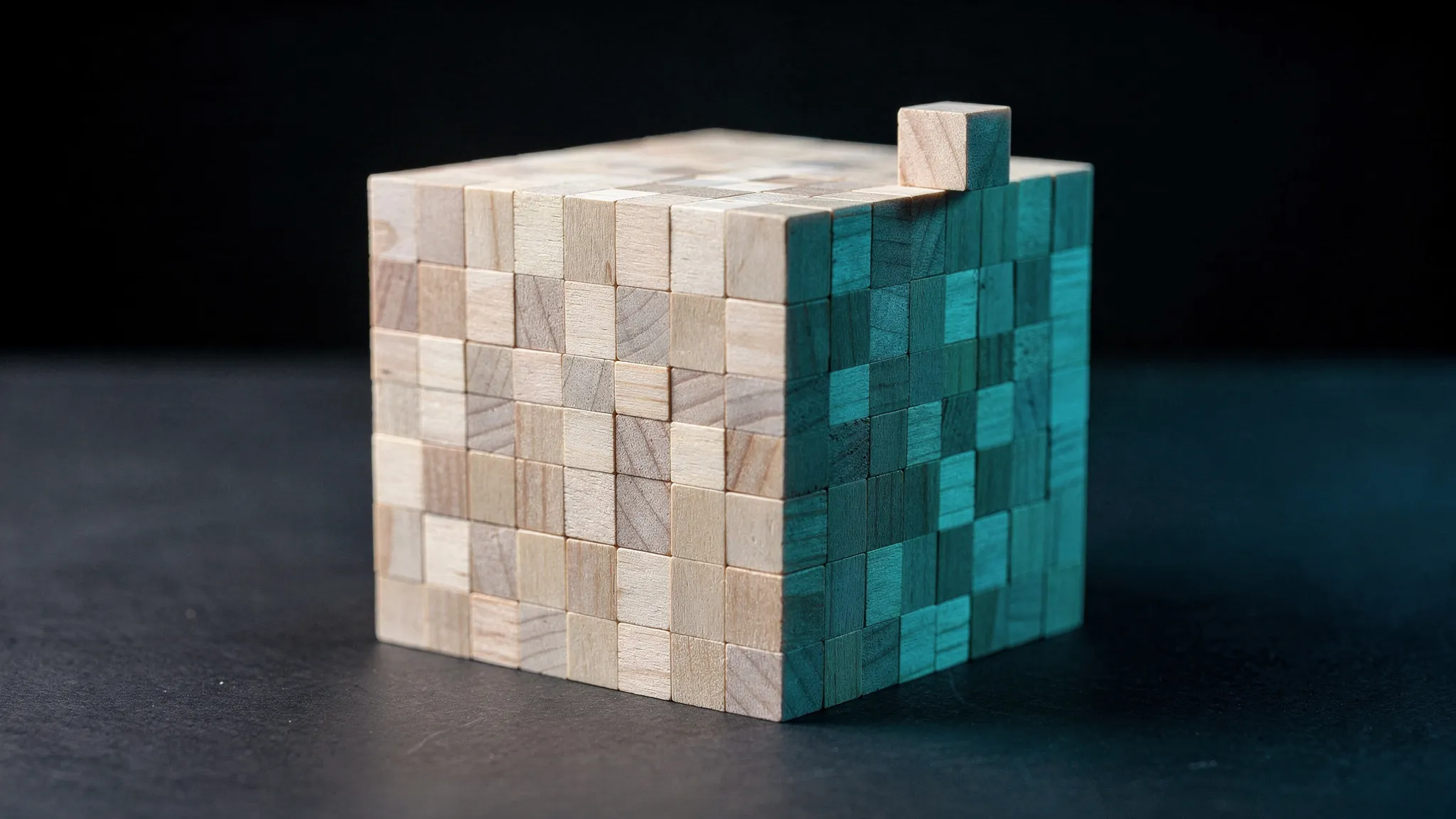
    A large cube built from many small pale wooden blocks, one face lit in blue-green light, with one extra small block resting on its top corner, on a dark table.

    The number 1729 already has a nickname: the Hardy–Ramanujan taxicab number. It is also a Carmichael number, a composite number with a curious property.

    Such a number splits into at least three different primes. Subtract 1 from each prime: every result must divide the number minus 1. For 1729 = 7 × 13 × 19, it works. 6, 12 and 18 all divide 1728.

    Now take numbers of the form 2ⁿ × p³ + 1, with p prime. Florian Luca had shown they need p = 3 to be Carmichael numbers. Two researchers at the University of Bath now finish the job. Only n = 6 works, which gives 1729.

    Their proof first caps n at 2,742. Then a sieve finishes the work without factoring anything. The paper is dedicated to the memory of Luca.

    Source: One more curious property of 1729: The only Carmichael number of the form 2^n p^3 + 1 with prime p, https://arxiv.org/abs/2611.24275

    PreprintTheory🧪 Experiment
  10. Medicine & health

    BARE NERVE FIBRES SKEW THE MRI READING OF MYELIN LOSS

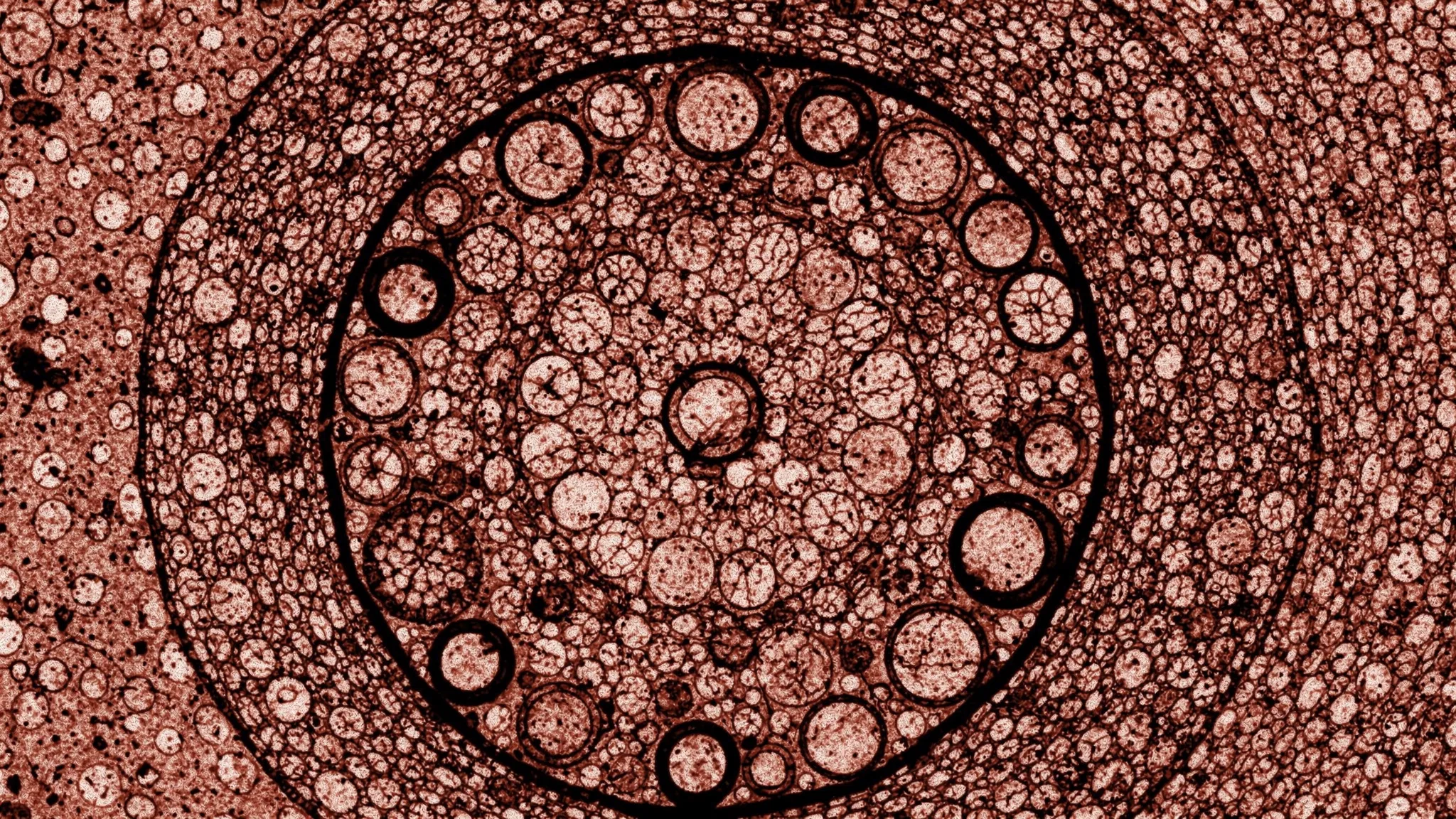
    A red-tinted electron micrograph of nerve fibres cut across: many small round axons packed together, some larger ones circled by a thick dark ring, all set inside large concentric outlines.

    Many nerve fibres in the brain wear a fatty sheath called myelin. Diseases that strip it are tracked with MRI. Its measures usually assume that all fibres are sheathed.

    A team in New York and Finland tested that idea in mice. Some ate cuprizone, a compound that destroys myelin. They compared MRI scans with electron microscope images of the same brain region.

    Bare fibres made up a growing share as myelin vanished. The MRI measure of fibre water counted them too. A common myelin index only matched the microscope once they were included.

    Each spot of an MRI image mixes sheathed and bare fibres. That mix pulls the same index down, by up to 8%. To read these scans right, bare fibres have to be counted.

    Source: Unmyelinated axons alter the biological interpretation of MRI biomarkers of demyelination, https://arxiv.org/abs/2611.24487

    PreprintData analysis❓ Quiz
  11. Life sciences

    A VIRUS GETS A SECOND COAT, BUILT BY ELECTRIC ATTRACTION

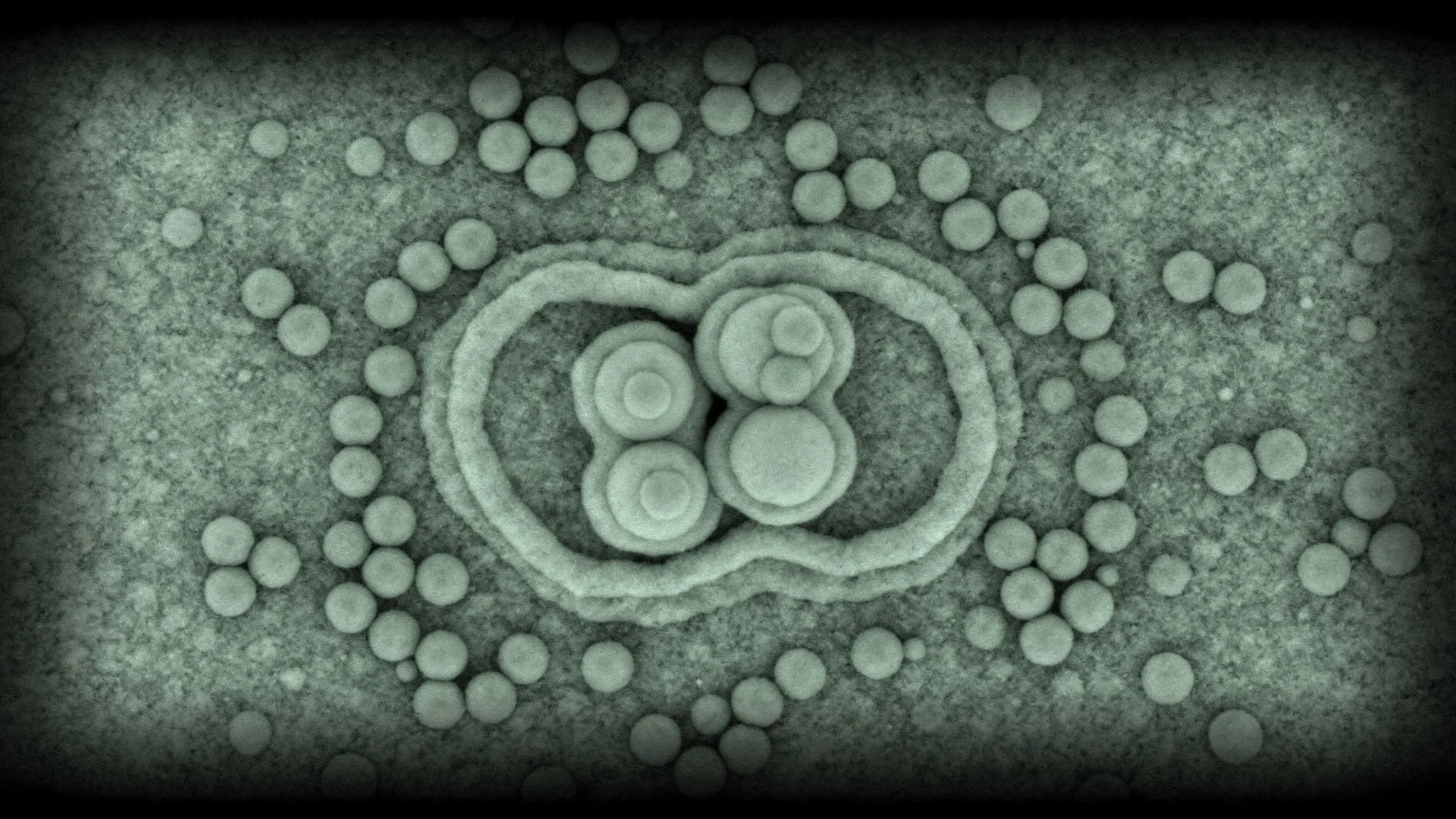
    A green-tinted micrograph of many small smooth round particles scattered in pairs and clusters, with four of them enclosed together in one thick double-walled shell in the middle.

    The virus MS2 infects bacteria and keeps its RNA inside a shell of protein. In a test tube, 180 copies of that protein can build the shell alone. They simply gather around the RNA.

    A team from Harvard, Princeton and San Diego tried something new. They added spare coat proteins to whole, intact viruses. Above a threshold, the proteins built extra shells around them. The RNA stayed locked inside.

    What holds them together? Electric attraction: the proteins show a positive apparent charge, the virus a negative one. The shells formed only at moderate salt levels.

    Many of these second coats stop halfway. Some even hide the part the virus uses to grab bacteria. The authors suspect stiffness and curvature hold growth back.

    Source: Electrostatic interactions drive the self-assembly of secondary coat-protein layers around wild-type MS2 particles, https://arxiv.org/abs/2611.24513

    PreprintExperiment❓ Quiz
Legal notice