The strong force glues quarks together. Its theory predicts something strange. The vacuum comes in several distinct versions, and nature can tunnel between them. These jumps are called instantons. Decades of study have never confirmed them.
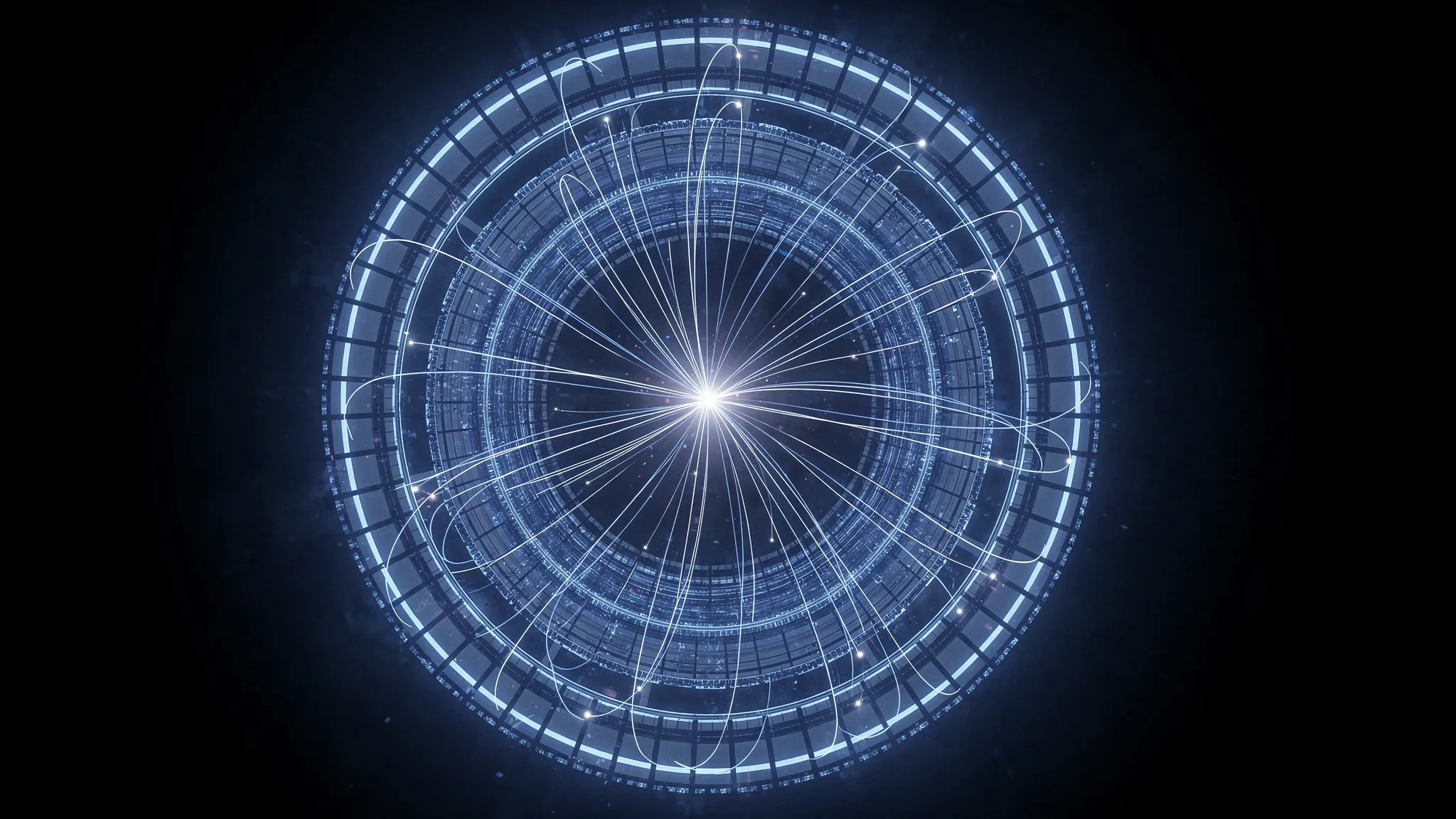
An instanton should spray particles almost evenly in every direction. The ATLAS collaboration looked for that signature at the LHC. It used data from 2015, recorded while collisions were kept deliberately rare.
A neural network sorted the collisions using five track measurements. In the final selection, 32,789 events remain. The fit attributes about 3,900 of them to a signal. Against background alone, the excess reaches 3.5 sigma.
So, instantons at last? Not yet. No background model alone describes the data, the team writes. The quarks these jumps should produce, and their mass spectrum, still have to be checked.
Source: Search for the low-mass isotropic signature of QCD instantons in pp collisions at √s = 13 TeV using the ATLAS detector, https://arxiv.org/abs/2611.22092