Navigation satellites do more than guide your phone. Their signals cross the ionosphere, an electrified layer high above us. Receivers on the ground can map its tiny ripples.
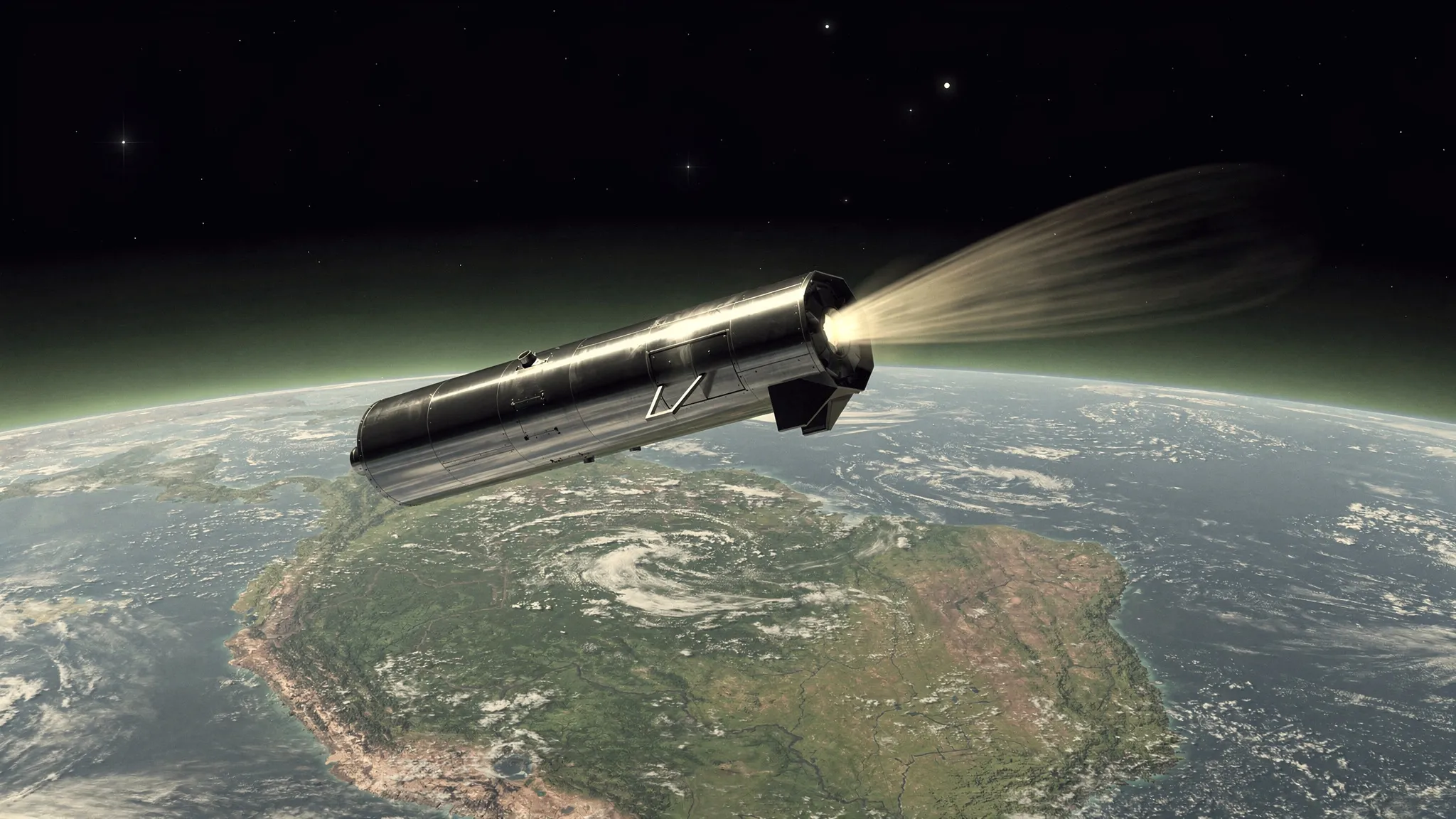
Starship flew its 14th flight on 28 September 2026. Over South America, receivers caught a bow wave. It looked like a boat's wake. Yet the engines were off.
How can a 9-metre hull stir such thin air? Flight video shows gas streaming out. A physicist in Norway simulated 10 kilograms of unburned methane and oxygen per second. The gas spreads its push over about 10 kilometres.
The simulated wake has a shape and speed broadly similar to those seen over South America. Over North America, it stays far too weak. The real venting rate remains unknown, and chemistry is still untested.
Source: Ionospheric bow waves during Starship Flight 14: coupling through vented propellant, https://arxiv.org/abs/2611.20379