Edition of November 11, 2026

  1. At The Knowledge Frontier, we pick out the research papers of the day and explain them simply.

    The web has changed in nature. We no longer search, we scroll. Pages look alike, texts are churned out, and we end up reading a great deal without keeping any of it. Educating yourself there has become a strangely passive affair.

    Here, you do more than read. Every article ends with a quiz: a few questions on what you have just read. When the subject lends itself to it, it is an experiment — you set the values yourself and recover, in turn, the researchers' result.

    @VirScience
  2. Space & astronomy

    A GIANT PLANET FULL OF HEAVY HYDROGEN

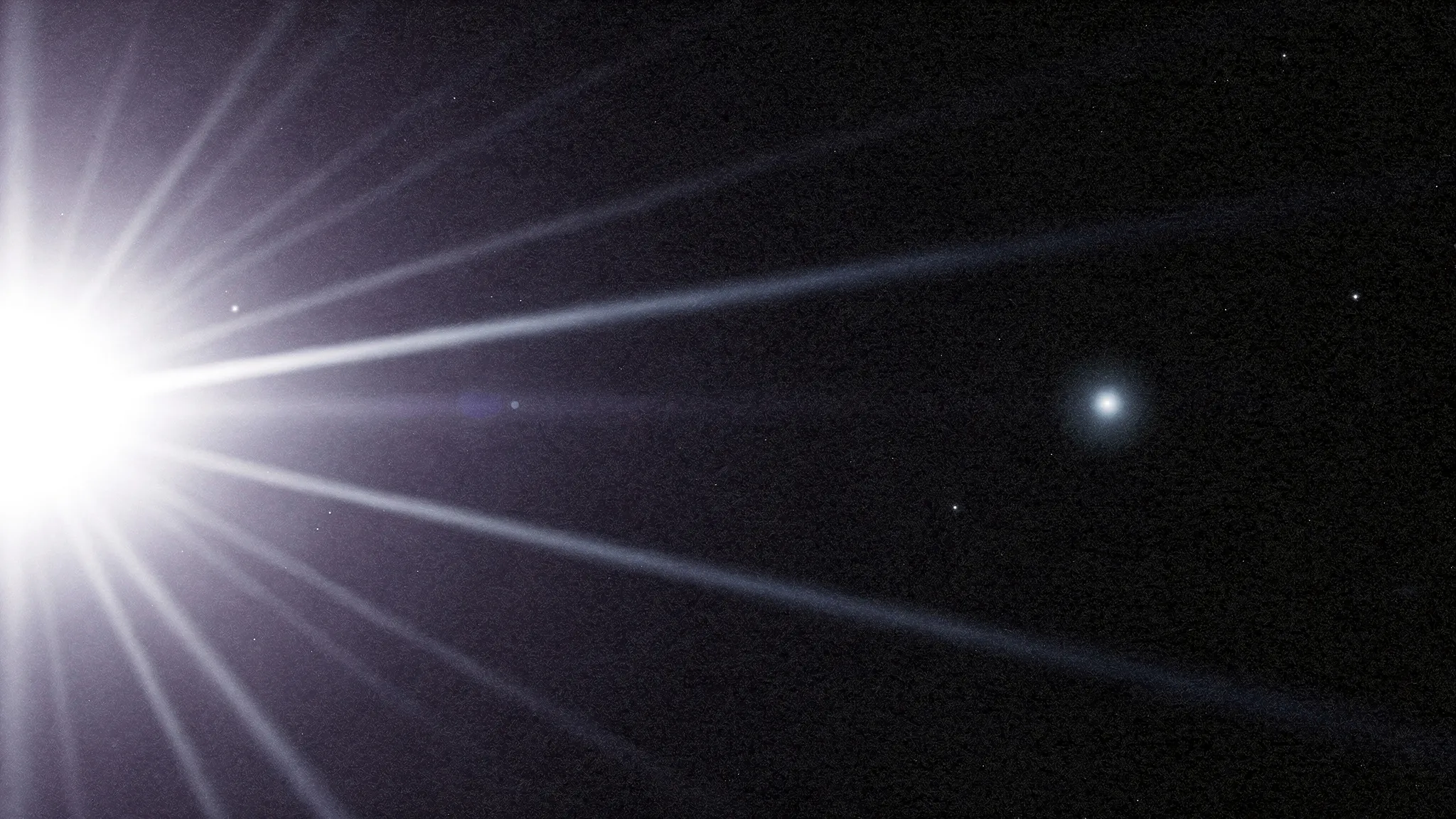
    A bright star blazing at the left edge of a dark violet-tinted sky with long diffraction spikes, and a faint small point of light on the right.

    Meet ε Ind Ab, a giant planet six to eight times heavier than Jupiter. It is cold and about four billion years old. Its star outshines it a million times. Yet the JWST picked out its light.

    In its atmosphere, the telescope found methane carrying deuterium, a heavy form of hydrogen. Result: twice as much deuterium as Jupiter or Saturn. That ratio matches Uranus and Neptune, two ice giants.

    No gas cloud can be that rich in deuterium: the Big Bang set a ceiling. So the planet must have swallowed icy solids. They held at least 30 times more deuterium than typical Solar System comets.

    Such values exist: in the interstellar comet 3I/ATLAS, and in organic molecules of star-forming regions. This giant ate pristine material formed in deep cold. Interstellar ice can leave its mark even on a gas giant.

    Source: The deuterium-rich atmosphere of a mature super-Jupiter, https://arxiv.org/abs/2611.10129

    PreprintObservation❓ Quiz
  3. Mathematics

    WHEN SHOULD VAR OVERRULE THE REFEREE?

    The boots of two players, one in red socks and one in white, almost level on a floodlit pitch at night, with a thin glowing line across the grass between them.

    World Cup 2026, Iran against Egypt, 93rd minute. Iran scores, and the referees on the pitch let it stand. Then VAR rules it out: part of a foot was offside. Iran's chances of qualifying, put at 92%, later fell to zero.

    Should a tiny margin be enough? Three authors, two from a high school, built a model. The referee gives a yes or no, VAR gives a distance. Both make random errors of known size.

    Their rule: VAR overrules only if its margin beats a threshold. The threshold grows with the square of VAR's own error. It shrinks when the referee's error grows. For typical errors of 10 cm (referee) and 2 cm (VAR), it is 0.32 cm.

    Combined, they err less: 9.7% instead of 15.9% in one example. The same rule fits any human verdict checked by a machine's measurement. Think of a doctor's diagnosis and an AI malignancy score.

    Source: When Should AI Overturn a Human Decision? Controversy at the 2026 World Cup and a √(2/π) Solution, https://arxiv.org/abs/2611.11819

    PreprintTheory
  4. Mathematics

    ERDŐS'S LONGEST CURVE, PROVED AT LAST

    A pale glowing wire bent into a flower of six rounded loops that all pass through a single centre, lying on dark slate.

    Start with a polynomial, like z⁶ − z. Mark every complex number z where its value has size exactly 1. You get a curve, called a lemniscate. How long can it be?

    In 1958, Erdős, Herzog and Piranian made a guess. Among polynomials of degree n starting with zⁿ, zⁿ − 1 wins. For degree 6, its curve has six petals meeting at the centre. Degree 2 was settled, then all large degrees and degree 3.

    Teng Zhang, of Xi'an Jiaotong University, now proves it for every degree. Analysis handles degrees from 256 up. For degrees 4 to 255, computers check the inequalities with rigorous arithmetic. Most checks are run by two independent programs.

    The proof also settles equality. Only zⁿ − 1, shifted or rotated, reaches the maximum. A 68-year-old Erdős problem is closed, pending review by other mathematicians.

    Source: A proof of the Erdős-Herzog-Piranian lemniscate conjecture, https://arxiv.org/abs/2611.12830

    PreprintTheory❓ Quiz
  5. Space & astronomy

    AN EARTH-WATCHING RADAR THAT ALSO SEES SPACE JUNK

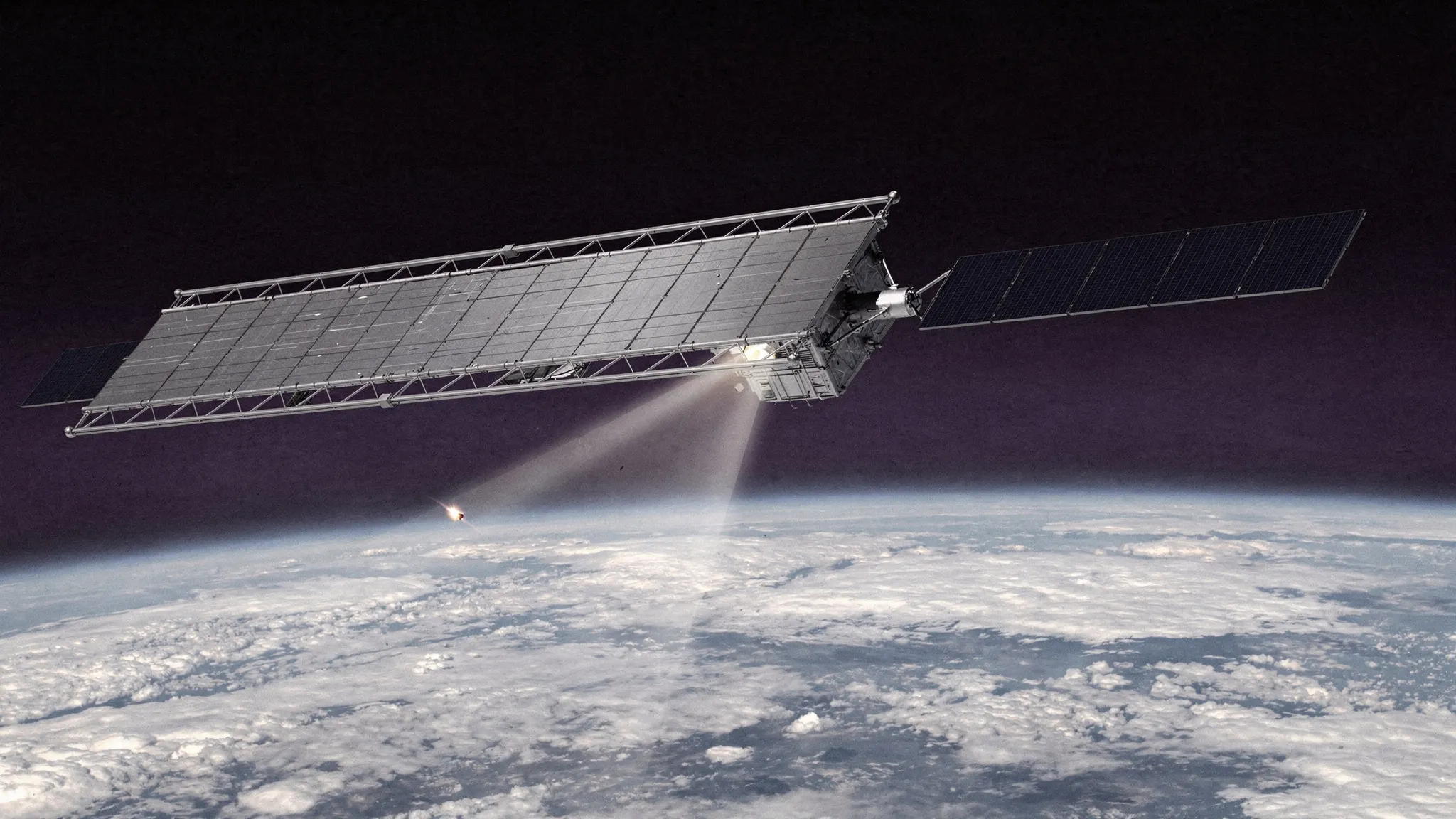
    A satellite with a long flat radar antenna and a solar wing above the curve of the Earth, a pale beam slanting down towards the clouds and a tiny glinting fragment at its edge.

    In 2016, a fragment of about 1 cm struck a solar panel of Sentinel-1A. Debris that small is too tiny to track one by one. Yet it cost that satellite part of its power for good.

    Sentinel-1 carries a radar that images the ground. A Norwegian-Swedish team reprocessed its open raw signals. Up close, radar is powerful: ten times closer, the echo is 10,000 times stronger.

    In 21 minutes of recordings from six days, they found 76 objects. Satellites, rocket stages and debris passed 42 to 493 km away. Two fragments were even found blind, without knowing their orbits.

    Echoes from the ground are the main obstacle. In theory, Sentinel-1 could see 3.4 mm spheres at 10 km. A cloud radar, EarthCARE, could reach 0.6 mm. Satellites already in orbit could count the smallest junk.

    Source: Detecting space objects with Earth-observation radar satellites, https://arxiv.org/abs/2611.12158

    PreprintData analysis❓ Quiz
  6. Chemistry

    A SHEET ONE MOLECULE THICK THAT GASES POUR THROUGH

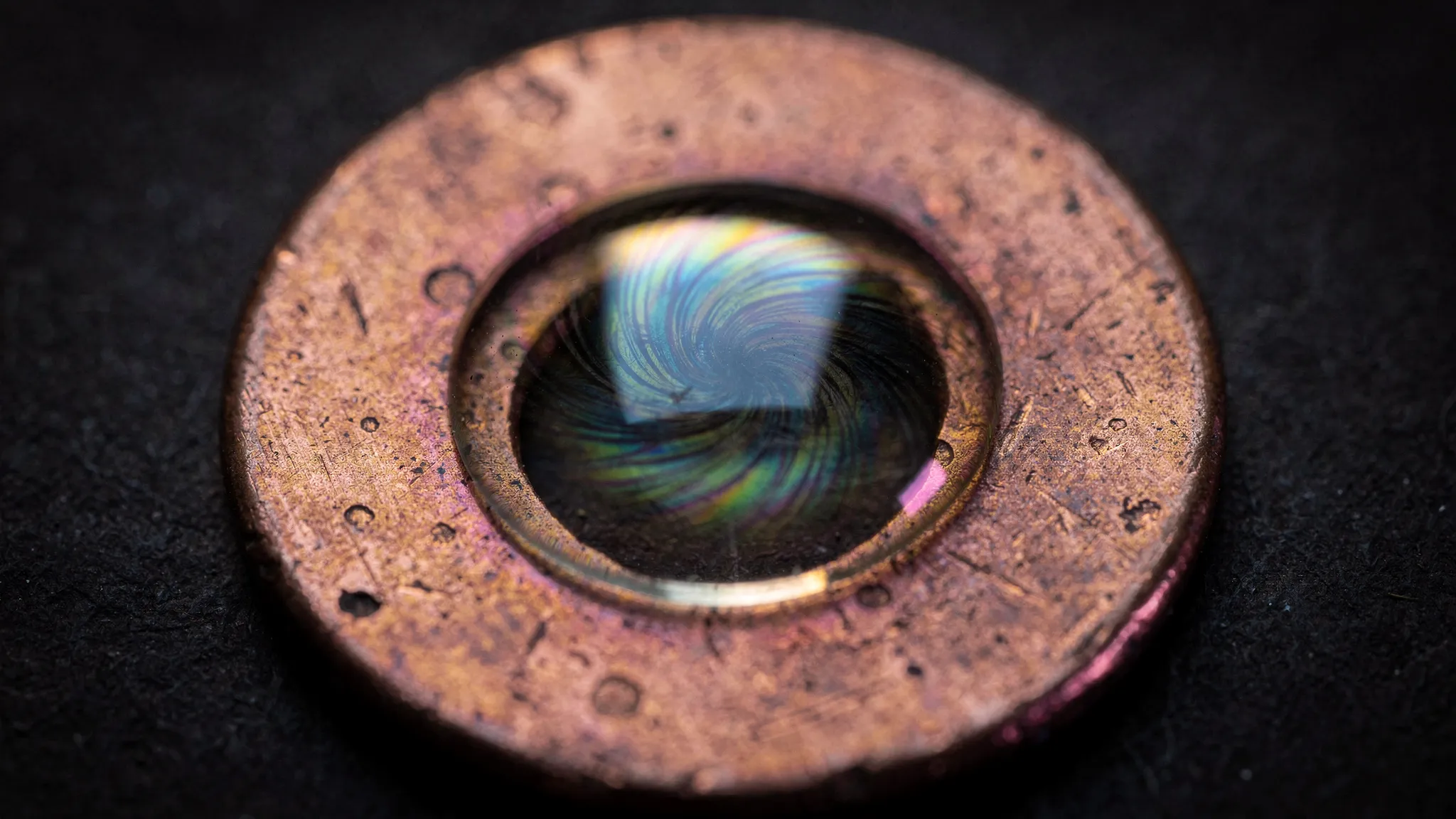
    A copper disc with a round central hole sealed by a thin iridescent film, swirling with rainbow colours like a soap film, against a dark background.

    Separating gases is one of industry's biggest energy costs. Membranes help, and the thinner, the faster. But graphene, the thinnest, blocks even the lightest gases. Holes must be punched in it, unevenly.

    Chemists in Nevada grow a polymer sheet one molecule thick, about 1.3 nm. Its pores are all identical and cover nearly a quarter of the surface. The Nevada team pushed five gases through it; a Tennessee group simulated the flow.

    Every gas obeyed Graham's law. Lighter gases pass faster, as one over the square root of their mass. The flow nears the ideal limit: almost every molecule hitting a pore goes through. That beats sieving graphene membranes by 1,000 to 10,000 times.

    Surprise: bulky SF₆, thought too big for the pores, slipped through too. The sheet sorts gases only by weight, not size, for now. Adding selectivity without losing the open area is the next challenge.

    Source: Giant gas permeance through a nanoporous crystalline 2D polymer, https://arxiv.org/abs/2611.11518

    PreprintExperiment❓ Quiz
  7. Physics

    PINCH A POTATO CHIP, FIND LIGHT AND SHADOW

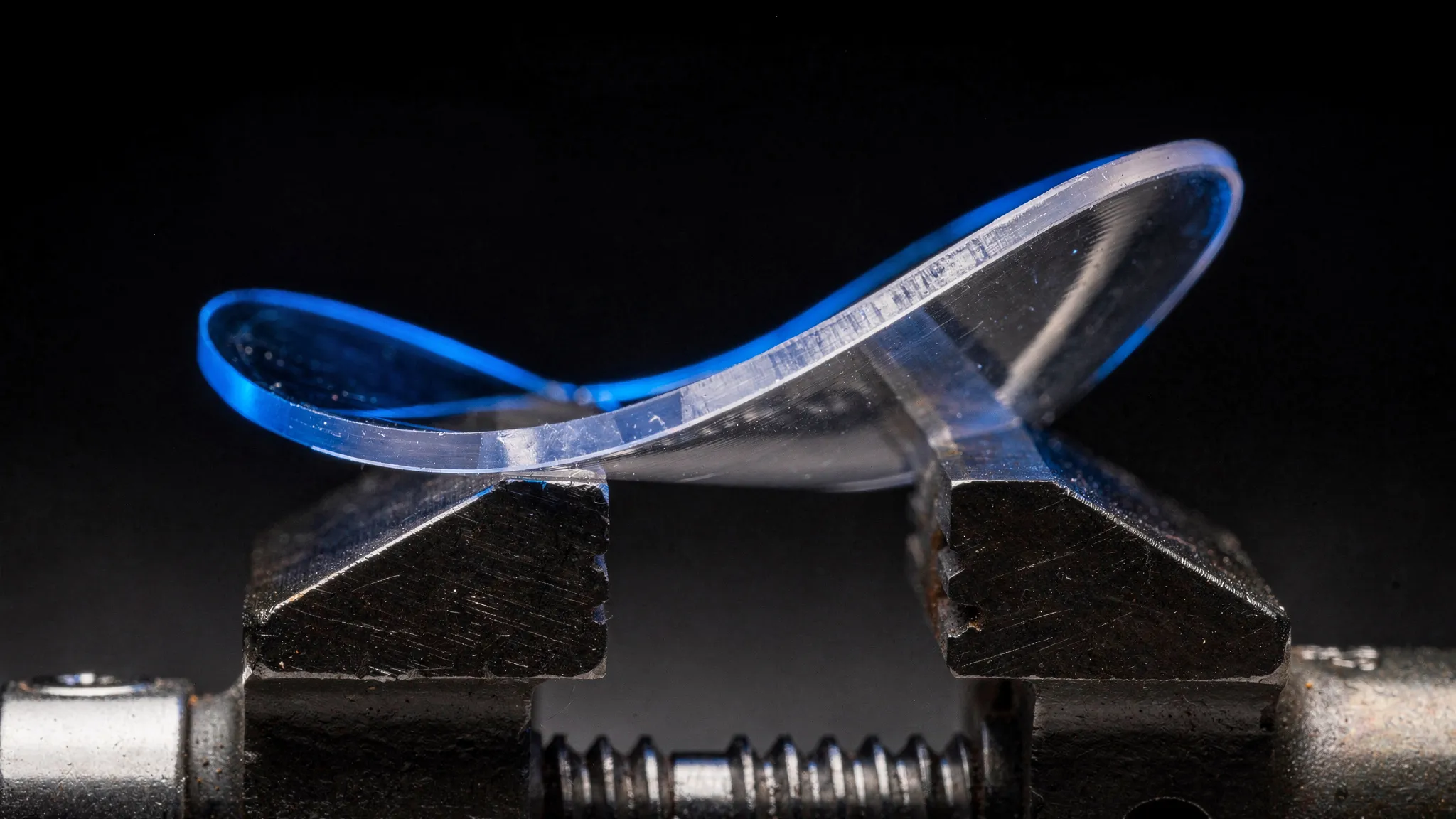
    A clear plastic shell shaped like a potato chip, its edge lit in blue, resting across the jaws of a small steel vice against a black background.

    Take a saddle-shaped shell, like a potato chip, and pinch it at two edge points. Its tip rises or sinks. Which one? A team at Keio University in Japan worked it out.

    Without stretching, the shell obeys a wave equation, with distance playing the role of time. The pinch travels along special lines of the surface. Along them, the surface does not curve.

    Points reached by two such lines are "lit": they rise. Points reached by none sit in "shadow": they sink. The tip switches when the chip's two curvatures are equal. 3D-printed chips and simulations agree.

    The same rule maps where a clamped shell is stiff: inside a lit diamond. Domes, by contrast, cast no shadows. It could guide designs from stretchable electronics to deployable structures.

    Source: Pinching an elastic potato chip, https://arxiv.org/abs/2611.10546

    PreprintExperiment
  8. Medicine & health

    A PICOSECOND PULSE THAT KILLS FEWER CELLS

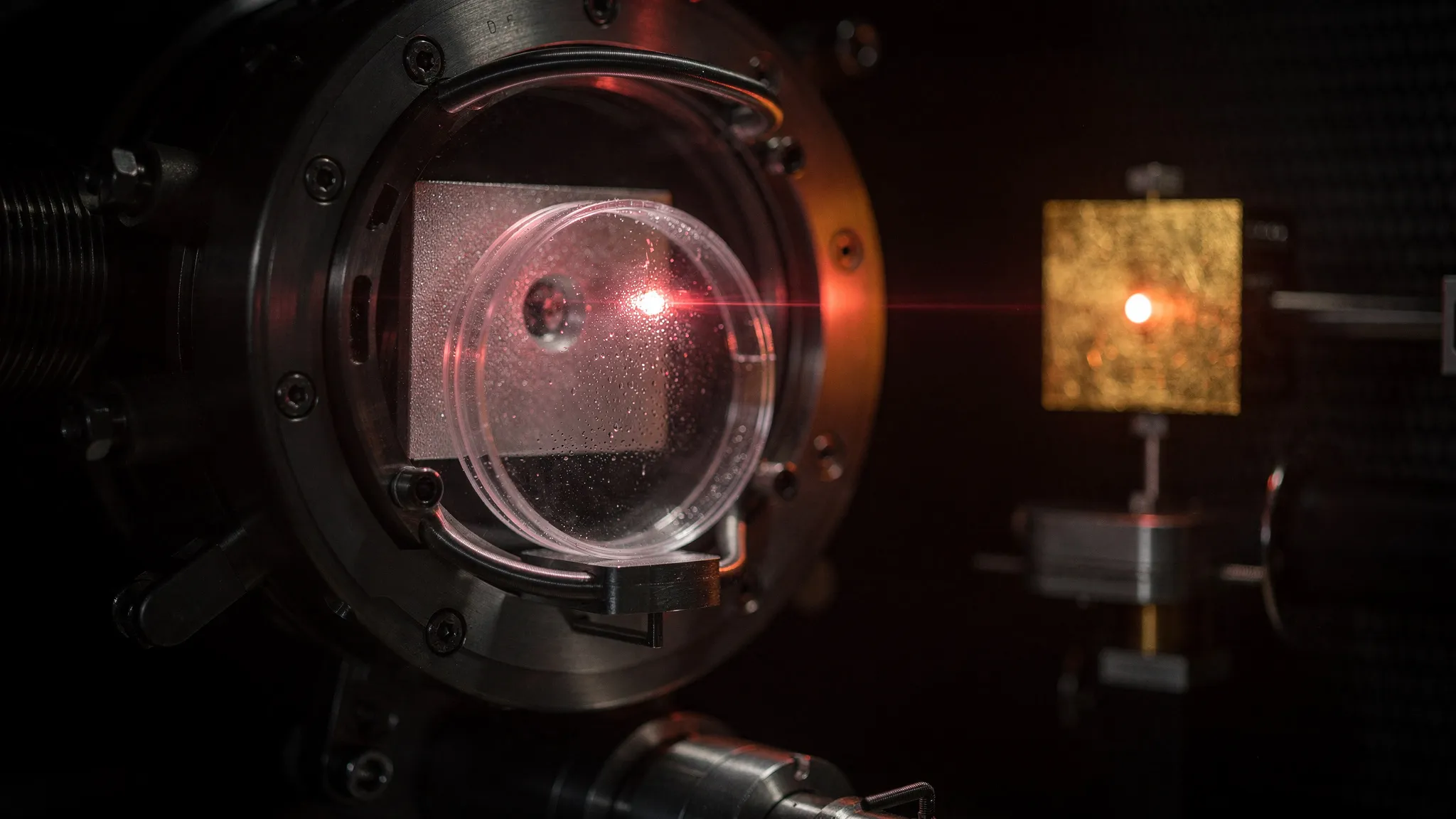
    A round clear culture dish behind the window of a metal vacuum chamber, a thin red laser beam and a glowing gold foil target in the background.

    Over half of cancer patients receive radiotherapy. Its weak point is damage to healthy tissue. Delivering the dose very fast, the "FLASH" approach, seems to spare it. Nobody knows exactly why.

    In Belfast, a powerful laser produced electron pulses aimed at human cells in culture. Each dose, up to 8 grays, arrived in a single pulse lasting picoseconds. A picosecond is a trillionth of a second.

    Up to about 3 grays, survival matched ordinary X-rays. Above, every cell line survived better. Healthy and cancer cells behaved alike. The effect points to the very first chemical steps after the hit.

    In earlier work, even shorter femtosecond pulses killed more cells, not fewer. So the response seems to flip between the two timescales. Its cause is still a mystery. These pulses now offer a test bench for radiobiology models.

    Source: Experimental Evidence of Cellular Sparing under Single-Pulse Picosecond Irradiation at Extreme Dose Rates, https://arxiv.org/abs/2611.12812

    PreprintExperiment❓ Quiz
  9. Computing & AI

    A 10⁴⁰ CONSTANT CUT TO 30.5 FOR GIANT RUBIK'S CUBES

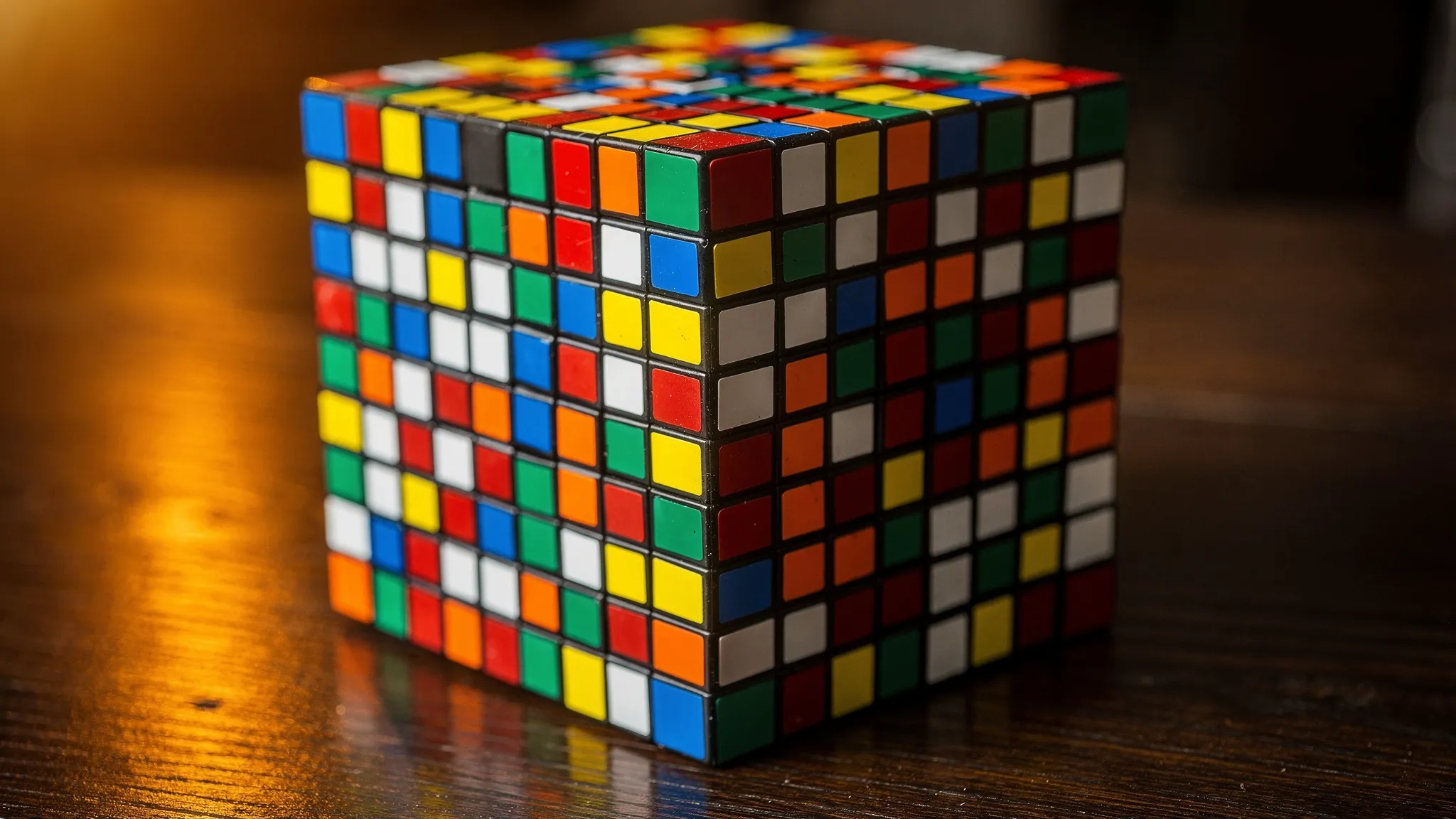
    A large scrambled puzzle cube with about eight rows of small coloured squares on each face, on a wooden table in warm amber light.

    For the classic 3×3×3 cube, 20 moves always suffice. That limit is known exactly. For giant cubes with n layers per side, only the growth rate was known. It is about n² divided by the logarithm of n.

    Trouble is, the proven formula hid a constant of about 10⁴⁰. The 2011 proof could not bound the length of its key step. So the bound was true, but useless in practice.

    Four authors, from MIT, TU Munich and California, rebuilt the method with sorting networks. Their guarantee: 30.5 n²/lg n moves, plus smaller terms. That is within 2.37 times the known lower bound.

    The constant shrinks by a factor of over 3 × 10³⁸. Their open-source solver runs in linear time. From about 840 layers per side, it beats existing solvers.

    Source: Solving Large Rubik's Cubes within a Factor of 2.37 + o(1) of Optimal, https://arxiv.org/abs/2611.11018

    PreprintTheory❓ Quiz
  10. Earth & climate

    WHAT IF CLIMATE MODELS MAKE THE ATLANTIC CIRCULATION TOO FRAGILE?

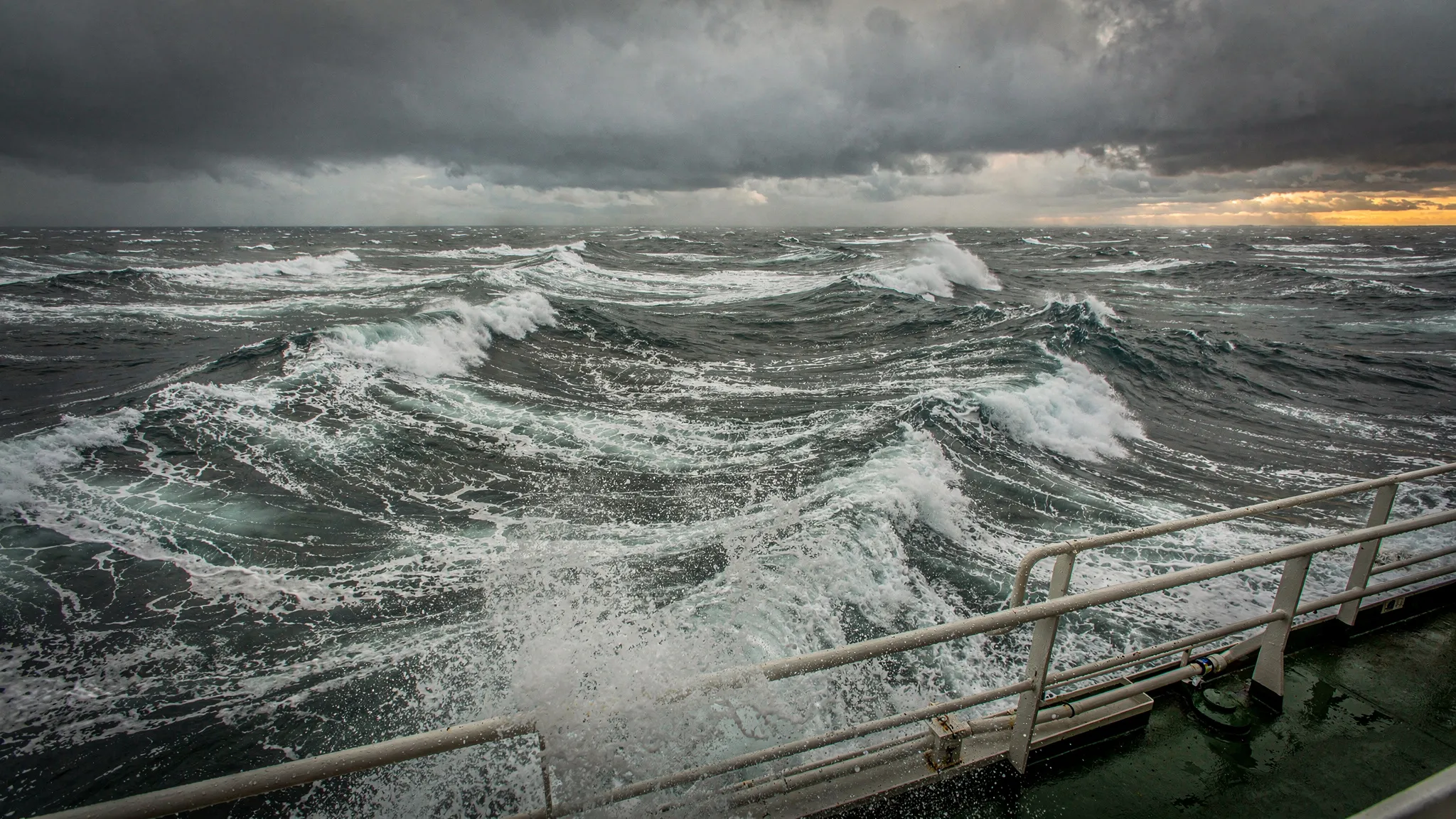
    A stormy grey ocean seen from a ship's railing at dusk, breaking swells and flying spray under heavy clouds.

    The AMOC carries heat north through the Atlantic. Its collapse is feared as one of the worst effects of warming. For years, experts thought climate models made it too stable.

    Now the latest models, run to 2300, show the deep circulation vanishing. Under the highest emissions, every one of them does. Two oceanographers ask the reverse question: are the models now too unstable?

    In the models, deep winter mixing collapses first, within 20 to 30 years. The deep current then takes 50 to 100 years to shut down. Each link of that chain may be too fragile in coarse models.

    Measurements do not settle it: the RAPID array has only run since 2004. Spotting a real trend could take 30 to 70 years of records. Yet the North Atlantic already shows unprecedented changes.

    Source: Is AMOC collapse too unstable in climate models?, https://arxiv.org/abs/2611.12515

    PreprintSimulation❓ Quiz
  11. Physics

    THE QUANTUM TWIN WHO SEEMS TO AGE MORE

    Two identical brass pocket watches side by side on a blue-lit table, the right one trailed by several faint translucent copies of itself.

    In the twin paradox, the twin who travels comes back younger. Moving clocks run slow, a fact confirmed by atomic clocks. GPS depends on it.

    Now make the clock quantum, like an atom in a superposition of energy levels. Its motion and its ticking become entangled. Three physicists in the US and Japan modelled this twin journey.

    No possible motion of the clock makes it run fast, as expected. But keep only the runs that end in a chosen final state. This trick is called post-selection. Then the travelling clock can read ahead of the twin at home.

    The cause is quantum interference, captured by "weak values" that can turn negative. Simple wave packets suffice, no exotic states needed. In a model atom, the electron cloud's sloshing even runs ahead. An experiment remains to be done.

    Source: Effective Time Advance of Quantum Clocks under Postselection, https://arxiv.org/abs/2611.12609

    PreprintTheory❓ Quiz
  12. Life sciences

    WILD BIRDS AS A WARNING LIGHT FOR BIRD FLU IN MAMMALS

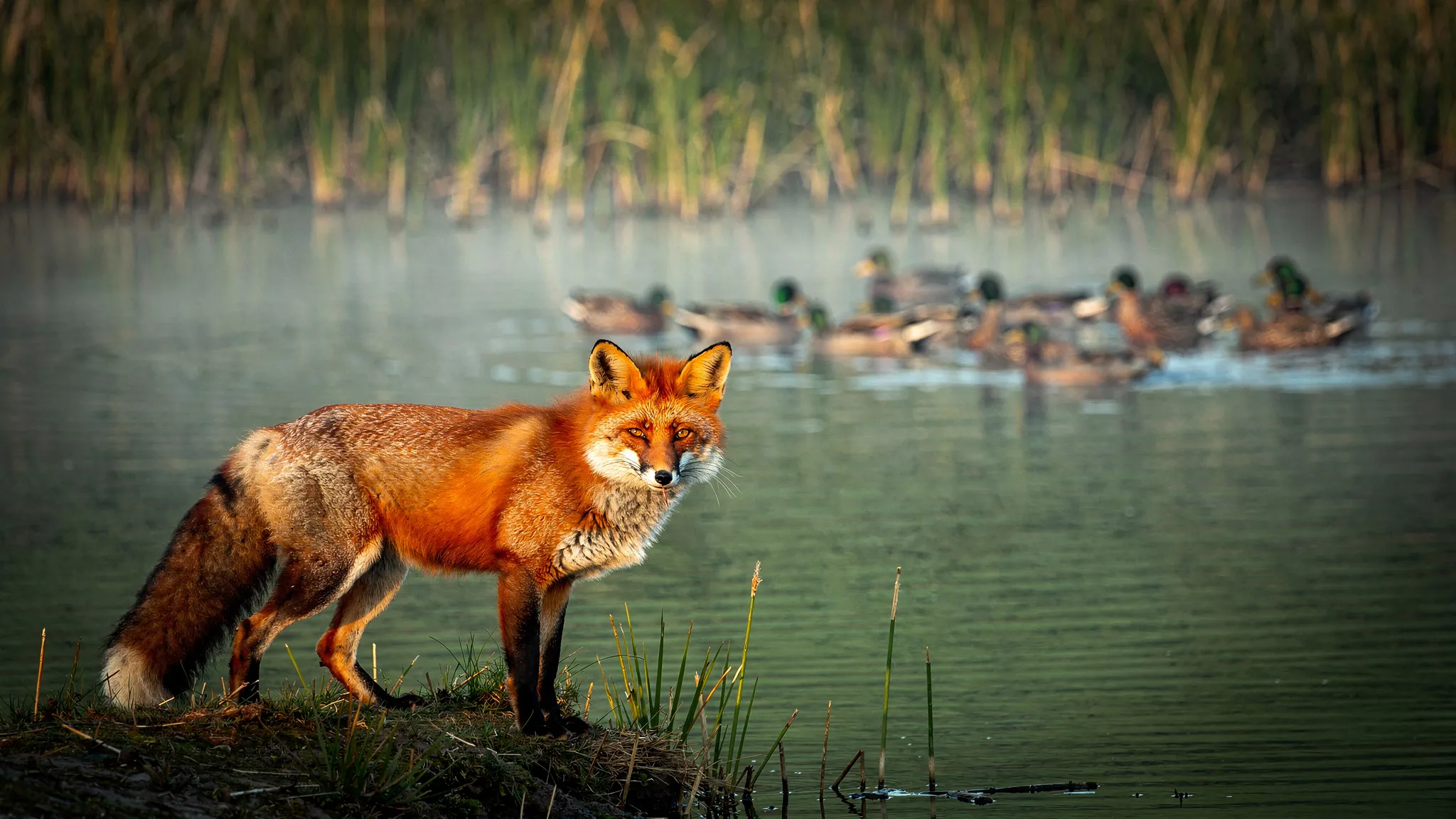
    A red fox standing at the edge of a marsh at dawn, a flock of wild ducks on the water behind it, reeds in the background.

    The H5N1 bird flu has spread among wild birds since 2020. It increasingly infects mammals too, on land and at sea. In the US, it even circulated in dairy cows.

    A study from New Zealand compares US records from April 2022 to July 2026. The records list 18,523 detections in wild birds and 815 in mammals. Month by month and state by state, do birds announce mammals?

    When bird detections double in a state, mammal detections rise by 58% the same month. A doubling the month before adds 16%. Birds in neighbouring states add nothing: the signal is local.

    Adding birds cut forecast errors by about a quarter. Yet the model still overpredicted the total. This is association, not proof of transmission. It can help decide where to sample mammals first.

    Source: Short-term associations between wild-bird and mammalian high pathogenic avian influenza detection in the United States, https://arxiv.org/abs/2611.12005

    PreprintData analysis❓ Quiz
Legal notice