Edition of October 26, 2026

  1. At The Knowledge Frontier, we pick out the research papers of the day and explain them simply.

    The web has changed in nature. We no longer search, we scroll. Pages look alike, texts are churned out, and we end up reading a great deal without keeping any of it. Educating yourself there has become a strangely passive affair.

    Here, you do more than read. Every article ends with a quiz: a few questions on what you have just read. When the subject lends itself to it, it is an experiment — you set the values yourself and recover, in turn, the researchers' result.

    @VirScience
  2. Physics

    THE STEADIEST LASER EVER BUILT

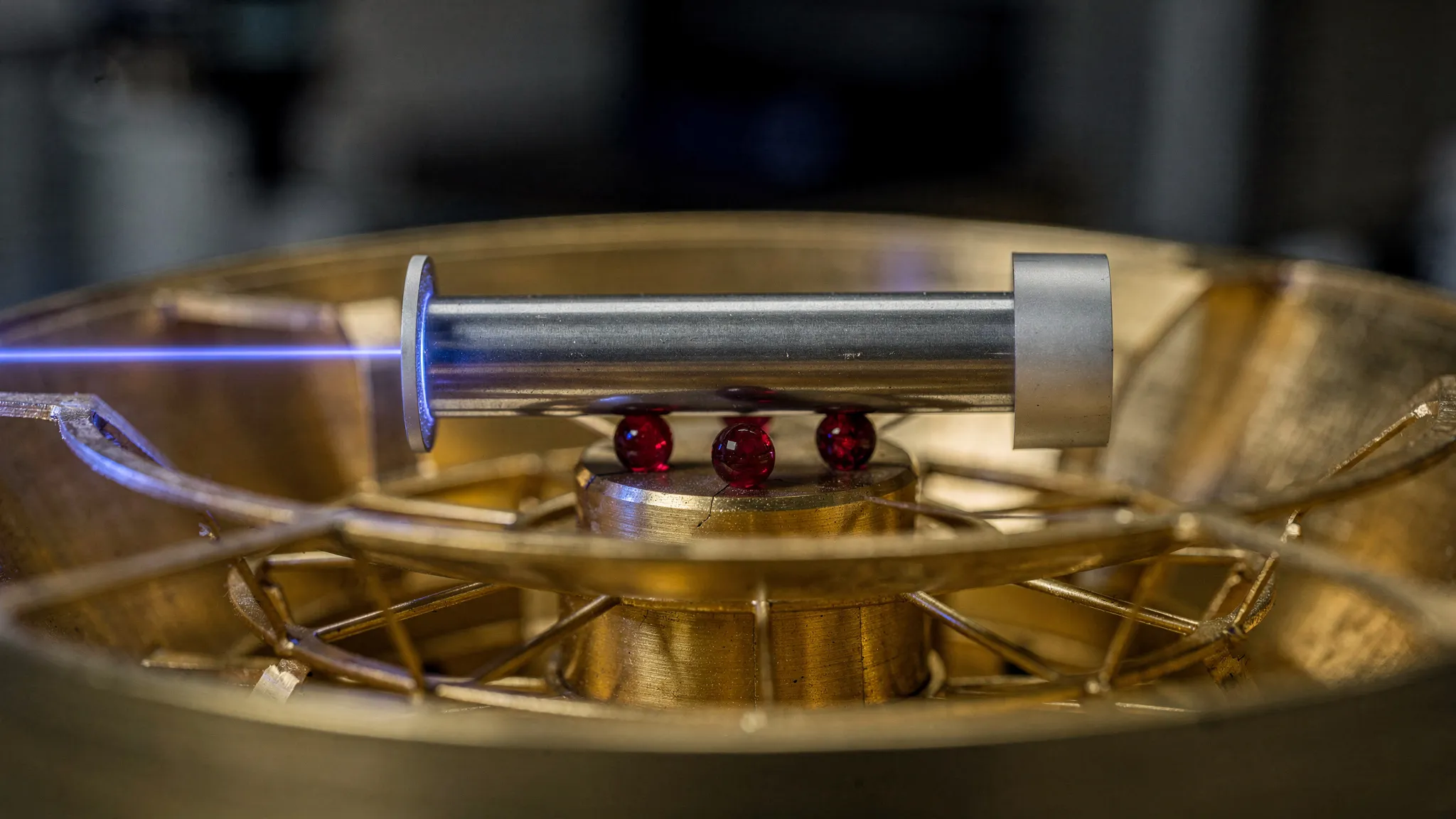
    A round metal bar with a round mirror at each end, resting on three small red ruby balls inside an open gold-coloured shield, a thin blue laser beam entering one mirror.

    In Colorado, a laser is locked onto a 21-cm silicon cavity cooled to 6 kelvin. Its frequency wobbles by only seven billionths of a billionth, a new record.

    The main enemy here is heat. Atoms in the mirror coatings jiggle and blur the light. Colder silicon and a wider beam cut that noise three- to fivefold.

    But cold makes everything sensitive to shaking. So the cavity rests on three tiny ruby balls, on a table that actively cancels vibrations, while blocks of erbium smooth out temperature swings.

    The laser already drives a strontium atomic clock, whose atoms can now be probed for over 10 seconds at a time. The authors expect the Boulder clocks to reach a given precision up to ten times sooner.

    Source: Laser with 7 × 10⁻¹⁸ frequency stability, https://arxiv.org/abs/2610.30532
    PreprintExperiment🧪 Experiment
  3. Physics

    THE SEA'S SALT CATCHES GHOST PARTICLES

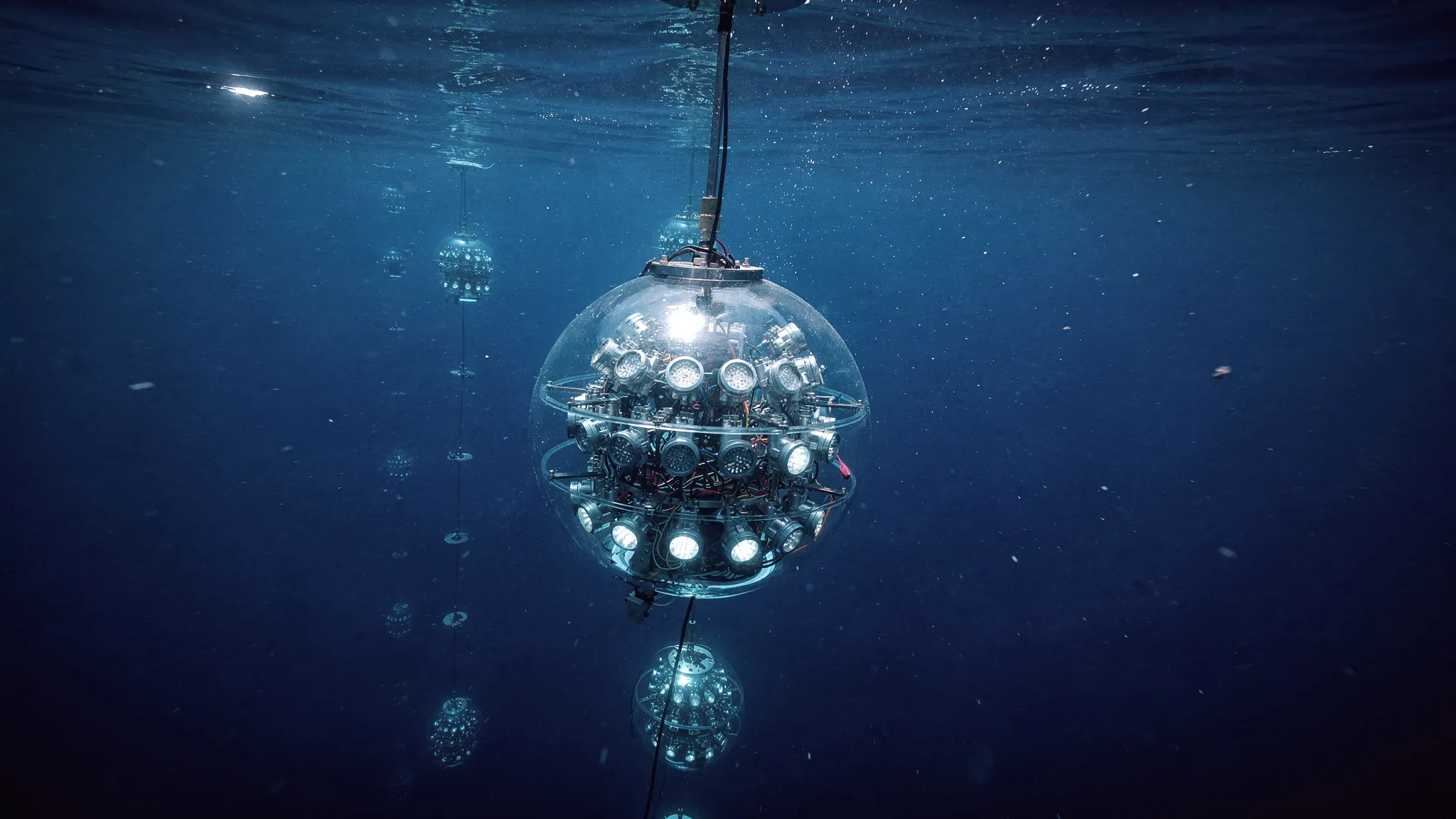
    A transparent sphere packed with round light sensors hanging on a cable in blue seawater, more spheres strung along cables in the distance.

    Seawater holds a hidden helper: chlorine. A team in Shanghai shows it can turn the deep ocean into a trap for antineutrinos, ghostly particles thrown out by collapsing stars.

    When an antineutrino hits water, it frees a neutron. Caught by hydrogen, that neutron gives a faint 2.2 MeV flash. Caught by chlorine, a burst of about 8.6 MeV, and sooner.

    Simulated in TRIDENT, a 10 km³ telescope planned in the South China Sea, this double signal doubles the reach. A collapsing star could be spotted beyond 100 kiloparsecs, against 50 without it.

    The idea was tested under 2.4 km of rock at Jinping, China. In salted water, a single detector module picked up the neutron captures. The ocean's own salt does the job.

    Source: Natural Chlorine Enhances Antineutrino Detection in the Deep Ocean, https://arxiv.org/abs/2610.30754

    PreprintSimulation❓ Quiz
  4. Life sciences

    THE BIGGER THE FLOCK, THE WEAKER THE BOSS

    Seven grey pigeons flying low over a green meadow towards a small wooden loft in the background.

    Released 8.1 km from home, a lone pigeon zigzags; in a group, the route straightens. Physicists in India reanalysed GPS tracks of flocks of 1, 2, 4 and 8 birds.

    Equal votes do not explain the flights, but a ranking does: some birds sway the others more. And the bigger the flock, the flatter that ranking becomes.

    The birds' own timing agrees. Leaders turn first and the others follow: on average, no bird runs more than about a quarter of a second ahead of or behind the rest, roughly a pigeon's reaction time.

    The proposed reason: one-way influence carries a thermodynamic cost, measured as entropy production. If each bird keeps that cost fixed, hierarchy must fade as the group grows. It is a hypothesis that fits the data, not yet a proof.

    Source: Entropy-production cost limits hierarchical decision-making in homing pigeon flocks, https://arxiv.org/abs/2610.31126

    PreprintData analysis🧪 Experiment
  5. Mathematics

    537 NUMBERS, SIX COLOURS, NO SUMS

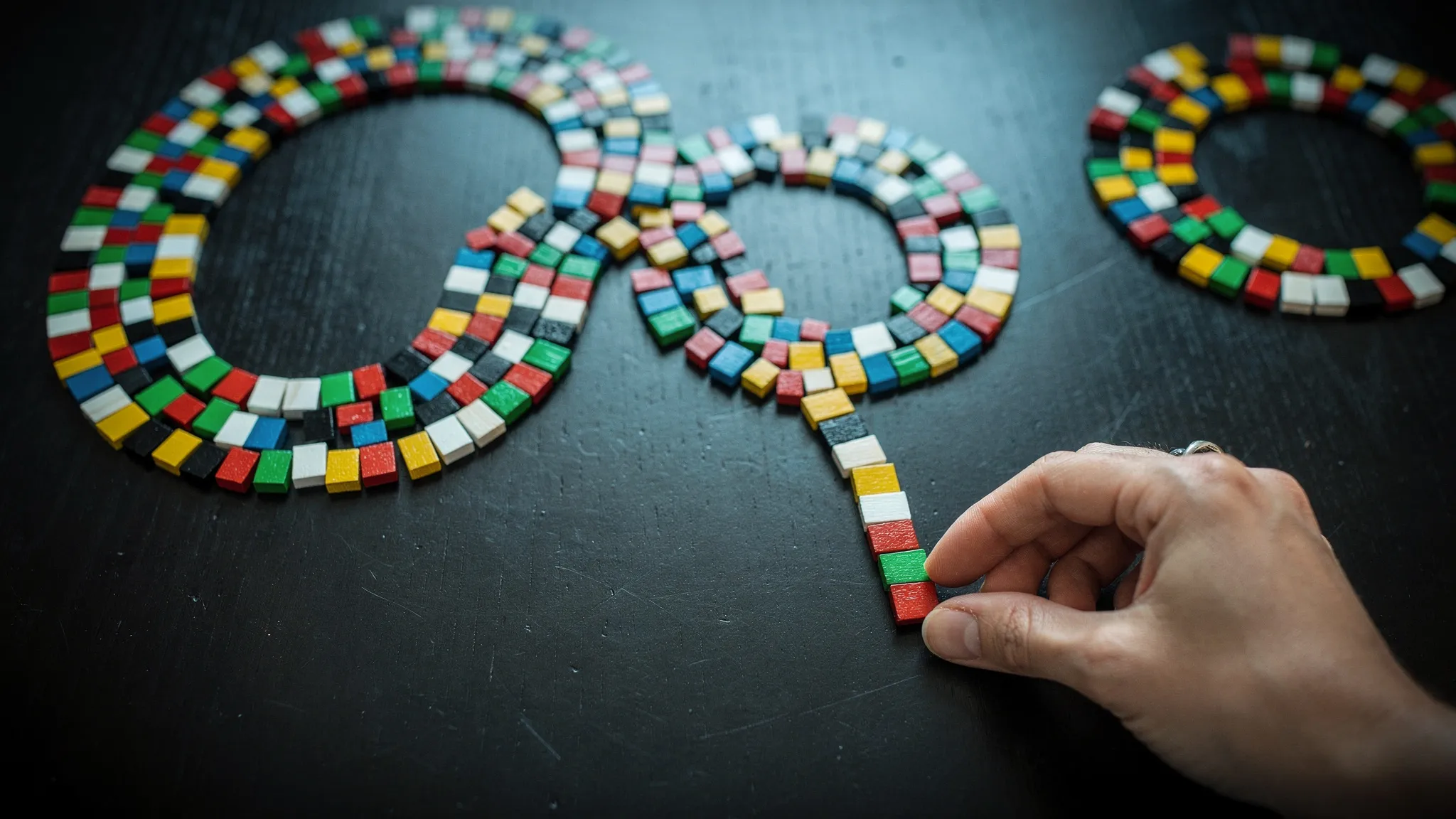
    A hand placing the last of hundreds of small wooden tiles painted red, yellow, green, blue, white and black, laid in long looping bands on a dark table.

    The game: give each number from 1 to n a colour. The rule: no colour may contain x, y and x + y together. With two colours you get stuck after 4; with five, after 160.

    With six colours, the best known run stopped at 536, a record set in 2000. Three researchers from the University of Toronto and NVIDIA have now reached 537.

    Their proof is simply the answer, printed in full: six lists covering all 537 numbers. Anyone can check every sum by computer, and one such colouring is enough.

    That single extra number ripples outward. Records for eight, eleven and thirteen colours rise too, and so does a bound on colourings with no single-colour triangle. The search also turned up 131 different six-colour solutions.

    Source: A new lower bound for the sixth Schur number: S(6) ≥ 537, https://arxiv.org/abs/2610.31362

    PreprintTheory🧪 Experiment
  6. Space & astronomy

    NINE RADIO FLASHES IN 106 SECONDS, THEN SILENCE

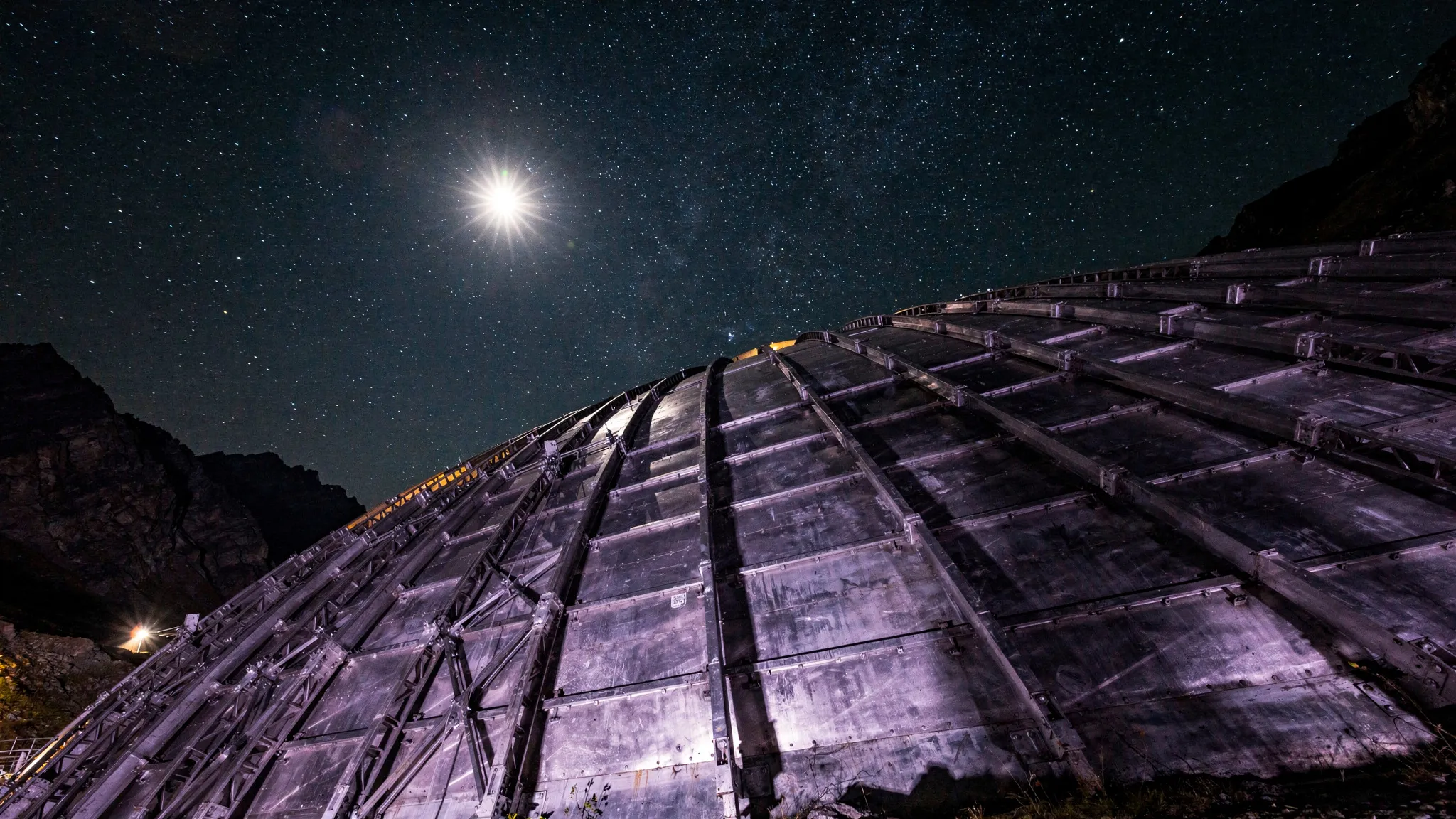
    A large curved metal reflector in a mountain valley at night under a starry sky, one bright point of light flaring above it.

    Fast radio bursts are flashes lasting milliseconds, reaching us from other, distant galaxies. On 1 June 2021, the Canadian telescope CHIME caught nine from one source in 106.5 seconds.

    Before and after: total silence. About 320 hours of observation over seven years, and not a single burst more. No other repeating source seen by CHIME has behaved like this.

    Yet the storm was only glimpsed. The source sat at the edge of CHIME's field, where the telescope hears much less well. At full sensitivity, at least 21 bursts would have shown up.

    The authors suspect a hidden family of sources that wake up very rarely, for a few minutes only. CHIME could have between one and over 200 of them within reach.

    Source: FRB 20210601A: Extreme Temporal Clustering in a Repeating Fast Radio Burst Source as Evidence for a Hidden Class of Episodic Repeaters, https://arxiv.org/abs/2610.31365

    PreprintObservation🧪 Experiment
  7. Earth & climate

    CLEANER AIR, STRONGER PACIFIC WINDS

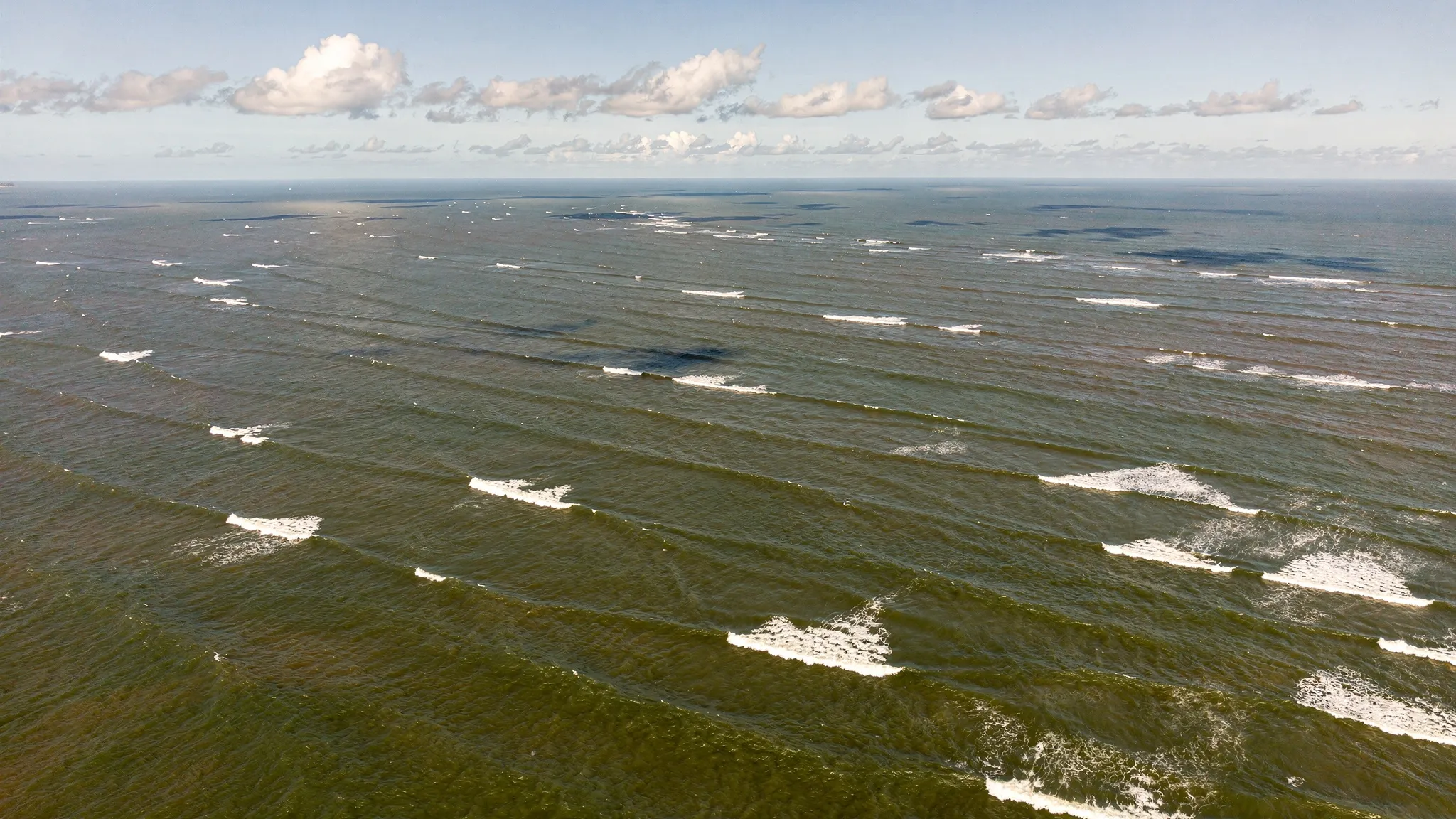
    Aerial view of an open ocean with long parallel lines of white-capped waves and a row of small clouds near the horizon.

    Countries are cleaning up their air, especially in Asia: fewer aerosols, fewer ozone-forming gases. What that does to the winds over the Pacific Ocean had been disputed until now.

    A team in Scotland and Italy compared 12 Earth system models, with and without air-quality controls. By 2036–2054, cleaner air strengthens the trade winds in 11 of them.

    That cancels half to two-thirds of the weakening projected without the cuts. The likely route runs through the Indian Ocean, which warms slightly more than the Pacific does.

    El Niño itself barely budges, changing by less than a tenth of its strength. But the climate around it shifts. India, East Africa and north-eastern Brazil would then feel El Niño's heat arriving on a warmer base.

    Source: Cleaner air strengthens the Pacific trade winds without a detectable change in El Niño, https://arxiv.org/abs/2610.31236

    PreprintSimulation❓ Quiz
  8. Mathematics

    THE SIGN SLIP THAT SANK THREE PROOFS

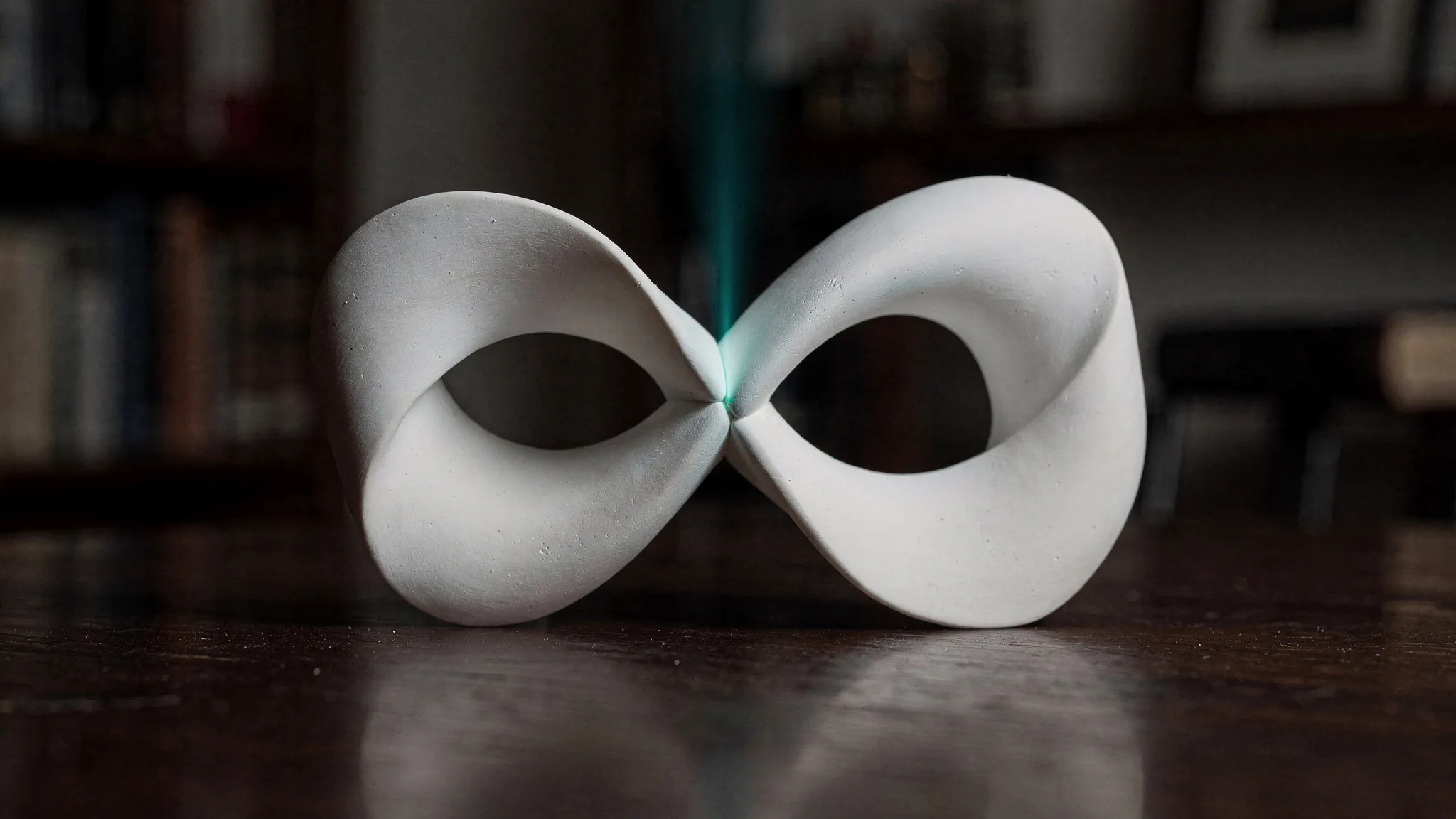
    A white plaster figure-eight surface touching itself at a single point, lit by a thin cyan beam on a dark wooden table.

    In September and October 2026, OpenAI released three documents. They claimed to prove cases of the Hodge conjecture, a famous open problem in mathematics. Later, OpenAI withdrew all three.

    Two mathematicians, based in London and Edinburgh, have now dissected the fault. All three proofs collapsed at exactly the same step. They had borrowed a 2013 theorem with the wrong sign convention.

    That theorem was right, but quietly used the opposite of the usual convention. Read correctly, it always leaves one stubborn crossing point, and that point blocks the whole argument.

    Not everything is lost. The authors find the overall strategy interesting and worth pursuing. And a sign convention hidden in a well-known 2013 paper is finally out in the open.

    Source: Rigidity, flexibility, and a sign error, https://arxiv.org/abs/2610.30976

    PreprintTheory❓ Quiz
  9. Life sciences

    TWO JAZZ PLAYERS, TWO VOICES, ONE GROOVE

    A saxophonist and a pianist playing together on a dark stage bathed in green light.

    How do two minds create something together, in real time? A Tokyo team studied six professional jazz duos trading solos on Autumn Leaves: 530 solos, 11,433 notes in all.

    A model trained on 456 transcribed jazz solos scored how surprising each single note was. In the melody, each musician keeps a personal signature. A single solo is enough to tell who is playing.

    Rhythm works the other way round. Partners become indistinguishable, and their shared groove drifts slowly as the piece unfolds. Only players who are really playing together share it.

    At each hand-off comes a push and pull. When one player surprises more than usual, the partner's very next solo surprises less. All six duos showed this push and pull.

    Source: Music Between Two Minds: Individual Signatures, Shared States, and the Emergence of Creative Interaction, https://arxiv.org/abs/2610.31131

    PreprintData analysis❓ Quiz
  10. Computing & AI

    TO SWAY A CROWD OF AIS, AIM FOR THE HUBS

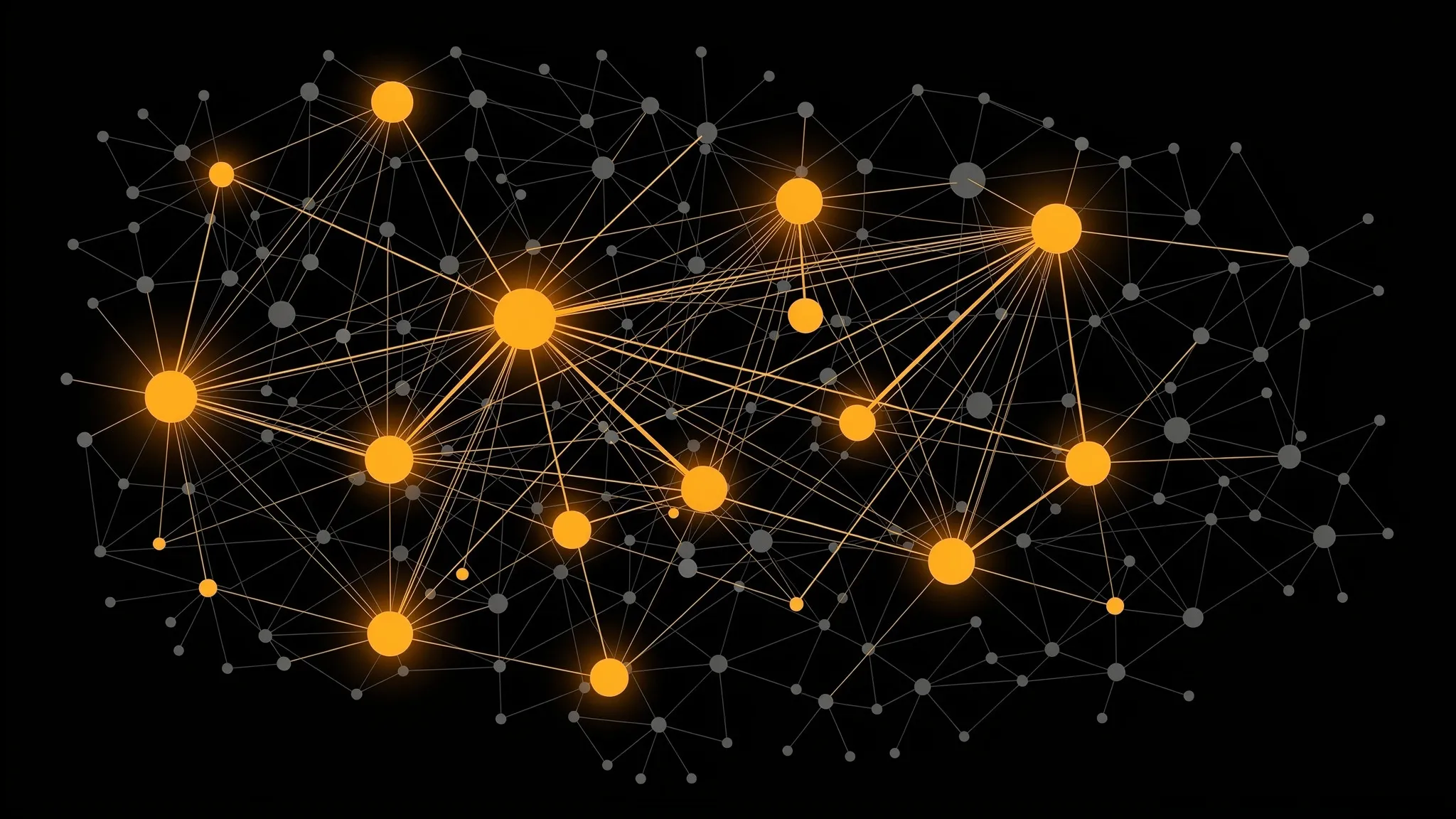
    A network of many small grey dots linked by thin lines, with about fifteen larger amber hubs connected to many lines.

    AI agents increasingly talk to one another, without any human in the loop. Do they settle on shared habits, and can a few troublemakers flip them? A team in Copenhagen, London and Barcelona simulated up to 100,000 such agents.

    The game is simple: pairs of agents must say the same word, like "he" or "she". Their behaviour was copied from four language models, including GPT-4o and Llama. Nobody told them to agree globally.

    Who talks to whom matters a lot. Sparse networks reach agreement up to 12 times more slowly. Sometimes they even crown the other word.

    Then came the attack. With stubborn agents on the best-connected hubs, about 3% suffice to overturn the convention. Placed at random, 16% are needed; on the least connected agents, 35%.

    Source: Network topology shapes consensus and vulnerability in LLM populations, https://arxiv.org/abs/2610.31165

    PreprintSimulation❓ Quiz
  11. Computing & AI

    A POWER METER THAT CATCHES HIDDEN AI TRAINING

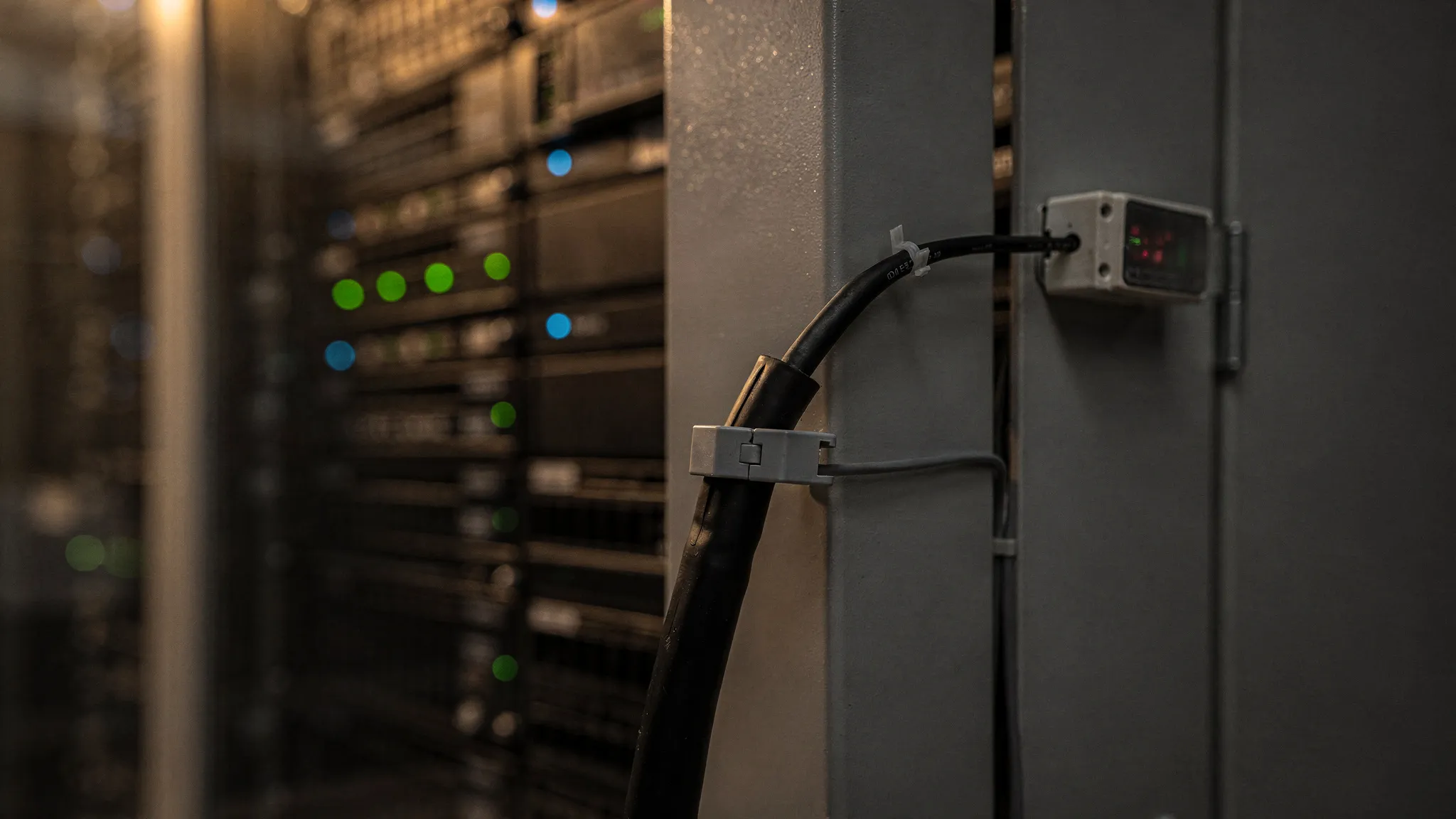
    A thick black power cable beside a grey cabinet, a small grey sensor clipped around it and wired to a little box with red lights, server racks with green and blue lights behind.

    Future AI treaties may need to check whether a datacentre is secretly training a large model. Without trusting its operator. Researchers in Melbourne and Oxford propose a simple meter on the power line.

    Training has a heartbeat. Chips compute hard, then pause to exchange results, about once a second. The datacentre's power swings to that rhythm.

    A tracker borrowed from sonar and gravitational-wave hunting follows that beat as it drifts. In simulations, it catches at least 96% of training runs in five minutes, with a meter reading twice a second.

    Hiding is possible, but costly. The best trick dodges detection in up to 73% of five-minute windows. Yet over a day, 87% of runs are caught, and the trick needs 93% more computing.

    Source: Detecting AI Training in Datacentre Power, https://arxiv.org/abs/2610.30182

    PreprintSimulation❓ Quiz
  12. Space & astronomy

    QUAOAR IS NOT A BALL, AND ITS MOON HAS BEEN WEIGHED

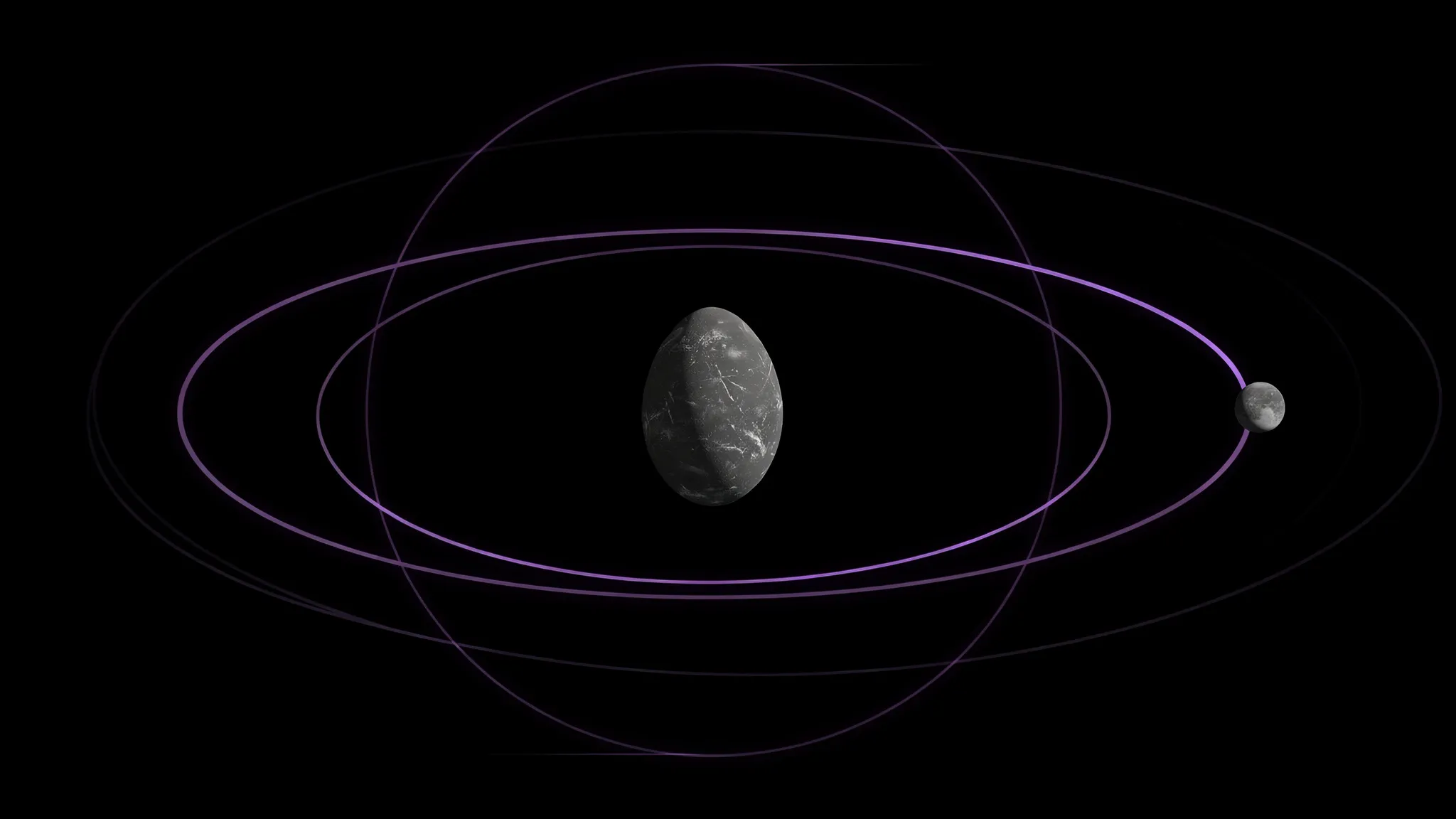
    Illustration of a small grey egg-shaped world at the centre of thin violet rings several times wider than it, with a small moon at the edge of the rings, on a black background.

    Quaoar is a ringed icy world beyond Neptune, about 1,100 km across. We always see it from nearly the same angle, so its 3D shape was hard to pin down.

    A team in Brazil, Spain and France combined 37 passages of Quaoar in front of stars, from 2011 to 2025. They added brightness curves recorded in 2003 and by the Hubble Space Telescope.

    Verdict: Quaoar is stretched in three directions, about 1,241 by 1,093 by 1,023 km. One rotation lasts about 17.7 hours, and no giant surface spot is needed to explain its flicker.

    Bonus: Quaoar wobbles slightly, tugged back and forth by its small moon Weywot. That wobble gives Weywot's mass: about 1.5 billion billion kg, roughly a thousandth of Quaoar's.

    Source: Ellipsoidal Modeling Framework for TNOs: the triaxial shape of (50000) Quaoar and its implications for Weywot and the dynamical environment, https://arxiv.org/abs/2610.30494

    PreprintData analysis🧪 Experiment
Legal notice