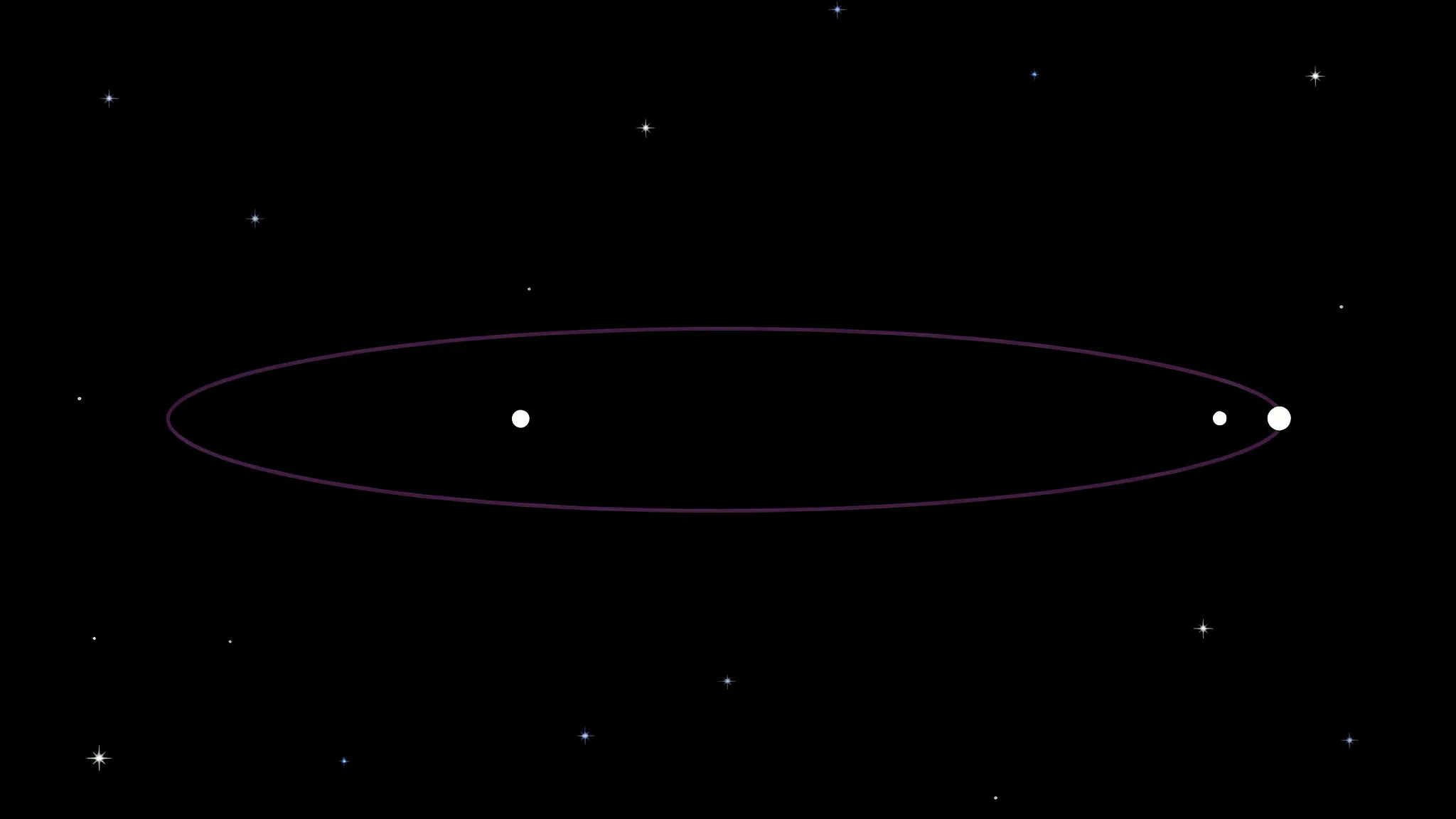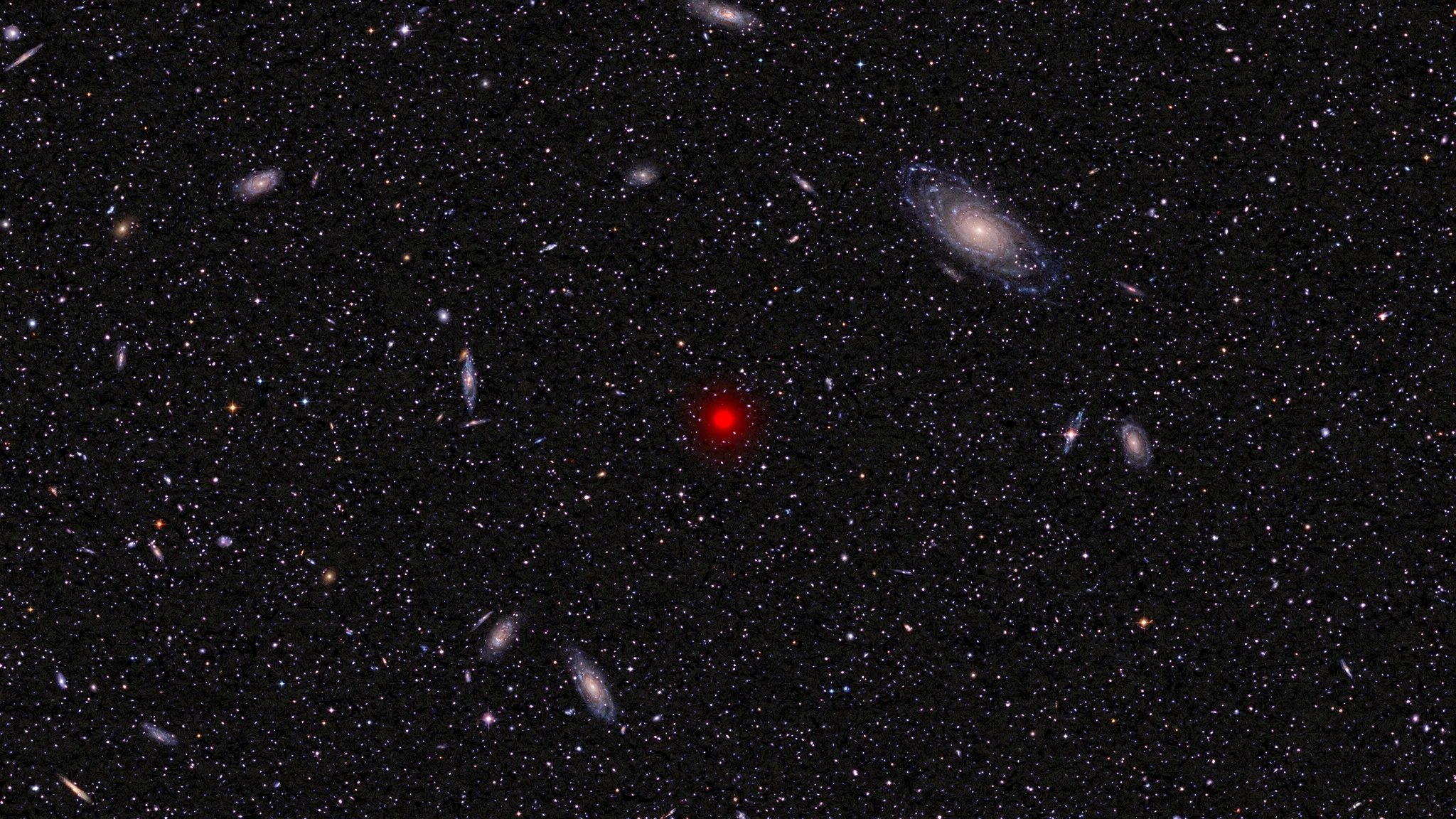
When the universe was 470 million years old, a black hole was already feeding in a faint galaxy. Astronomers found it in public spectra from the James Webb Space Telescope.
Its tell-tale sign: a hydrogen line broadened by gas whirling at thousands of kilometres per second. It sits just past the edge of Webb's standard data processing, at 5.35 micrometres.
From that width, the team weighed the black hole: about 36 million Suns. Under another assumption, 2 million. Both are huge for so young a cosmos.
To grow that fast from the remains of a single star, it would have needed to swallow matter faster than the usual limit. Or it started out big. It is the most distant black hole weighed this way.
Source: Discovery of a Broad-Line Active Galactic Nucleus at z = 9.98, https://arxiv.org/abs/2610.28735