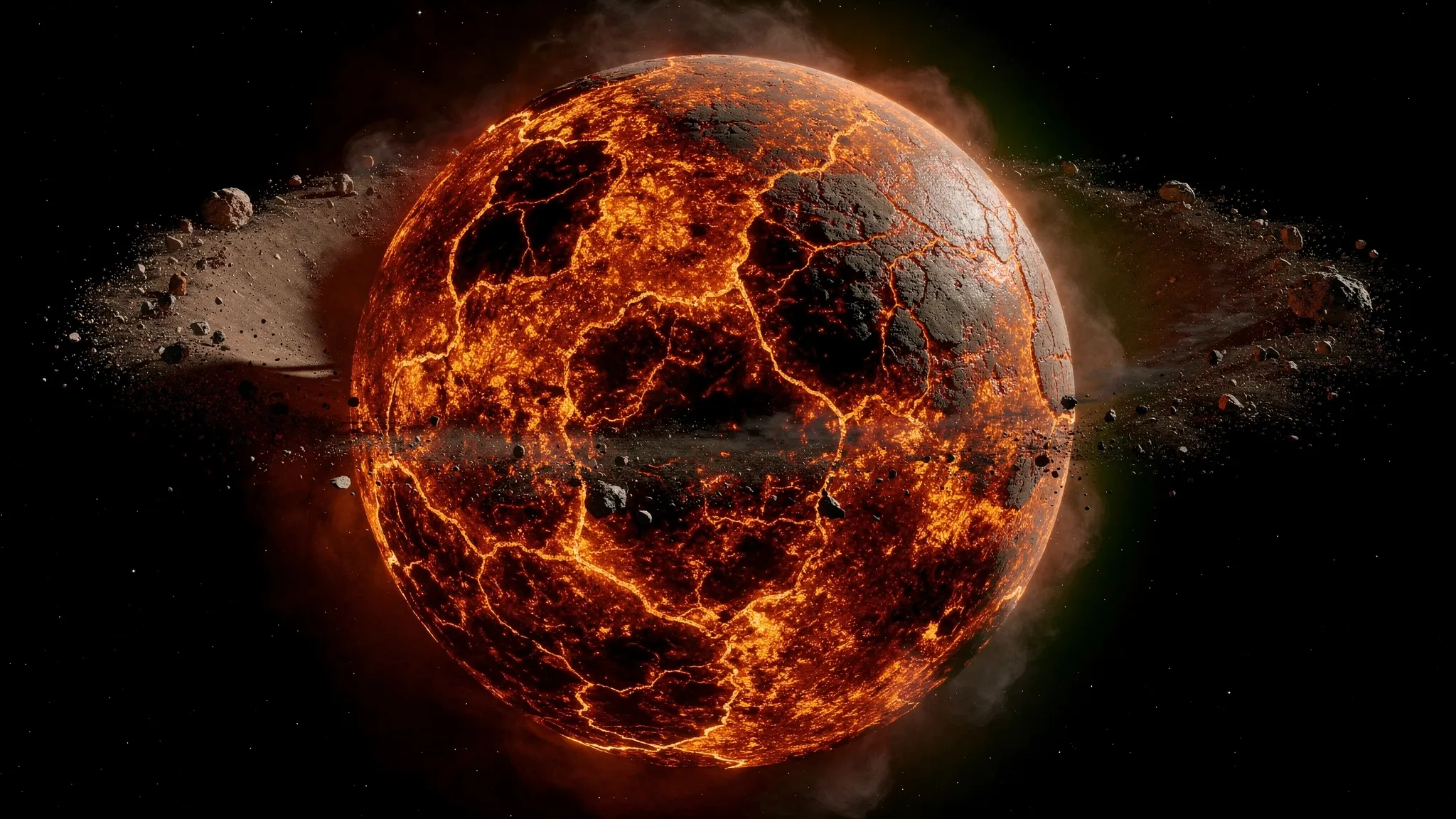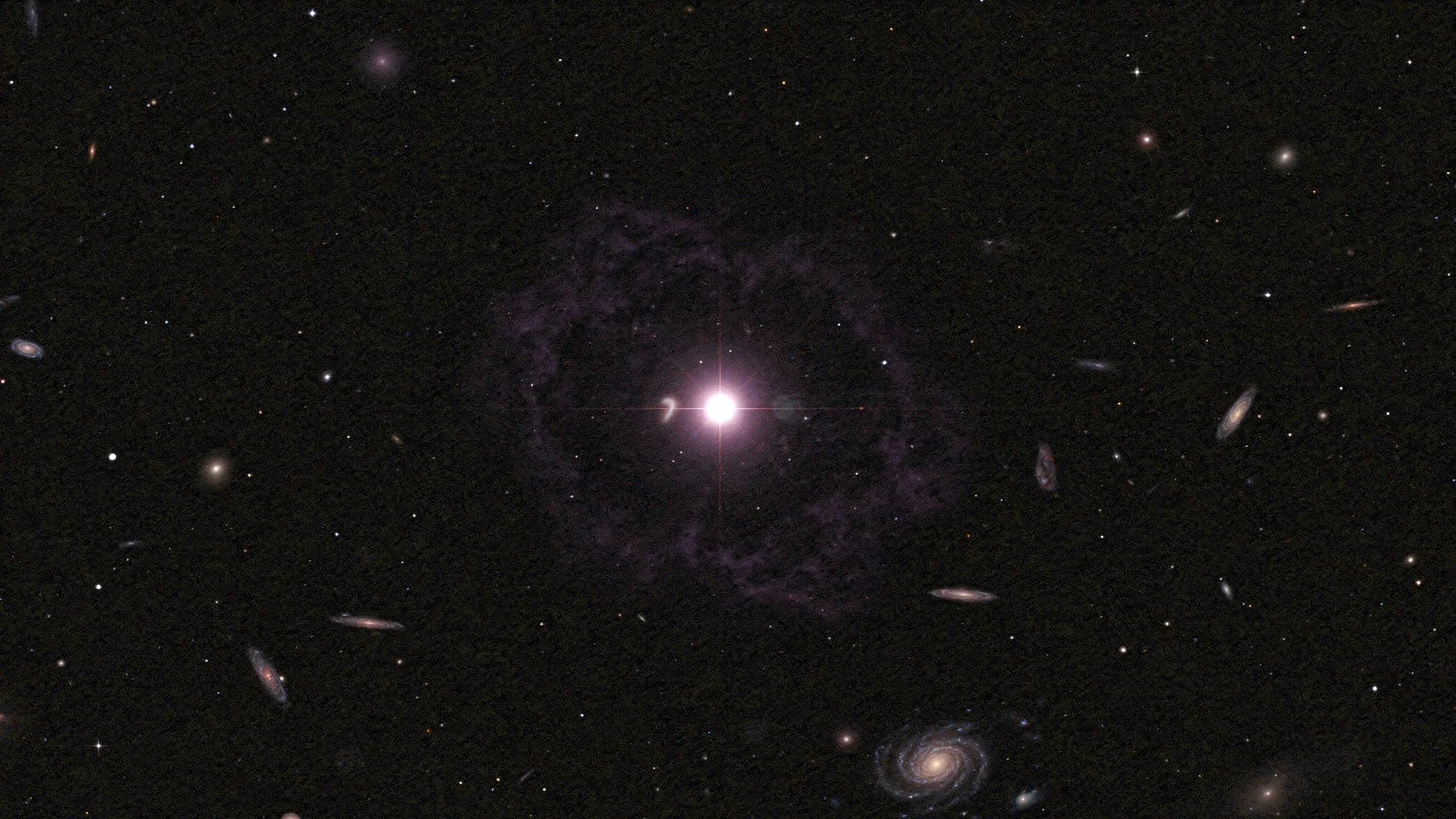
Some exploding stars brighten slowly, over about 100 days. Their model is supernova 1987A. In 2023, sky surveys caught the most extreme one ever seen: SN 2023iop.
It took at least 88 days to peak. It shone about four magnitudes brighter than 1987A and released at least 4 × 10⁵⁰ erg. An ordinary explosion driven by neutrinos cannot supply that.
One line in its late light may come from stable nickel, about 0.02 solar masses. Only the most massive "pair-instability" models make that much: a star of some 190 suns destroyed by a thermonuclear blast.
The authors call it the most plausible scenario. But it rests on a single spectral line, and no explosion model on its own explains the extra glow after day 150. The James Webb telescope will look again.
Source: SN 2023iop: An Extreme 1987A-like Supernova and the Death of Very Massive Stars, https://arxiv.org/abs/2610.27312