Edition of October 29, 2026

  1. At The Knowledge Frontier, we pick out the research papers of the day and explain them simply.

    The web has changed in nature. We no longer search, we scroll. Pages look alike, texts are churned out, and we end up reading a great deal without keeping any of it. Educating yourself there has become a strangely passive affair.

    Here, you do more than read. Every article ends with a quiz: a few questions on what you have just read. When the subject lends itself to it, it is an experiment — you set the values yourself and recover, in turn, the researchers' result.

    @VirScience
  2. Space & astronomy

    THE GLASSY DUST OF AN INTERSTELLAR COMET

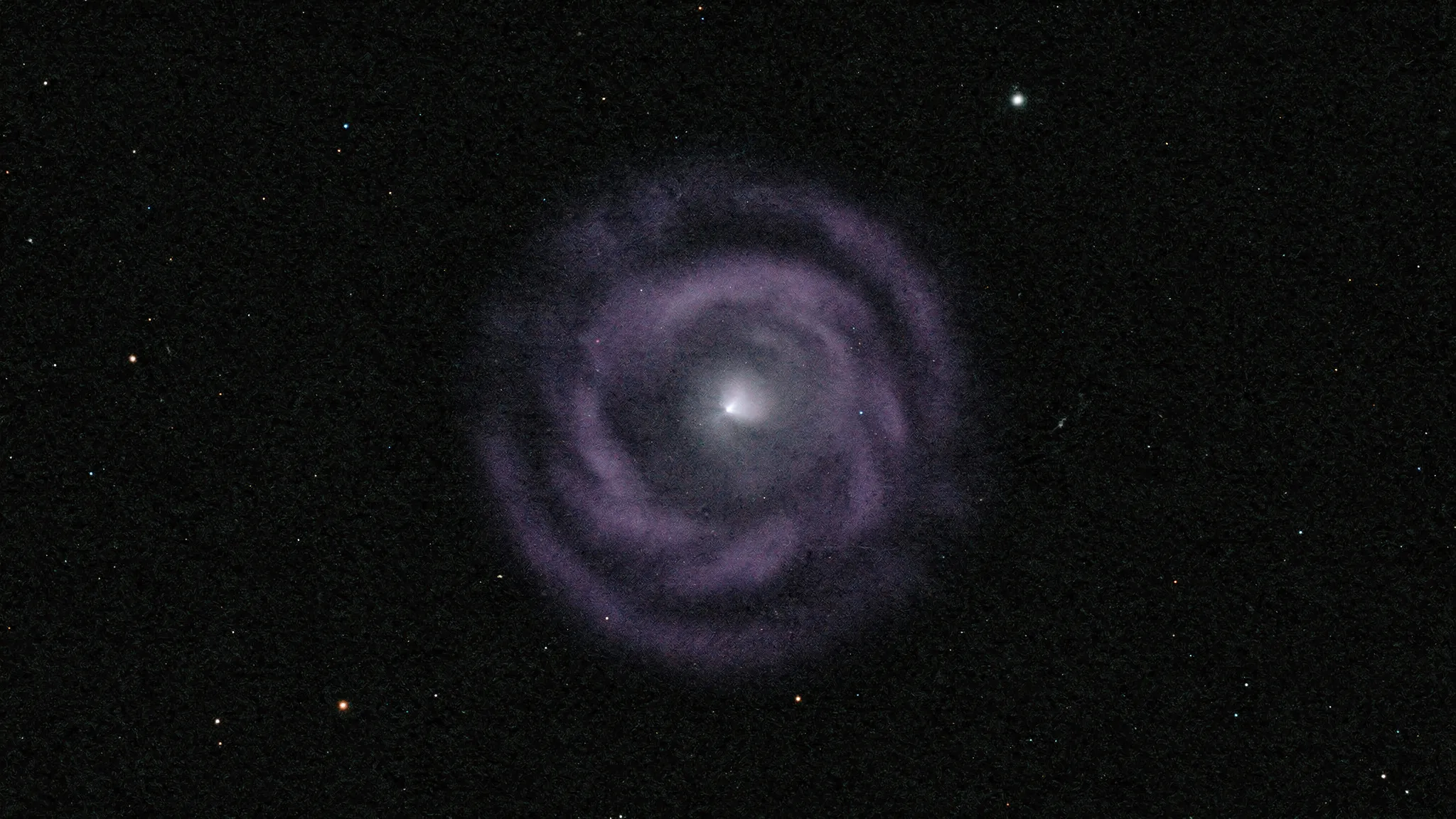
    A bright point at the centre of violet dust coiled into loose spiral arms, faint stars scattered on a black sky.

    3I/ATLAS is only the third object ever seen arriving from another star. In December 2025, the James Webb telescope studied the dust around its icy core.

    Warm dust glows in infrared light. Silicates, the minerals of rock, leave a bump near 10 micrometres. In our own comets, that bump often carries the marks of crystals. Here, it is smooth.

    Best fit: zero crystals, at most 5.3%. The dust is amorphous, disordered like glass. In comets, crystals betray dust that was once heated. This dust barely was.

    Other teams had found hints of a birth below 30 kelvin, from its gas. The dust agrees. This comet probably grew in a cold, quiet corner of its home disc. Little stirring, almost no heat.

    Source: JWST/MIRI Observations of Amorphous Silicates in Interstellar Comet 3I/ATLAS, https://arxiv.org/abs/2610.37540
    PreprintObservation❓ Quiz
  3. Mathematics

    HOW FAST MUST YOU WALL IN A FIRE?

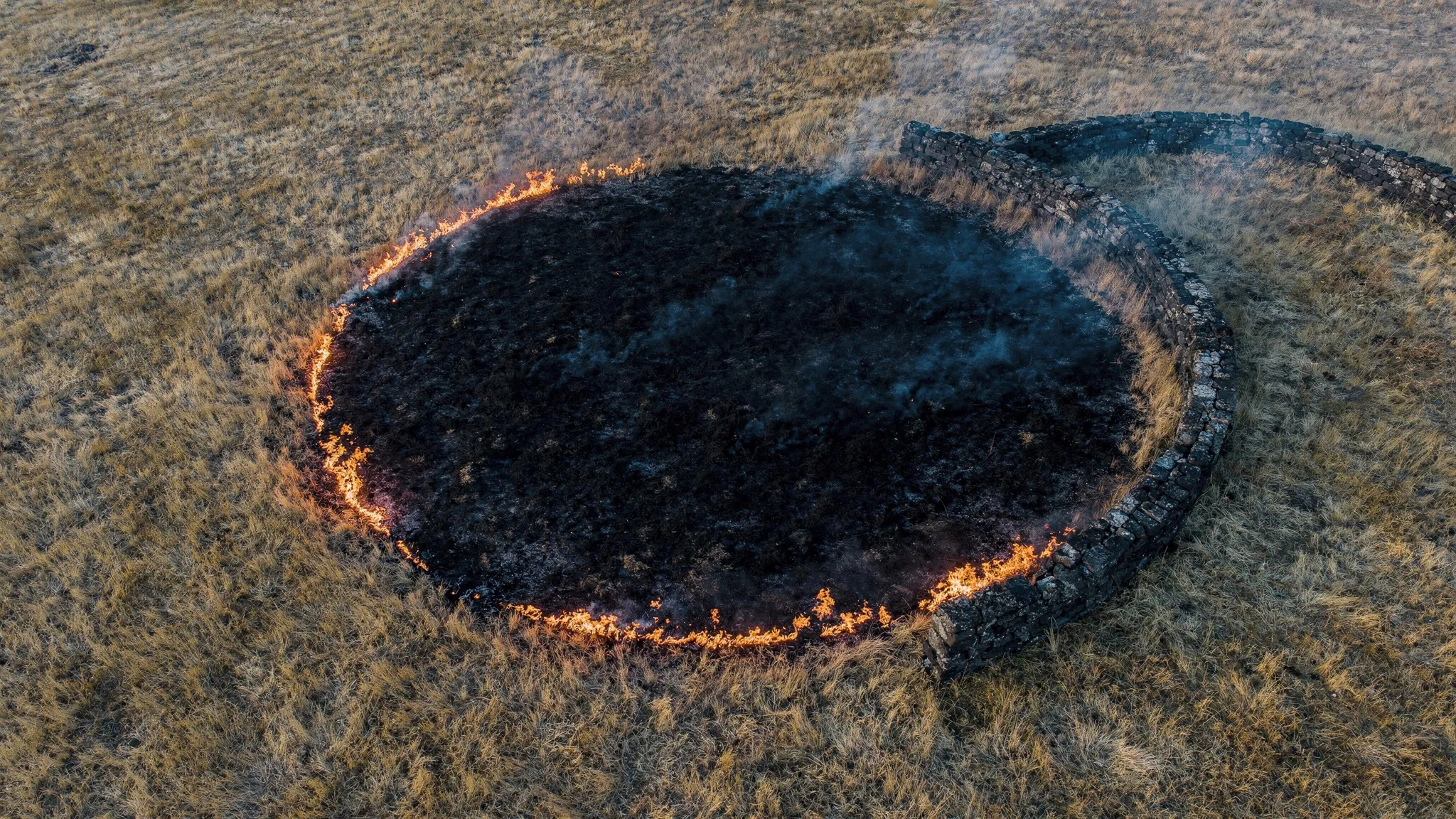
    Seen from above, a round patch of burned grass on a dry plain, a dry-stone wall curving around one side and a thin line of flames along the open side.

    A fire spreads across a plain at the same speed in every direction. You build a wall around it in real time, brick by brick. How fast must you build to trap it?

    Mathematician Alberto Bressan has long conjectured the answer: more than twice the fire's speed. Nobody has proved it yet, or found a way around it.

    With Luca Talamini, he now shows that 1.626 times the fire's speed is never enough. The previous bound was 1.5. The proof compares the burned land to a pair of soap bubbles.

    For a wall closed in one single loop, they settle it. Above 2, or the fire escapes. A cheaper strategy would need strange walls. Their only job: slowing the fire, before it swallows them.

    Source: On the Minimum Speed for a Fire Blocking Problem, https://arxiv.org/abs/2610.36919

    PreprintTheory🧪 Experiment
  4. Physics

    1,555 NEUTRINOS THAT NUDGED A WHOLE NUCLEUS

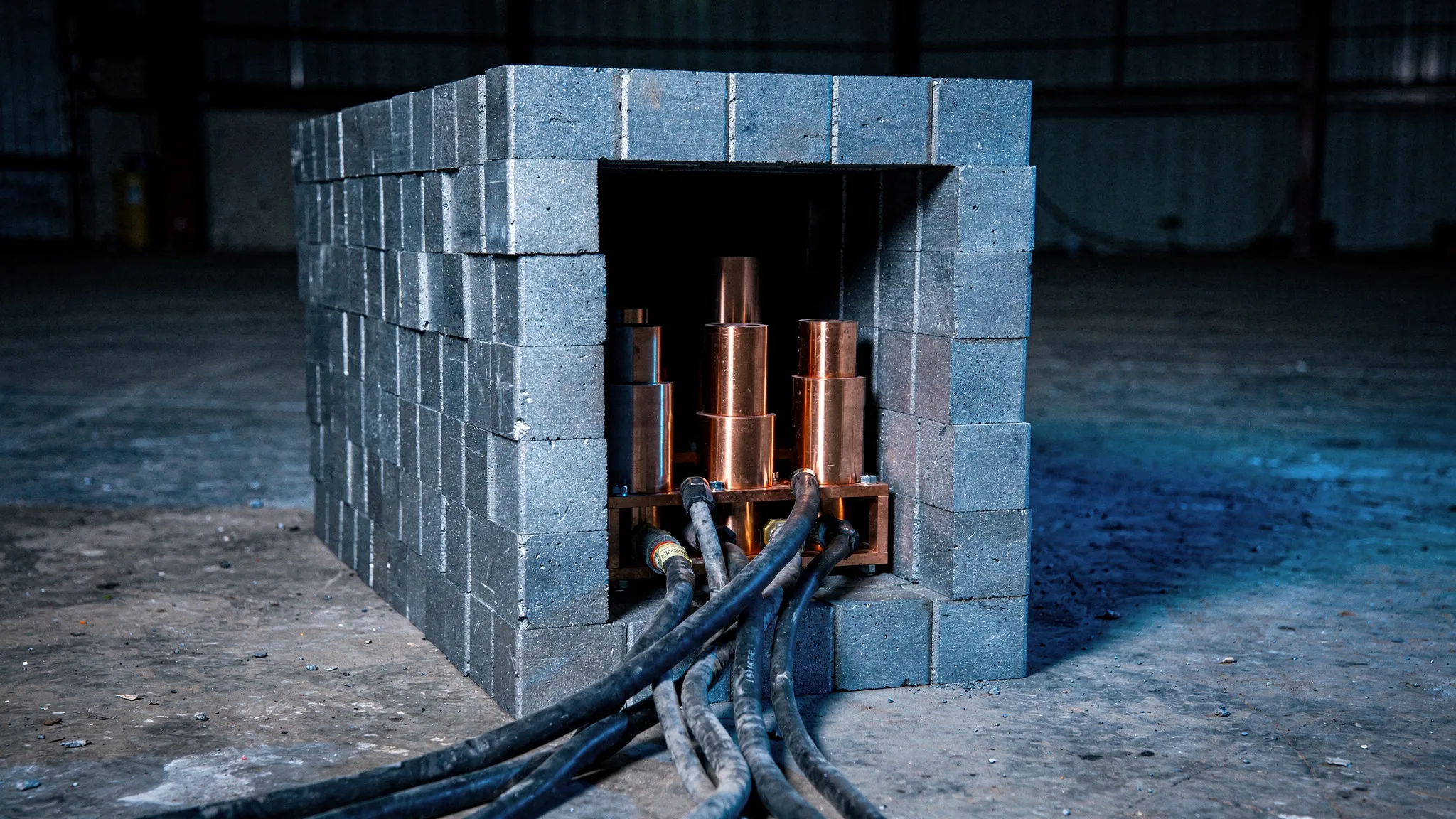
    Small copper cylinders inside an open shield of stacked grey bricks, thick black cables running out across a concrete floor, in cold blue light.

    A collision predicted in 1974: a neutrino bounces off an entire atomic nucleus at once. Because the whole nucleus takes part, detectors of a few kilograms can catch it.

    CONUS+ sits 20.7 metres from the core of a Swiss nuclear reactor, at Leibstadt. Its 5.6 kilograms of germanium crystals, inside a heavy shield, wait for these tiny kicks.

    From February 2025 to July 2026, the team counted 1,555 such events. Theory predicted 1,701, within the error margins. The signal is 10.2 times larger than its uncertainty, after a blind analysis.

    It is the most precise measurement of this collision next to a reactor. It also pins down a parameter of the weak force. One more year of data would shrink the statistical error to about 5%.

    Source: High significance measurement of reactor coherent elastic neutrino-nucleus scattering on germanium by CONUS+, https://arxiv.org/abs/2610.37318

    PreprintExperiment❓ Quiz
  5. Space & astronomy

    A GIANT CRASH CAN SAVE A PLANET'S ATMOSPHERE

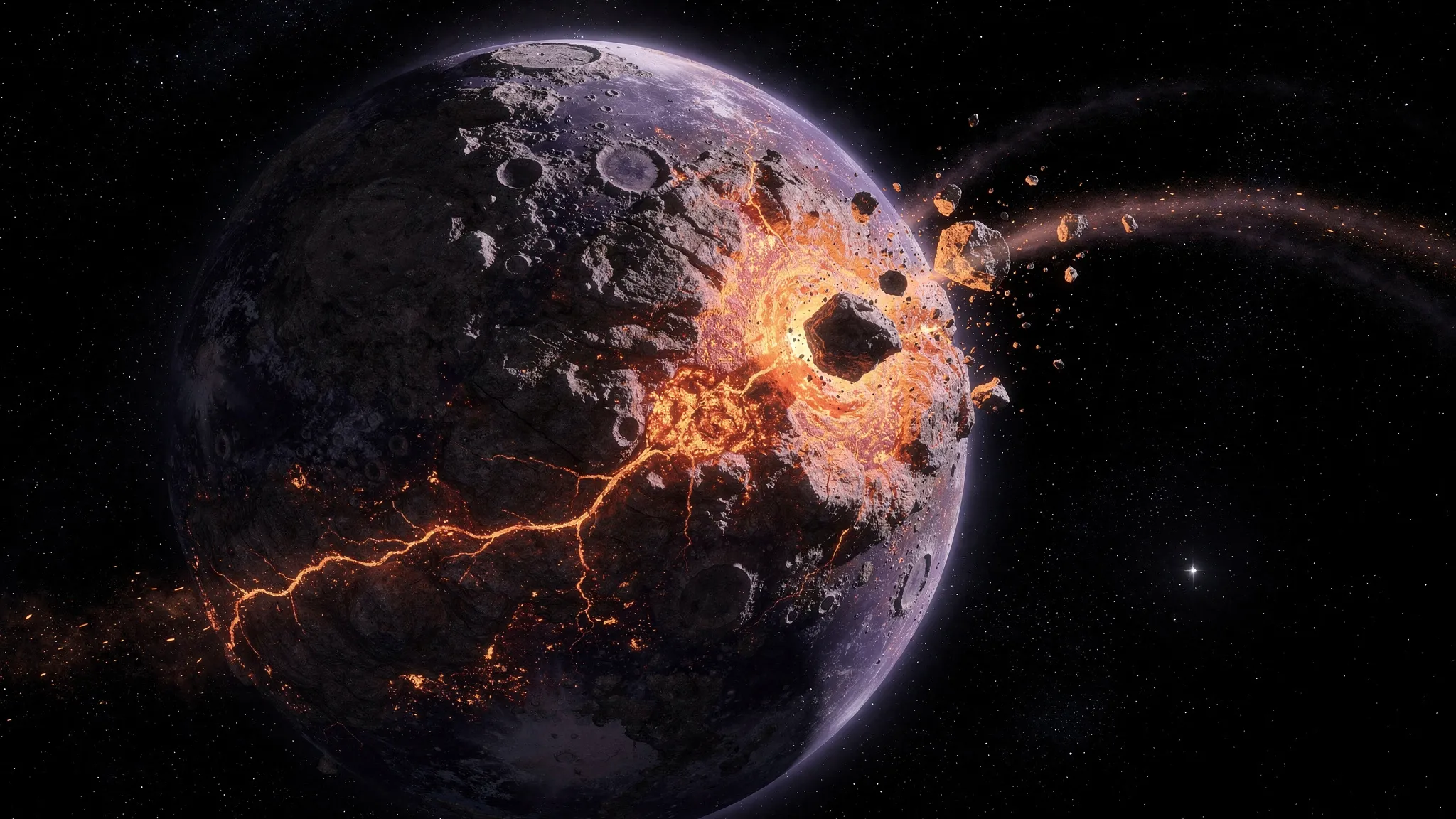
    Illustration of a cratered rocky planet split by glowing cracks of molten rock around a fresh impact, rock fragments flying off, a thin violet haze along its edge.

    Small exoplanets cluster around two sizes: about 1.3 and 2.4 times Earth's width. The bigger ones are thought to keep a thick hydrogen atmosphere. The smaller ones are thought to have lost it.

    A popular idea blames giant collisions late in planet formation. The crash melts the rock, and the scorching surface blows the gas away. Case closed?

    Two researchers, in Shanghai and at Yale, redid the full energy budget of a crash. All the impactor's mass adds gravity. Yet its metal core sinks, melting soaks up heat, and the upper atmosphere barely warms.

    Across 100 million simulated planets, crashes mostly help planets hold on to their hydrogen. Sub-Neptunes may therefore hide heavier rocky interiors than super-Earths. Future telescopes can check by weighing them and probing their atmospheres.

    Source: Retention of primordial atmospheres through giant impacts, https://arxiv.org/abs/2610.36446

    Peer-reviewedSimulation❓ Quiz
  6. Medicine & health

    A HIP EXOSKELETON THAT LEARNED ON A VIRTUAL BODY

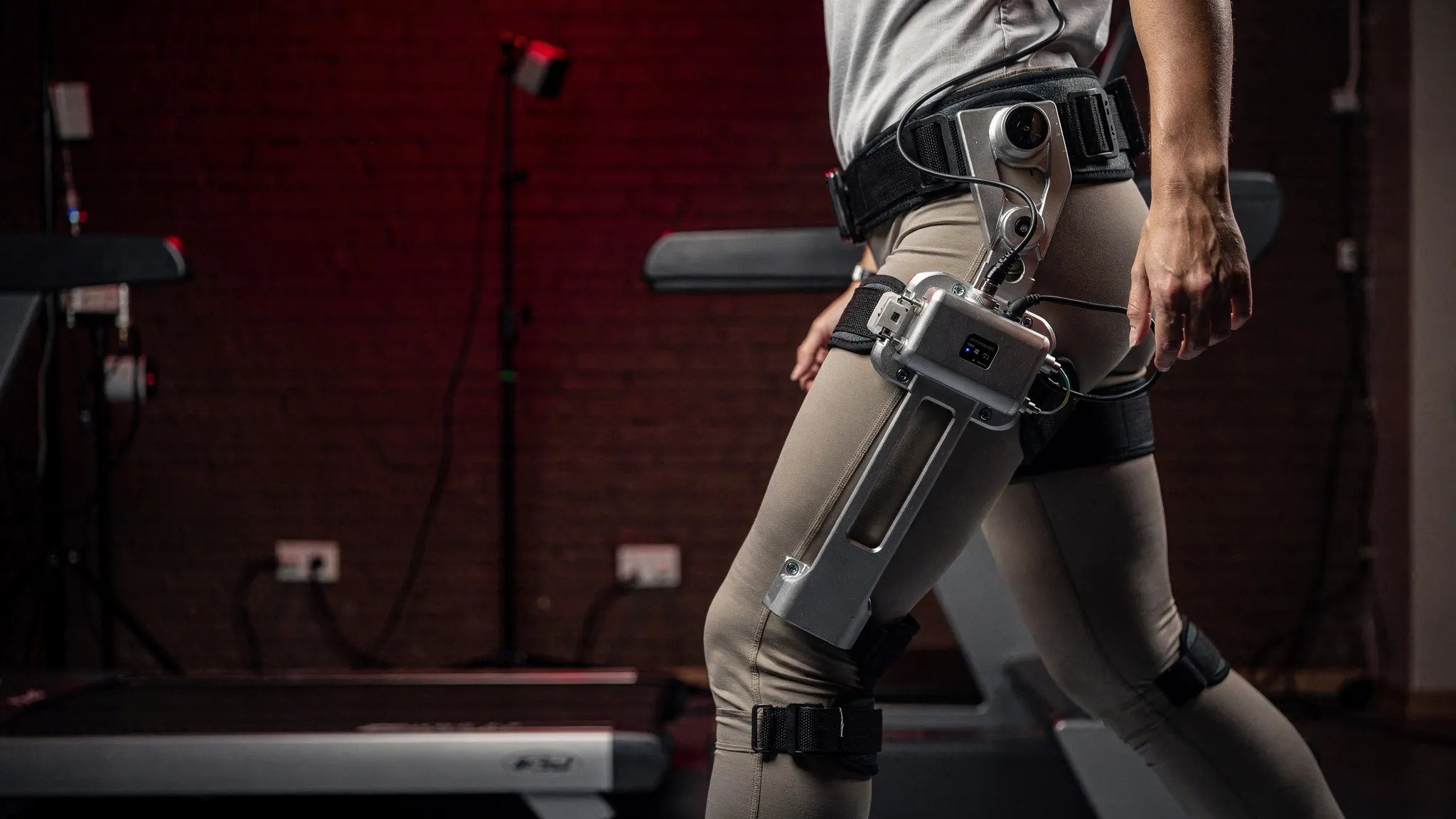
    Close-up of a walker's hip and thigh fitted with a metal hip exoskeleton — a motor at the hip, a waist belt and thigh straps — treadmills behind, in red light.

    Robotic hip braces can make walking cheaper for the body's muscles. But tuning one usually takes long sessions with every new wearer.

    A team in New Jersey trained one inside a computer instead. Its partner was a virtual body with 304 muscles, in random sizes and gaits. The goal: make those muscles burn less energy.

    Then eight real adults walked with it on a treadmill, with no tuning at all. A breath analyser tracked their effort. Compared with wearing it switched off, it cut their energy use by 18.3%. Every walker gained over the switched-off device.

    The catch: the 5.9-kilogram device itself costs 13.1% extra. Six walkers still spent less than without it, up to 24% less. A lighter frame should widen the gap.

    Source: Multi-Agent Reinforcement Learning of Co-Adaptive Hip Exoskeleton Control (MARL-Exo) for Metabolic Energy Reduction, https://arxiv.org/abs/2610.37441

    PreprintExperiment❓ Quiz
  7. Computing & AI

    ASK A CHATBOT TO PICK A RANDOM NUMBER

    Two white dice tumbling in mid-air in front of an open laptop with a blank glowing screen, on a dark wooden desk under an amber lamp.

    Ask a chatbot for a random number between 1 and 30. It answers at once. People use such answers to break ties or flip virtual coins. But how random are they?

    A researcher computed the exact odds each model gives every number. No sampling, no guesswork. Eighteen families of open models, five ranges, two different computers.

    Tuning turns a raw model into a chat assistant. In all 15 pairs tested, it made the answers less even. One assistant answers 17 essentially every time. Its untuned version gave 17 no special favour.

    Tuned models almost never say 1 or the top number. They shun multiples of 10, and many lean towards odd numbers. The fix is simple. Let a true random generator choose, then hand its result to the model.

    Source: 3, 7, 14, 17, 42: Instruction Tuning Installs and Sharpens Number-Choice Heuristics in Language Models, https://arxiv.org/abs/2610.36178

    PreprintExperiment❓ Quiz
  8. Computing & AI

    SINCE CHATGPT, A DEGREE PAYS A LITTLE LESS

    A dark open-plan office at dusk, a young employee and an older colleague leaning over the same laptop under an amber desk lamp.

    Take the US jobs most exposed to AI. Each year of schooling there used to add about 7.5% to pay. Since ChatGPT, it adds about 6.9%.

    Three economists in Buenos Aires compared US wage surveys from 2018 to mid-2026. ChatGPT's release splits the period. They set exposed jobs, like software developers and accountants, against truck drivers or waiters.

    Their idea: AI hands out written-down knowledge, so what school teaches becomes less scarce. Know-how learned by doing does not come so easily from a machine.

    Indeed, early experience now pays slightly more in those jobs. But after about 18 years, each extra year pays less. Some skills seem tied to the old ways of working. The authors call it a repricing, not a forecast.

    Source: Practice Makes Perfect: Tacit Knowledge, Generative AI, and Returns to Schooling and Experience, https://arxiv.org/abs/2610.36008

    PreprintData analysis❓ Quiz
  9. Physics

    A ROPE THAT HOLDS WITHOUT FRICTION

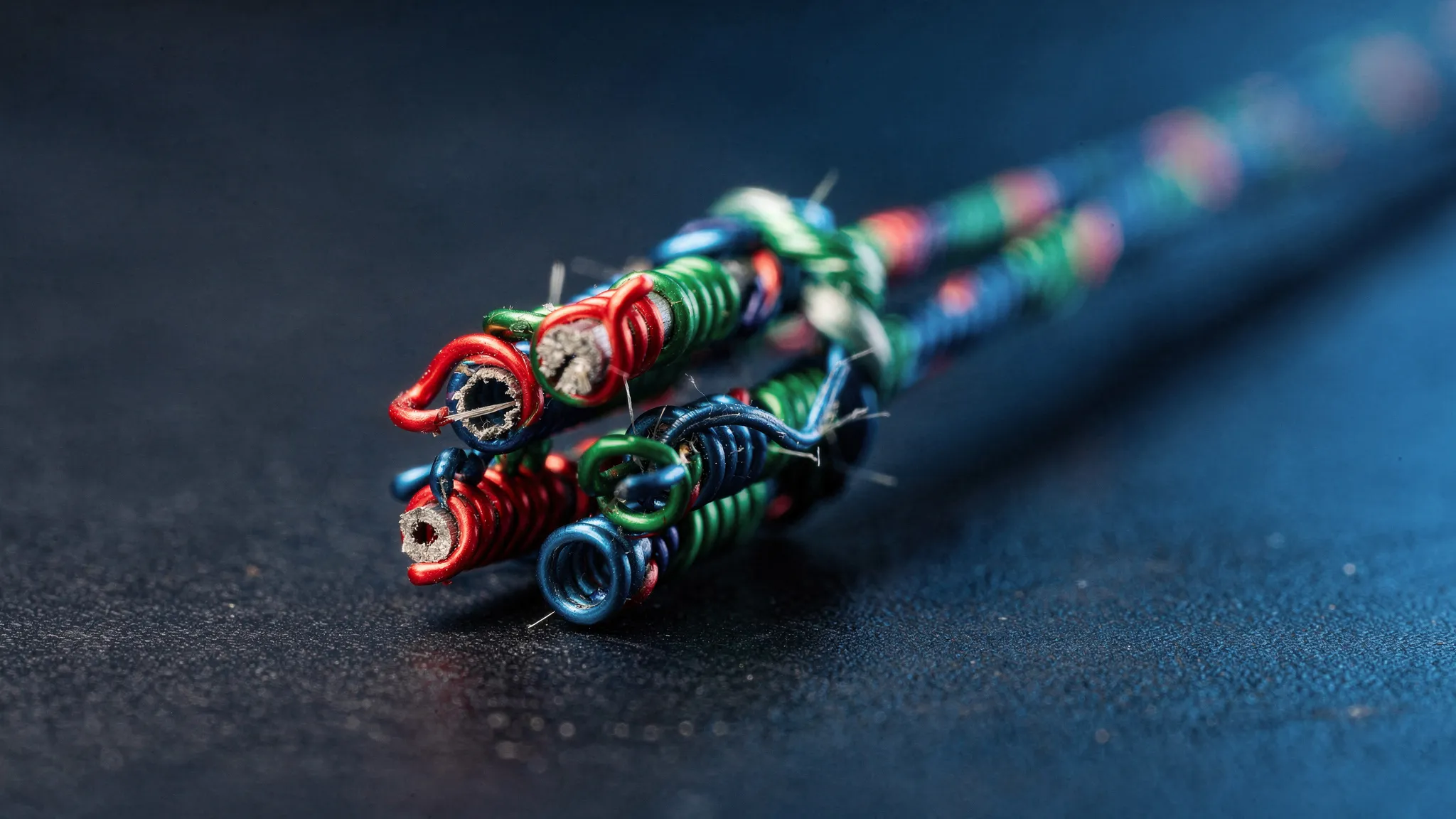
    Close-up of the freshly cut end of a bundle of springy red, green and blue coiled strands wound around one another, the strands staying grouped at the cut, in cold blue light.

    Cut a rope and its end frays. The classic explanation needs three things. Twist, a pull on the rope, and friction between the threads.

    A University of Massachusetts team used strands coiled at rest, like springs. Twisted together, then cut, the bundle stays locked. No sleeve holds it.

    In their simulations, friction is almost entirely removed. For the right shapes, the bundle still holds, with nothing to grip. Each strand is squeezed out of its favourite shape and pushes back against its neighbours.

    With too little curl, though, the bundle unzips from its ends, like a spreading crack. Some shapes, straight strands included, cannot be saved by any amount of friction. Engineers could use that edge to build fibres that untie themselves.

    Source: No friction required: Self-locking in entangled assemblies of curved filaments, https://arxiv.org/abs/2610.36330

    PreprintSimulation❓ Quiz
  10. Earth & climate

    WHY THE SMALLER GRAIN TAKES THE CHARGE

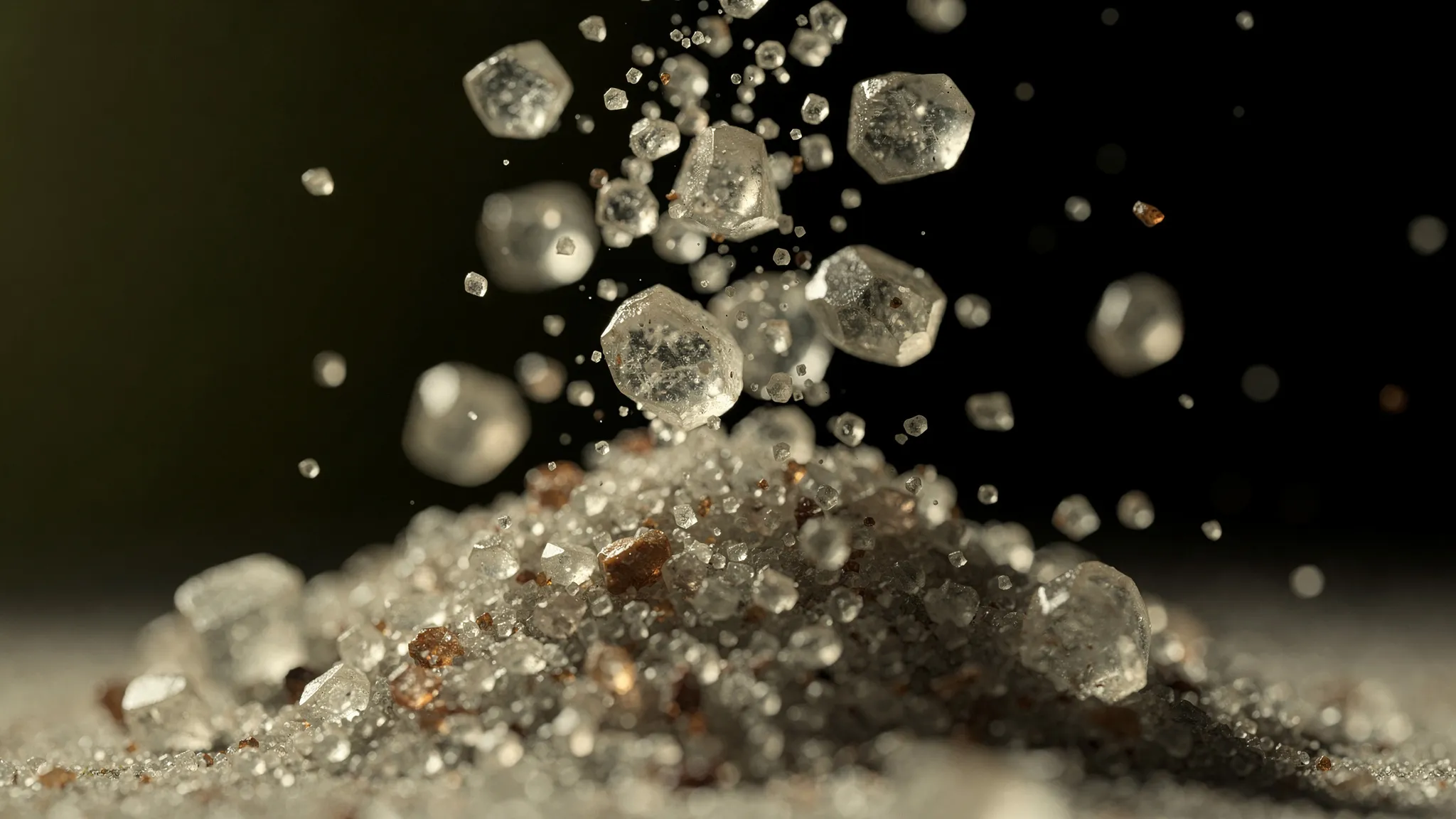
    Translucent sand grains of many sizes, from fine specks to large faceted grains, falling through the air onto a small heap of sand against a black background.

    Volcanic eruptions, dust storms, coffee grinders. Grains that collide become electrically charged. Physicists still cannot fully explain why. Stranger still, two grains of the same material can end up with opposite charges.

    A team at KAIST, in South Korea, points to the heat of the impact. They assume both grains receive the same heat. The smaller one warms up more: it has less matter to soak up that heat.

    That temperature gap, a few thousandths of a degree, creates a voltage. It is the Seebeck effect, the principle of a thermocouple. Charges then flow from one grain to the other.

    The material sets the direction. In their calculations, small quartz grains turn negative and large ones positive. With nylon, it flips, and small grains turn positive. Experiments had already reported both trends.

    Source: Tribocharging of Granular Materials Dictated by Geometric and Thermoelectric Effects, https://arxiv.org/abs/2610.36757

    PreprintTheory❓ Quiz
  11. Chemistry

    CRACKED MICROCRYSTALS THAT HEAL AND TRAP LIGHT AGAIN

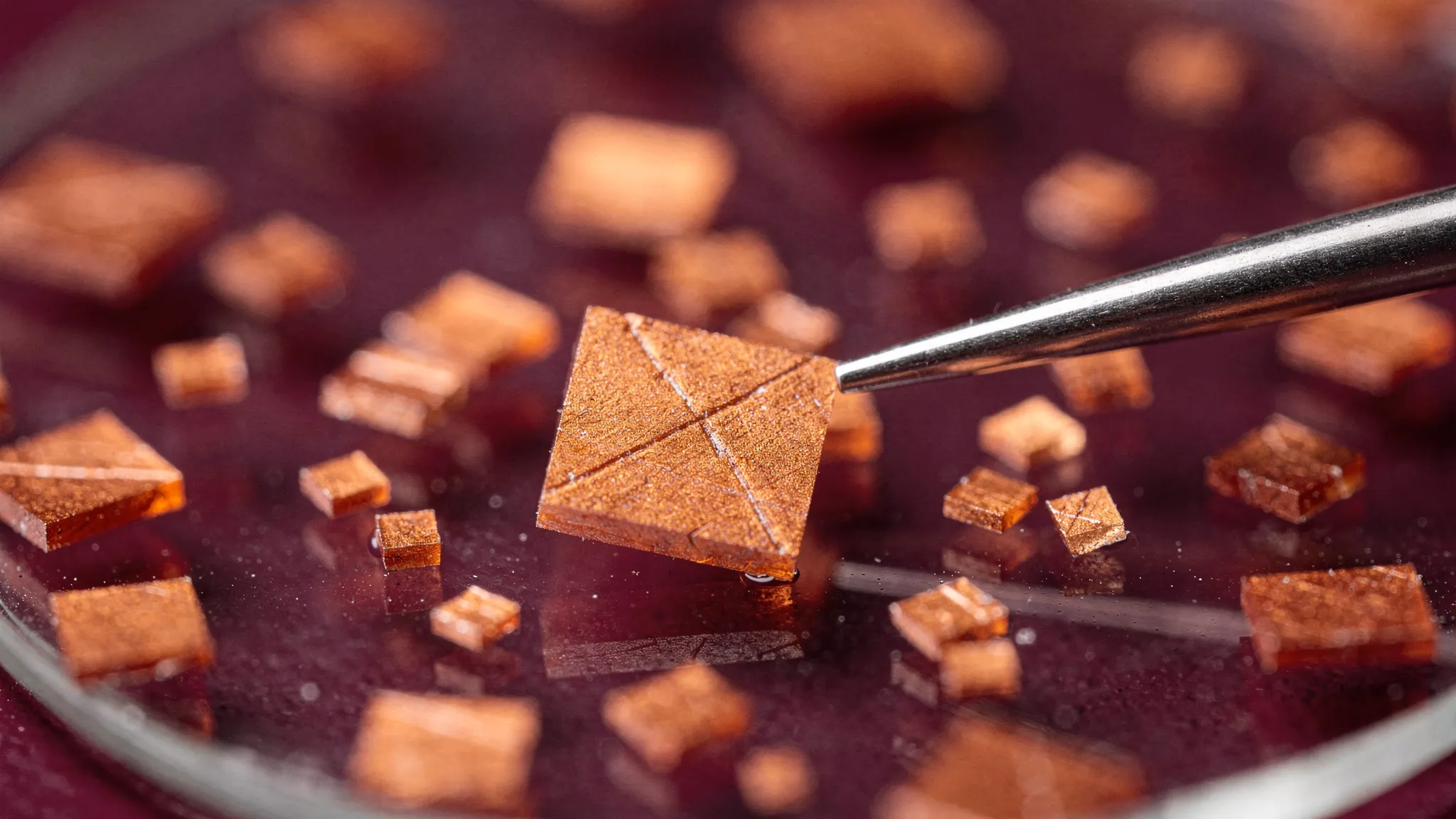
    Flat square and rectangular orange crystals scattered in a glass dish on a magenta background, the tip of a metal needle touching one of them, crossed by two thin diagonal lines.

    Tiny crystals can trap light between their faces, as if between two mirrors. That makes them candidates for microscopic lasers. But a single crack, and the trapped light is lost.

    At the University of Hyderabad, in India, chemists cracked such orange-glowing crystals on purpose. Their tool was the tip of an atomic force microscope, used like a tiny hammer.

    Then they pushed the pieces back into contact. The crack vanished. Two separate fragments even fused into one crystal again. Across six light-guiding crystals, between 32% and 99% of the light came back.

    In a crystal 31 micrometres wide, the light's resonances disappeared at the crack. After healing, they returned, matching the intact crystal. The mended zone is softer, though: its stiffness drops to about two-thirds.

    Source: Fracture Mechanics and Self-Healing in Molecular Crystal Resonators for Lasing, https://arxiv.org/abs/2610.36692

    PreprintExperiment❓ Quiz
Legal notice