Edition of October 30, 2026

  1. At The Knowledge Frontier, we pick out the research papers of the day and explain them simply.

    The web has changed in nature. We no longer search, we scroll. Pages look alike, texts are churned out, and we end up reading a great deal without keeping any of it. Educating yourself there has become a strangely passive affair.

    Here, you do more than read. Every article ends with a quiz: a few questions on what you have just read. When the subject lends itself to it, it is an experiment — you set the values yourself and recover, in turn, the researchers' result.

    @VirScience
  2. Computing & AI

    FOUR COLOURS FOR ANY MAP, FOUND IN LINEAR TIME

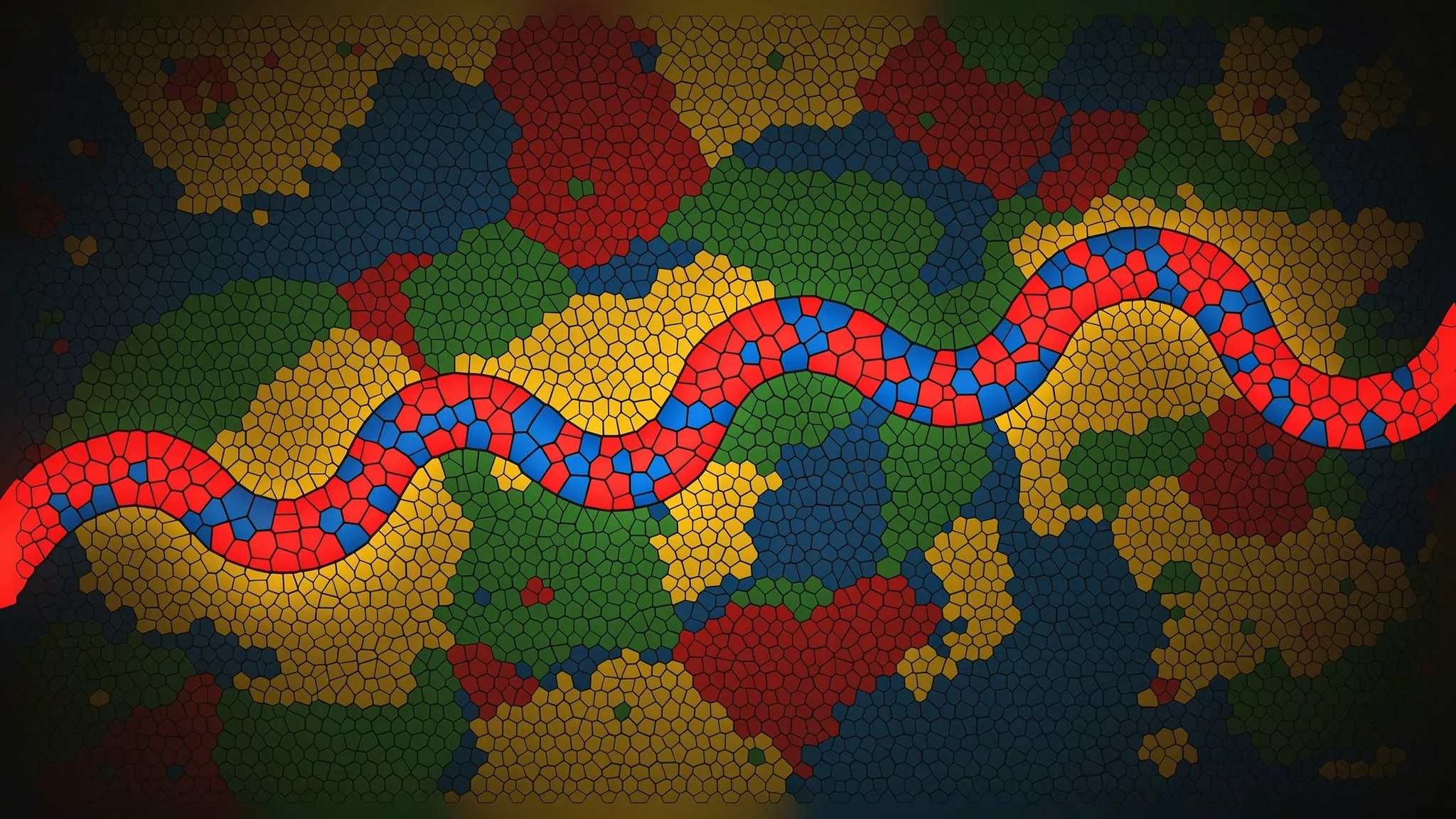
    Illustration of a mosaic of hundreds of small cells grouped into patches of red, blue, green and yellow, crossed by a glowing winding band of red and blue cells.

    Four colours are enough for any map, so that neighbours always differ. That was proved in 1976. But how do you actually find the colours?

    The classic tool is the Kempe chain. Pick two colours and take the whole connected patch of countries painted in just those two. Swap them throughout the patch: the map stays correctly coloured.

    The catch: a single swap can ripple across the whole map. The previous record needed more swaps as maps grew. Each one cost a full pass over the map.

    Six mathematicians, from Tokyo to Copenhagen, have removed that extra cost. Their algorithm colours n countries in a time proportional to n. Small pieces of the map are solved once, stored in tables, then simply looked up. The authors call this speed optimal.

    Source: Four-Coloring Planar Graphs in Linear Time, https://arxiv.org/abs/2610.39753
    PreprintTheory❓ Quiz
  3. Space & astronomy

    A WHITE DWARF WITH TWO RINGS OF GAS

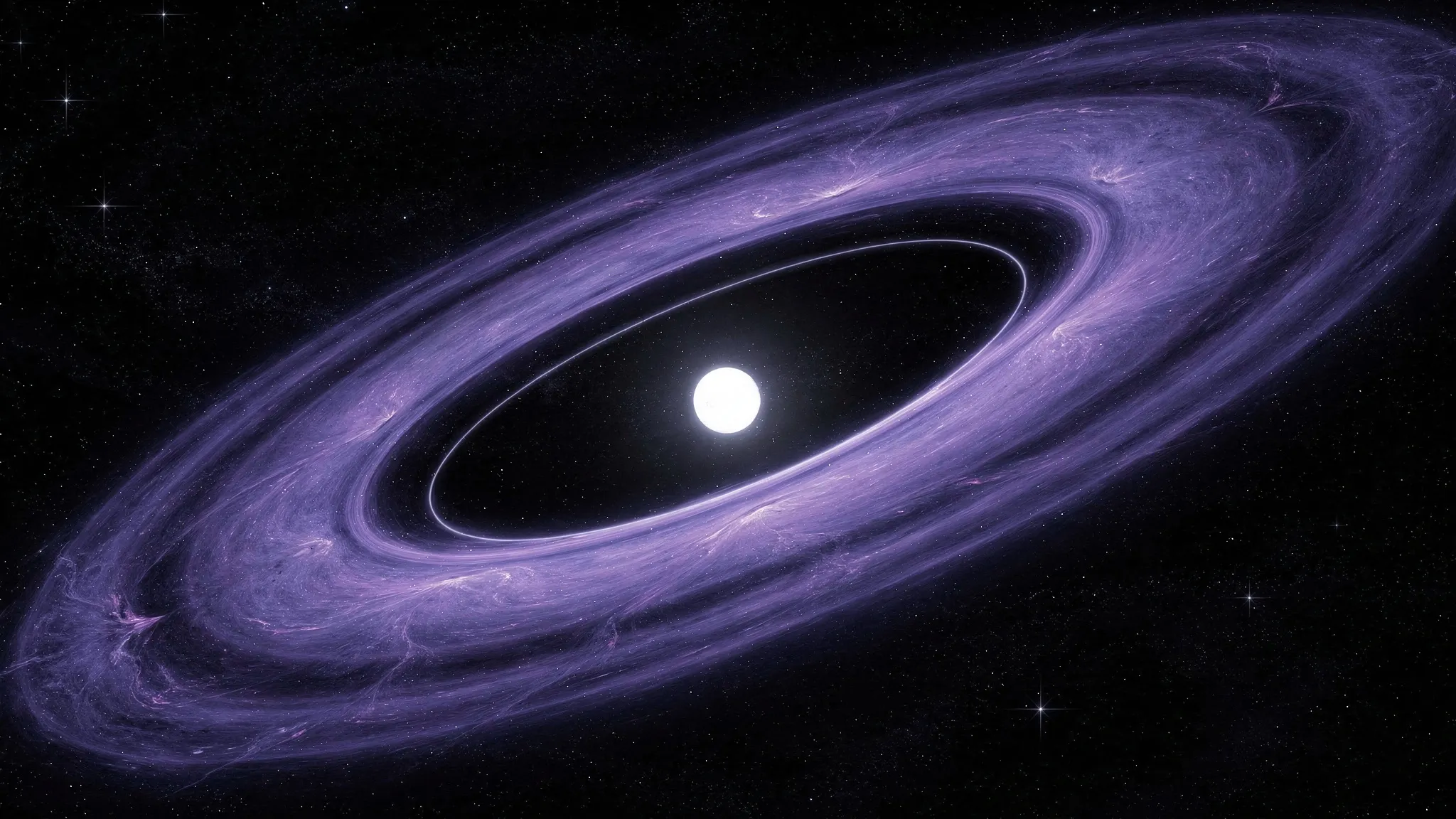
    Illustration of a tiny brilliant white star circled closely by a thin ring of violet gas, then a dark gap and a much broader tilted outer band of violet gas, against a black starry background.

    When a star becomes a white dwarf, some of its planets survive. Their shattered debris can circle the remnant as dust and gas. Astronomers knew 21 such gas discs.

    All 21 sign their light the same way: two peaks per line. One peak for gas coming towards us, one for gas moving away. Around WD J1328−1450, each calcium line shows four.

    Four peaks mean two rings of gas, with an empty gap between them. The inner ring spins faster, as Kepler's law demands. And magnesium glows only in the inner ring.

    What keeps two rings apart, each making its own gas? The authors propose one surviving solid body inside each ring. The inner one would be asteroid-sized at most. The outer one could be as big as Pluto.

    Source: A double debris disc around a white dwarf sculpted by two planetary bodies, https://arxiv.org/abs/2610.37773

    Peer-reviewedObservation🧪 Experiment
  4. Computing & AI

    THE CROWD BELIEVES IN YOU, A LITTLE TOO MUCH

    Spectators on their feet in the stands of a stadium at dusk, clapping with raised hands, most of them facing a lone runner on the track below, under amber floodlights.

    "Will I go to the gym three times this week?" On Manifold, a prediction site using play money, strangers bet on questions like this. Lab studies say onlookers judge our plans more coldly than we do.

    Three researchers studied 6,150 such markets on people's own goals. Prices gave YES a 49.4% chance on average; it happened 45.0% of the time. Bets on outside events were nearly spot on.

    That excess hope was absent when the markets opened. It appeared within a day of trading, even when the person never bet. Onlookers marked events down to their usual odds, but not personal goals.

    The correction came late, and much of it from the person. Their own bets supplied 38% of the price's move toward the truth. A correction learned from past markets improves later forecasts by only 1.5%.

    Source: Crowds Believe in You: Online Prediction Markets Overestimate How Often People Achieve Their Own Goals, https://arxiv.org/abs/2610.40324

    PreprintData analysis❓ Quiz
  5. Life sciences

    A FEW DNA DROPLETS, A MESH 25 TIMES STIFFER

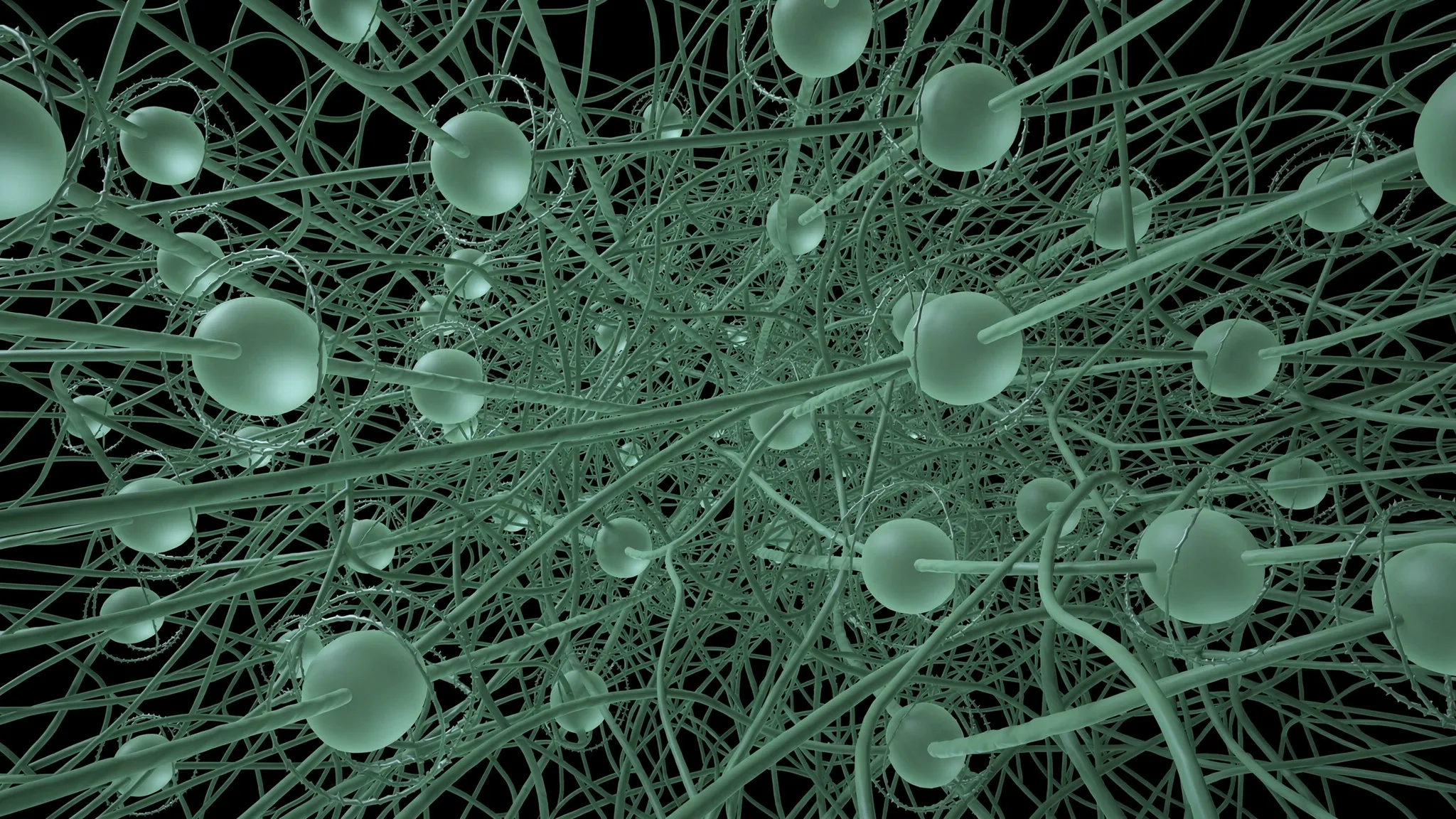
    Illustration of a dense tangle of thin green filaments threaded through dozens of small round droplets, each droplet ringed by a halo of filaments, in deep green light on a dark background.

    Mix hard grains into a soft material, and it gets stiffer. But theory sets a ceiling. Grains filling a tenth of the volume add 25% at most.

    A US–German team tried liquid droplets of DNA instead. They grew them inside a tangle of actin, filaments taken from muscle. The droplets filled less than a tenth of the volume.

    Cooled to 10 °C, the mix became 25 times stiffer. Not 25% stiffer: 25 times! Warm it past 31 °C, the droplets melt, and it turns soft again. The switch takes about ten minutes, and it works again and again.

    How do droplets beat the ceiling? Filaments run straight through each one and get gripped inside. When the material is sheared, each droplet turns and drags its filaments along. Its reach doubles, and the droplets link up into one rigid web.

    Source: Extraordinary stiffening and reciprocal control in a DNA condensate/actin composite, https://arxiv.org/abs/2610.38504

    PreprintExperiment❓ Quiz
  6. Mathematics

    A LIMIT ON NETWORKS, NOW PROVED FOR EVERY SIZE

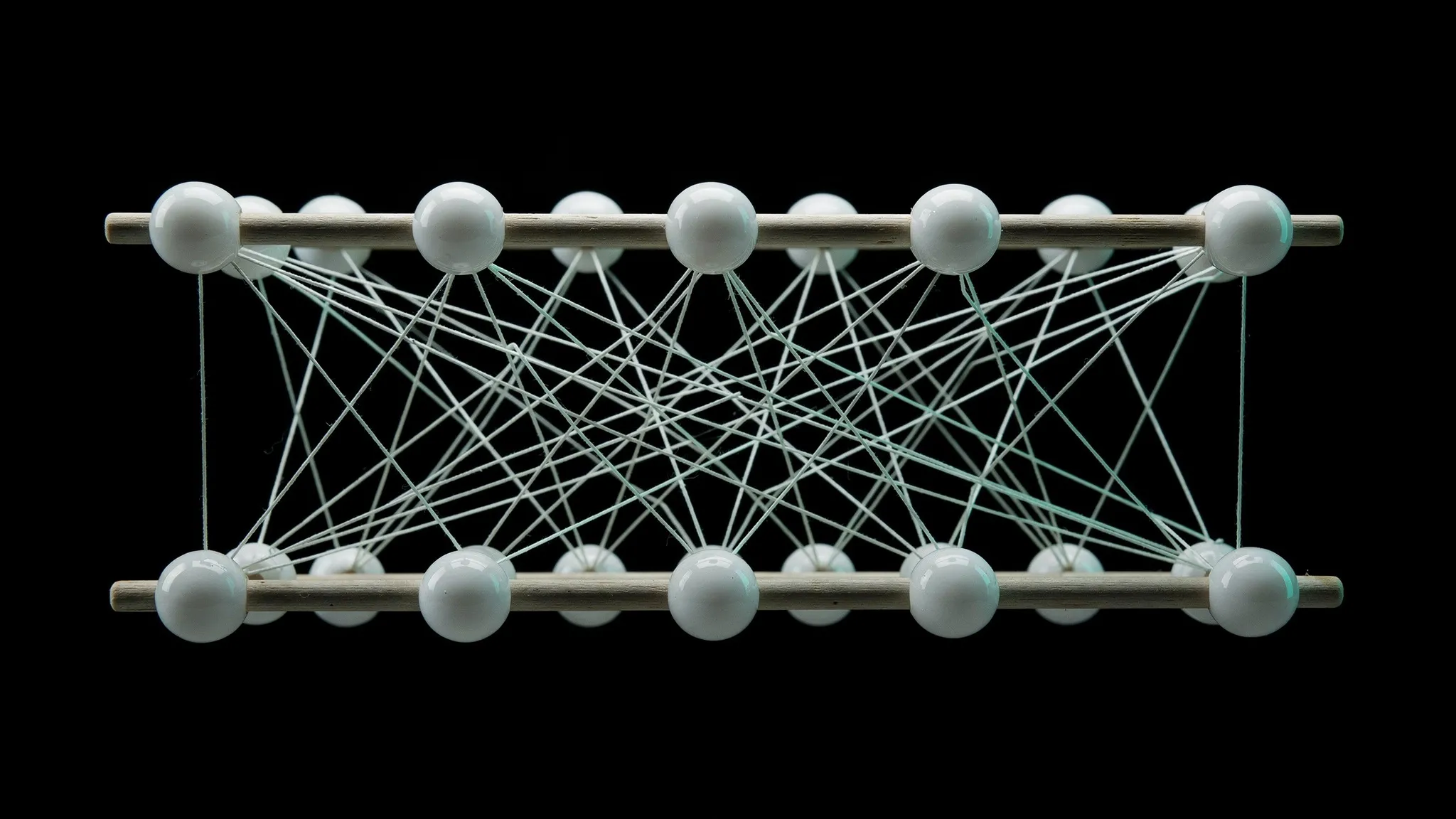
    Model of a complete bipartite graph: two parallel wooden rods lined with white beads on a black background, beads of one row joined to beads of the other by thin taut threads that cross in the middle.

    Take a network where any two points sit at most two links apart. Add a rule: cutting any single link must break that. How many links can such a network hold?

    The Murty–Simon conjecture sets the limit: the number of points squared, divided by four. Ten points, at most 25 links. Only one network reaches it. Two groups as equal as possible, each point linked to every point of the other.

    In 1992, Zoltán Füredi proved it, but only for gigantic networks. They needed more points than a tower of 2's about 10¹⁴ storeys high. Each storey raises 2 to the power of everything above it.

    Sanjana Das and Jacob Fox, at Stanford, now prove it for every size. An AI, GPT-5.6 Sol, found most of the proof. Their own argument shows that only the two-group network hits the limit.

    Source: A proof of the Murty–Simon conjecture on diameter-2-critical graphs, https://arxiv.org/abs/2610.39032

    PreprintTheory❓ Quiz
  7. Chemistry

    THE BOND IN H₂, PINNED DOWN TO 175 KILOHERTZ

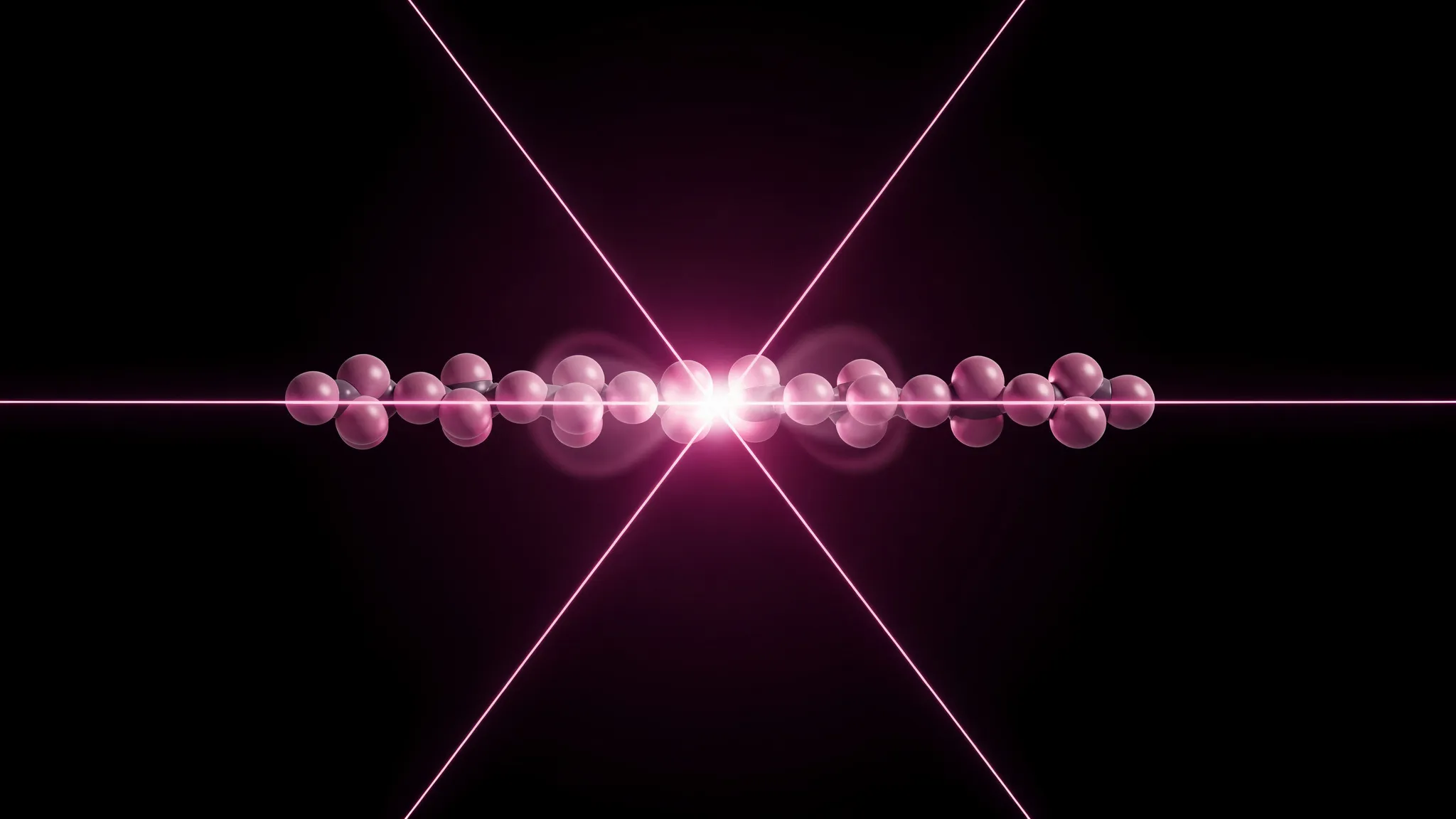
    Illustration of a row of small glowing magenta spheres, like a stream of molecules, crossed at its centre by thin laser beams that form a bright star, on a black background.

    Two protons, two electrons: the hydrogen molecule is the simplest there is. How much energy splits it in two? In 1913, Bohr's estimate fell about 40% short.

    Physicists measure such energies as frequencies of light, in hertz. A team from ETH Zurich and VU Amsterdam climbed the molecule's energy ladder. Lasers and millimetre waves did the climbing, rung by rung.

    The energy that splits H₂ is now known to within 175 kilohertz. That is about 1.6 parts in ten billion. The best calculations are more than five times less precise.

    Hydrogen comes in two forms, whose protons spin differently. The energy gap between them matches theory. Any unknown physics telling them apart stays below 540 kilohertz. Theory now needs its α⁷ correction computed in full.

    Source: Ionization and Dissociation Energies of Molecular Hydrogen, https://arxiv.org/abs/2610.40359

    PreprintExperiment❓ Quiz
  8. Physics

    LIGHT THAT TURNS IN CIRCLES MAKES GRAPHENE TOPOLOGICAL

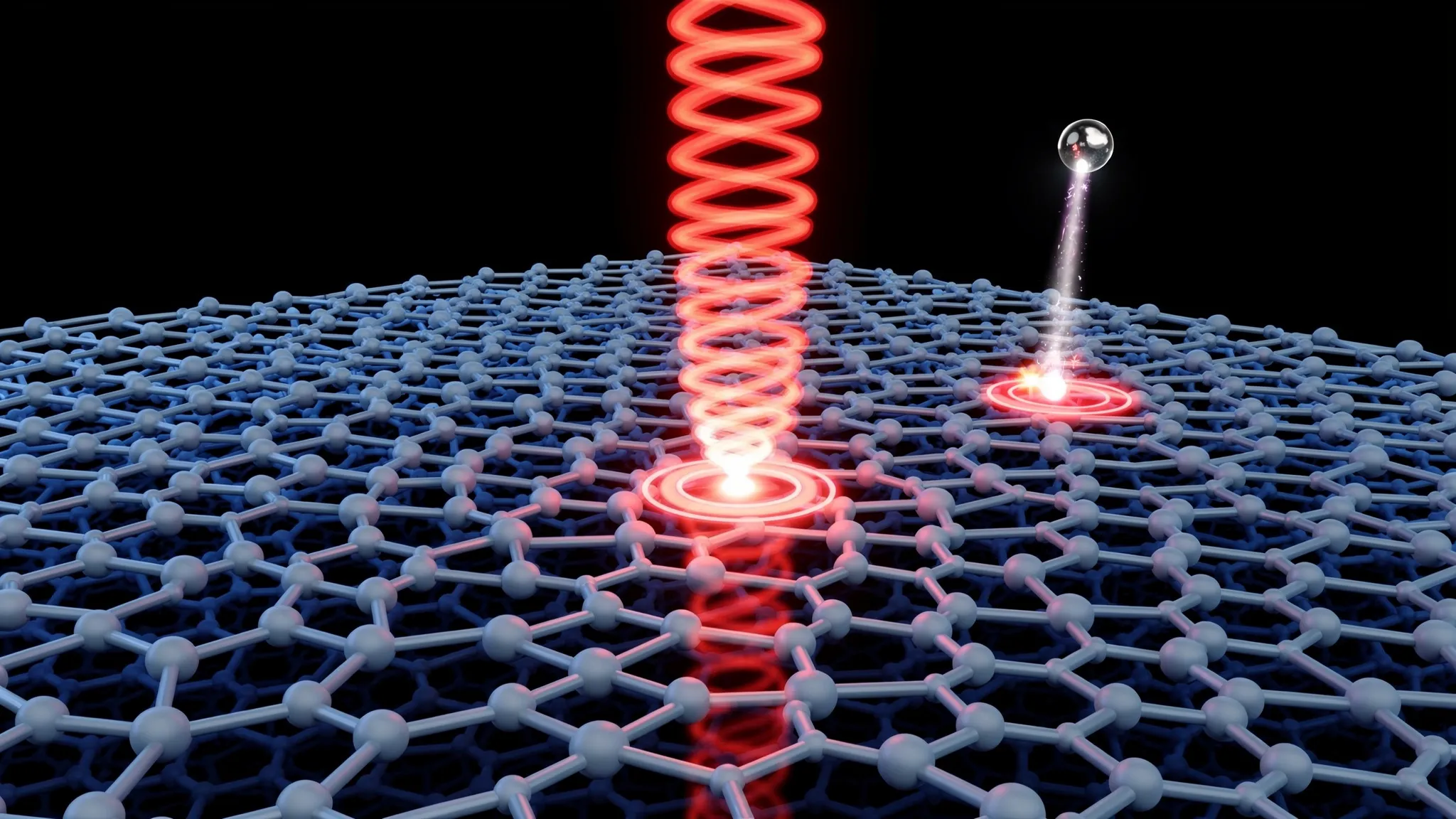
    Illustration of a honeycomb lattice of small grey spheres joined by thin rods, a red corkscrew-shaped beam of light spiralling down onto it, and a bright electron rising from a glowing spot nearby, on a black background.

    In 2009, theorists predicted that light whose field turns in circles could transform graphene. Graphene would become a topological insulator, defined by the shape of its electron waves.

    Testing it was hard. Electrons in graphene collide extremely fast, which could blur the effect. Earlier experiments that imaged its bands used light swinging back and forth, which cannot create this state.

    A team led from Bordeaux hit graphene with infrared pulses lasting 135 femtoseconds. A femtosecond is a millionth of a billionth of a second. During each pulse, extreme-ultraviolet flashes knocked electrons out to read their state.

    Near the point where graphene's energy bands meet, a new signal appeared. Its sign flipped whenever the light turned the other way. The expected gap in electron energies stayed invisible; the flip is their evidence.

    Source: Observation of light-induced topological state in graphene, https://arxiv.org/abs/2610.39695

    PreprintExperiment❓ Quiz
  9. Physics

    SIGNS OF CHARGED WHIRLPOOLS IN A FLUID OF NEUTRAL PAIRS

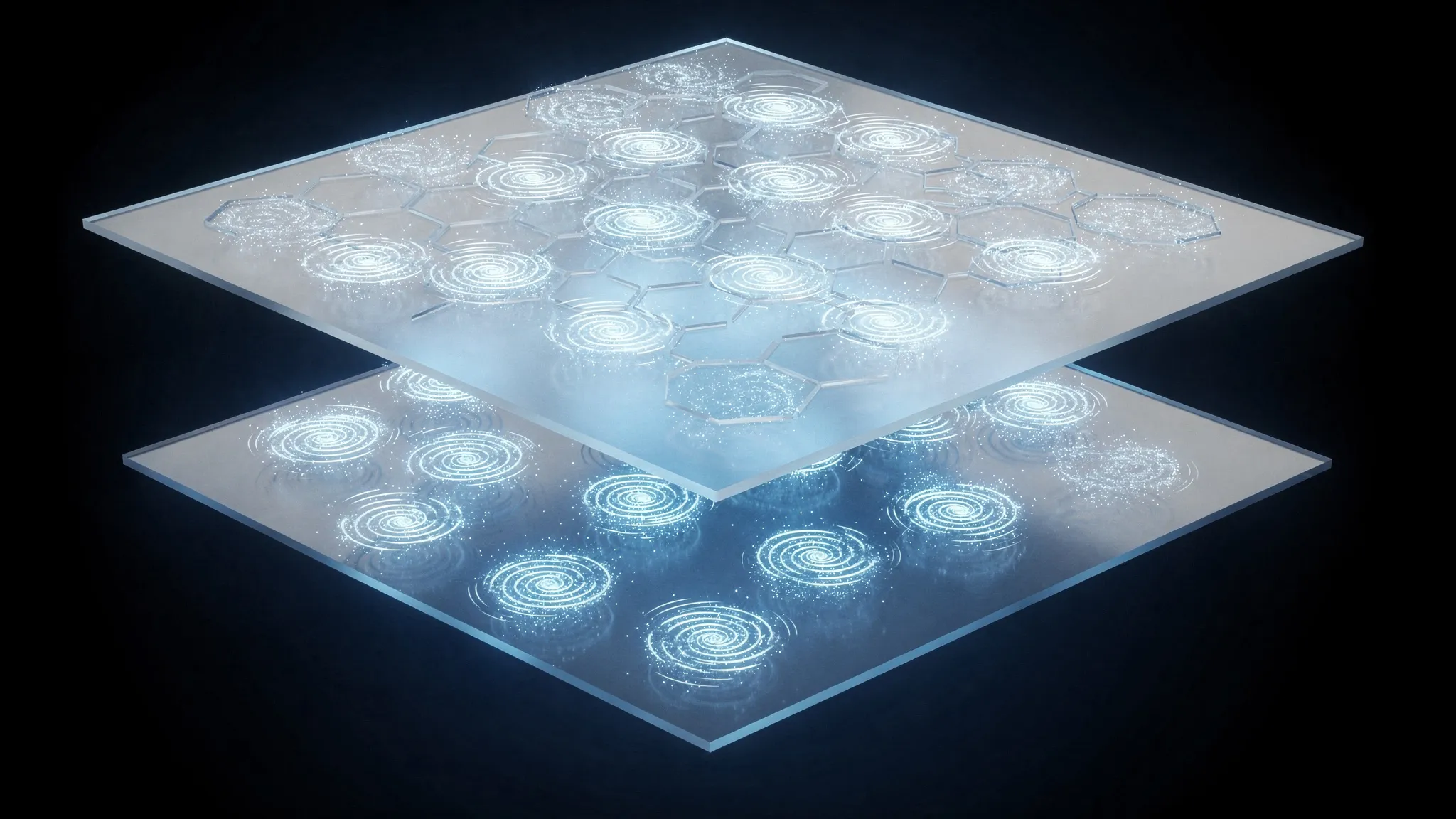
    Illustration of two smooth translucent sheets stacked one above the other, each dotted with glowing spiral whirlpools of bluish-white light set in a honeycomb pattern, on a black background.

    An exciton is an electron bound to a hole, a missing electron. The pair carries no electric charge. Cooled enough, excitons can form a superfluid that moves as one quantum wave.

    That neutrality makes their superfluid hard to observe. A Princeton team stacked two graphene sheets 3.2 nanometres apart, in a strong magnetic field. Electrons in one sheet paired with holes in the other.

    The team then added a pinch of extra charge. Theory said it would settle in tiny whirlpools, locked in a lattice. A tunnelling microscope found a lattice of charge whose spacing matched the theory.

    Moving charge from one sheet to the other left that spacing unchanged. A crystal of electrons in the top sheet would have shifted it. That points to pairs sharing one quantum rhythm.

    Source: Evidence for a charged vortex lattice in an exciton superfluid, https://arxiv.org/abs/2610.37781

    PreprintExperiment❓ Quiz
  10. Space & astronomy

    A 1991 GAMMA-RAY FLASH RINGS LIKE A MAGNETAR

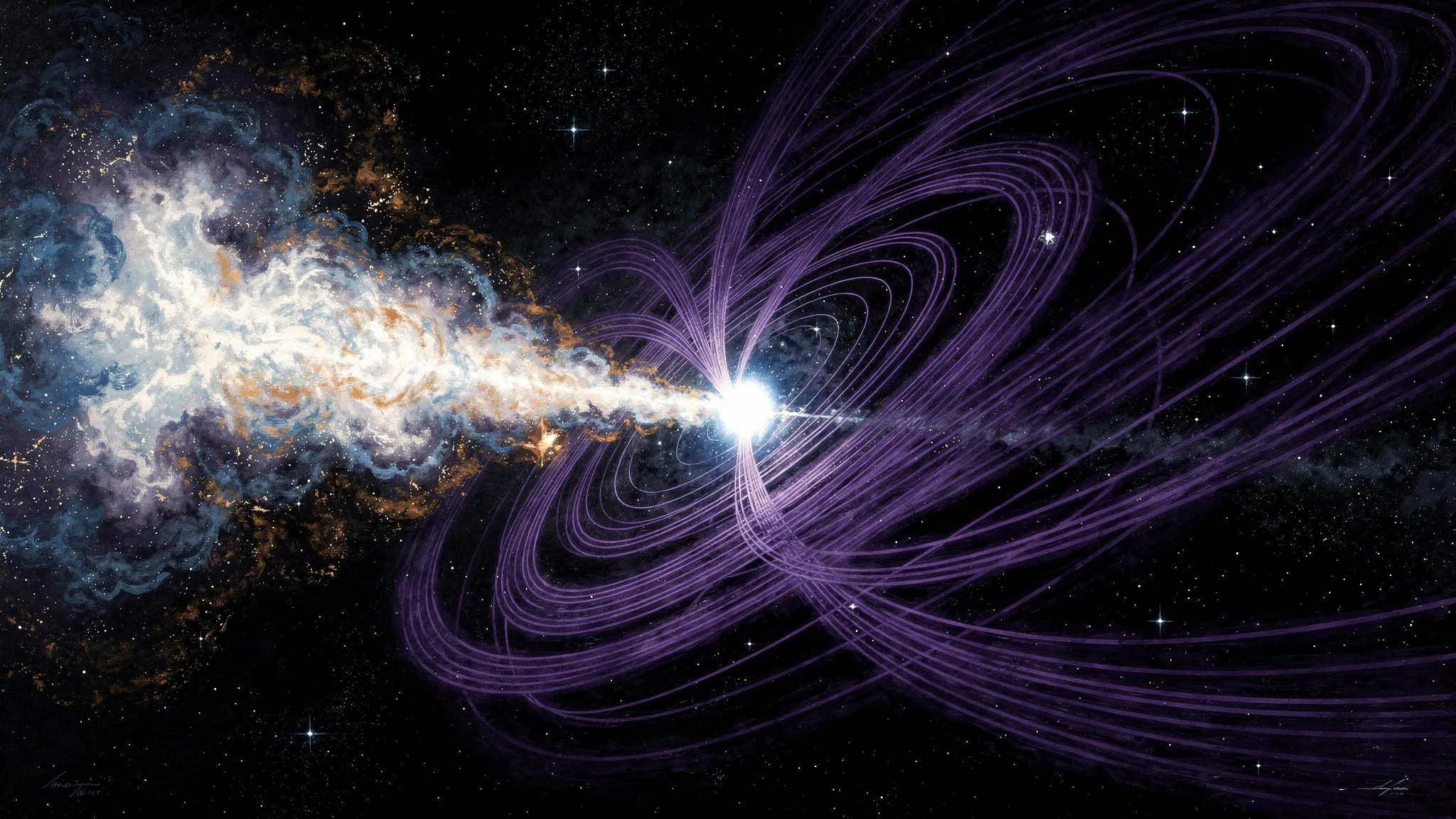
    Illustration of a tiny brilliant star wrapped in large looping violet magnetic field lines, with a bright flare of hot gas bursting from one side, against a black starry sky.

    On 11 July 1991, a space observatory caught a flash of gamma rays. Its bright spike lasted about ten milliseconds. Its source? Two compact stars merging, or a magnetar.

    A magnetar is a neutron star with an ultra-strong magnetic field. In 2020, one let off a giant flare in a nearby galaxy. A team from China and the United States compared the two flashes.

    Same shape: a sharp spike, then a faint tail. Same rhythm, too. Both brighten and dim at whole multiples of about 360 times per second. These beats look coupled, like the overtones of one note.

    For the authors, a magnetar flare explains it more simply than a merger. They stop short of calling it proven. Seventeen nearby galaxies are candidate hosts.

    Source: Harmonic brightness oscillations point to magnetar giant flares in rare short gamma-ray bursts, https://arxiv.org/abs/2610.39130

    Peer-reviewedData analysis❓ Quiz
  11. Mathematics

    SIX DICE THAT BEAT EACH OTHER IN A LOOP

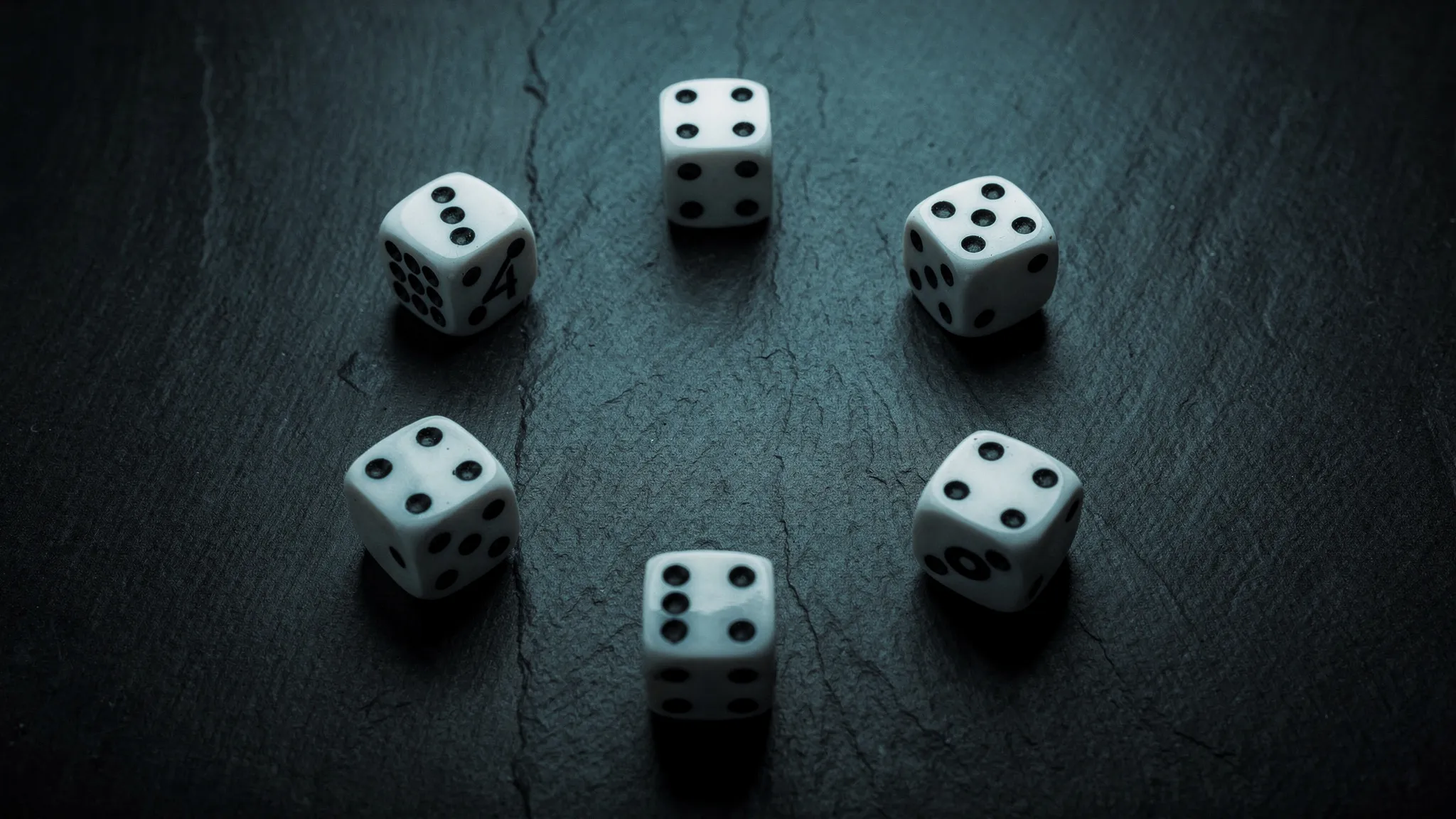
    Six small white dice with black pips arranged in a circle on a dark slate table, under soft dark cyan light.

    Six dice, one loop. The first beats the second, the second beats the third, and so on. Then the sixth beats the first. No die is the best.

    The rules are strict. Six faces, each showing a value from 1 to 6, repeats allowed. Every win comes by the slimmest possible margin: 19 duels out of 36.

    Terry Easlick, at the Université de Montréal, had a computer sort all 462 such dice. With three, four or five faces, no loop forms at their slimmest margin. With six faces, exactly two loops exist.

    The two loops are mirror images. Turn each face v into 7 − v, flip the arrows: you get the other. With seven to ten faces, loops grow longer than the number of faces. Is six the only number that fits? That is still a conjecture.

    Source: Computer-Assisted Results for n-Sided Non-Transitive Dice Taking Face Values in [n], https://arxiv.org/abs/2610.40321

    PreprintTheory❓ Quiz
  12. Earth & climate

    HOW A MAGMA OCEAN COULD TURN HYDROGEN INTO WATER

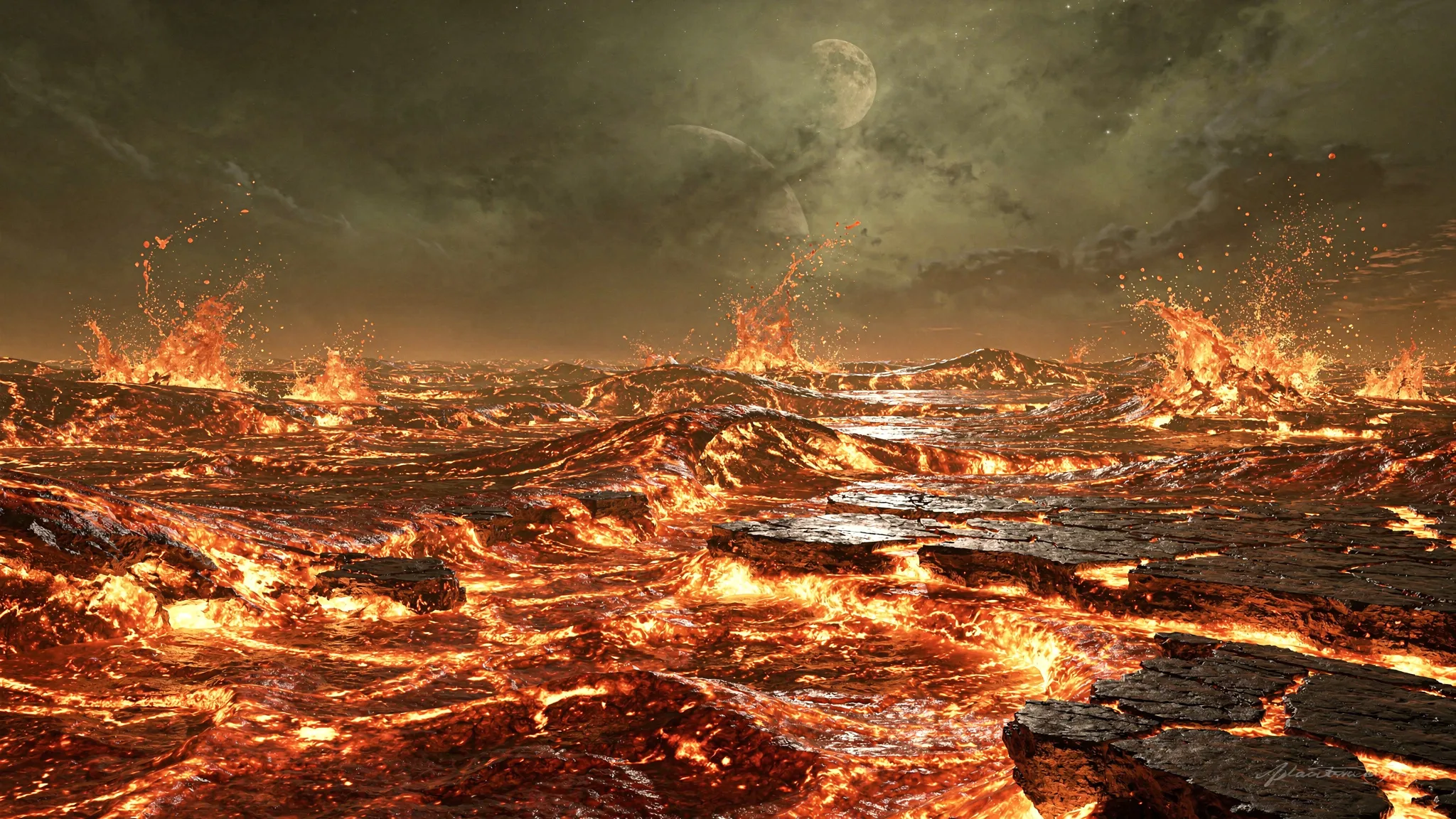
    Illustration of a glowing ocean of molten rock stretching to the horizon, with dark crusted slabs and splashes of lava, under a heavy olive-green haze with pale moons in the sky.

    After giant impacts, the young Earth was probably covered by an ocean of molten rock. Above it lay a dense atmosphere, mostly hydrogen. Deep below, crushing pressure split iron into metal and oxidised iron. The metal sank into the core.

    Hydrogen plus oxidised iron makes water. But hydrogen seeps only slowly into molten rock. So could this chemistry matter? A team in Japan built a model to find out.

    The answer lies in the magma's skin. Cooled from above, it sinks every minute or so. Fresh melt replaces it and keeps absorbing hydrogen. Most of the hydrogen becomes water within about 10,000 years.

    The deeper the magma ocean, the more water it makes. With enough hydrogen, this could explain Earth's water budget, the authors write. And the sky would have stayed rich in hydrogen.

    Source: Coupled evolution of Earth's H2-rich proto-atmosphere and oxidized magma ocean: Efficient H2O production through dissolved H2 transport and atmospheric buffering of the magma ocean redox state, https://arxiv.org/abs/2610.38503

    Peer-reviewedSimulation❓ Quiz
Legal notice