Edition of November 2, 2026

  1. At The Knowledge Frontier, we pick out the research papers of the day and explain them simply.

    The web has changed in nature. We no longer search, we scroll. Pages look alike, texts are churned out, and we end up reading a great deal without keeping any of it. Educating yourself there has become a strangely passive affair.

    Here, you do more than read. Every article ends with a quiz: a few questions on what you have just read. When the subject lends itself to it, it is an experiment — you set the values yourself and recover, in turn, the researchers' result.

    @VirScience
  2. Earth & climate

    THEY NAMED WHERE THE QUAKE WOULD START

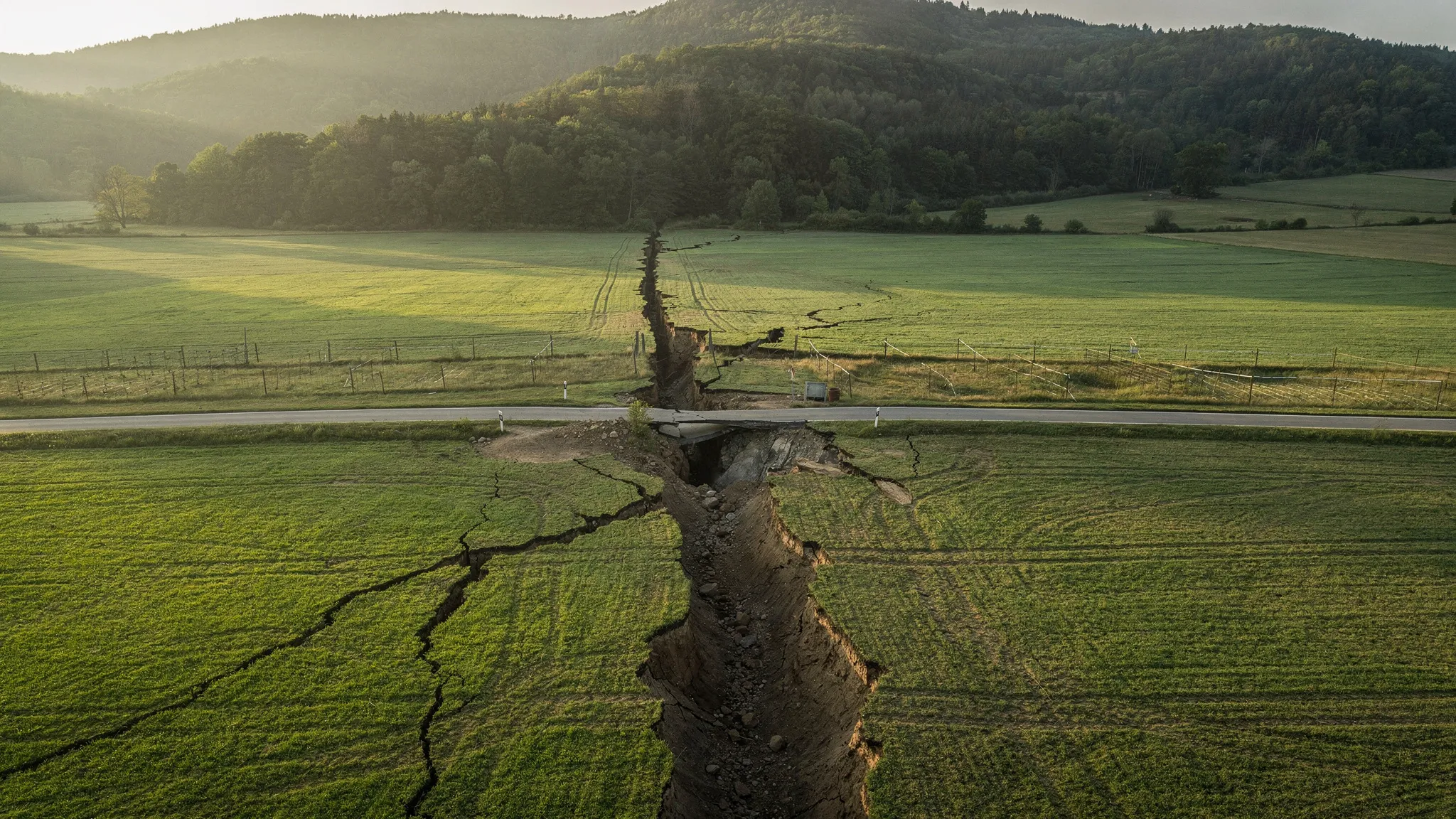
    Aerial view of a long, wide crack in the ground running straight across green fields towards wooded hills, cutting through a country road.

    Earthquake forecasts tell you how likely a fault is to break. They never say where the break will begin. In 2019, a Japanese team tried anyway.

    Their clue: the b-value. It compares small quakes to large ones, and falls as stress rises. After 2016, it dropped in only one spot along the Hinagu fault.

    On 28 July 2026, a magnitude 7.1 earthquake struck the Hinagu fault. Its epicentre sat 2.9 km from the edge of their 2019 rectangle. Its starting point, 16 km deep, lay inside the low-b zone.

    To the authors' knowledge, no big quake's starting point was ever named in print beforehand. Their next candidate is a bend in the fault, still under strain. They give no date, only a place.

    Source: Advance identification of where the 2026 Kumamoto earthquake would begin, https://arxiv.org/abs/2610.39393
    PreprintData analysis❓ Quiz
  3. Space & astronomy

    A SUPERNOVA'S CHIRP TURNED AROUND, ON CUE

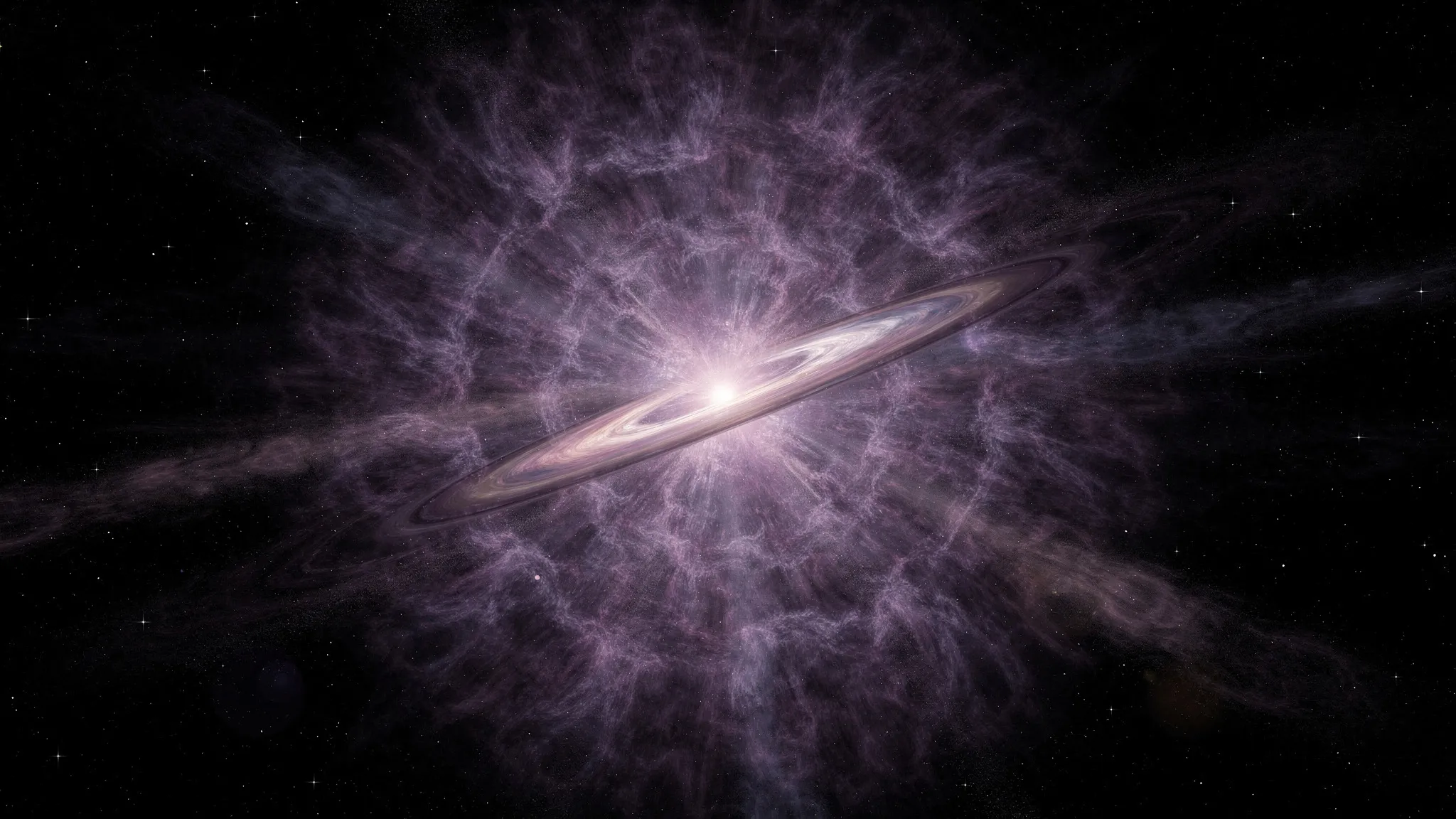
    Space illustration of a tiny brilliant star at the centre of a glowing cloud of supernova debris, a thin tilted disk of hot gas encircling it, in violet light.

    Supernova SN 2024afav is one of the brightest kinds of stellar explosion. Its light flickered, faster and faster. Astronomers call that a chirp, a first for a supernova.

    The suspected engine is a newborn magnetar, a fast-spinning neutron star. A tilted disk of infalling gas wobbles around it. That wobble makes the light rise and fall.

    Three US astronomers derived a relation free of every unknown setting. Fed only the early chirp, it gave a verdict. The flicker must stop speeding up near day 150, then slow down.

    New data revealed five more bumps, now drifting apart. The chirp reversed at day 147, give or take 3 days. Random noise mimics this pattern in fewer than 0.1% of simulations.

    Source: A universal relation predicts the observed reversal of a supernova chirp, https://arxiv.org/abs/2610.39240

    PreprintObservation❓ Quiz
  4. Computing & AI

    THE PICTURE YOU LOVE, YOU THINK A HUMAN MADE

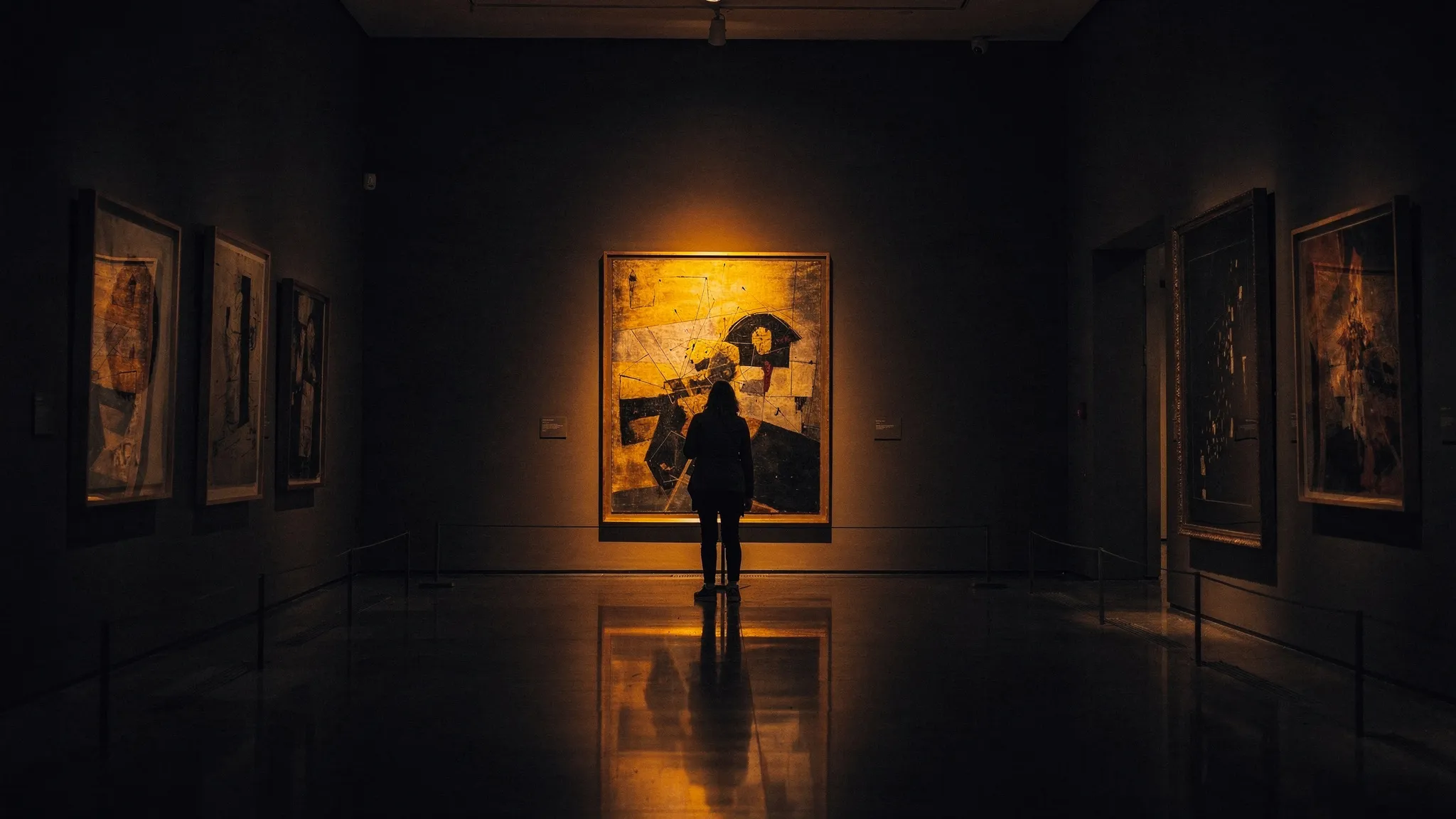
    A visitor seen from behind in a dim gallery, standing before an abstract painting lit by a warm spotlight, other framed pictures in shadow on the walls.

    In 2024, a blog posted 50 pictures. Twenty-six came from AI image generators, screened for obvious flaws. Over 11,000 readers guessed which ones a human had made. The median score was 60%.

    Readers also named a favourite. They judged it human 76.6% of the time. Other readers judged the same pictures human only 54.6% of the time.

    The pull was just as strong when the favourite was AI-made. Six of the ten most popular favourites came from AI. One picture most readers spotted as AI fooled 22% of its fans.

    Even readers who loathe AI art chose an AI favourite 47% of the time. Four in five of them believed a human made it. Poems, rated before the guess, show the same pattern.

    Source: Beauty Is Human: When People Love AI-Generated Art, They Think a Human Made It, https://arxiv.org/abs/2610.38113

    PreprintData analysis❓ Quiz
  5. Physics

    A MEMORY BIT MADE OF ONE SUPERCONDUCTING WHIRL

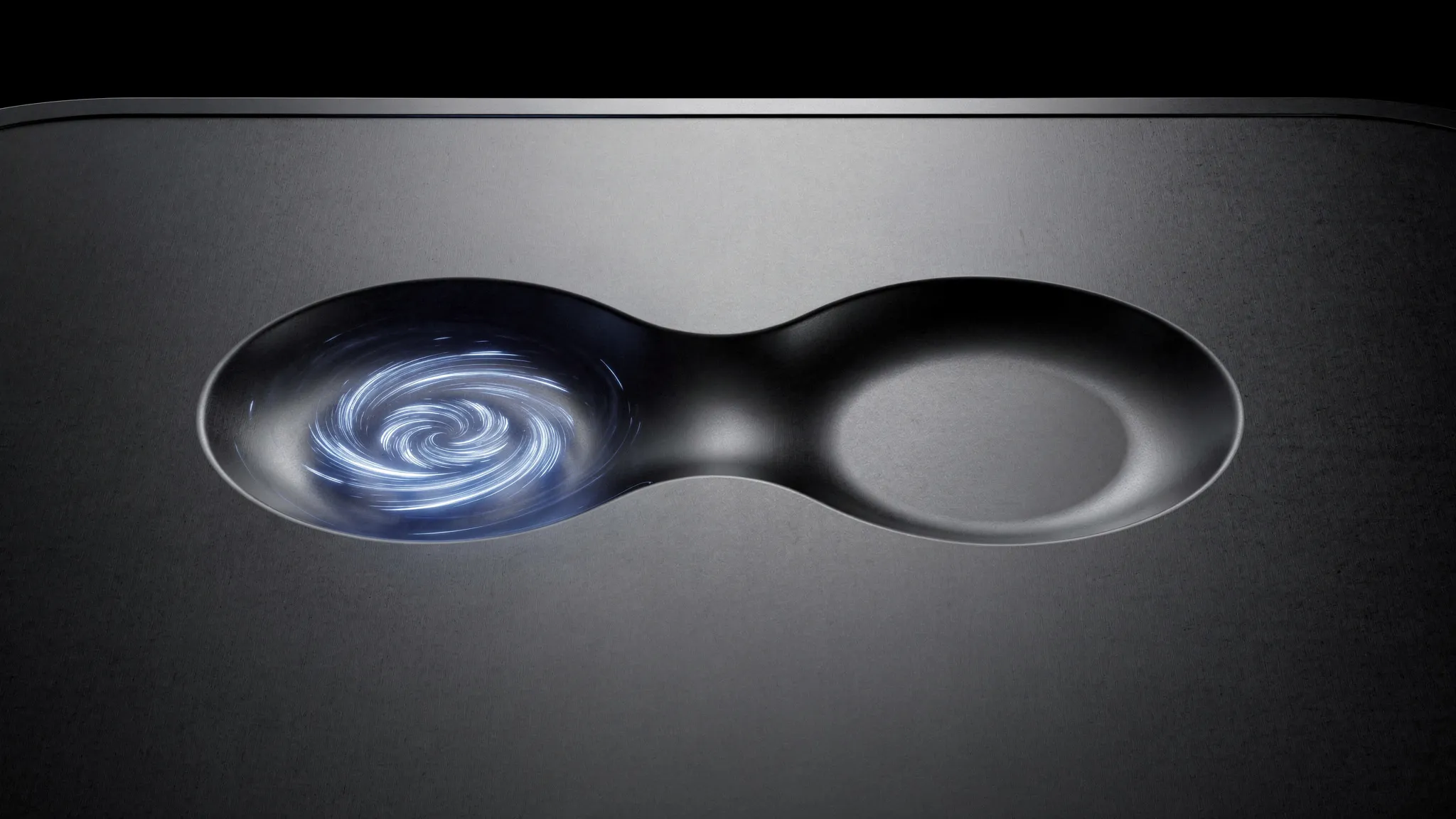
    3D illustration of a dark grey metal surface hollowed into two connected dimples, a glowing blue whirlpool of light filling the left one, the right one empty.

    Erasing one bit of memory has a minimum heat cost. Landauer worked it out in 1961. Can a real, tiny bit come close to it?

    A team in Jerusalem trapped one vortex, a nanoscale whirl, in a niobium film. The film sat at 4.2 kelvin. The whirl rests in one of two hollows, nanometres apart. Left or right: that is a bit.

    A magnetic microscope followed its motion to a fraction of a nanometre. The lag between push and motion revealed the energy spent. No thermometer needed.

    Some measurements even dipped below Landauer's limit. No law was broken: rocking the whirl back and forth is not erasing it. Simulations of a true erasure give about five times the limit.

    Source: Approaching Landauer's limit in a single superconducting vortex memory bit, https://arxiv.org/abs/2610.37753

    PreprintExperiment❓ Quiz
  6. Physics

    CLOCKS THAT FEEL THE TIDES IN TIME ITSELF

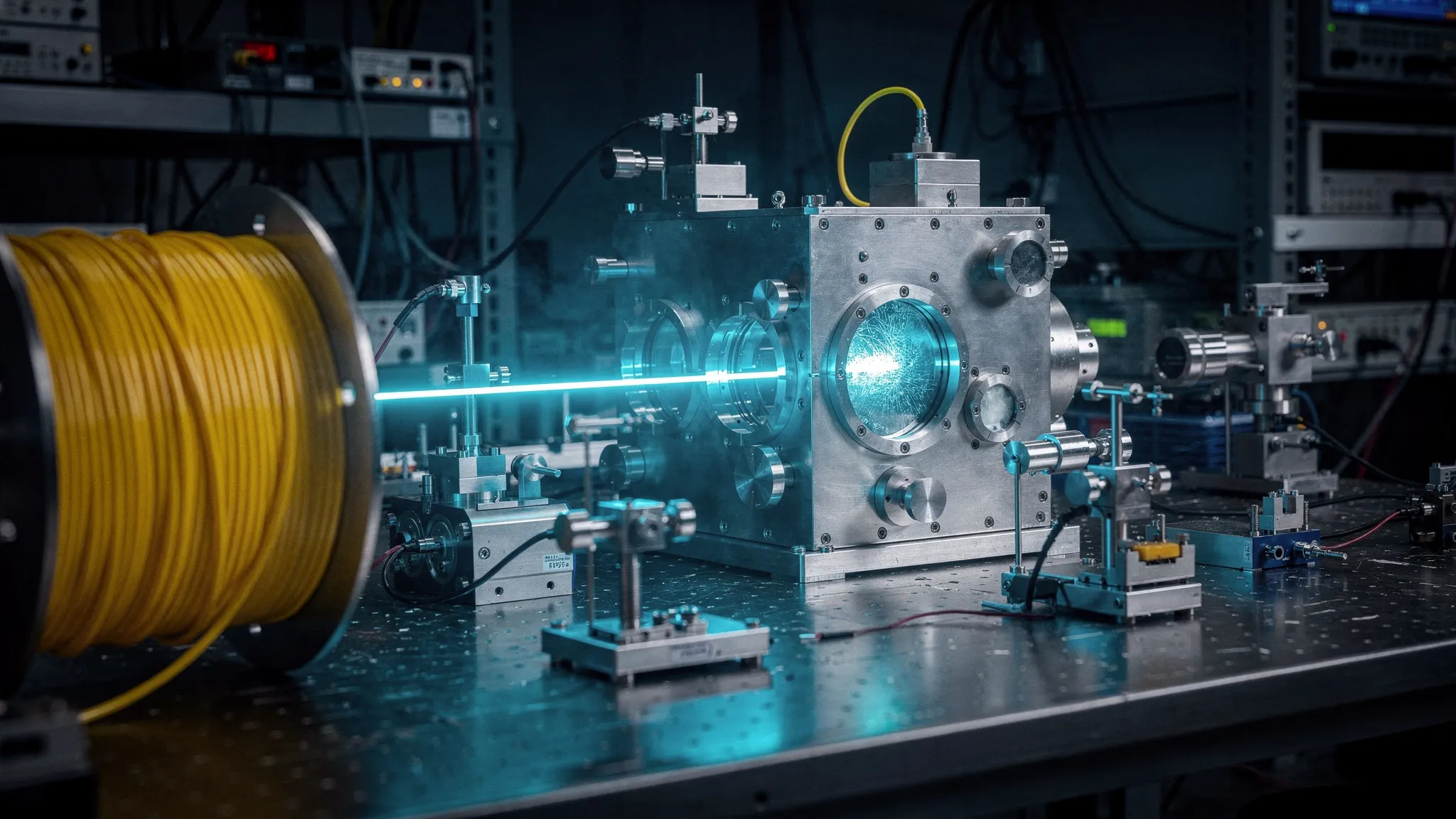
    A dark laboratory with a cubic steel vacuum chamber dotted with round windows on an optical table, a cyan laser beam entering it, a large spool of yellow fibre in the foreground.

    Gravity changes the pace of time. Raise a clock by one metre, and its rate shifts by one part in 10¹⁶. Today's best clocks can feel that.

    The Moon and the Sun deform the Earth and shift gravity under our feet. Clocks swing with them, by up to five parts in 10¹⁷. The rhythm repeats once or twice a day.

    European labs compared optical clocks about 800 km apart, linked by fibre. One portable clock was moved from Germany to Turin. The gap between each pair rose and fell with the tides.

    The tidal signal stood out in under a day. Across all comparisons, measured over predicted came to 1.00 ± 0.12. Next target: less predictable shifts in gravity, such as magma or groundwater.

    Source: Optical clock network tracks tidal variations of the gravity potential, https://arxiv.org/abs/2610.39635

    PreprintExperiment❓ Quiz
  7. Mathematics

    IN FOUR DIMENSIONS, SEVEN PIECES ALWAYS DO

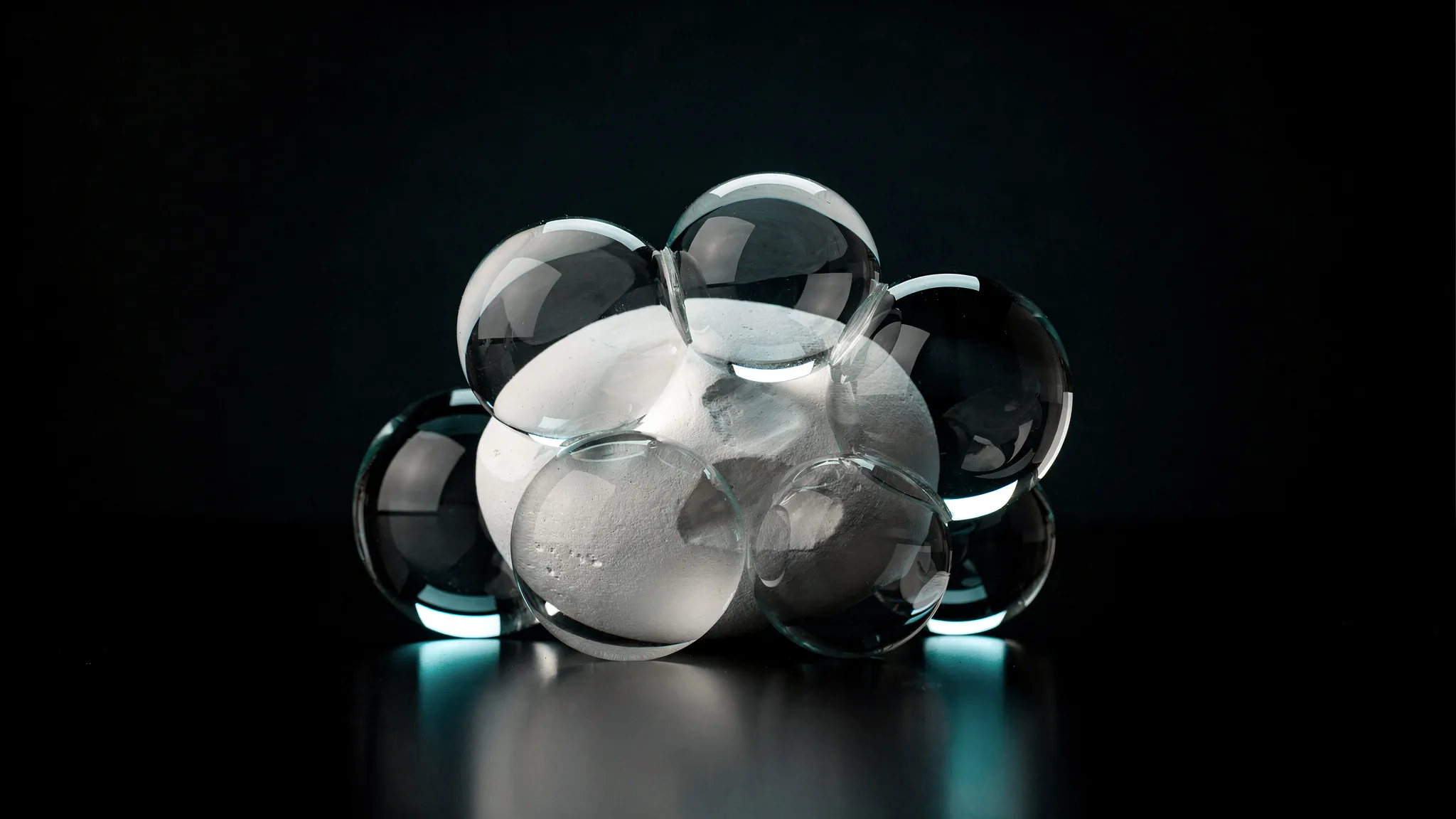
    Studio photograph of a smooth white pebble-like shape surrounded by a ring of overlapping clear glass spheres, on a black reflective surface.

    Take any shape and cut it into pieces, each a little narrower than the whole. How many pieces must you allow? In 1933, Borsuk guessed one more than the number of dimensions.

    In two dimensions, three pieces always do. In three, four. In very high dimensions, the guess fails. Four dimensions is the first case still unsolved.

    The best proven bound stood at nine, then eight earlier this year. Four mathematicians now show that seven always suffice. Seven balls, each just under the shape's width, can cover it.

    The hardest cases were split into 23,494 boxes, each checked with exact fractions, no rounding. ChatGPT helped them find the approach; they checked every step. Is five enough? Still open.

    Source: Borsuk number in four dimensions is at most seven, https://arxiv.org/abs/2610.39078

    PreprintTheory❓ Quiz
  8. Space & astronomy

    THE SUN'S 'RARE' WHITE-LIGHT FLARES ARE EVERYWHERE

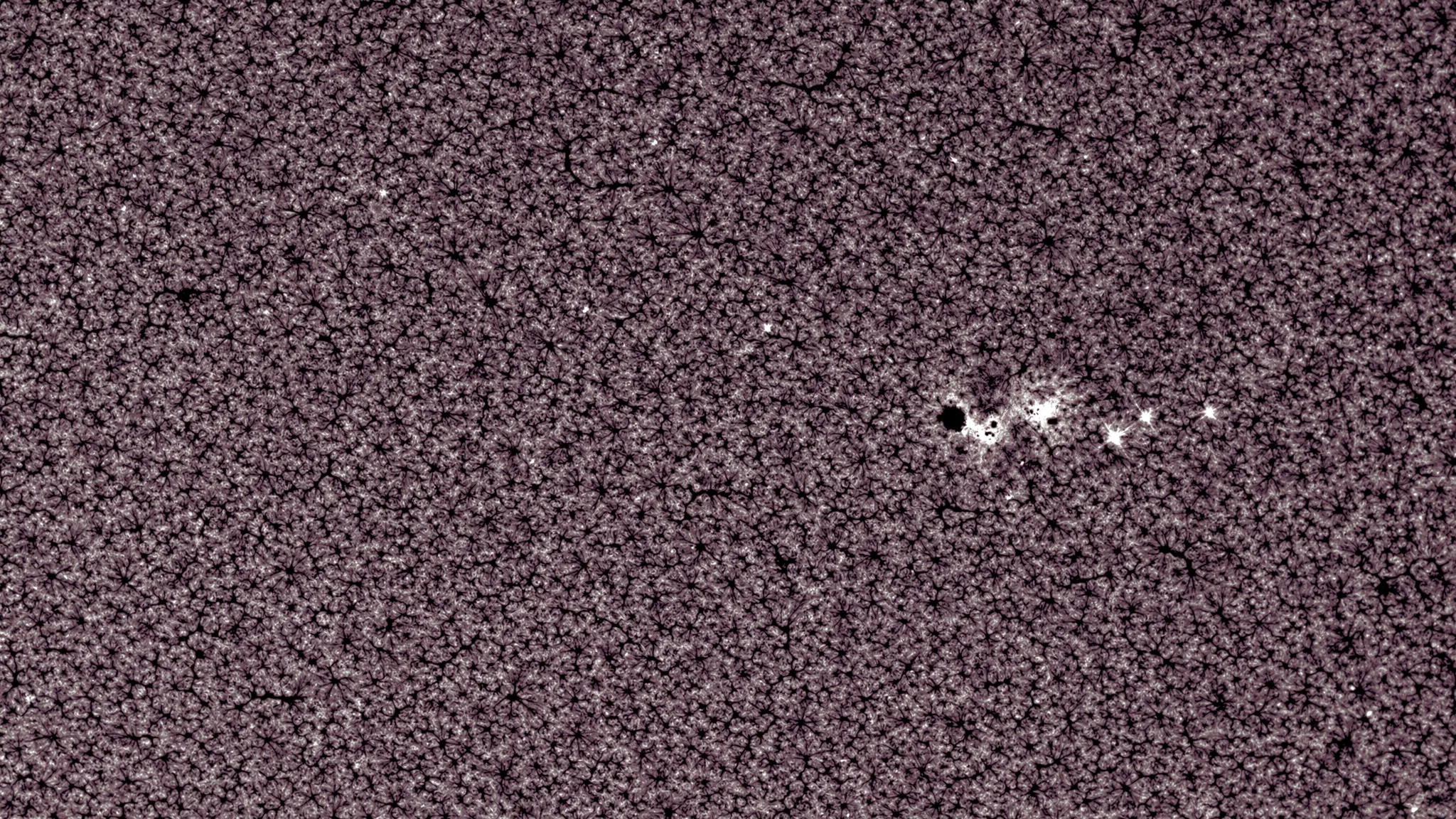
    Close-up of a mottled violet-grey solar surface covered in fine dark lanes, a small dark sunspot right of centre with a few brilliant white points beside it.

    In 1859, Carrington and Hodgson saw a solar flare light up the Sun's visible surface. Such white-light flares have passed for rare ever since. Only a few hundred were known, mostly big ones.

    A team in China reanalysed 15 years of images from the SDO satellite. They followed the brightness of every pixel, one by one. The camera took an image every 45 seconds.

    Of 1,951 modest flares, 1,012 glowed in white light: 51.9%. Even 36.9% of the smallest, class B, did. The bigger the flare, the higher the share.

    Why were they missed? Most bright spots are tiny and lie outside sunspots, where the contrast is weak. Flares on other stars may be more common than thought, too.

    Source: The Ubiquity of White-Light Flares on the Sun, https://arxiv.org/abs/2610.38419

    PreprintData analysis❓ Quiz
  9. Life sciences

    HOW MANY MUTATIONS TO INVENT A NEW FUNCTION?

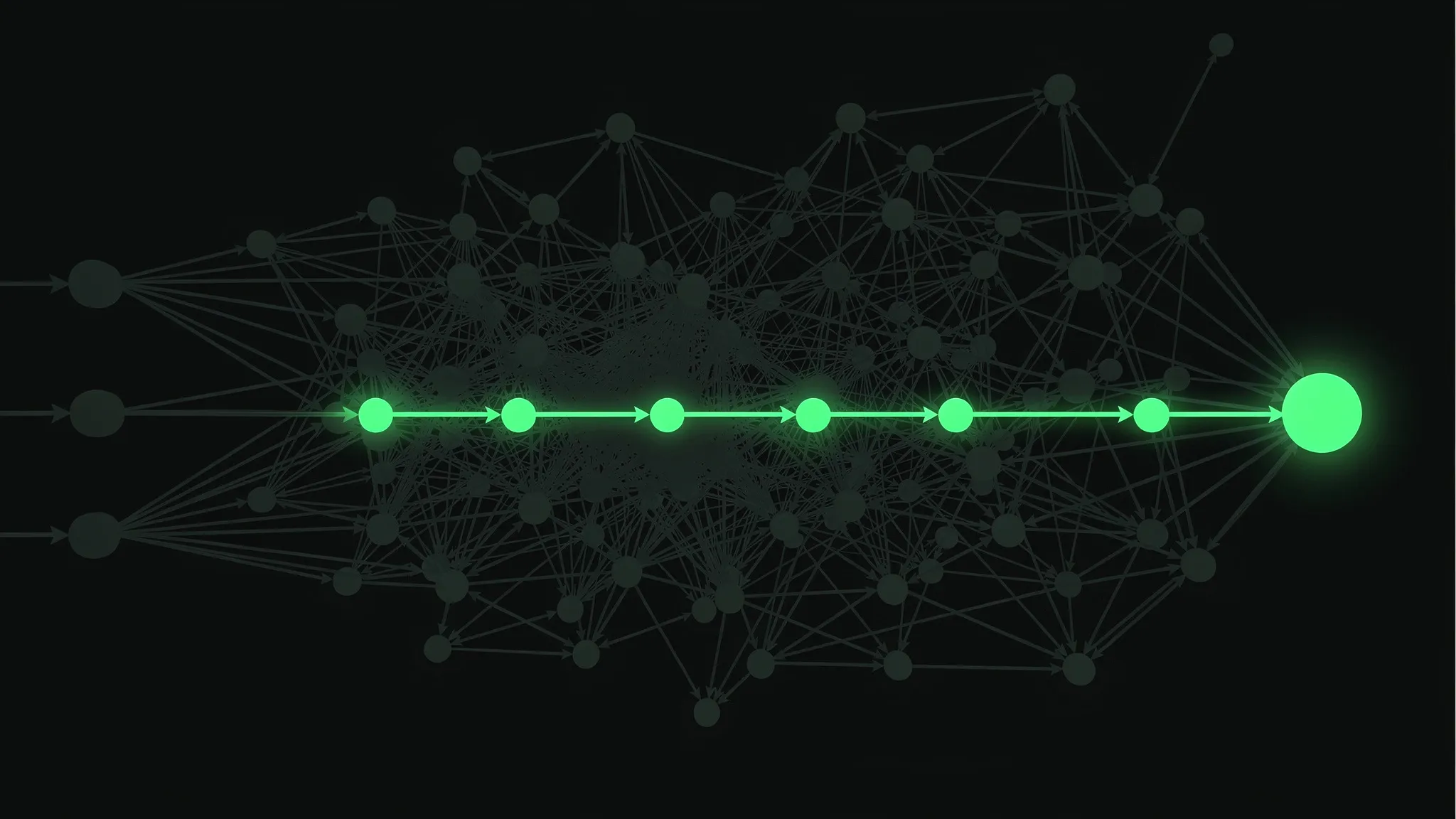
    Illustration of a dense network of dim grey nodes linked by arrows, crossed by a single straight path of bright green nodes and arrows leading to one large glowing output node.

    Living cells keep evolving new functions, from drug resistance to new enzymes. But how many mutations does that take? The space of possible genomes is astronomically large.

    A US team modelled genetic circuits as networks of simple logic gates. Each mutation rewires one connection. The goal: turn a circuit that computes NAND into one that computes AND.

    The bigger the circuit, the longer the search: about ten mutations per gate. Almost all of them change nothing. They hit wires that play no part in the output.

    Start instead from a circuit where every wire counts, and size stops mattering. The pace is not set by how many mutations are possible. It is set by the share that can help.

    Source: How many mutations does it take to evolve a new function?, https://arxiv.org/abs/2610.40635

    PreprintSimulation🧪 Experiment
  10. Chemistry

    IN SPACE, THE LESS STABLE MOLECULE WINS

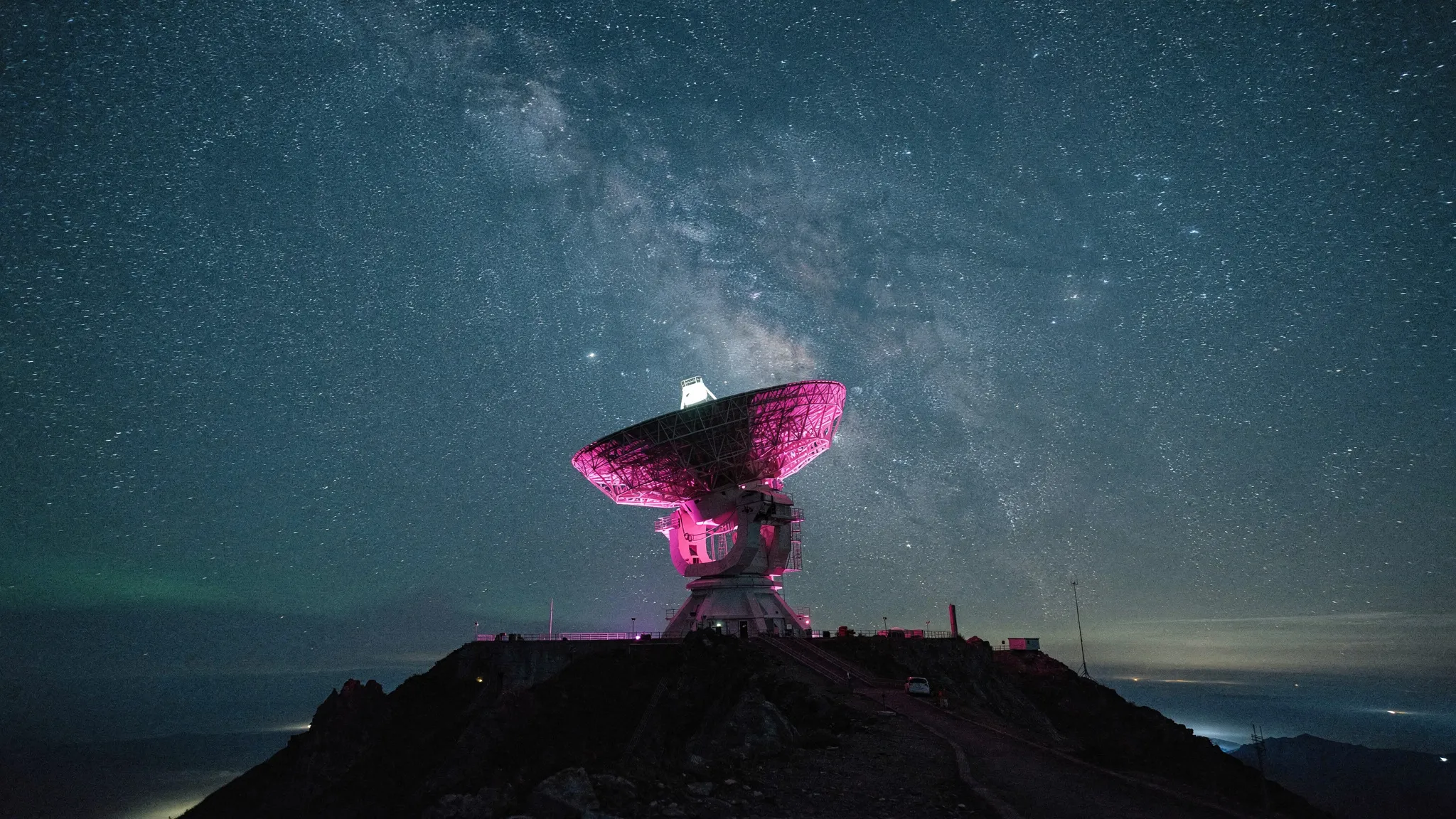
    Night photograph of a large radio telescope dish lit in magenta on a mountain summit, under the bright band of the Milky Way and a sky full of stars.

    Near the centre of the Milky Way, a gas cloud is shaken by shocks. Colliding clouds probably cause them. They tear molecules off icy dust grains. It is one of the richest places to find new ones.

    Three radio telescopes scanned it across nearly 150 GHz of frequencies. Among the signals: HNCOH⁺, seen in space for the first time.

    It carries the isocyanate group, which the authors call the core of peptide bonds. Only five molecules with that group were known in space before.

    The surprise: HNCOH⁺ outnumbers its more stable twin almost four to one. Stability alone predicted the reverse, by a huge margin. Here, chemistry follows how molecules form, not which one is most stable.

    Source: Detection of HNCOH+ in the interstellar medium, https://arxiv.org/abs/2610.39654

    Peer-reviewedObservation❓ Quiz
  11. Medicine & health

    THE WAY PATIENTS WALK HINTS AT A BRAIN TUMOUR'S PROGRESS

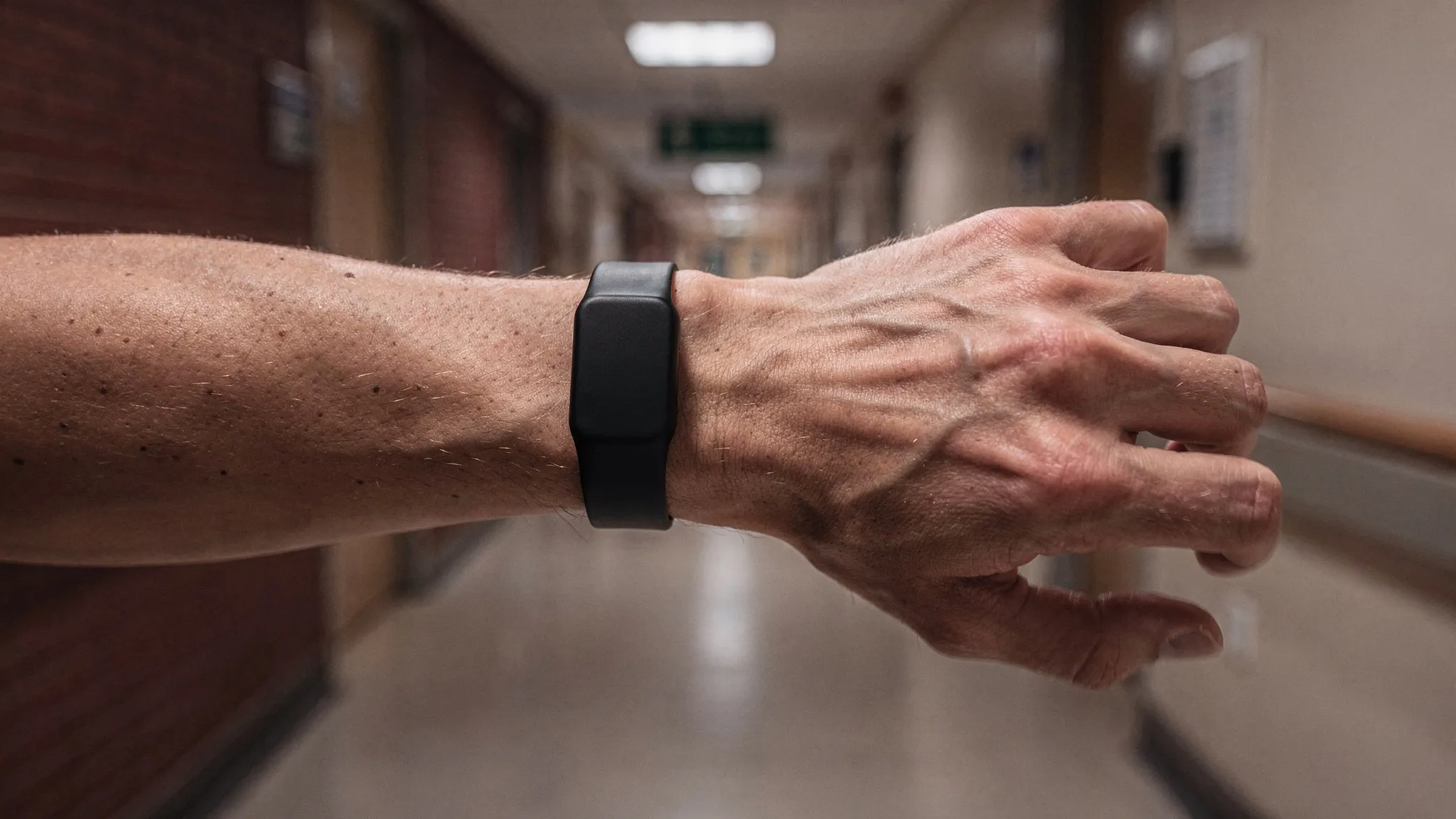
    Close-up of a forearm held forward wearing a plain black sensor band without a screen, a long hospital corridor blurred in the background.

    Aggressive brain tumours called high-grade gliomas are checked by MRI every two to three months. In between, doctors see little. Could a wrist sensor help?

    Researchers at Imperial College London used data from patients wearing a wrist accelerometer. They kept only walking, cut into 15-second pieces. Each day was compared with the first two weeks after the patient's previous visit.

    A mathematical tool, path signatures, captured the shape of those walking pieces. Measured against each patient's stable periods, walking changed more when the tumour progressed. Step counts showed nothing.

    This is a proof of concept on just 11 patients. It does not yet show that walking changes before the MRI does. Larger studies, following patients day by day, come next.

    Source: Detecting Brain Cancer Progression Through Signatures of Wearable Accelerometry Data, https://arxiv.org/abs/2610.38021

    PreprintData analysis❓ Quiz
Legal notice