Edition of November 3, 2026

  1. At The Knowledge Frontier, we pick out the research papers of the day and explain them simply.

    The web has changed in nature. We no longer search, we scroll. Pages look alike, texts are churned out, and we end up reading a great deal without keeping any of it. Educating yourself there has become a strangely passive affair.

    Here, you do more than read. Every article ends with a quiz: a few questions on what you have just read. When the subject lends itself to it, it is an experiment — you set the values yourself and recover, in turn, the researchers' result.

    @VirScience
  2. Mathematics

    A 1974 SPEED LIMIT FOR SOLVING EQUATIONS, FINALLY PROVED

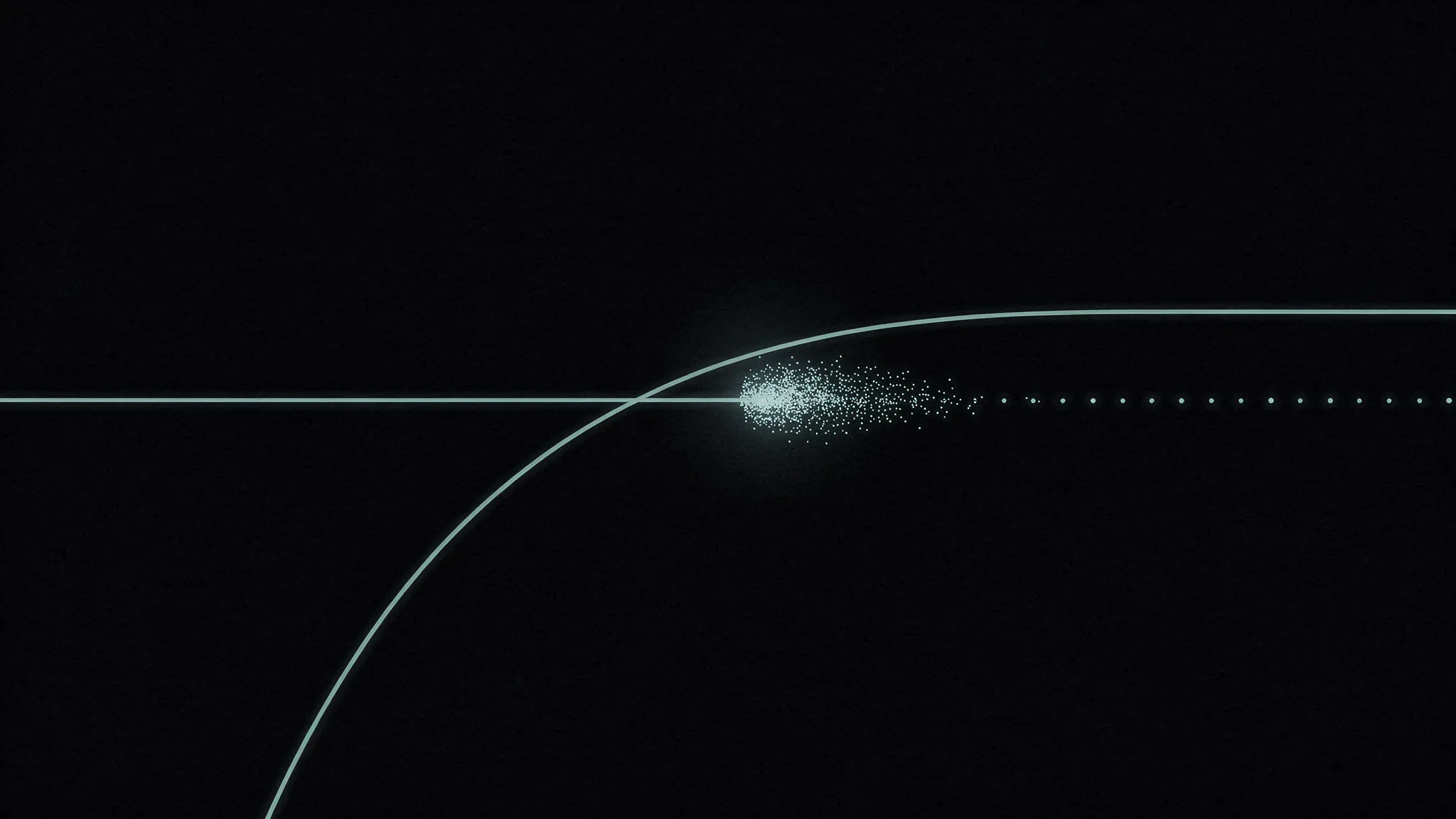
    Diagram on a black background: a glowing cyan curve crosses a horizontal axis; along the axis, dots spaced widely far away crowd into a dense cluster near the crossing point.

    To solve an equation, a computer often guesses, checks, then guesses again. Each round lands closer to the answer. But how much closer can one round get?

    Newton's method asks two questions per round: the value of the function and its slope. Near the answer, the number of correct digits then doubles every round.

    In 1974, Kung and Traub conjectured a speed limit. With n questions per round, the order can never exceed 2 to the power n−1. They had built methods reaching it. Nobody could prove it unbeatable.

    Matthew Colbrook, at Cambridge, has now proved it. The trick: build functions that give the same answers but hide their zero elsewhere. A proof assistant, Lean, checked the result.

    Source: Adversarial Wronskians: A proof of the Kung–Traub conjecture, https://arxiv.org/abs/2610.40660
    PreprintTheory🧪 Experiment
  3. Space & astronomy

    A PLANET DETECTOR SCORED 0.97 — ON REAL FALSE ALARMS, A COIN TOSS

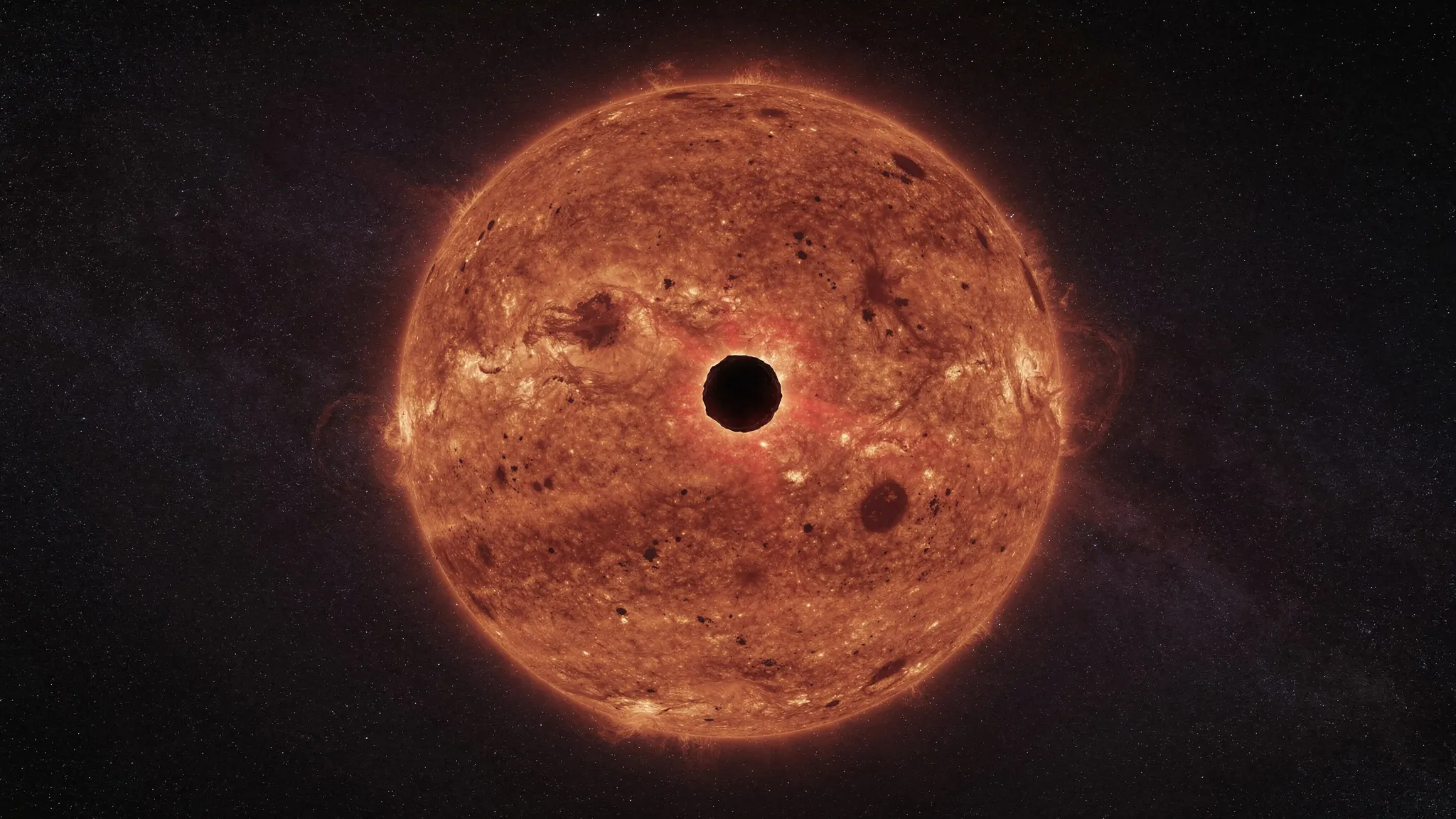
    Space illustration: a small, round, dark planet seen in silhouette against the glowing face of a huge orange-red star, on a starry background.

    A researcher trained a neural network to spot tiny planets. Its data came from the TESS satellite. Tested the usual way, it scored 0.97 out of 1. Impressive?

    Not quite. Against false alarms that astronomers had really rejected, the score fell to 0.50. That is a coin toss, no better than guessing.

    The culprit: 42% of those false alarms are neighbouring stars that eclipse. In the light curve, they look exactly like planets. So a detector reading only that curve should top out around 0.79. Retrained, this one reached 0.80: right at the ceiling.

    Adding colour, position and star motion still paid off. Among its 49 best-scored candidates out of 435, one was validated as a planet. It is Earth-sized and circles its small star every 7.05 hours.

    Source: An end-to-end CNN search for ultra-short-period planets in TESS: from the blend ceiling to the independent validation of TOI-6662 b, https://arxiv.org/abs/2610.42009

    PreprintData analysis❓ Quiz
  4. Space & astronomy

    A NEUTRON-STAR COLLISION 12 BILLION YEARS IN THE MAKING

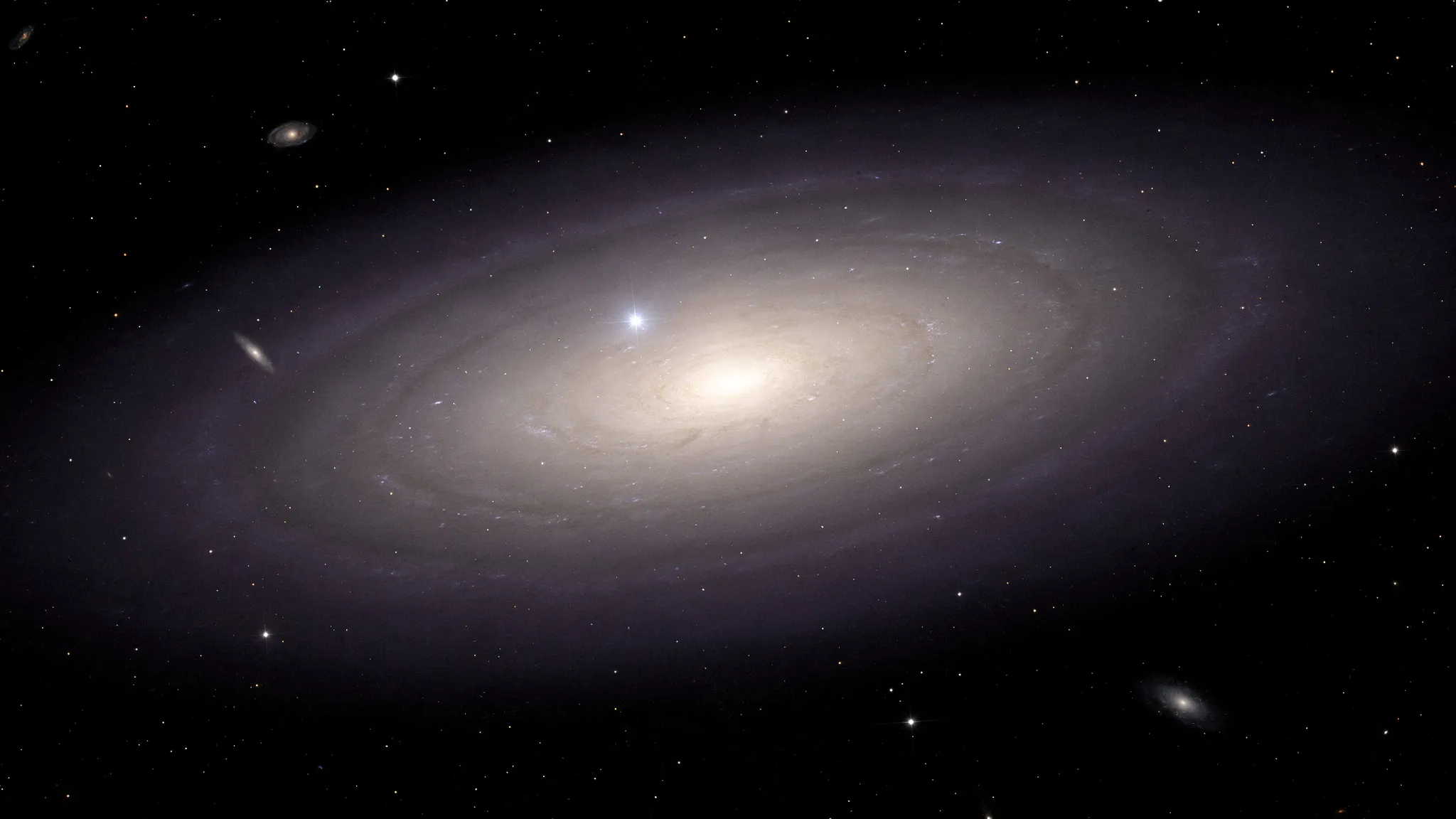
    Telescope-style image of a large, smooth galaxy glowing pale cream and fading into violet at its edges, with a bright blue-white point just beside its core and small distant galaxies around it.

    In 2017, gravitational waves revealed two neutron stars colliding: GW170817. Light from the crash was seen too, in the galaxy NGC 4993. It is still the only merger pinned to a galaxy.

    Ryan Foley, at UC Santa Cruz, dated that galaxy's stars. On average, they are 12.4 billion years old. So the pair probably took about that long to merge.

    Standard models say most pairs merge quickly after birth. Under them, catching such an old merger had only a 1.8% chance. You would need 55 more detections to expect one.

    So either many young mergers are missing, or another, slow route dominates. Dense clusters of stars are the leading suspect. Yet none was seen at the crash site.

    Source: Missing Mergers: On the Unexpected Delay-Time Distribution of Binary Neutron Star Mergers, https://arxiv.org/abs/2610.40782

    PreprintData analysis❓ Quiz
  5. Earth & climate

    EARTH'S HIGHEST CLOUDS ARE SINKING

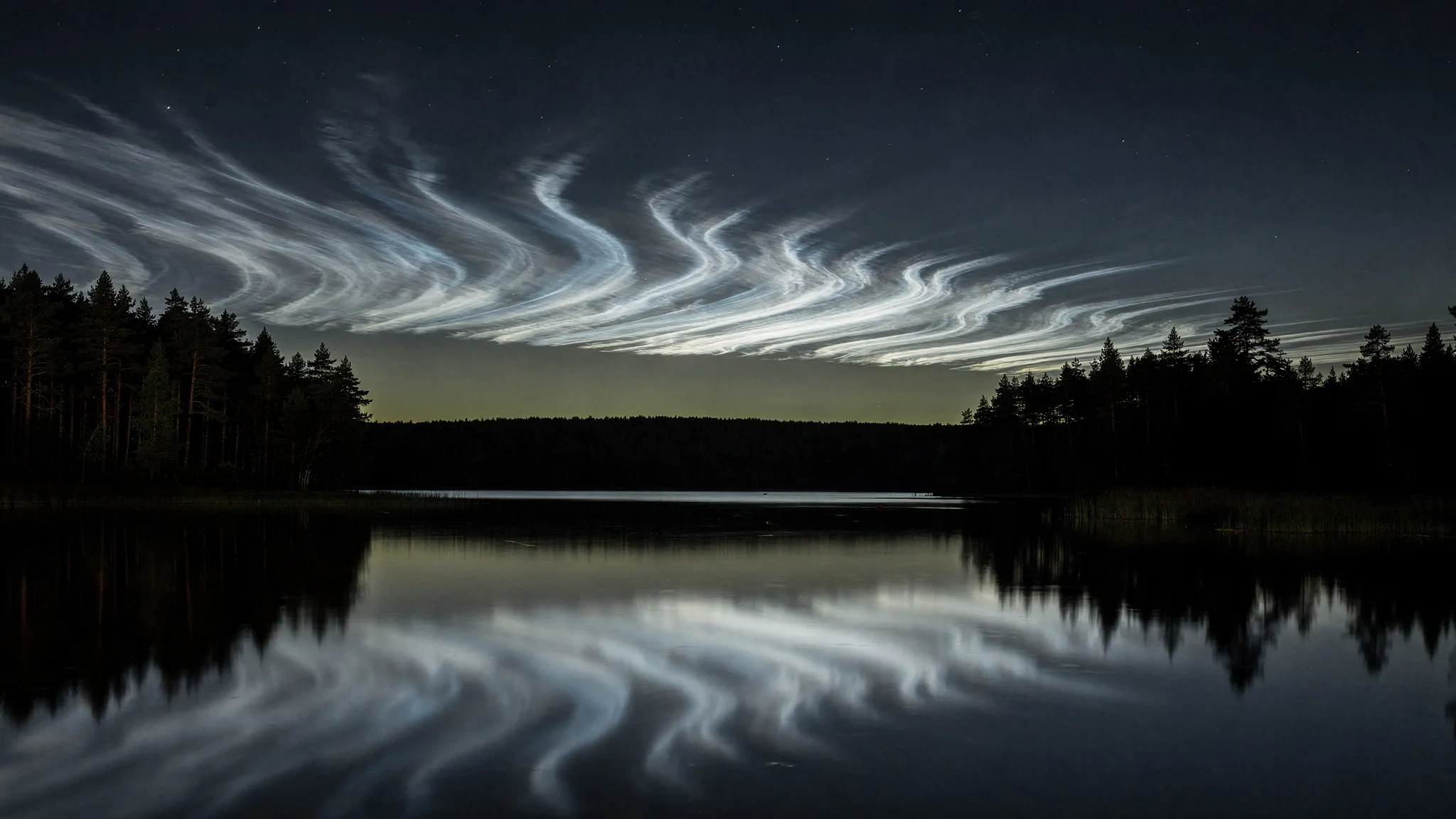
    Night photograph: luminous white wavy streaks of noctilucent clouds above a dark pine forest, reflected in a calm lake, a faint greenish twilight band along the horizon.

    On summer nights, some clouds glow long after sunset. They float over 80 km up, still lit by the Sun. These noctilucent clouds are the highest on Earth.

    Since 2020, Russian researchers have measured their altitude about 20,000 times. Networks of cameras, 50 to 200 km apart, watched the same clouds. Comparing the views from different places gives the height.

    They then compared with measurements made the same way since 1890. The clouds now sit about 0.7 km lower than before 2000. Today they sink about 1.2 km per century. The descent itself is detected with over 99.5% confidence.

    The likely cause: carbon dioxide cools the air beneath them. The upper atmosphere then shrinks. Yet the clouds descend only half as fast as a climate model predicts.

    Source: Long-Term Trend of Noctilucent Cloud Altitude Detected: A Comparison of Positional Data with Historical Measurements, https://arxiv.org/abs/2610.41750

    PreprintData analysis❓ Quiz
  6. Life sciences

    TWO MICROSWIMMERS, ONE PRISONER'S DILEMMA

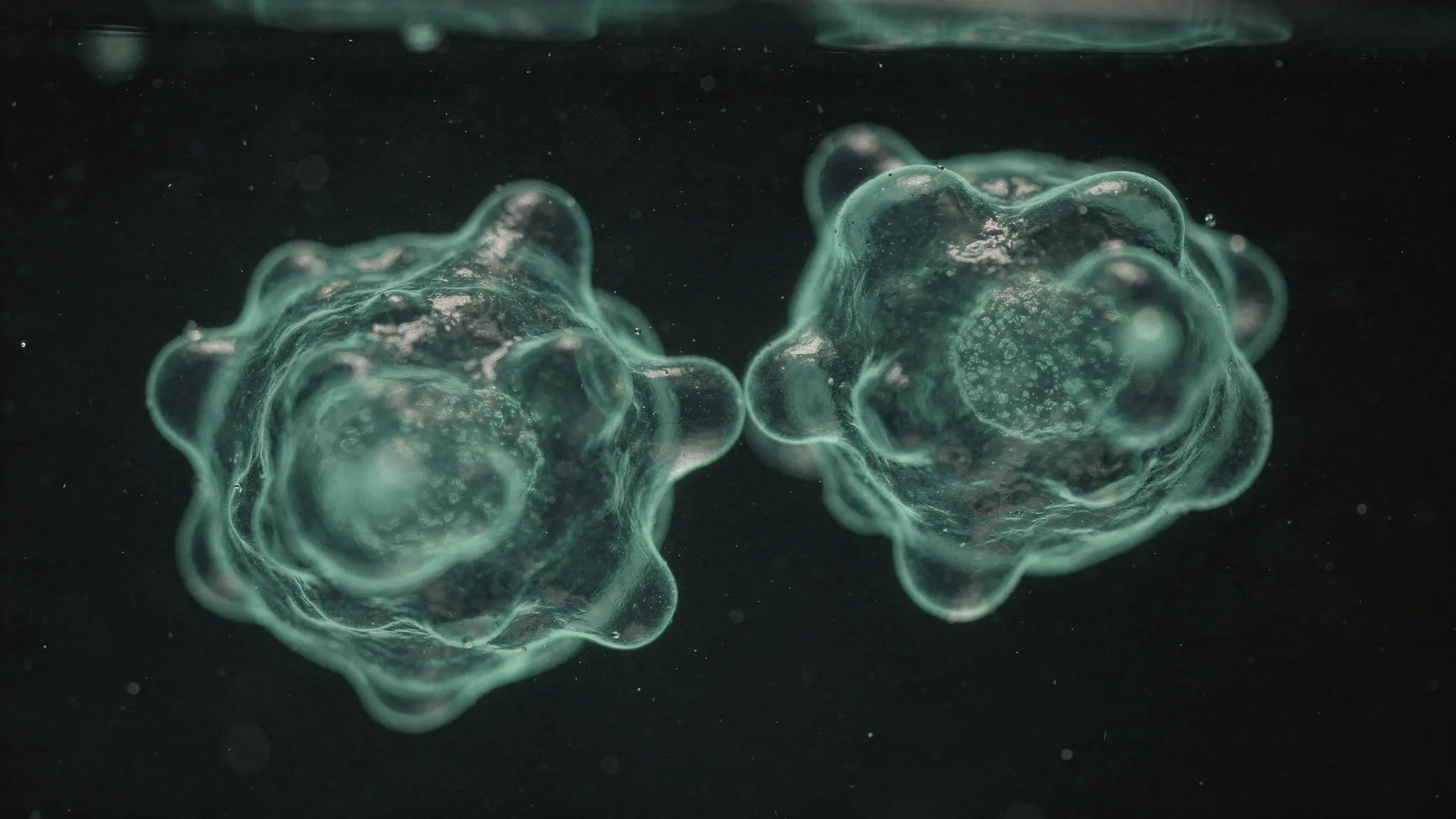
    Microscope-style image: two translucent, roughly round cells with bulging edges, side by side in dark water and almost touching, in a pale green light.

    At the scale of a cell, water's stickiness beats momentum. Every push creates a flow that reaches the neighbours. So how should a cell swim when it has company?

    A researcher in Denmark let simulated cells learn their best stroke. Alone, a cell finds a wave that runs along its body. In pairs, the game changes.

    Each cell strongly affects its neighbour, but gets little reason to change itself. Two selfish cells gain 14% over swimming alone. Two cells that simply keep their solo strokes in step gain 17%. Cooperating cells gain 29%.

    It works much like a prisoner's dilemma, created by fluid physics alone. Related cells, like clones, can escape it. Rivals pay to slow each other down.

    Source: Microswimmers lose by swimming selfishly, https://arxiv.org/abs/2610.41965

    PreprintSimulation❓ Quiz
  7. Life sciences

    SCIENTIST MOTHERS IN CHILDCARE DESERTS GET TENURE LESS OFTEN

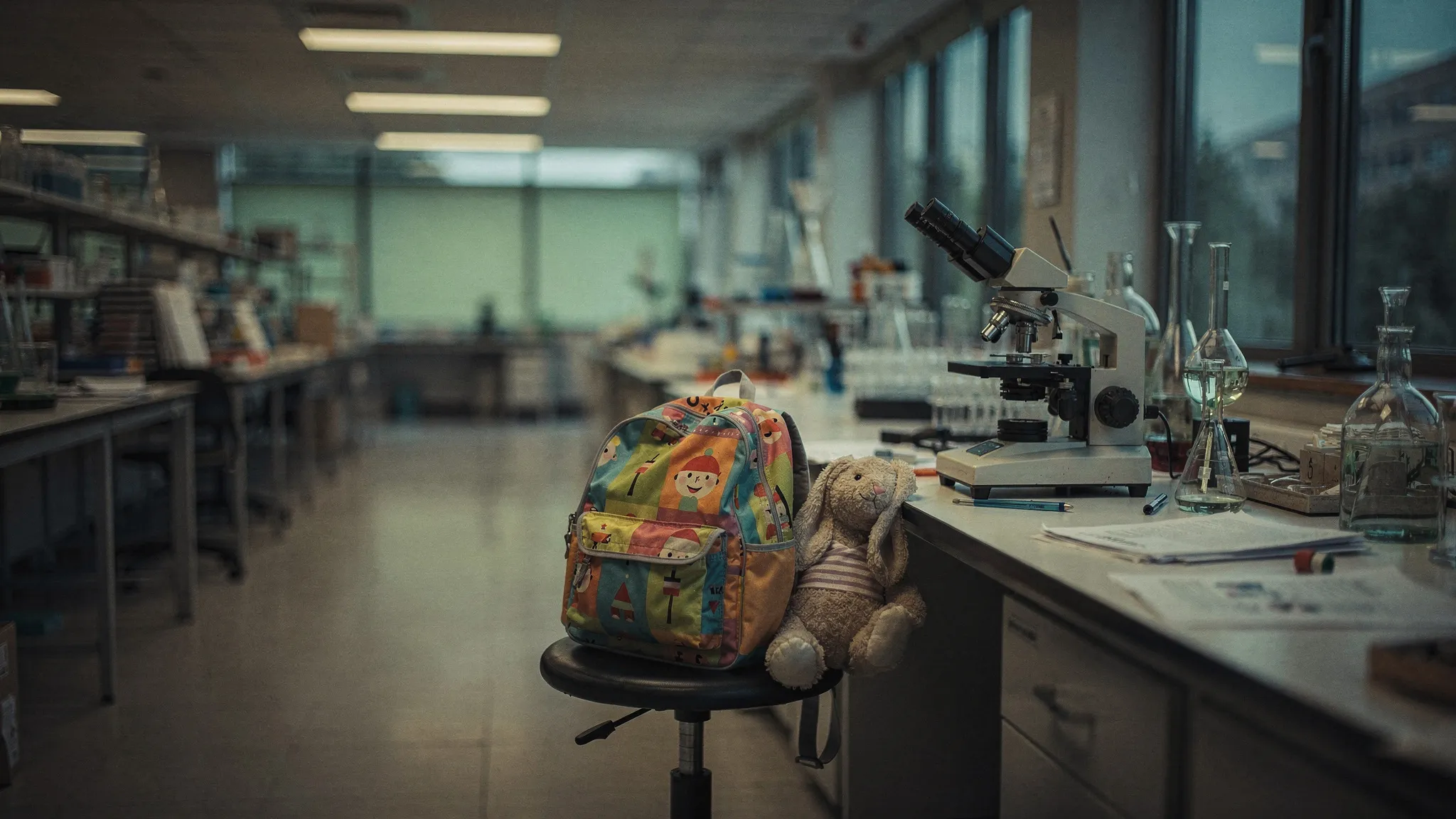
    Photograph of an empty university laboratory at dusk: a child's colourful backpack and a plush rabbit sit on a lab stool beside a microscope, in a soft green light.

    In the United States, childcare is scarce. A "childcare desert" is an area where supply covers less than a third of demand. More than half of university scientists work in one.

    A study followed 12,629 US science PhDs, graduated between 1997 and 2014, until 2023. Men and women work in deserts equally often, about 58%. Yet women get tenure less often: 32.6% versus 38.4%.

    For fathers, working in a desert changes nothing measurable. For mothers, the tenure gap widens. They also move more often to industry and part-time jobs. And they work 2.4 fewer hours a week.

    Lost hours explain only part of it. Interruptions and fatigue may do the rest, but the data cannot tell. And the study shows a link, not proof of cause.

    Source: Scientist Mothers Working in Childcare Deserts Are Less Likely to Attain Tenure, https://arxiv.org/abs/2610.40951

    PreprintData analysis❓ Quiz
  8. Chemistry

    A DECADES-OLD DEBATE ON BIOTECH'S STRONGEST BOND, SETTLED BY A PIPETTE

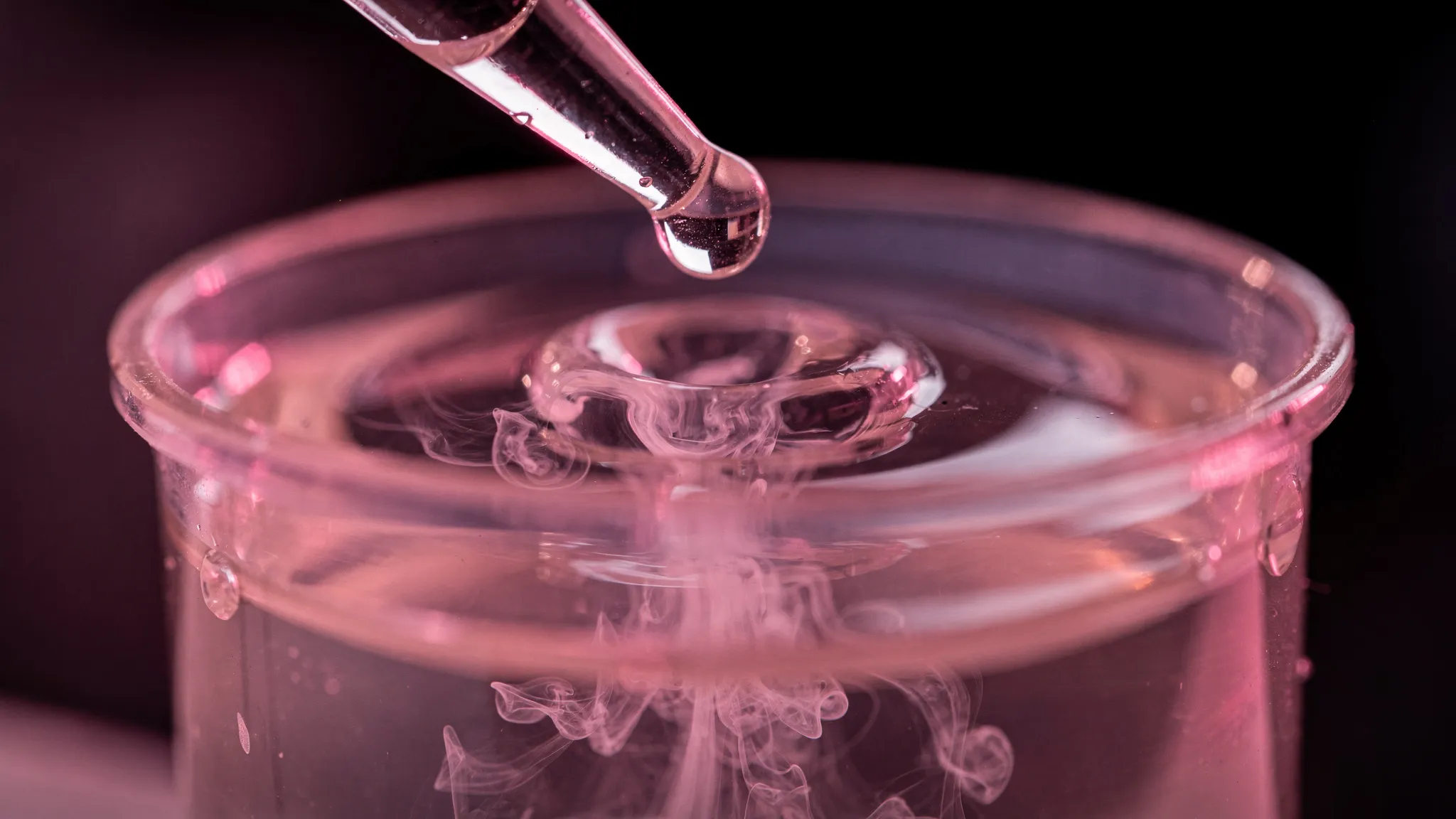
    Macro photograph in pink-magenta light: a drop hangs from a glass dropper above a clear liquid, where an earlier drop spreads downwards as swirling, unmixed wisps.

    Streptavidin and biotin form one of the strongest bonds in biology. Biotechnology labs use the pair everywhere. Each streptavidin protein has four slots for biotin.

    For decades, scientists argued: does one bound biotin help the next one bind? Studies said yes, no, and even the opposite. Fluorescent labels may have muddied the answer.

    A team in Marseille used the protein's own ultraviolet glow instead, with no label. With dilute biotin, the four slots fill independently. No measurable teamwork between the slots.

    So where did the "teamwork" come from? A tiny drop of concentrated biotin reacts within tens of milliseconds, before it spreads. Locally, a few proteins fill up completely. It looks like cooperation, but it is only poor mixing.

    Source: Streptavidin-Biotin Binding is Intrinsically Non-Cooperative, but Experimental Artefacts Can Induce Apparent Positive Cooperativity, https://arxiv.org/abs/2610.41363

    PreprintExperiment🧪 Experiment
  9. Physics

    QUANTUM POPCORN: THE BUBBLES OF A CHANGING UNIVERSE ARE BORN LUMPY

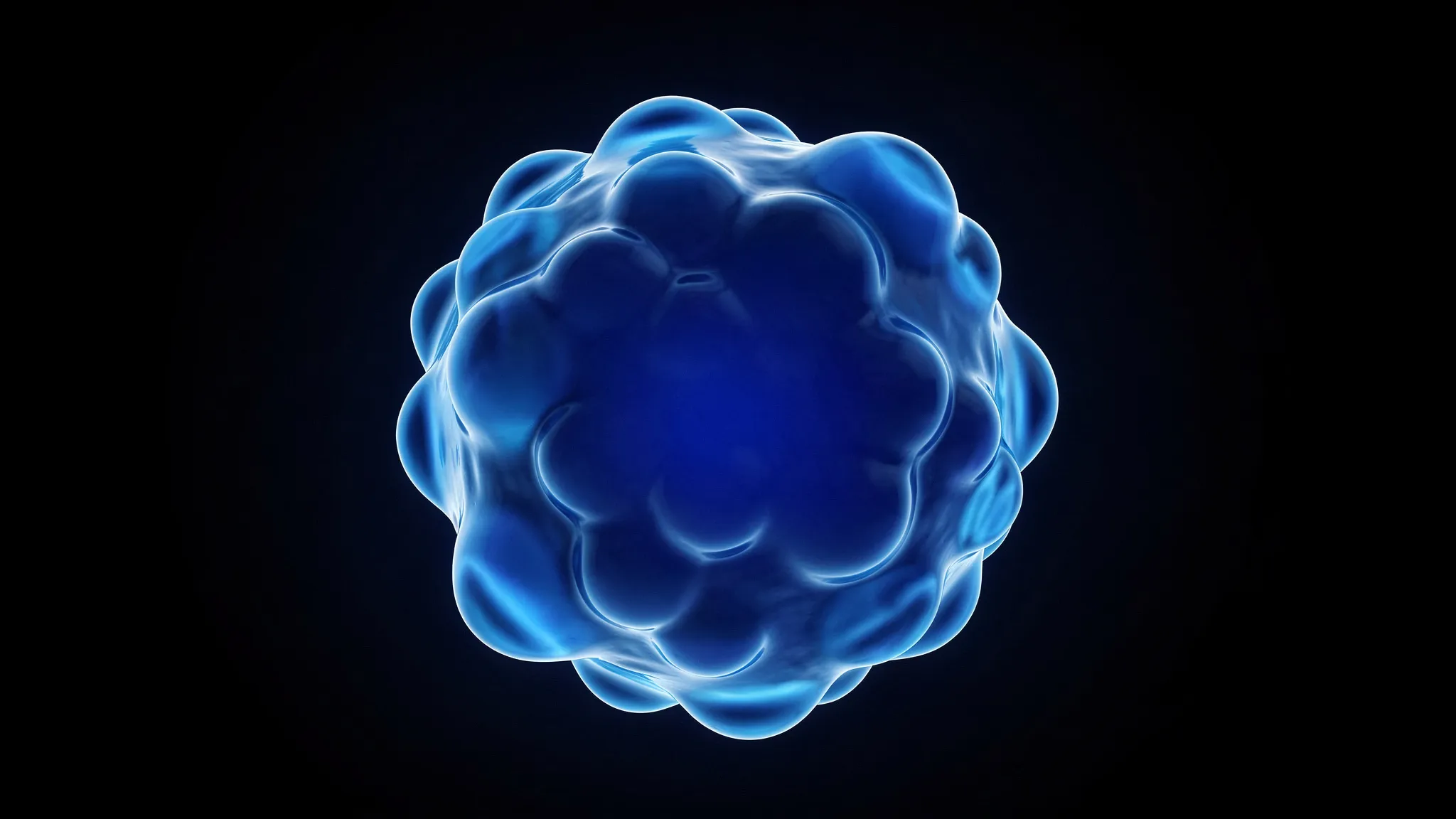
    3D illustration: a glowing blue bubble on a black background, roughly round but covered in soft rounded bulges.

    Many theories say the early Universe went through phase transitions. Space itself switched to a new state. Each switch starts with a tiny bubble of the new state, born by quantum tunnelling.

    Since the 1970s, physicists have drawn this newborn bubble as a perfect sphere. Yet that is only the first approximation of the standard calculation.

    A team from Israel and Italy looked one step further, at the next order. At birth, the bubble's wall is a random draw of quantum fluctuations. So no bubble is ever exactly round.

    How lumpy? In a typical cosmic transition, the wall is off-round by about 10% of the radius. The authors drew one such bubble at random. It looks just like popcorn.

    Source: Quantum Popcorn: the shape of a phase transition bubble, https://arxiv.org/abs/2610.41504

    PreprintTheory❓ Quiz
  10. Physics

    DROP A BALL IN A POOL: A SECOND AIR PINCH DECIDES IF IT COMES BACK

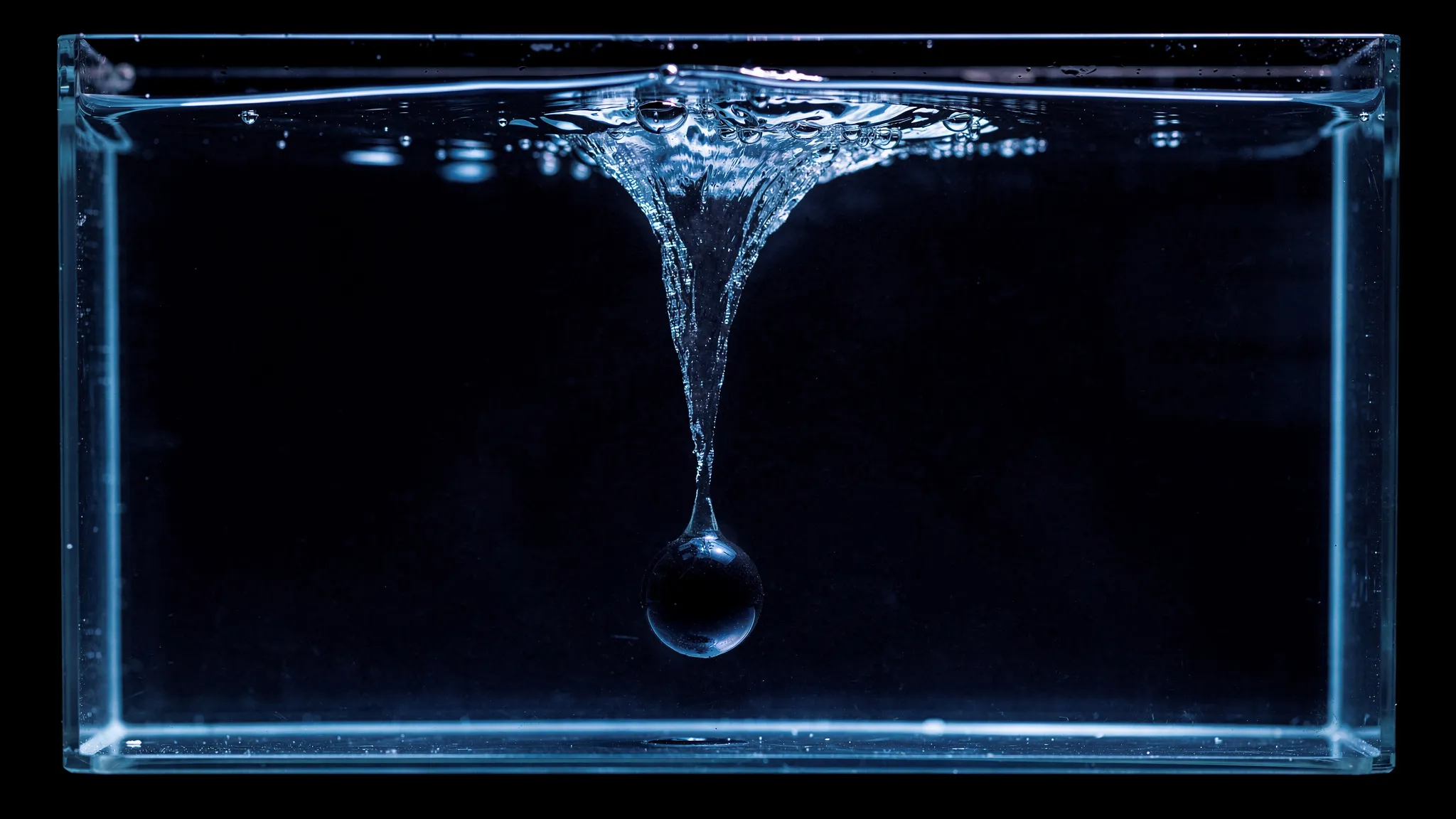
    Side-view photograph of a glass tank in blue light: a dark sphere sinks in clear water, trailing a funnel of air from the surface that narrows into a thin neck just above it.

    Drop a small ball into water. It drags a pocket of air down with it. The pocket soon pinches off near the surface. But some air stays stuck to the ball.

    Engineers in India and Germany filmed balls of 4 to 10 mm hitting water. Impacts reached 3.5 m/s. Their cameras took up to 2,000 images per second.

    The rule is plain buoyancy. Ball plus air must displace more water than the ball weighs. Then it turns around and rises. But if the air pocket pinches a second time, the ball always keeps sinking.

    Water-repellent coatings help keep the air, yet they are not enough. A bigger or faster ball can still lose it. Sometimes, identical drops even end differently.

    Source: Penetration of a sphere in a pool: Secondary pinch-off, https://arxiv.org/abs/2610.41942

    PreprintExperiment❓ Quiz
  11. Computing & AI

    THE MORE ACCURATE THE RESTAURANT APP, THE MORE IT SEPARATES RICH AND POOR

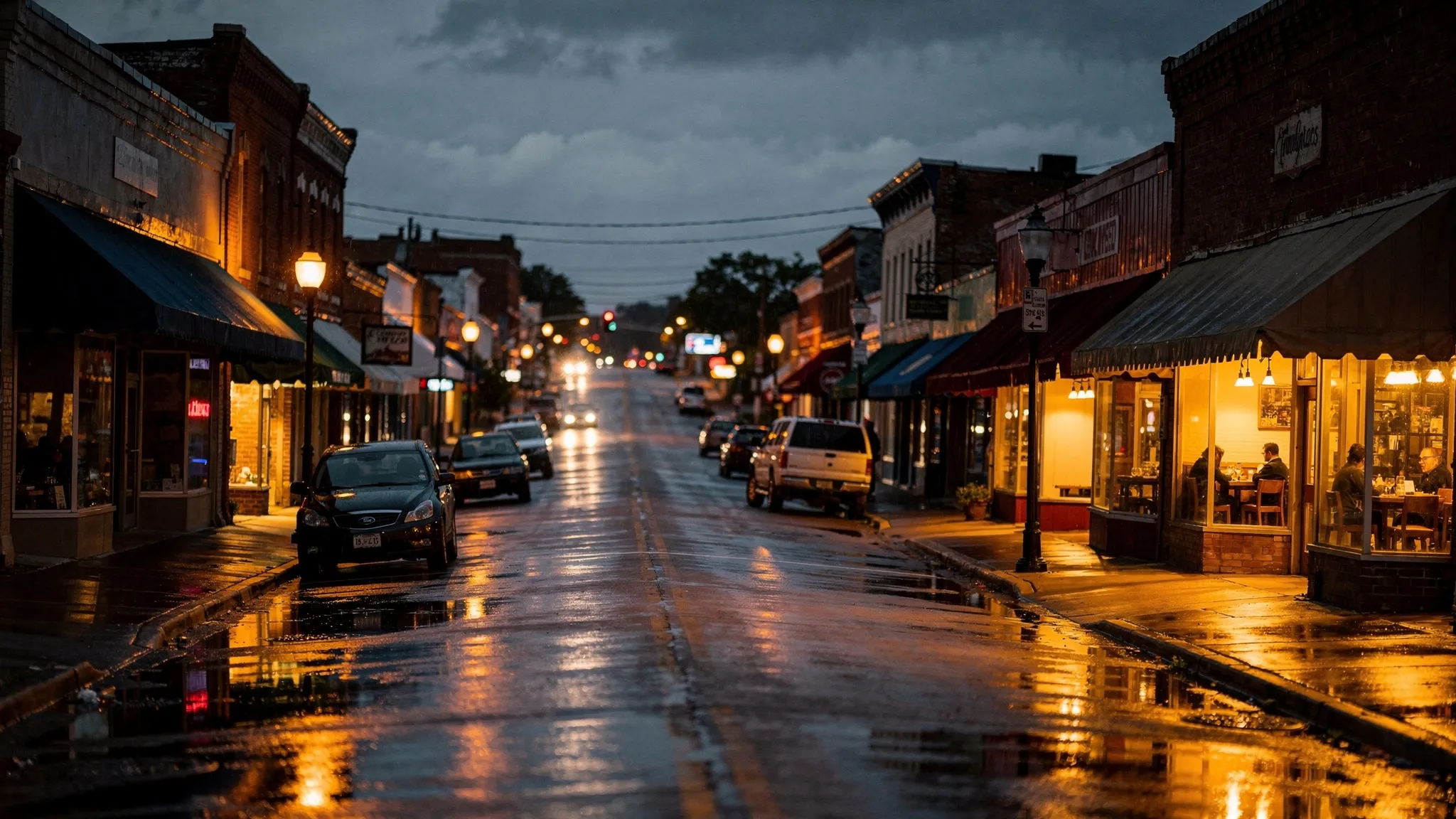
    Evening photograph of a rain-wet American main street: a few restaurants glow amber with diners inside, among darker shopfronts, with cars parked along the kerb.

    Apps suggest where to eat, then learn from the visits they caused. Researchers asked what this loop does to a city over the years.

    They simulated 4,000 to 8,000 residents each in Boston, San Francisco, Detroit and Chicago. Everyone followed their real GPS schedule through three years of weekly app updates.

    The most accurate algorithm keeps sending people back to familiar places. It left them 15–21% more segregated by income than in reality. And under every algorithm, at least a fifth of venues lost all their simulated visitors.

    A simple fix exists: push lesser-known places up the list. It more than halves the lost venues. It also reduces segregation for three algorithms out of four. The price is a modest loss of accuracy.

    Source: Recommendation Feedback Loops Shape Urban Income Segregation and Venue Visitation, https://arxiv.org/abs/2610.41911

    PreprintSimulation❓ Quiz
Legal notice