Edition of October 28, 2026

  1. At The Knowledge Frontier, we pick out the research papers of the day and explain them simply.

    The web has changed in nature. We no longer search, we scroll. Pages look alike, texts are churned out, and we end up reading a great deal without keeping any of it. Educating yourself there has become a strangely passive affair.

    Here, you do more than read. Every article ends with a quiz: a few questions on what you have just read. When the subject lends itself to it, it is an experiment — you set the values yourself and recover, in turn, the researchers' result.

    @VirScience
  2. Computing & AI

    THE VOYNICH MANUSCRIPT SHOWS LITTLE TRACE OF LANGUAGE

    An old vellum book lying open on a dark wooden table, each page filled by a large plant drawing with leaves and roots beside a few short lines of small brown writing, a brass magnifying glass resting on one page, in warm amber lamplight.

    The Voynich manuscript holds about 240 pages of plants, stars and an unknown script. Nobody can read it. Is it gibberish copied by a scribe, or a language behind a cipher?

    Two US researchers turned each idea into a program that writes the pages. On features never used to tune them, copying beats ciphers with one key. But ciphers with a second key do just as well.

    So they looked for a trace of real language. In 28 texts in 16 languages, words that belong together keep sharing a line. The manuscript shows this at half the strength of the weakest.

    Code-breaking programs, first tested on known texts, found nothing readable in it. Yet one cipher still survives, with a scribe miscopying many of the words. Short hidden messages could slip through too.

    Source: Does the Voynich Manuscript Mean Anything? Calibrated Tests Find Little Trace of Language, https://arxiv.org/abs/2610.34499
    PreprintData analysis❓ Quiz
  3. Mathematics

    JOIN EVERY DOT TO EVERY OTHER: THE FEWEST CROSSINGS, PROVED

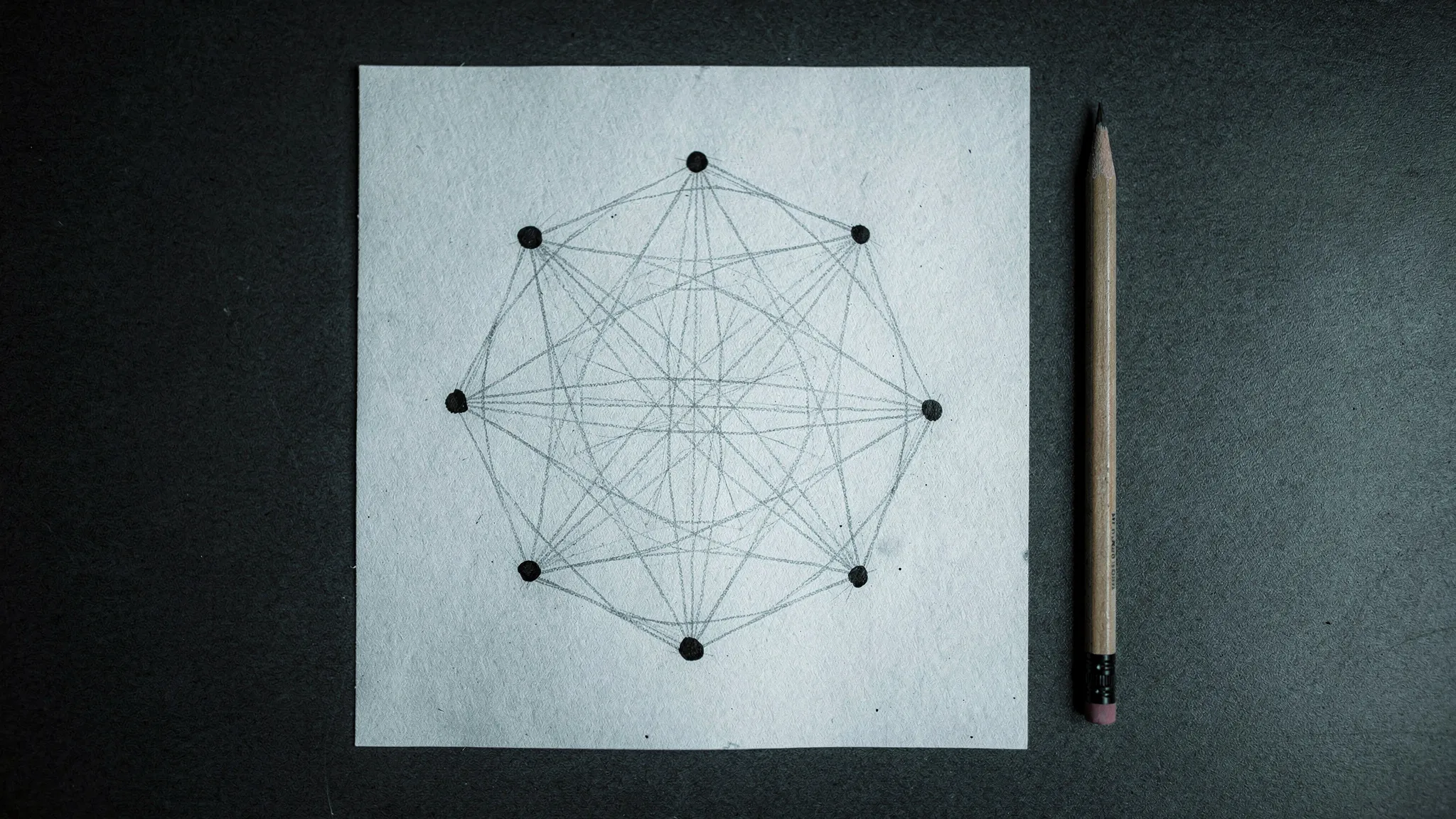
    A sheet of white paper on a dark desk, eight ink dots in a rough ring, each joined to the others by thin pencil lines that cross many times near the centre, a pencil beside it, in dark cyan light.

    Draw 10 dots on a page. Join every pair with a curve, crossing as little as possible. However clever you are, at least 60 crossings remain.

    In the late 1950s, British artist Anthony Hill drew them for any number of dots. His crossing counts fit one simple formula. Can anyone do better? For over 60 years, nobody could prove the answer was no.

    In 2026, OpenAI announced a proof for every number of dots. Mathematician Martin Balko now rewrites it, shorter and easier to follow. It needs only basic linear algebra and graph theory.

    The trick: give each dot a number, then count polynomial coefficients. Fewer crossings than the formula would force an impossible polynomial. The same proof also settles several other families of networks.

    Source: Proof of the Harary–Hill conjecture: an exposition, https://arxiv.org/abs/2610.34444

    PreprintTheory🧪 Experiment
  4. Physics

    A FAINT HINT OF THE NEUTRINOS LEFT BY ALL PAST SUPERNOVAE

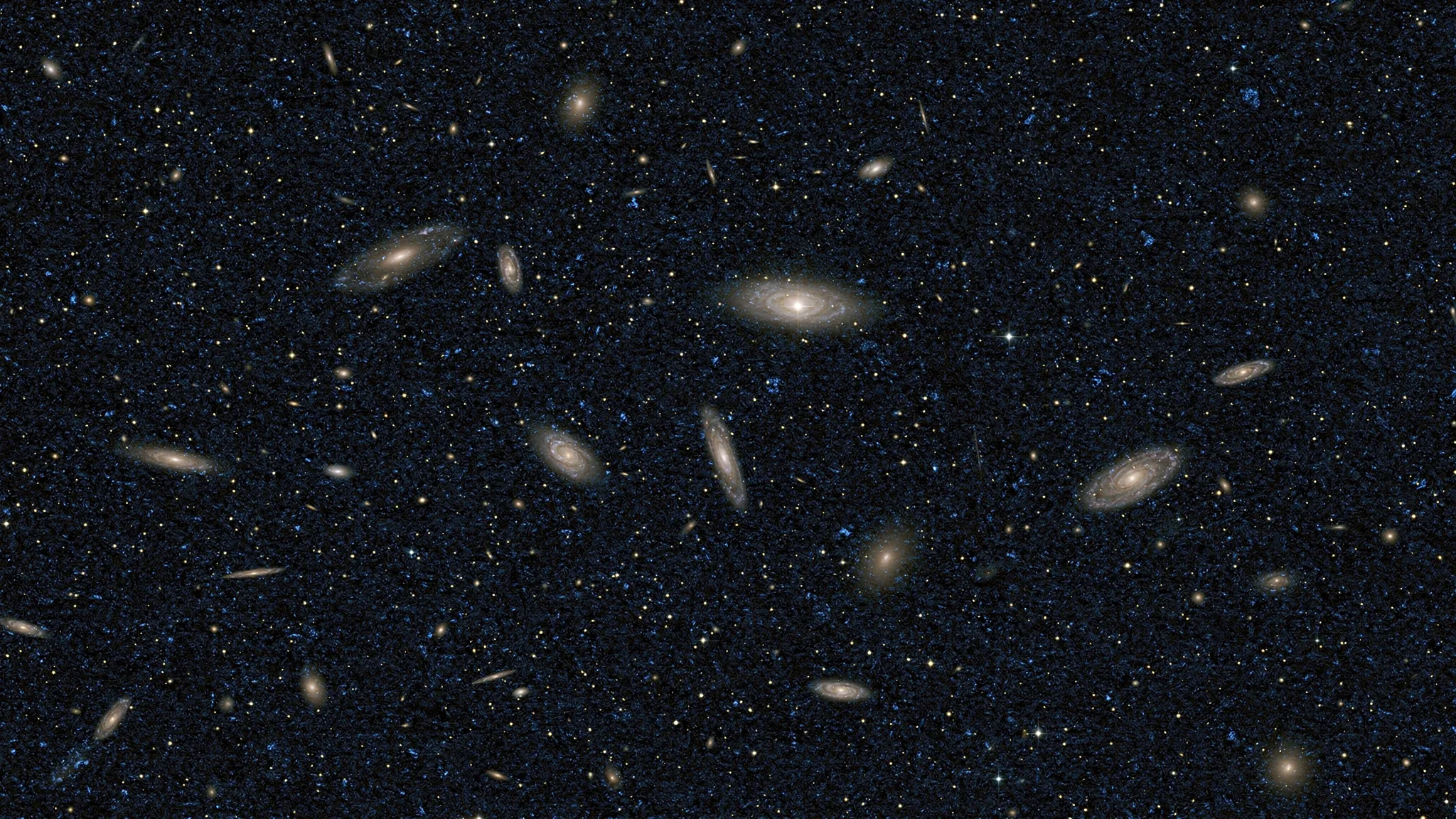
    Deep-sky photograph of hundreds of faint distant galaxies on a black sky, a few of them holding a tiny bright point, the whole field bathed in a faint deep cobalt blue glow.

    When a star's core collapses, about 99% of the energy leaves as neutrinos. Across the universe, this happens a few times per second. Near us, only a few times per century.

    All those neutrinos add up to a faint, steady flow from every direction. Can anyone catch it? Super-Kamiokande expects only a few events per year.

    The team combed through 5,003 days of data, from 2008 to 2026. An antineutrino, one type of neutrino, striking a proton makes a flash and a neutron, caught a split second later. Requiring both strips away most of the noise from cosmic rays.

    Result: a 2.6 sigma hint, not yet proof. With background alone, data like these would be unlikely. The authors disfavour that idea at 99.5% confidence.

    Source: Indication of Electron Antineutrinos from the Diffuse Supernova Neutrino Background, https://arxiv.org/abs/2610.35619

    PreprintObservation❓ Quiz
  5. Space & astronomy

    THE OVERSIZED PLANET OF BOYAJIAN'S STAR MAY WEAR A RING

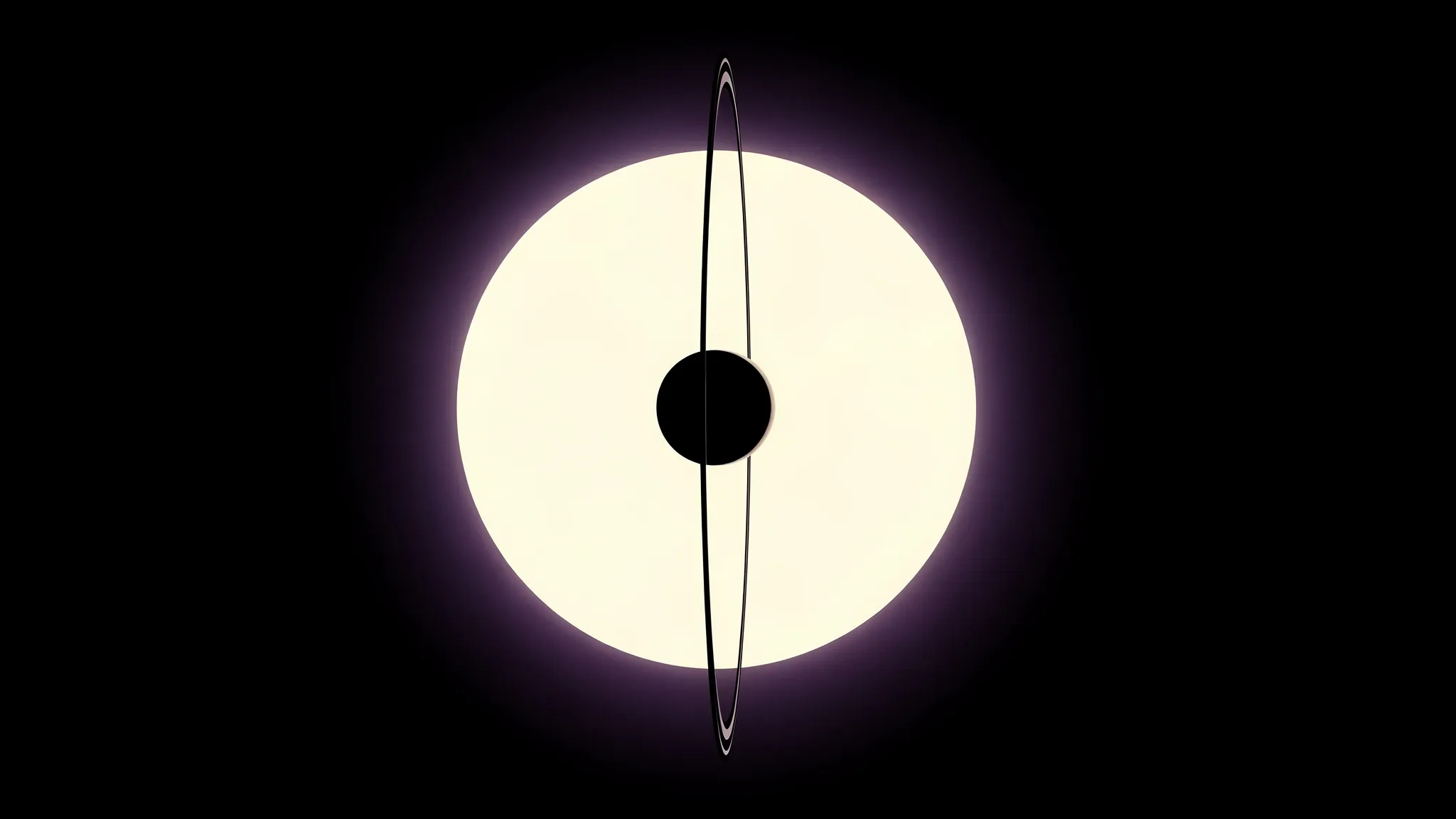
    Illustration of a small dark planet crossing in front of a glowing star, encircled by a thin, nearly upright ring of dust, in violet light.

    Boyajian's star is famous for deep, irregular dimmings. Some dips blocked 15%, even 22%, of its light. In 2019, the TESS satellite caught a cleaner event: one neat dip of about 1.1%.

    Earlier work linked it to a giant planet of about 9.4 Jupiter masses. The puzzle is its size: 1.7 times Jupiter's radius. Models say such a cool, heavy giant should be Jupiter-sized.

    Two astronomers in Beijing propose a way out. What if a normal planet wears a huge, opaque ring? Their best fit: a flattened ring reaching three to four planet radii.

    Proof? Not yet: statistically, ring and no ring are nearly tied. But the ring makes the planet ordinary again. And if the ring traces its spin, it rotates on its side, like Uranus.

    Source: The anomalously large transiting planet around Boyajian's star: evidence for a circumplanetary ring, https://arxiv.org/abs/2610.34806

    PreprintData analysis🧪 Experiment
  6. Mathematics

    A SMOOTH BALL THAT IS ROUND AT ONLY ONE POINT

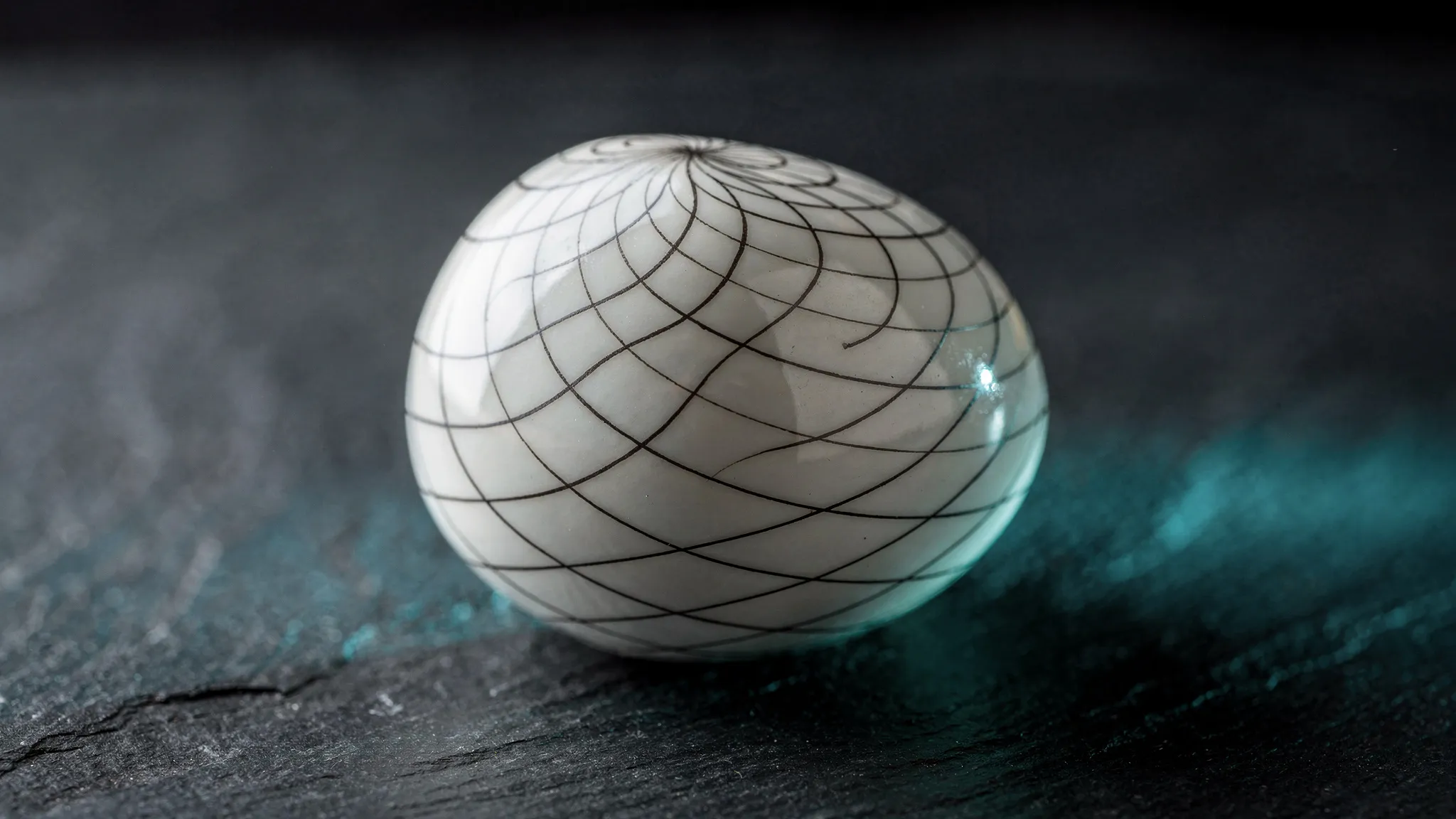
    A smooth, very slightly egg-shaped white porcelain ball on dark slate, covered with a grid of thin dark curves that swirl toward a single point at its top, in dark cyan light.

    A ball curves the same way in every direction. The side of a rugby ball does not: sharply around, gently along. A point that curves equally all ways is called an "umbilic".

    Two conjectures concerned these points. Carathéodory's: every closed convex surface has at least two. Loewner's: around one, the directions of strongest bending turn at most once. On such surfaces, these turns always add up to two.

    On 19 August, L. Alpöge announced smooth counterexamples to both. AI helped develop them. Two mathematicians in Japan now publish a simpler recipe. Its seed is a short formula of sines.

    The result? A smooth, nearly round, convex surface with one single umbilic. Around it, the bending directions make two full turns. It is smooth, yet not "analytic", a stricter kind of smoothness.

    Source: A simple construction of smooth counterexamples to the Loewner and Carathéodory conjectures, https://arxiv.org/abs/2610.34036

    PreprintTheory❓ Quiz
  7. Earth & climate

    MANHATTAN'S TOLL: 42% LESS TRAFFIC?

    View from above at dusk of a long avenue between tall office towers, cars with glowing headlights and tail lights in wide lanes, sparse in the foreground and denser far down the avenue, in olive-green light.

    Since 5 January 2025, driving into southern Manhattan, up to 60th Street, has a price. At peak hours, a car pays $9. It is the first permanent toll of this kind in the United States. Did the streets empty?

    A University of Kansas researcher compared traffic counters inside the zone and north of it. Best estimate: 41.7% fewer vehicles per hour. That is about twice the drop seen in Stockholm.

    But inside the zone, the estimate rests on just three road segments. Its margin of error includes zero. Move the start date back one year, and a "drop" appears too.

    One signal is firmer: traffic on the bridges in the sample rose by 25%. Some drivers may be going around the zone. A first sketch, then, not yet a verdict.

    Source: Cordon Tolls and Urban Traffic Volumes: Evidence from NYC's 2025 Congestion Relief Zone, https://arxiv.org/abs/2610.34818

    PreprintData analysis❓ Quiz
  8. Space & astronomy

    A STRIPPED STAR, A HIDDEN PARTNER, A 4.2-HOUR ORBIT

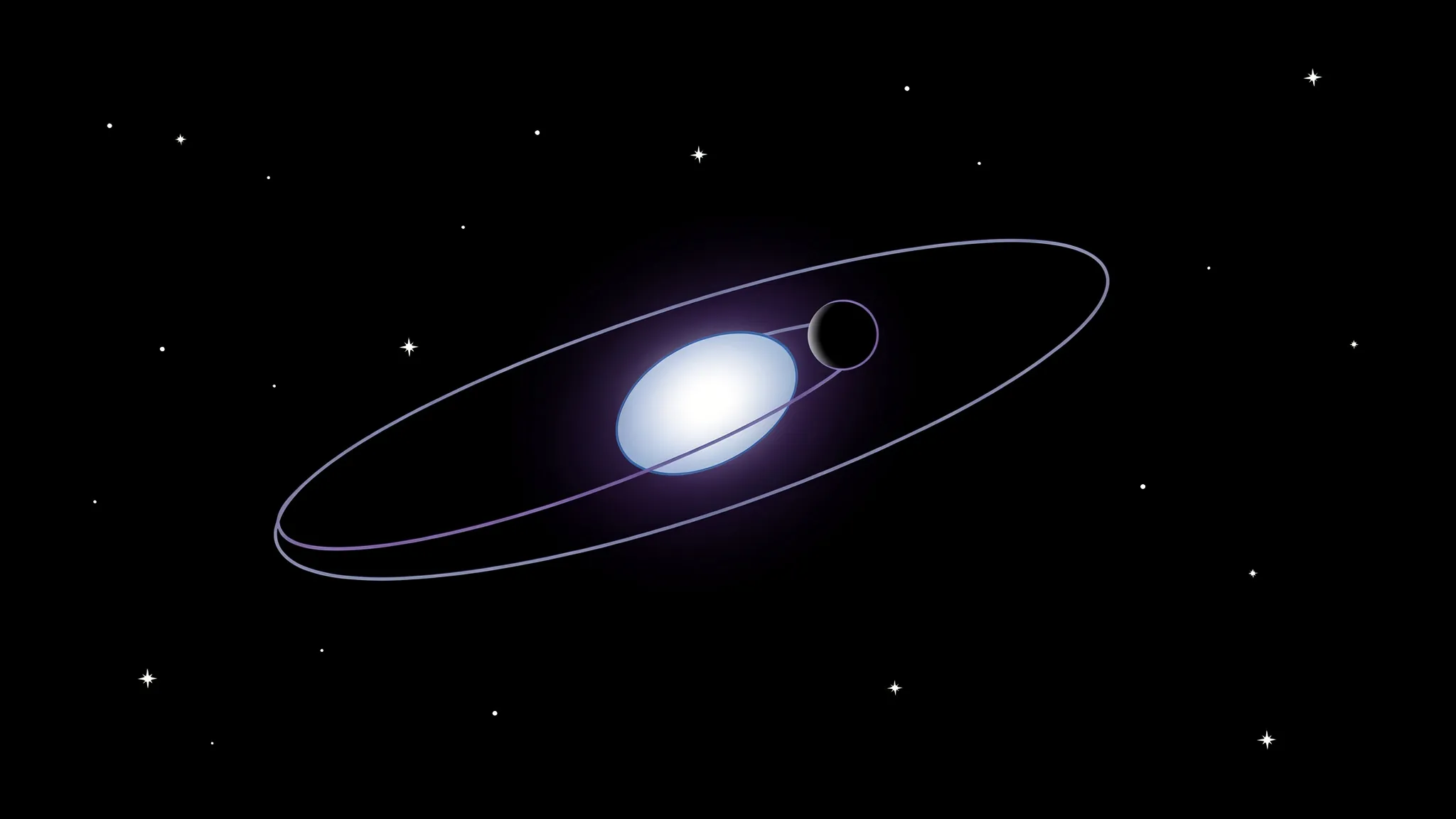
    Illustration of a small blue-white star stretched into an egg shape that points toward a tiny dark companion sphere close beside it, faint orbit lines around them, on a near-black starry background in deep violet light.

    This star was stripped of its hydrogen outer layers by a close companion. What remains is small, very hot and about 3.4 times the Sun's mass. It circles an invisible partner every 4.2 hours.

    What could that partner be? No normal star would fit in so tight an orbit. And a second stripped star would show up in the spectra.

    The partner's gravity stretches the star, so its brightness wobbles. This wobble gives 99.4% odds the partner exceeds 1.4 Suns, a white dwarf's ceiling. The likeliest answer: a neutron star, the collapsed core of an exploded star.

    A computer model then plays out the future. The star should explode and leave a second neutron star bound to the first. After 220 million years, the two would spiral together and merge.

    Source: An Intermediate Mass Stripped Star in a 4.2-hour Orbit around a Compact Object, https://arxiv.org/abs/2610.35539

    PreprintObservation🧪 Experiment
  9. Earth & climate

    AN ICE SHELF WITH A MEMORY

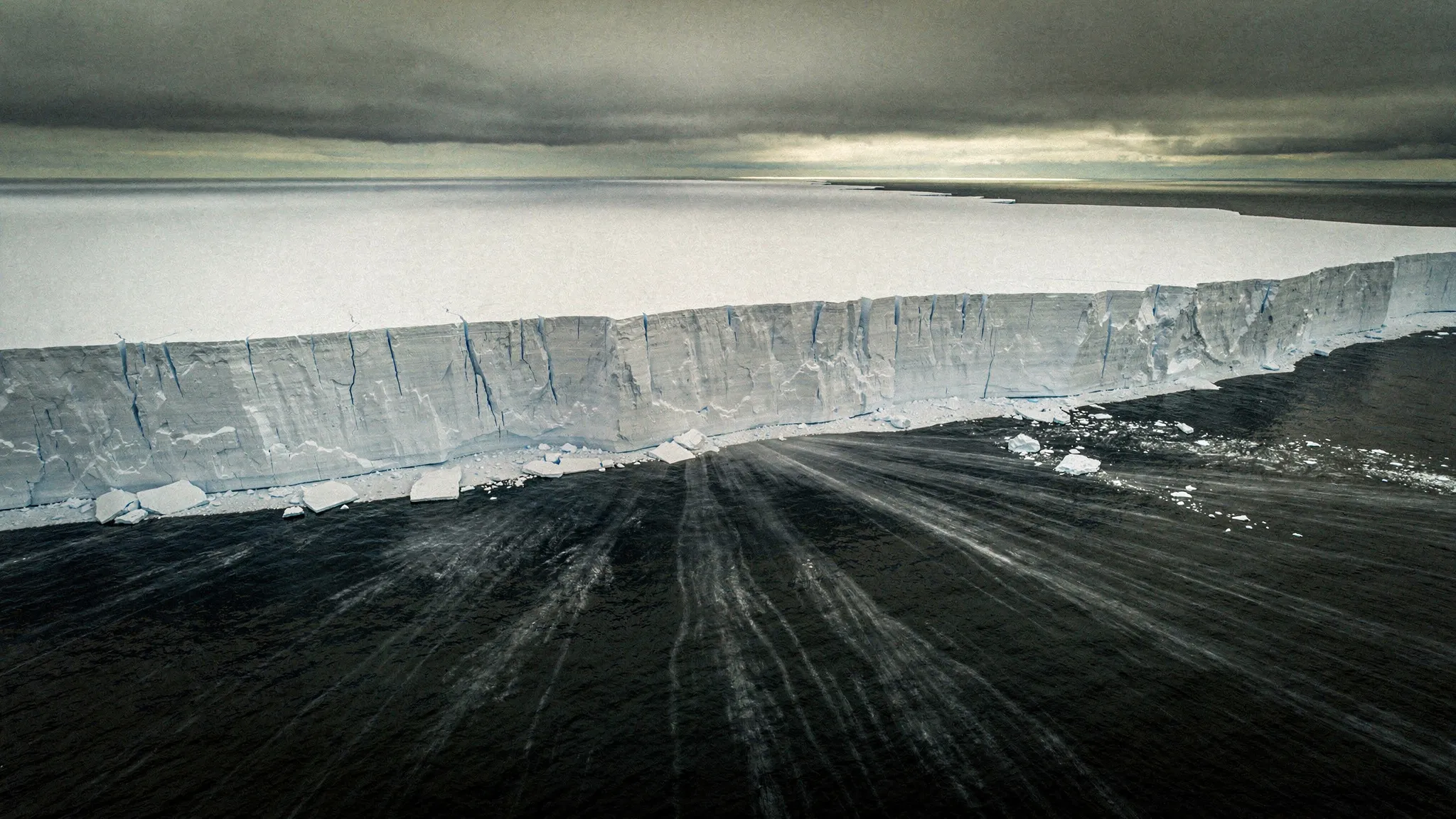
    Aerial photograph of a long white Antarctic ice cliff above a band of dark open sea, with grey streaks of new sea ice drifting away from it, in low olive-green light.

    Antarctica's ice shelves are slabs of ice floating on the sea. The ocean beneath them sets how fast they melt. Cold water melts little. Warm deep water melts a lot.

    The cold comes from polynyas, patches of open sea in front of the ice. Sea ice forms there fast and leaves its salt behind. That heavy, salty water sinks and stirs the sea to the bottom.

    A French-Australian team built a simplified ice shelf on a computer. They turned this salt up step by step, then down, each way over 160 simulated years. With 1 °C deep water, the sea under the ice turned cold at one level. It turned warm again only at half that level.

    Why this memory? A swirl of water traps meltwater near the ice front. Remove the swirl, and the switch becomes reversible. Do real ice shelves get stuck too? This model alone cannot tell.

    Source: Bistability of ice-shelf cavity circulation and melt under coastal polynya forcing, https://arxiv.org/abs/2610.35359

    PreprintSimulation❓ Quiz
  10. Chemistry

    A POLARIZING FILTER SHARPENS THE VIEW THROUGH TRANSPARENT WOOD

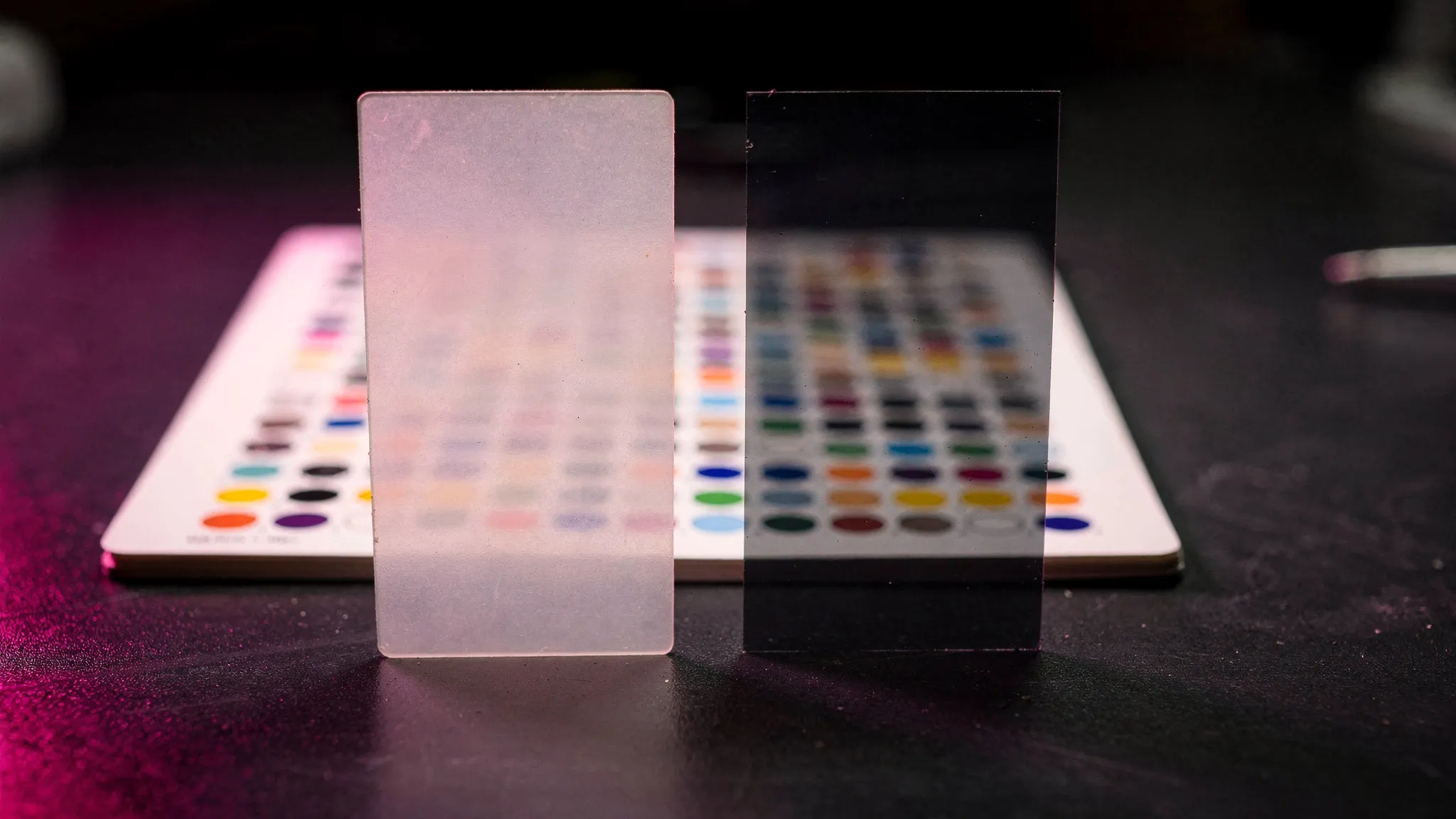
    Two thin sheets of transparent wood standing side by side in front of a card of coloured circles: behind the milky left sheet the circles are hazy, behind the right sheet, covered by a dark grey polarizing film, they are crisp, in magenta light.

    Strip wood of what absorbs light, fill it with plastic: it turns see-through. A 1-millimetre sheet passes about 90% of light. So why does the view behind it look milky?

    That milkiness is called haze. It is light that gets through but is knocked off course. Light's electric field also vibrates in one direction, its polarization. A Swedish team asked whether that direction matters.

    It matters a lot. When light vibrates across the wood fibres, haze falls to about 21% in red light. Along the fibres, it stays far higher. The reason: cellulose bends light differently in each direction.

    No new recipe is needed. Put a polarizing filter across the fibres, and a logo 30 centimetres away looks sharper. The picture gets dimmer, but the letters read clearly.

    Source: Polarization-resolved haze in transparent wood - towards wooden glass, https://arxiv.org/abs/2610.33459

    PreprintExperiment🧪 Experiment
  11. Space & astronomy

    THE ASTEROID THAT DART REPAVED

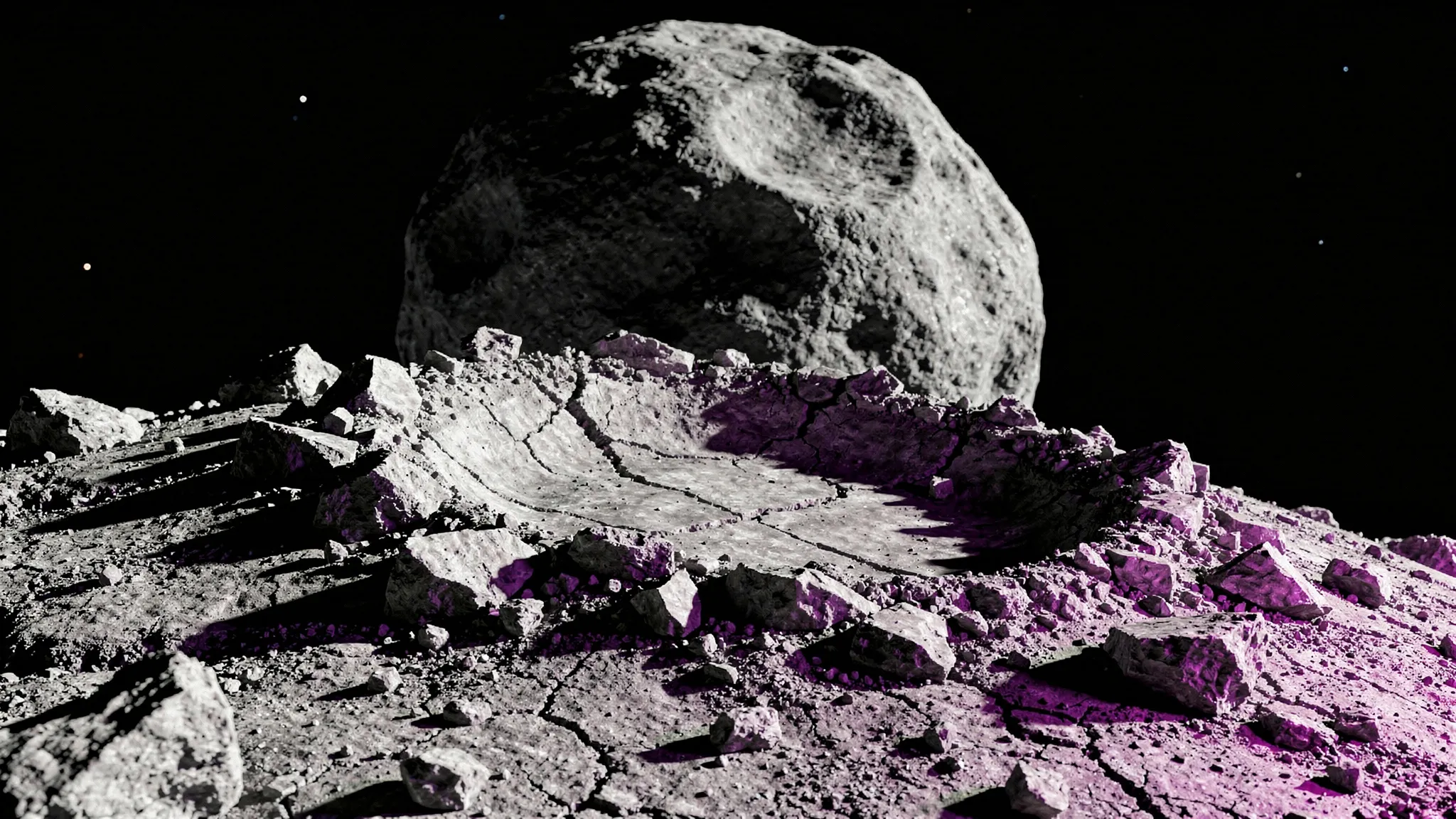
    The grey, boulder-strewn surface of a small rubble-pile asteroid, a wide flat-floored hollow ringed by heaped debris, a larger cratered asteroid looming behind it against black space, deep violet light on the shadows.

    In 2022, NASA's DART spacecraft struck Dimorphos, a small asteroid orbiting a larger one. Where did the debris go? A new computer simulation followed it for six hours.

    About 13% of the asteroid's mass was blasted off. Nearly all of it rained back, covering the entire surface. The layer tops 8 metres near the impact, a few tens of centimetres opposite.

    Gravity shifted too, by about 10% in places. Boulders thrown out and resettled cause most of it. A dense boulder at the core would stand out only inside the impact hollow.

    Europe's Hera mission reaches the pair in late 2026. Its small probe will land and read gravity at one spot. Gravity alone cannot tell shallow boulders from deep ones, the authors warn.

    Source: Post-DART impact ejecta re-accumulation on Dimorphos and implications for Hera gravity measurements, https://arxiv.org/abs/2610.35718

    PreprintSimulation❓ Quiz
Legal notice