Edition of October 19, 2026

  1. At The Knowledge Frontier, we pick out the research papers of the day and explain them simply.

    The web has changed in nature. We no longer search, we scroll. Pages look alike, texts are churned out, and we end up reading a great deal without keeping any of it. Educating yourself there has become a strangely passive affair.

    Here, you do more than read. Every article ends with a quiz: a few questions on what you have just read. When the subject lends itself to it, it is an experiment — you set the values yourself and recover, in turn, the researchers' result.

    @VirScience
  2. Physics

    SCHRÖDINGER'S UNPUBLISHED HIDDEN-VARIABLE MODEL, FOUND IN VIENNA

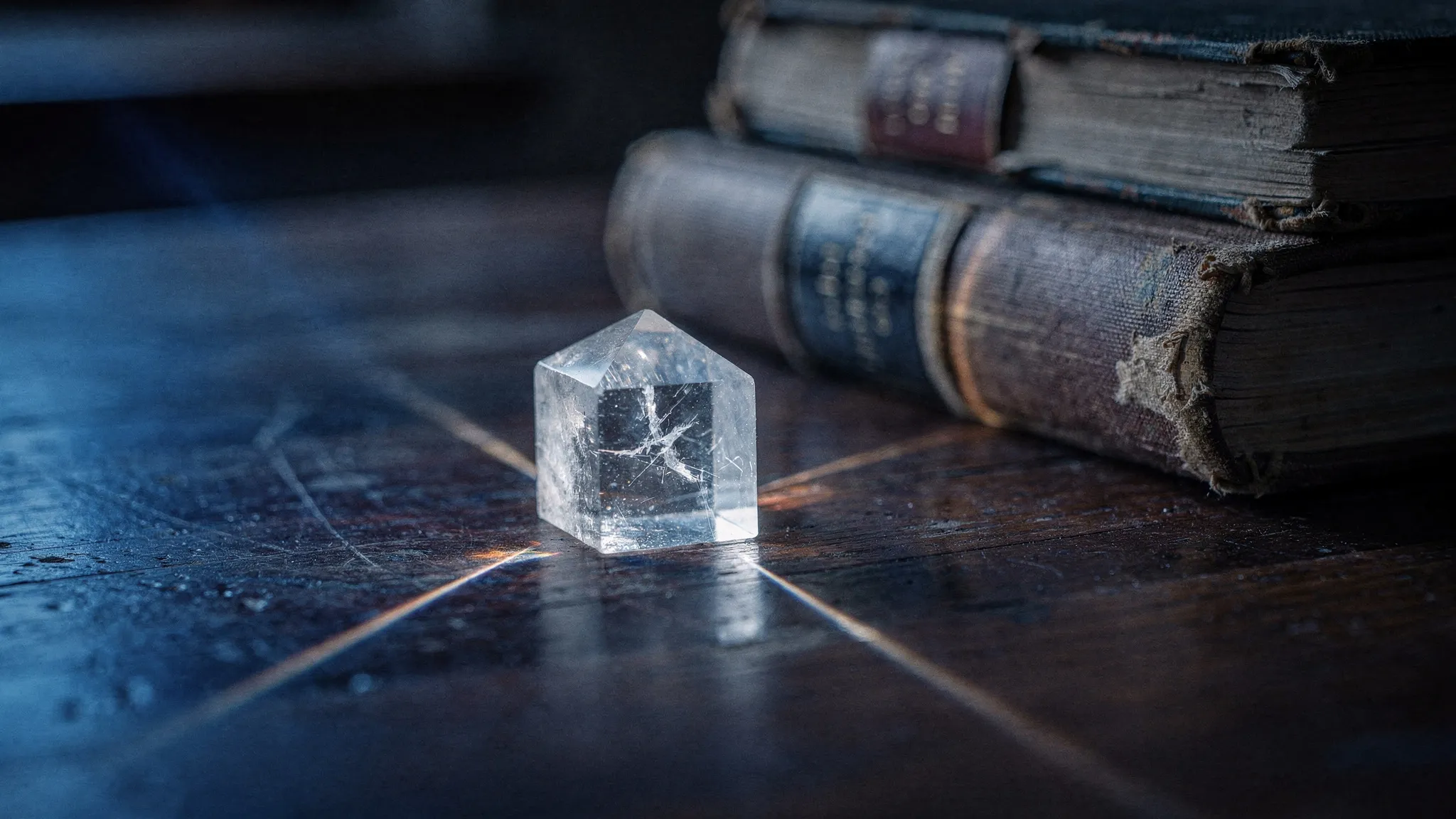
    A small clear crystal on a dark wooden desk, thin lines of light crossing the wood, a stack of worn old books behind it, in cold blue light.

    A coin toss only looks random. Know every detail of the throw, and you could predict it. Could quantum chance hide the same kind of secret details?

    In 1943, a British mathematician said no. His proof used a single photon and a polarizer. It sparked eleven replies, ten of them in the journal Nature, in 1944 and 1945.

    A twelfth reply was never printed. A researcher in Geneva found it in Vienna, in Erwin Schrödinger's archives. In a few lines, Schrödinger built exactly the model that was supposed to be impossible.

    Yet he was no believer in determinism; he had argued for chance in nature since the 1920s. His model was a proof of principle: an impossibility proof only holds for the problem as it is posed.

    Source: Schrödinger's unpublished hidden-variable model in the 1944–45 debate over the "Collapse of Determinism", https://arxiv.org/abs/2610.20752
    PreprintTheory🧪 Experiment
  3. Physics

    A MILLION ATMOSPHERES ON A LAB BENCH

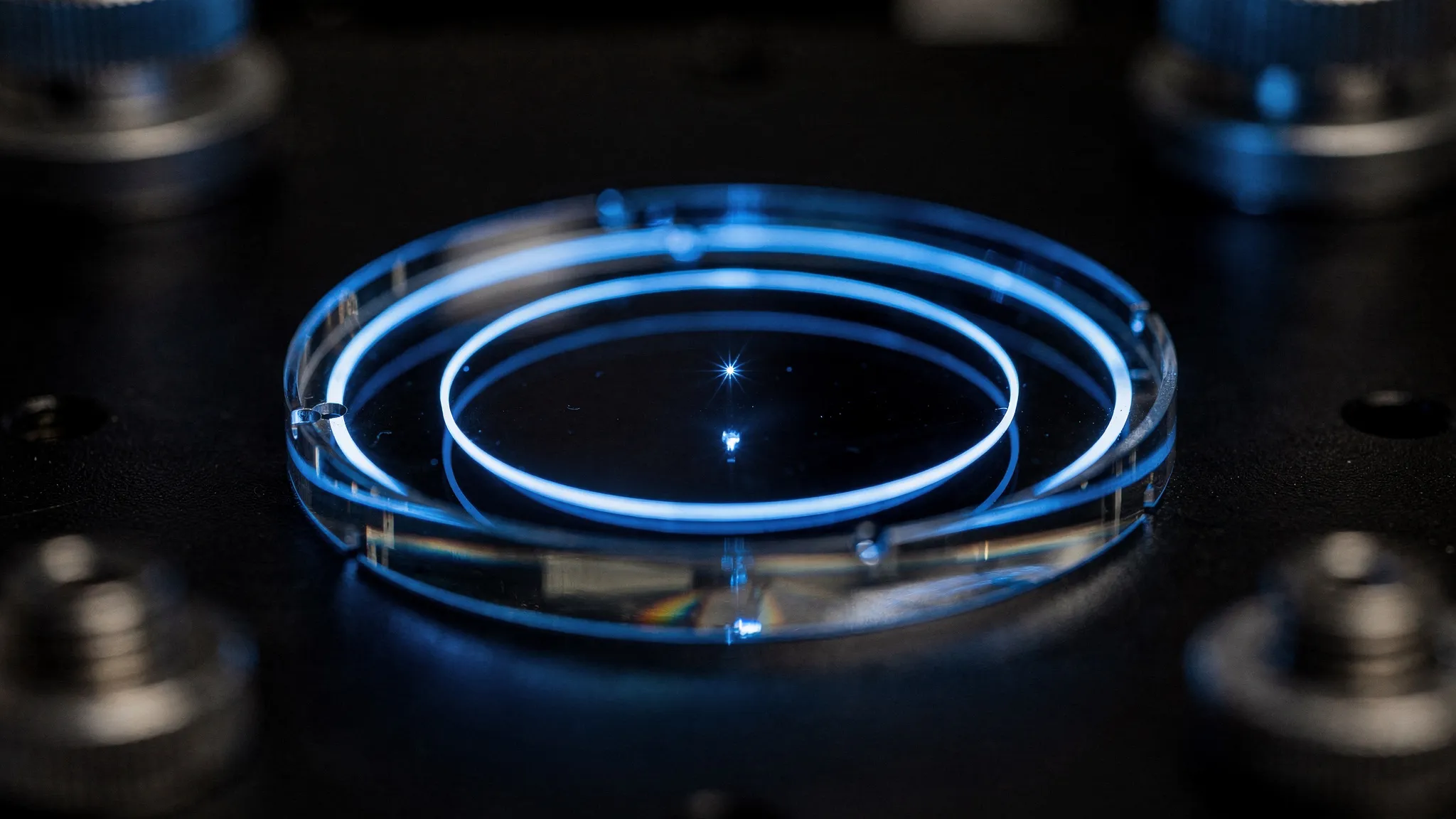
    Two glowing blue rings of light on a clear disc set on a dark optical table, a tiny bright spark at their centre, steel mounts blurred around it.

    One megabar is about a million times the air pressure around you. It turns insulators into metals. Making it with shock waves usually takes giant lasers in national labs.

    An MIT team found a shortcut. A single laser makes four rings of light, the largest fired first, the smallest last. Each ring hits a thin film of inky water just as the inward shock passes, and pushes it harder.

    Four rings of 4.5 millijoules each are enough. Simulations matched to the measured shock paths put the pressure at the centre above 400 gigapascals. Four rings do far better than four separate ones.

    One caveat: that pressure is computed, not yet measured. X-rays should check it. If confirmed, extreme-matter physics could fit on an ordinary lab table.

    Source: Megabar Shocks on a Benchtop, https://arxiv.org/abs/2610.20749

    PreprintExperiment🧪 Experiment
  4. Mathematics

    HILBERT'S TENTH PROBLEM ON FRACTIONS: 86 UNKNOWNS ARE ENOUGH

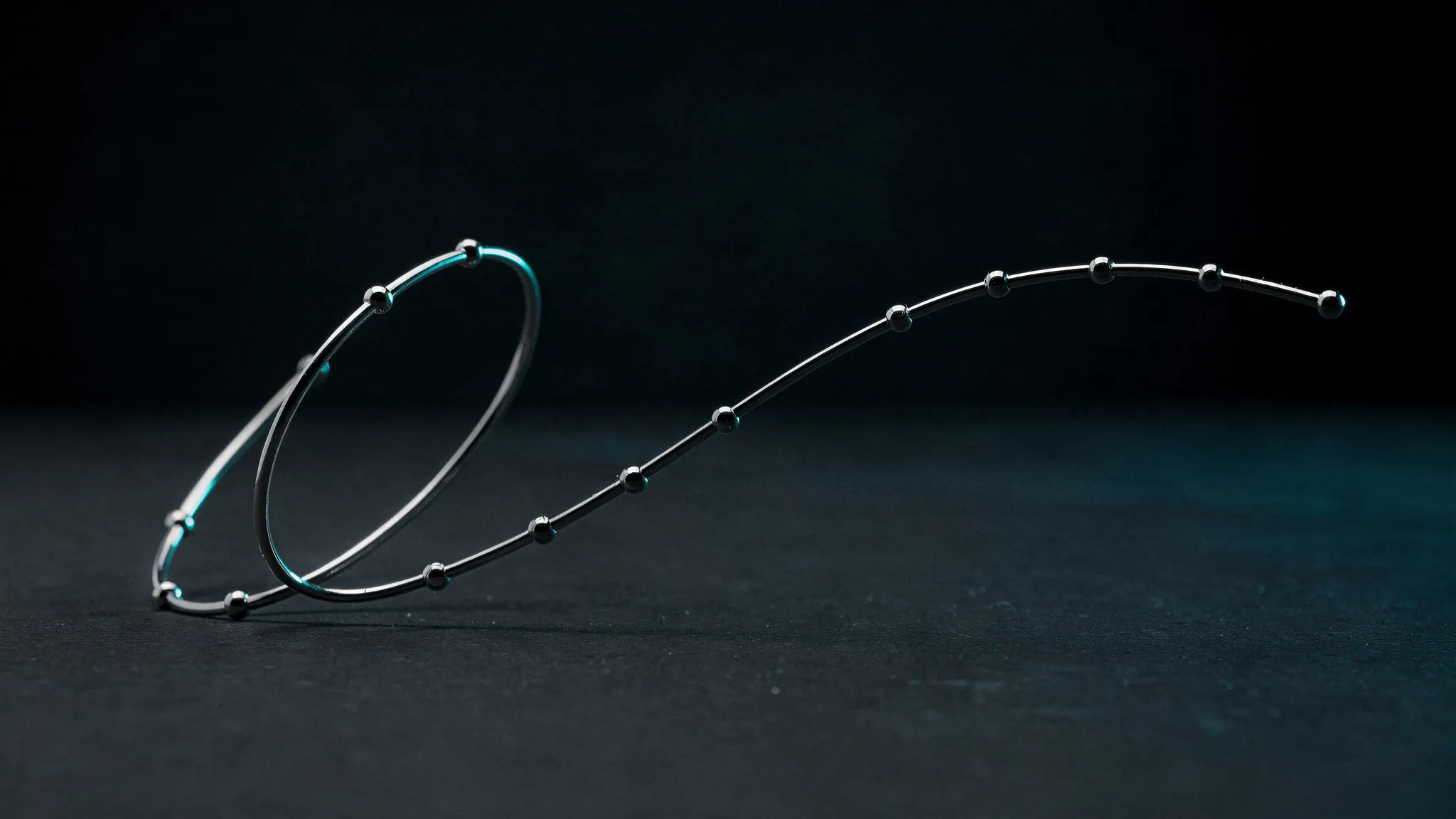
    A thin polished wire sculpture on a dark table: a closed loop joined to a long sweeping branch, small metal beads spaced along it, faint cyan light.

    In 1900, Hilbert asked for a method to decide whether any polynomial equation has whole-number solutions. In 1970, the answer came: no such method can exist.

    For fractions, the answer came only recently. In early October 2026, a preprint from OpenAI proved that the answer is again no. No algorithm decides it for every equation.

    Zhi-Wei Sun, at Nanjing University, built on that proof. He shows the impossibility already holds for equations with just 86 unknowns. His tools are points on an elliptic curve and carefully built families of prime numbers.

    For whole numbers, Sun had already brought the count down to 10. On fractions, 86 is what this construction gives. Sun calls it an upper bound, not a limit that cannot be beaten.

    Source: 86 unknowns for Hilbert's tenth problem over the rationals, https://arxiv.org/abs/2610.20691

    PreprintTheory
  5. Physics

    THE GALLIUM ANOMALY, CHECKED AGAINST THE SUN

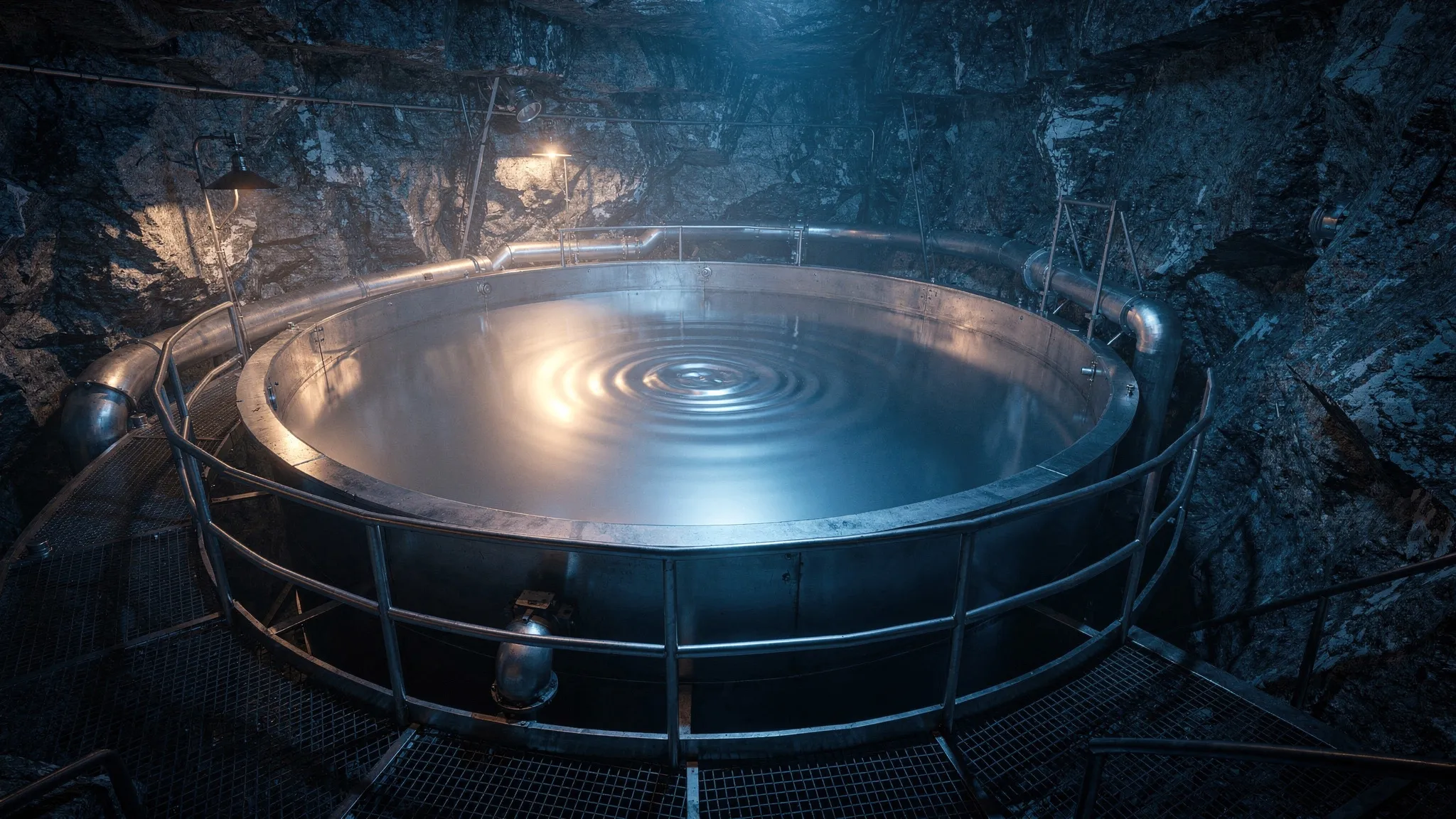
    A large round steel tank filled with silvery liquid metal in an underground rock cavern, ripples on its mirror-like surface, a metal walkway around it, in cold blue light.

    Gallium can catch neutrinos. Now and then, one turns a gallium atom into germanium. Counting those atoms measures how many neutrinos came through.

    When physicists aimed intense radioactive sources at gallium, they found about 20% too few germanium atoms. That gap, confirmed at over 4 sigma, is the "gallium anomaly".

    Two physicists turned to another source: the Sun. Its neutrino output is measured by other detectors, such as Borexino and SNO, independently of gallium. They predicted 67.5 captures in standard units. The gallium experiments themselves measured 66.1 ± 3.1.

    Measured and predicted agree: the ratio is 0.98. So the capture rate on gallium is not wrong, and neither is the counting. The anomaly is real, and its cause lies somewhere else.

    Source: Gallium Anomaly and Solar Neutrinos, https://arxiv.org/abs/2610.22219

    PreprintData analysis🧪 Experiment
  6. Medicine & health

    THE AI THAT READS THE HOSPITAL STAMP INSTEAD OF THE LUNGS

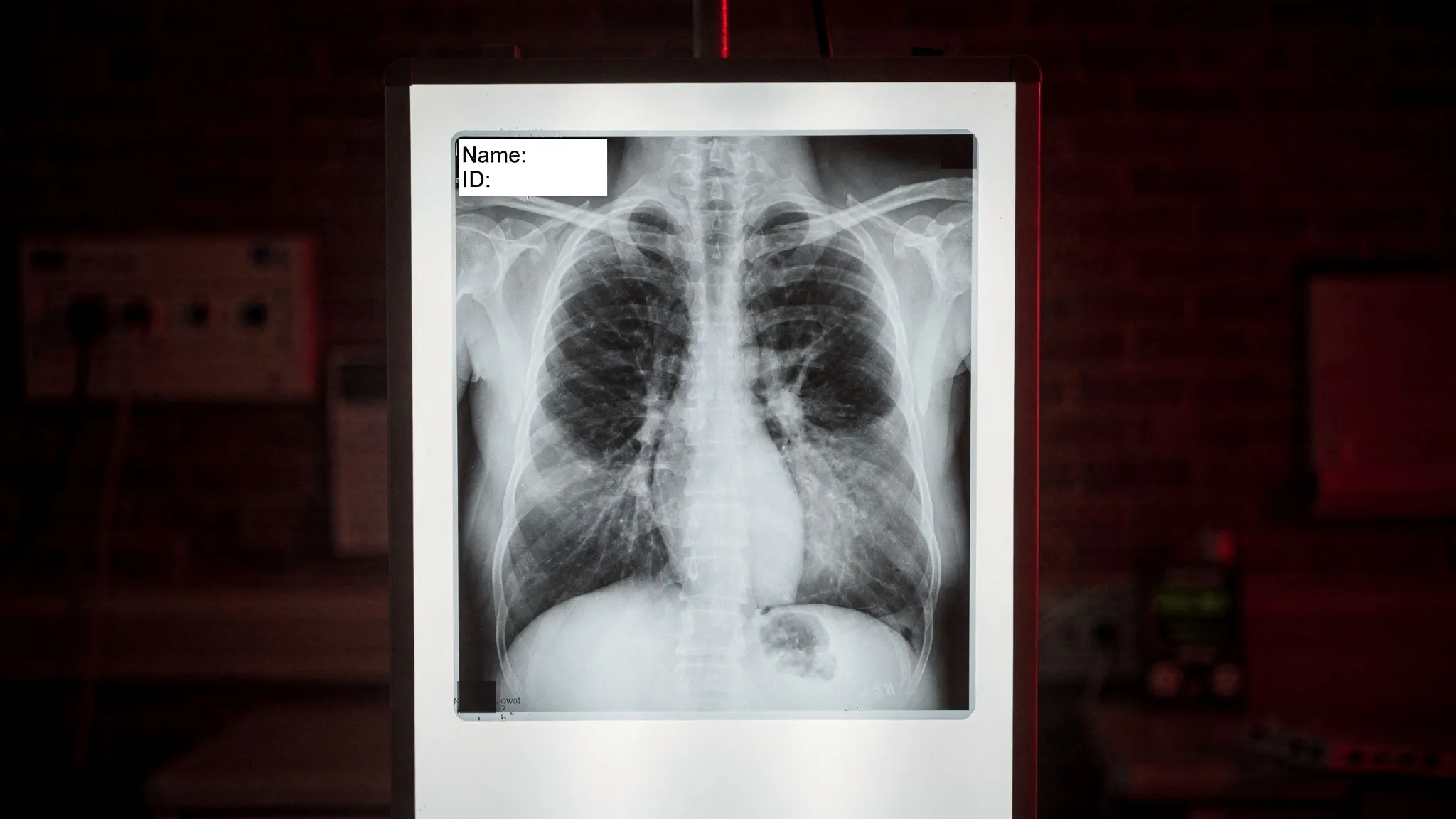
    A chest X-ray on a lightbox in a dark room with reddish light; a white label printed with the words Name and ID sits in its top left corner.

    A chest X-ray often carries a stamp in its corner: a hospital code, a label. An AI can learn to read that stamp instead of the lungs. It then fails, silently, in another hospital.

    Two researchers at Makerere University looked inside a common image AI. Out of 144 attention heads, one stood out. On 62% of 200 COVID-19 X-rays, it stared at the text in the top-left corner.

    Erase the text with realistic tissue texture, and that head's attention moves back towards the lungs. The same pattern shows up in two other AI models and on a second dataset.

    The twist: switch the head off, even with two other suspect heads, and the diagnoses do not measurably change. Standard tests cannot see the shortcut. Only looking inside the model reveals it.

    Source: Spurious Attention Heads in Vision Transformers: Mechanistic Identification of Annotation-Driven Bias in Medical Chest X-Ray Analysis, https://arxiv.org/abs/2610.21638

    PreprintExperiment
  7. Earth & climate

    CITIES SIT WHERE CLIMBING COSTS THE LEAST

    Aerial view at dusk of a city's lit grid of streets at the foot of a steep green mountain, a road zigzagging up the slope, under an olive-tinted sky.

    Two trips of the same length can involve very different climbs. And every climb costs energy, again and again, each time it is driven. Does the shape of a city take that into account?

    Researchers in Spain took the real street network of 56 cities. They kept the same trips, from geolocated posts, and moved each network on its terrain: shifted, turned, stretched.

    In 26 of the 30 cities that could be fully tested, the real layout needs the least energy of all the versions tried. In the other four, a shifted version saves less than 3%.

    Bogotá would save 2.5% if moved 750 metres west. But that land includes flood-prone areas along the Bogotá River. The real city may already sit on the cheapest ground available.

    Source: Mobility energetic balance frames spatial configuration of cities, https://arxiv.org/abs/2610.21558

    PreprintData analysis🧪 Experiment
  8. Earth & climate

    AI WEATHER MODELS TRACK CYCLONES BETTER, BUT STILL MAKE THEM TOO WEAK

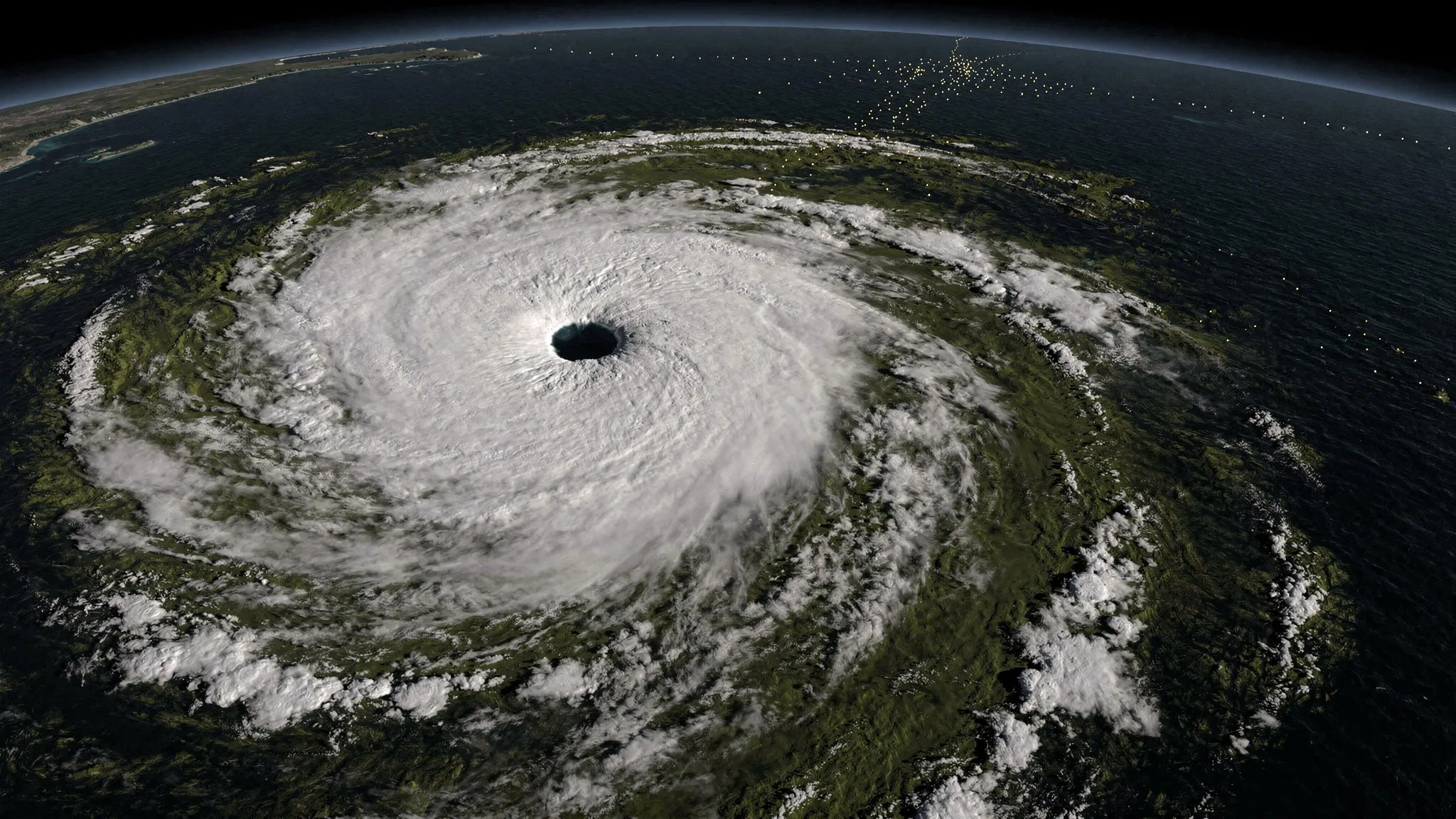
    Satellite-style view of a large tropical cyclone over a dark ocean, white spiral bands around a dark eye, olive tints at its edges, a curved coastline at the top left.

    To evacuate before a cyclone, people need to know where it will strike, several days ahead. AI weather models already rival the best classic forecasts on average. But on rare, violent storms?

    A team from INRIA, Sorbonne University and AXA replayed 178 cyclones. They pitted three AI models that output whole sets of forecasts against IFS-ENS, the physics-based ensemble of the ECMWF.

    On the 2025 season, the AI model FGN put more probability on the storm's real position than IFS-ENS for about 90% of the cyclones. It also placed the strongest winds and lowest pressures better.

    The weak spot: the AI storms are too weak. Their peak winds fall short, while IFS-ENS stays closer to the reference. Yet the link between wind and pressure inside each storm comes out right.

    Source: Can AI Forecast the Extremes? Evaluating Probabilistic Weather Models on Tropical Cyclones, https://arxiv.org/abs/2610.22077

    PreprintData analysis
  9. Space & astronomy

    THE BLACK PEARL: A DUST FINGERPRINT 500 MILLION YEARS AFTER THE BIG BANG

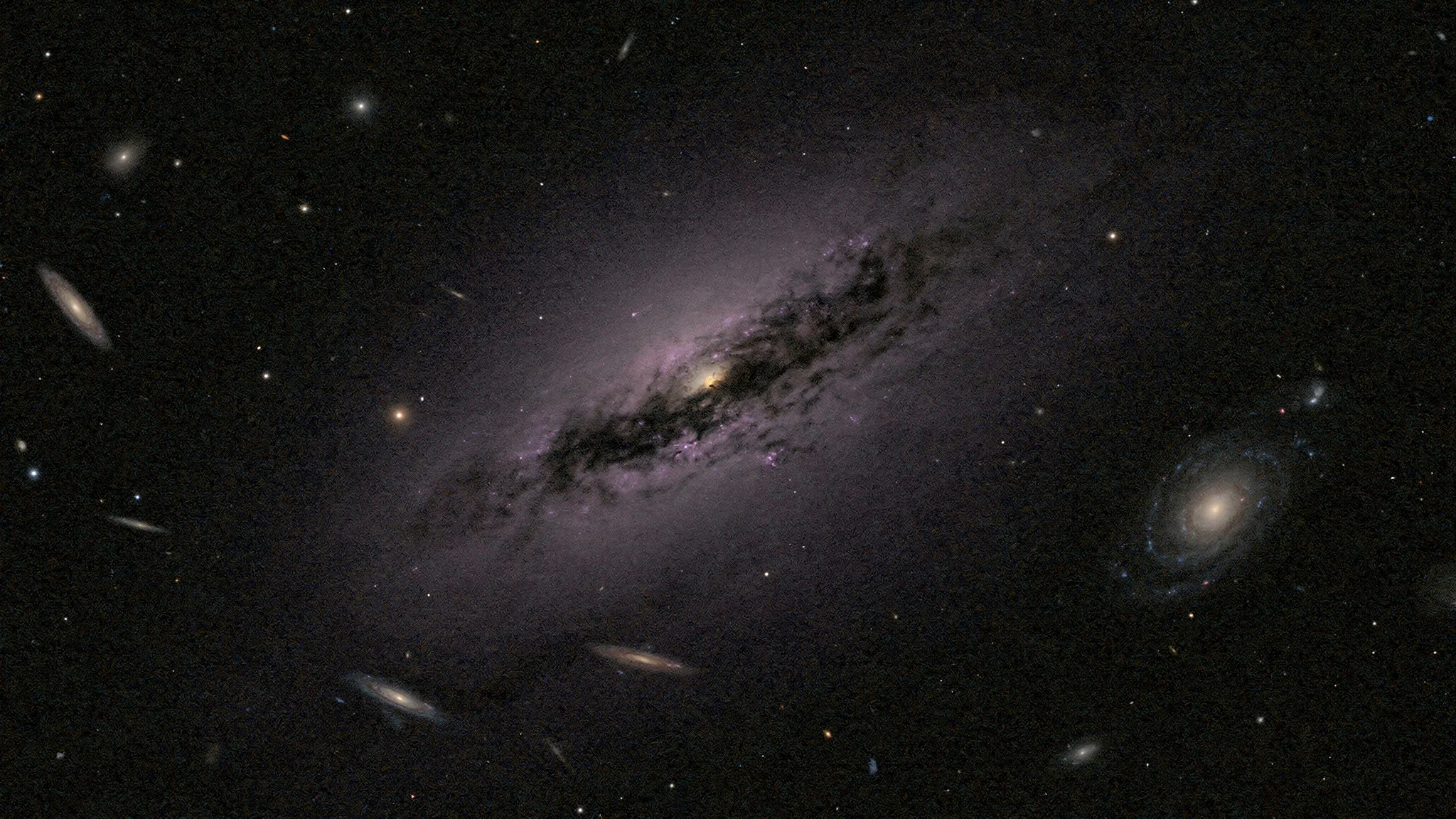
    A large, nearby-looking spiral galaxy seen almost edge-on, crossed by a dark band of dust and wrapped in a violet glow, with smaller galaxies scattered around it.

    Cosmic dust dims light in a telltale way. In our Milky Way, it carves a dip in the ultraviolet near 2,175 ångströms. Tiny carbon grains are the usual suspects.

    An international team led from the University of Padua studied a galaxy nicknamed the Black Pearl. The Webb telescope sees it as it was about 500 million years after the Big Bang.

    Its light shows that same dust dip, detected at 17.6 sigma. It is the most distant one reported so far. But it sits at 2,132 ångströms, shifted towards the blue.

    The known dips from slightly later galaxies are shifted the other way. So the earliest dust was not all alike. Small graphite grains or carbon molecules called PAHs could both fit.

    Source: An Attenuation Bump at z=9.3: Probing Dust Diversity at Cosmic Dawn, https://arxiv.org/abs/2610.20722

    PreprintObservation🧪 Experiment
  10. Computing & AI

    PRICING ALGORITHMS COLLUDE — WITHOUT THREATENING EACH OTHER

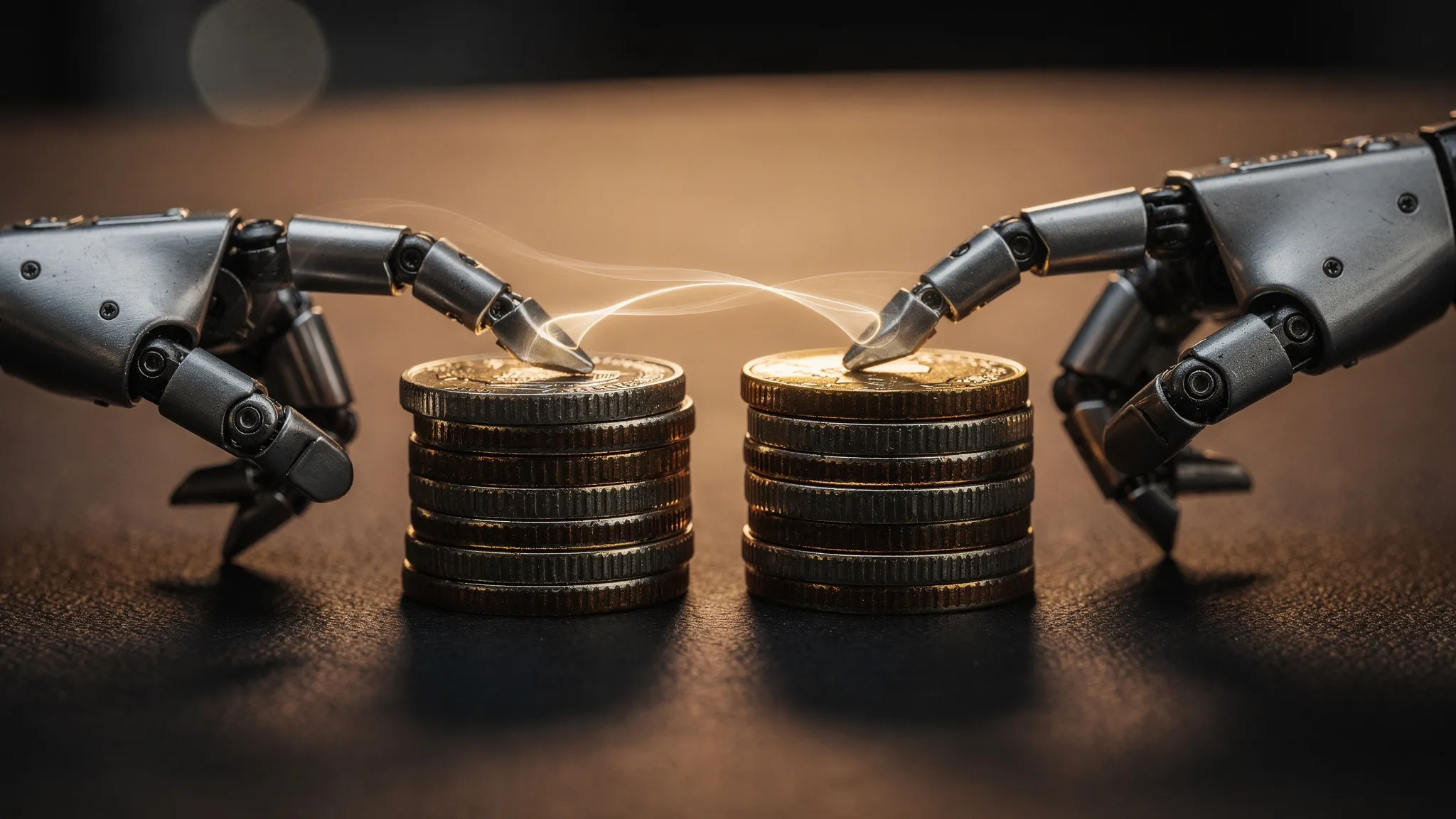
    Two metal robot hands facing each other across a dark table, each touching the top of a stack of gold coins of the same height, a wisp of light between them, warm amber lighting.

    Let two simple learning programs set prices against each other. They end up charging well above the competitive price. A landmark 2020 study saw a threat behind it: undercut me and I strike back.

    Prices defended by retaliation look like a cartel. That reading gave the result its weight with competition regulators. Two researchers in São Paulo put it to five tests.

    Raise your price instead of cutting it, and the rival "retaliates" just the same. Pair an agent with a stranger, and coordination collapses by 80%. And a smarter deviation would pay: 17.5% more profit on average.

    So prices stay high not because cheating is punished, but because it is never tried. Shuffling who plays against whom breaks the habit.

    Source: Algorithmic Collusion Without Deterrence: Auditing the Punishment Mechanism in Q-Learning Pricing Agents, https://arxiv.org/abs/2610.21867

    PreprintSimulation🧪 Experiment
  11. Mathematics

    GAUSS'S CIRCLE PROBLEM SLIPS BELOW 5/16

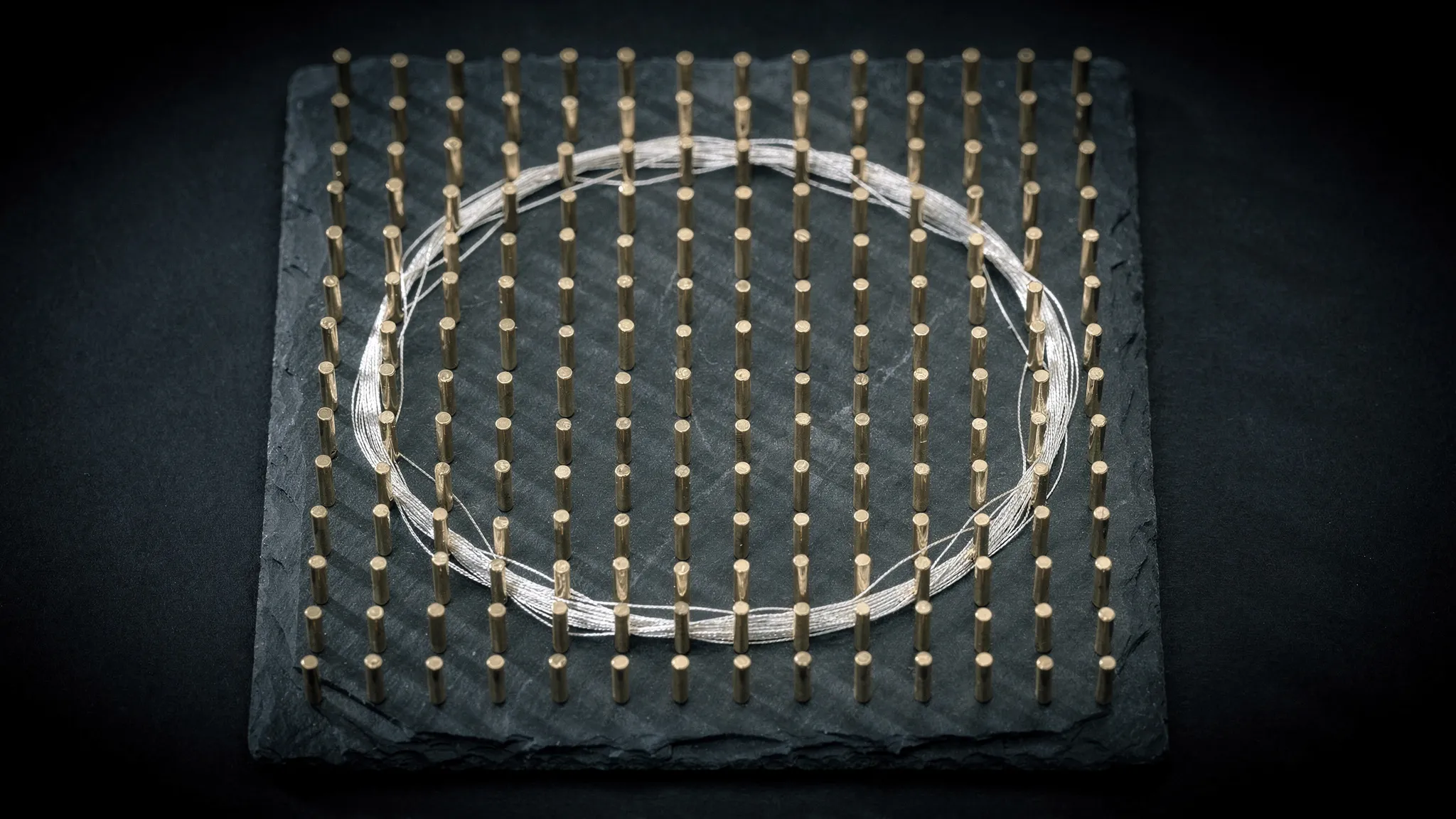
    A square grid of small brass pins standing on a slate board, a loose loop of fine silver thread lying across the grid, against a dark background.

    Draw a large circle on squared paper and count the grid points inside. The count is close to the area, never exact. How large can the gap get?

    Gauss showed the gap grows at most like X to the power 1/2. Here X is the squared radius. Mathematicians expect 1/4, and cannot do better than that.

    For more than a century, the exponent has crept down. Four mathematicians in Beijing now reach 209/670, about 0.3119. The previous record was about 0.3145.

    Their value sits just below 5/16. Huxley once suggested 5/16 as a possible limit of the method he was refining. Two new technical refinements got past it. The paper is a preprint, and the road to 1/4 is still long.

    Source: A New Bound for the Gauss Circle Problem, https://arxiv.org/abs/2610.21730

    PreprintTheory
Legal notice